
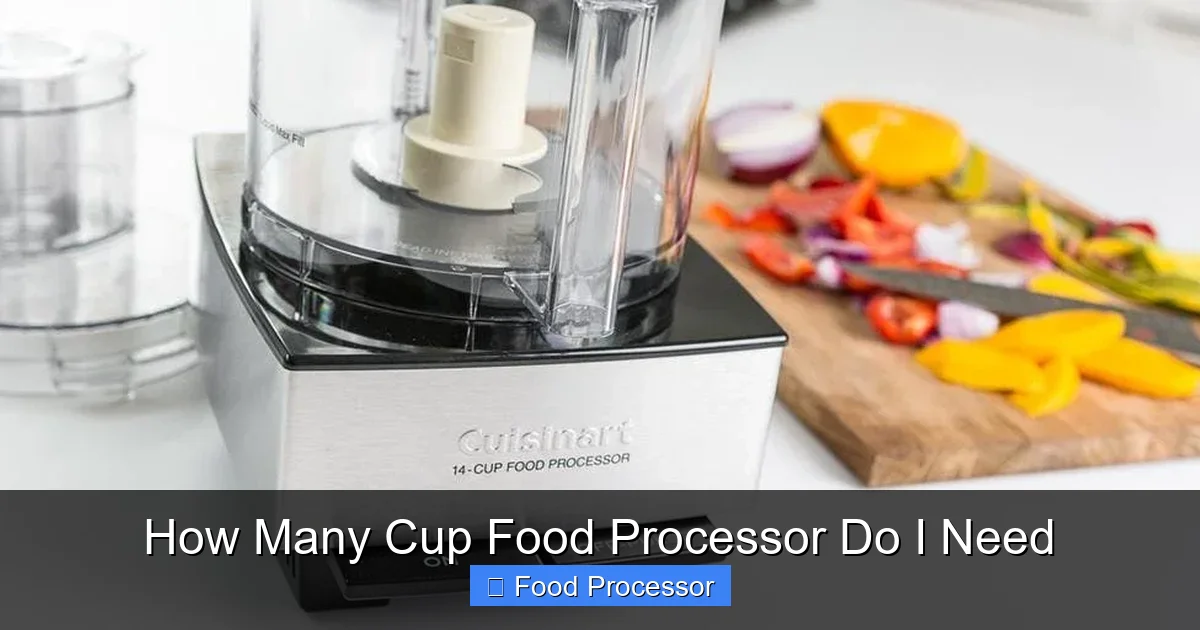
Selecting the perfect food processor size is crucial for efficient cooking and avoiding frustration. This guide will walk you through assessing your culinary habits, typical batch sizes, and kitchen space to help you decide whether a mini, compact, or full-size food processor is best for you. Making an informed choice ensures your appliance truly meets your needs, saving you time and effort in the kitchen.
How Many Cup Food Processor Do I Need
Welcome to the world of efficient cooking! A food processor is a true kitchen workhorse, saving you immense time and effort with tasks like chopping, slicing, shredding, and pureeing. But here’s a common dilemma: how do you choose the right size? Picking the perfect food processor isn’t just about finding one that looks good on your counter; it’s about matching its capacity to your specific culinary needs.
In this comprehensive guide, we’ll walk you through everything you need to consider. By the end, you’ll confidently know how many cup food processor you need to make your kitchen adventures smoother and more enjoyable. We’ll explore different sizes, discuss typical cooking scenarios, and provide practical tips to ensure you make the best choice for your home.
Key Takeaways
- Assess Your Cooking Habits: Consider how often you cook, what you typically prepare (e.g., small dips vs. large batches of dough), and for how many people. This will be your primary guide.
- Understand Size Categories: Food processors generally come in mini (3-5 cups), compact (7-11 cups), and full-size (12-16 cups) options, each suited for different tasks and volumes.
- Match Batch Sizes to Capacity: A small family or individual might find a 7-cup model sufficient, while a large family or avid baker will likely need a 12-cup or larger food processor.
- Consider Kitchen Space: Bigger food processors take up more counter and storage space. Ensure your chosen size fits comfortably in your kitchen environment.
- Think About Versatility: A slightly larger food processor (e.g., 12-cup instead of 7-cup) often offers more versatility for future cooking projects, even if you don’t immediately need the extra capacity.
- Don’t Overlook Power: While cup size is important, remember that higher wattage usually comes with larger models, which is beneficial for tougher tasks like kneading dough.
Understanding Food Processor Sizes
Food processors come in a range of sizes, measured by the capacity of their work bowl in cups. This capacity dictates how much food you can process at once. Let’s break down the common categories:
Mini Food Processors (3-5 cups)
These smaller units are perfect for quick, everyday tasks that don’t involve large quantities.
- Who it’s for: Singles, couples, or anyone with limited kitchen space who mainly prepares small batches.
- Best for: Chopping a single onion, mincing garlic, making salad dressings, preparing small amounts of pesto, grinding spices, or creating a quick dip.
- Pros: Compact, easy to store, generally more affordable, quick to clean for small jobs.
- Cons: Limited capacity means multiple batches for larger recipes, may struggle with tough ingredients or dough.
Compact or Mid-Size Food Processors (7-11 cups)
This category is often considered the sweet spot for many households, offering a balance between capacity and countertop footprint.
- Who it’s for: Small to medium-sized families (3-4 people), or individuals who cook regularly and enjoy meal prepping.
- Best for: Slicing vegetables for a family stir-fry, shredding cheese for a lasagna, making hummus, preparing pie crust dough, or pureeing soups.
- Pros: Versatile for most common cooking tasks, doesn’t take up excessive space, good power for various ingredients.
- Cons: Might still require multiple batches for very large recipes or entertaining a crowd.
Full-Size Food Processors (12-16 cups)
These robust machines are built for serious cooks, large families, or anyone who frequently entertains.
- Who it’s for: Large families (5+ people), avid bakers, entertainers, or those who do a lot of batch cooking and freezing.
- Best for: Preparing large quantities of salsa, kneading bread dough, shredding multiple heads of cabbage, slicing potatoes for a gratin, or making big batches of baby food. For instance, if you’re wondering how to use food processor to shred cabbage for a big batch of coleslaw, a full-size model is ideal.
- Pros: High capacity, powerful motors (usually 600-1000 watts), handles heavy-duty tasks with ease, often comes with a wider array of attachments.
- Cons: Takes up significant counter and storage space, can be more expensive, overkill for very small tasks.
Extra-Large or Commercial Food Processors (18+ cups)
These are typically found in professional kitchens or for very specialized home use where extremely large volumes are processed. They are usually not necessary for the average home cook.
Step 1: Assess Your Cooking Habits
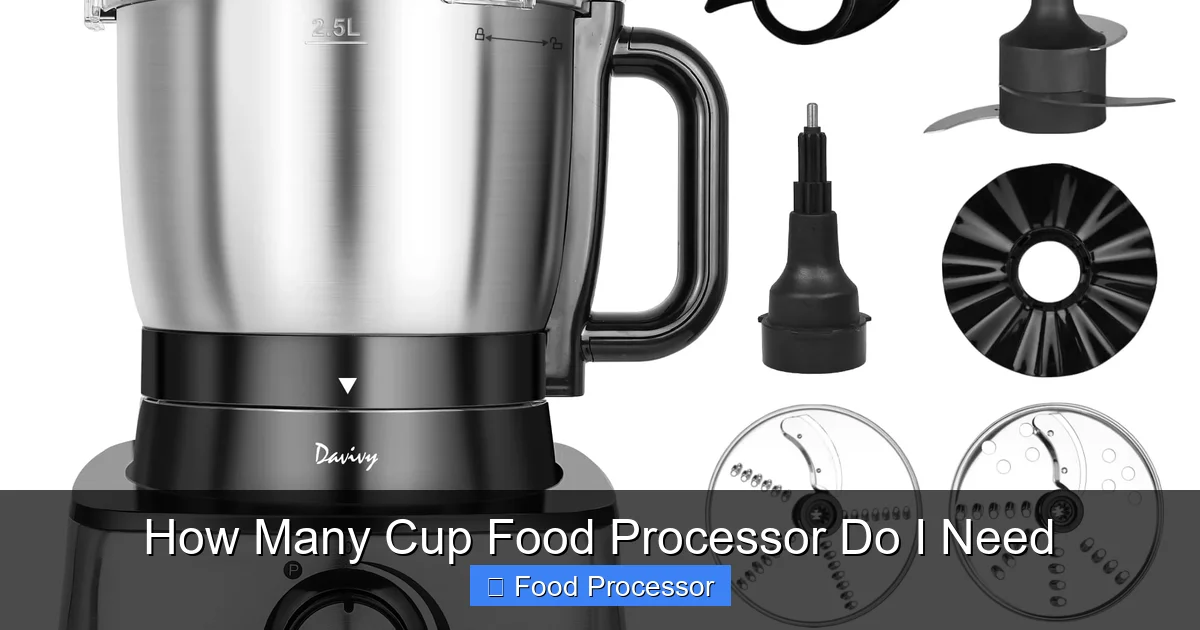
Visual guide about How Many Cup Food Processor Do I Need
Image source: m.media-amazon.com
The first and most important step in deciding how many cup food processor you need is to take an honest look at your current (and aspirational) cooking habits.
How Often Do You Cook?
- Daily/Multiple Times a Week: If you’re a frequent cook, investing in a mid-size or full-size food processor will likely be worth it. It will see a lot of use for various tasks.
- Occasionally (2-3 times a week): A compact 7-cup model might suffice for your regular needs, especially if you’re not making huge batches.
- Rarely/Mostly for Small Tasks: A mini food processor could be perfect, saving you space and money.
What Types of Food Do You Prepare?
Think about your go-to recipes.
- Dips, Sauces, Dressings, Spices: If these are your primary uses, a 3-5 cup mini food processor is perfectly adequate. You don’t need a huge bowl for a cup of pesto.
- Vegetable Prep (Chopping, Slicing, Shredding): Do you often chop onions, carrots, and celery for soups, or shred cheese for weeknight meals? A 7-11 cup model handles these volumes well. For tasks like how to use food processor to chop vegetables, a mid-size unit is versatile.
- Baking, Large Batches, Dough: If you frequently make bread dough, pie crusts, or large quantities of purees (like pumpkin for pies), you’ll need the power and capacity of a 12-16 cup food processor. Kneading dough requires a strong motor and a spacious bowl to prevent overflow.
- Meal Prepping: If you dedicate a day to preparing ingredients for the week, a larger food processor (12+ cups) will be invaluable for efficiently processing bulk ingredients.
How Many People Do You Cook For?
The number of mouths you feed directly impacts the volume of food you need to prepare.
- 1-2 People: A 3-5 cup mini food processor for very small tasks or a 7-cup compact model for more general cooking is usually enough.
- 3-4 People: A 7-11 cup food processor is often ideal. It can handle most family-sized meals without requiring multiple batches.
- 5+ People or Frequent Entertainers: A 12-16 cup full-size food processor is almost a necessity to avoid tedious batch processing.
Step 2: Consider Your Typical Batch Sizes
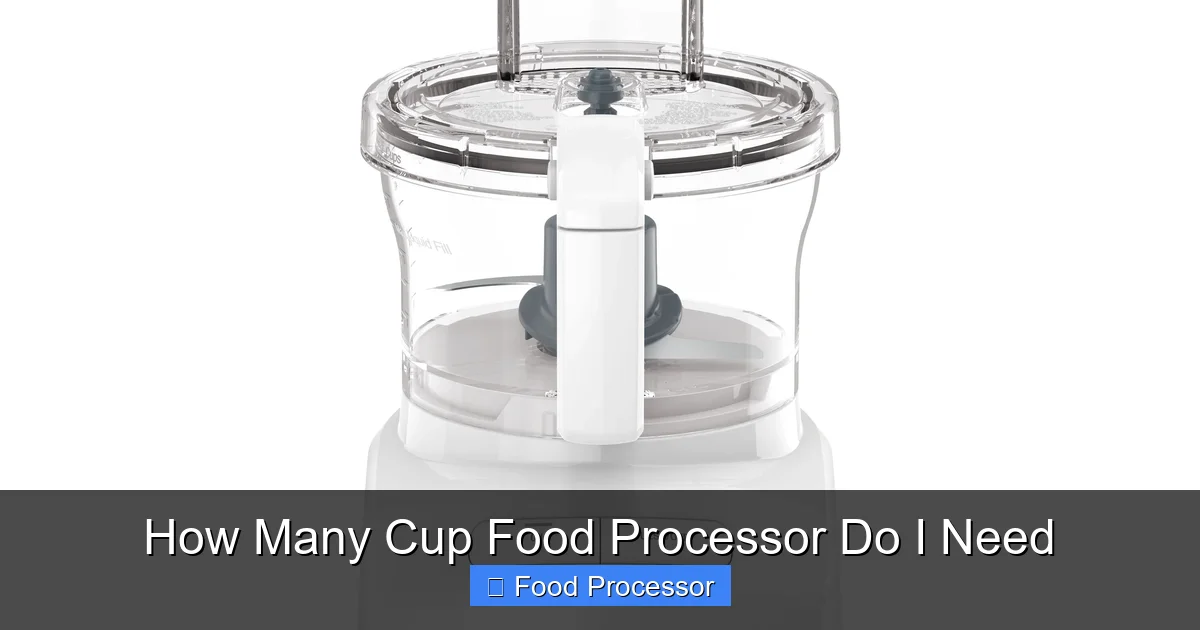
Visual guide about How Many Cup Food Processor Do I Need
Image source: cuisinart.com
Even if you cook for a large family, you might only make small batches of certain items. Conversely, a single person might enjoy large-batch meal prepping. Focus on the typical volume of ingredients you’ll be processing for your most common tasks.
Small Tasks (e.g., A single serving of pesto, a few cloves of garlic, a cup of nuts)
These are best suited for mini food processors. Trying to process tiny amounts in a large bowl often results in uneven chopping or ingredients getting stuck under the blade.
Medium Tasks (e.g., Shredding 8 oz of cheese, slicing 2-3 onions, making a batch of hummus for 4)
This is where a compact 7-11 cup food processor shines. It provides enough space for these quantities without being overly large.
Large Tasks (e.g., Kneading dough for two loaves of bread, shredding a whole head of cabbage, slicing 5 lbs of potatoes)
For these jobs, a full-size 12-16 cup food processor is essential. It prevents overcrowding, which can lead to poorly processed food and strain on the motor.
Step 3: Evaluate Your Kitchen Space
Food processors can be bulky. Don’t let a great deal on a huge appliance turn into an annoying counter hog.
Countertop Availability
Do you have dedicated counter space where your food processor can live, or will it need to be pulled out and put away for each use? A larger food processor is heavier and more cumbersome to move frequently. If space is tight, a smaller model might be more practical.
Storage
If your food processor won’t live on the counter, where will you store it? Make sure you have cabinet space that can accommodate its dimensions, including any attachments. A 14-cup food processor can be quite tall and wide.
Step 4: Think About Future Needs
Are you planning to expand your culinary skills? Will your family grow?
Are Your Cooking Habits Likely to Change?
If you currently cook for two but plan to start a family, or if you’re looking to get more into baking and from-scratch cooking, choosing a slightly larger food processor now (e.g., a 12-cup instead of a 7-cup) could save you from needing an upgrade later. It’s generally better to have a bit more capacity than not enough. This is a key aspect of how to choose the right size food processor for long-term satisfaction.
Will You Use It for More Adventurous Recipes?
Some recipes, like large batches of nut butter, pureed soups, or certain doughs, benefit significantly from the power and capacity of a larger food processor. If you aspire to tackle these, plan accordingly.
Step 5: Don’t Forget Power and Features
While cup size is the main focus here, it’s worth noting that bowl capacity often correlates with motor power (wattage) and available features.
Wattage
Larger food processors generally come with more powerful motors (600-1000+ watts). Higher wattage is crucial for tough tasks like kneading stiff dough, grinding hard cheeses, or processing large quantities of dense vegetables. If your chosen size is in the 12-16 cup range, look for higher wattage.
Attachments
More expensive, larger food processors often include a wider array of blades and discs for slicing, shredding, grating, and even juicing. Some also offer multiple nested bowls (e.g., a 12-cup bowl with a smaller 4-cup mini bowl insert), which gives you the best of both worlds.
Tips for Choosing the Right Size
- When in doubt, go slightly larger: It’s usually less frustrating to have a bit more capacity than you need than to constantly run out of space in a too-small bowl. You can always process smaller amounts in a larger machine, but you can’t fit more into a small one.
- Look for models with nested bowls: Some food processors come with a large main bowl and a smaller “mini prep” bowl that fits inside. This offers great versatility, allowing you to handle both large and small tasks with one machine.
- Read reviews and consider brands: Once you have a size in mind, research specific models. Brands like Cuisinart, KitchenAid, and Breville are well-regarded. Reading user reviews can give you insight into real-world performance for different tasks. It’s always a good idea to research what to consider when buying a food processor beyond just the size.
- Think about cleanup: Larger bowls mean more parts to wash. Consider if the bowls and blades are dishwasher safe, which can be a significant time-saver.
What if I Choose the Wrong Size?
It happens! Even with careful planning, you might find your food processor isn’t quite right.
If Your Food Processor is Too Small:
You’ll experience frustration with having to process ingredients in multiple small batches. This can add a lot of time to your cooking. If you find yourself consistently needing to divide ingredients, it might be time to consider upgrading. In the meantime, you can always revert to manual methods or explore options like what to do if I don’t have a food processor for certain tasks.
If Your Food Processor is Too Large:
While less problematic than being too small, a food processor that’s too big can be cumbersome. It takes up valuable counter and storage space. Cleaning a large bowl and lid for a tiny job can also feel inefficient. However, you can still use it for small tasks; just ensure the ingredients are evenly distributed around the blade to prevent them from simply being pushed to the side.
Tips for Adapting:
- For too small: Process in stages. Don’t overload the bowl. Chop larger ingredients into smaller pieces manually before adding them to the food processor if necessary.
- For too large: Use the pulse function more often to gain better control over smaller batches. Ensure the blade is properly assembled and secured so that even small amounts are caught by the blade. You might also want to consult a general guide on how do you use a food processor step by step to ensure you’re getting the most out of your appliance, regardless of size.
Conclusion
Choosing the right food processor size is a foundational step toward maximizing its utility in your kitchen. By carefully assessing your cooking habits, the number of people you cook for, your typical batch sizes, and your available kitchen space, you can confidently select an appliance that will be a joy to use rather than a source of frustration.
Whether you opt for a compact 7-cup model for everyday tasks or a robust 14-cup workhorse for large family meals and extensive baking, the goal is to find a food processor that seamlessly integrates into your culinary routine. Remember, a well-chosen food processor isn’t just another gadget; it’s an investment in efficiency, creativity, and enjoyment in your kitchen. Happy cooking!
