

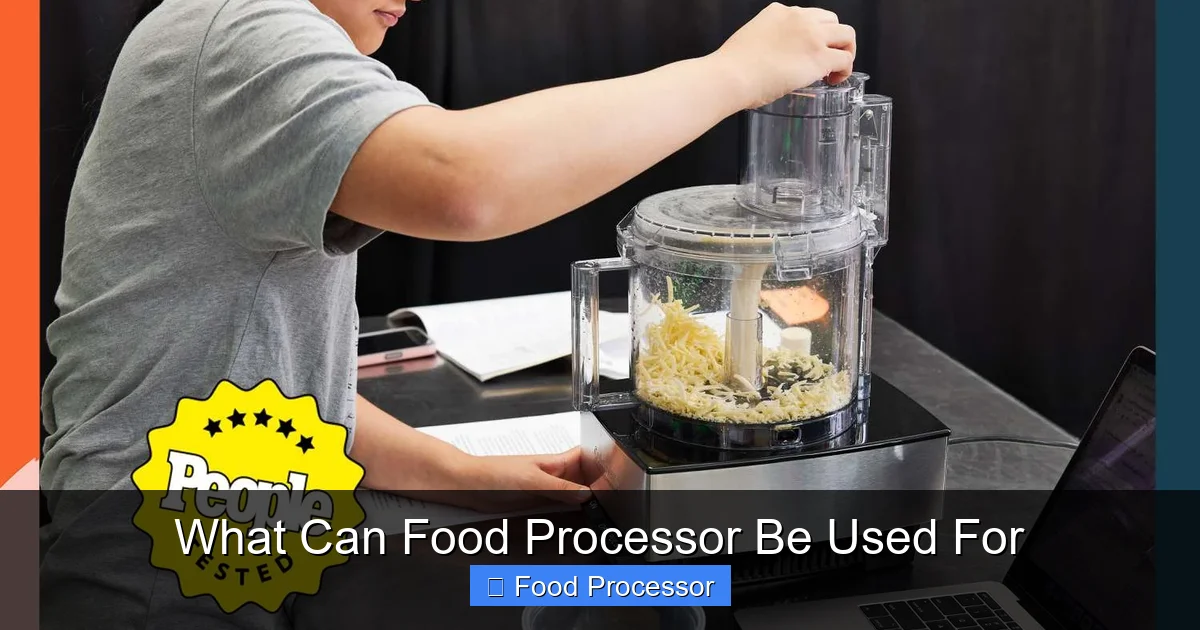
A food processor is an incredibly versatile kitchen appliance designed to simplify many tasks, from basic chopping and slicing to more complex pureeing and dough kneading. It saves time and effort, making meal preparation quicker and more efficient. Understanding its various functions and attachments allows you to unlock a world of culinary possibilities, transforming your cooking experience with ease and precision.
What Can Food Processor Be Used For
Ever wondered what incredible kitchen magic you can whip up with that powerful gadget sitting on your counter? If you have a food processor, you’re holding a ticket to significantly faster, easier, and more enjoyable cooking! Often seen as a simple chopper, the truth is, a food processor is one of the most versatile appliances you can own, capable of transforming a mountain of ingredients into perfectly prepped components in mere seconds. It truly simplifies cooking.
This comprehensive guide will dive deep into the world of “what can food processor be used for.” We’ll explore its fundamental functions, advanced applications, and provide practical tips to help you get the most out of your machine. Whether you’re a seasoned chef or a kitchen novice, prepare to unlock the full potential of your food processor and revolutionize your meal prep!
Key Takeaways
- Master Multitasking: A food processor excels at a wide range of tasks including chopping, mincing, slicing, shredding, pureeing, mixing, and even kneading dough, making it a true kitchen workhorse.
- Time-Saving Efficiency: It significantly reduces preparation time for everyday meals and complex recipes by automating laborious manual tasks like dicing vegetables or grating cheese.
- Blade and Disc Versatility: The various blades (S-blade) and discs (slicing, shredding) are key to its functionality, allowing for precise control over texture and cut for different ingredients.
- Pulse Power for Control: The pulse function is essential for achieving desired textures, preventing over-processing, and ensuring ingredients are chopped or mixed just right without turning to mush.
- Beyond Basic Prep: Beyond simple cutting, a food processor can create sauces, dips, nut butters, pestos, and even help with baking by blending crusts and kneading dough.
- Maintenance Matters: Proper cleaning and assembly are crucial for safe operation and extending the lifespan of your appliance. Always consult your user manual for specific care instructions.
- Not a Blender Substitute: While some tasks overlap, a food processor is not a direct replacement for a blender, especially for very smooth liquids or hot purees, due to differences in blade design and power.
Understanding Your Food Processor: The Basics
Before we jump into all the amazing things your food processor can do, let’s quickly review its core components. Most food processors consist of a sturdy base with a motor, a work bowl, a lid with a feed tube, and a set of interchangeable blades and discs.
- S-Blade (Chopping Blade): This is your most commonly used blade, typically metal, and shaped like an “S.” It’s perfect for chopping, mincing, pureeing, and mixing.
- Slicing Discs: These flat discs have sharp blades that slice ingredients uniformly. You often get a medium and a thin slicing disc.
- Shredding/Grating Discs: These discs have raised holes that shred ingredients into various sizes, ideal for cheese or vegetables.
- Dough Blade (Plastic Blade): Some food processors come with a plastic “S” blade designed specifically for mixing and kneading dough without overworking it.
Knowing which attachment to use is the first step to mastering your food processor. Now, let’s explore its incredible range of uses!
Fundamental Uses of Your Food Processor
These are the core tasks that make a food processor an indispensable kitchen tool for daily cooking and meal prep.
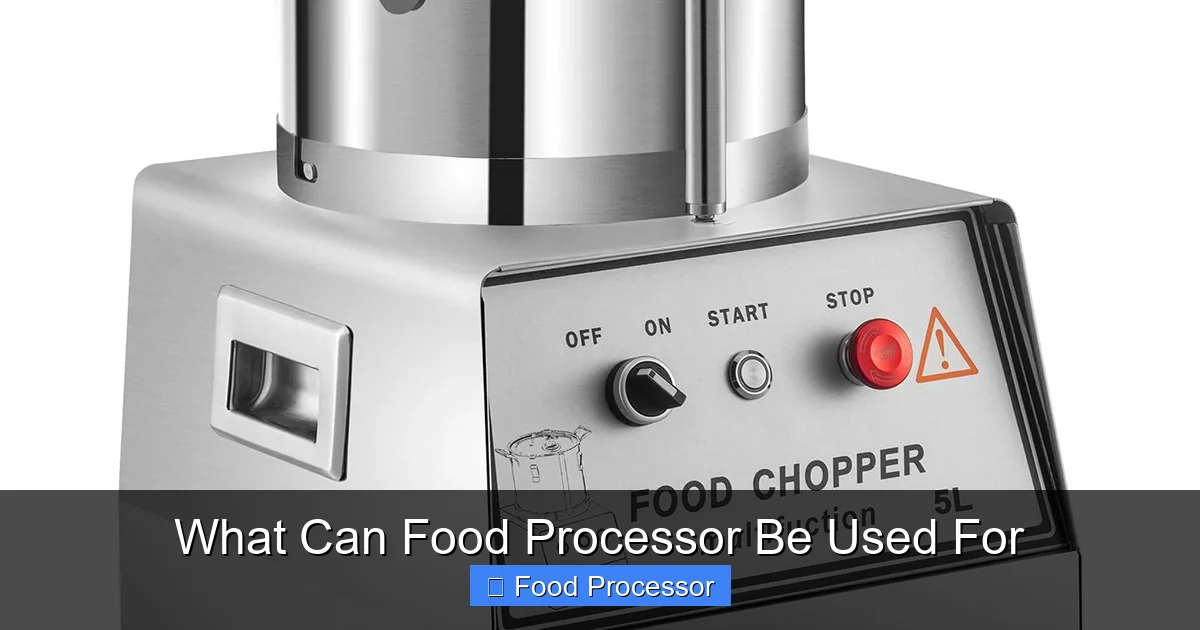
Visual guide about What Can Food Processor Be Used For
Image source: m.media-amazon.com
Chopping and Mincing
Say goodbye to teary eyes from chopping onions or tedious mincing of garlic and herbs. Your food processor makes quick work of these tasks, saving you precious time.
- How to Do It: Attach the S-blade. Cut larger ingredients into 1-2 inch pieces. Place them in the work bowl. Use the “pulse” function in short bursts until you reach your desired consistency. For finer mincing, process a bit longer, but be careful not to over-process into a paste.
- Practical Tips:
- For onions, quarter them. Pulse until finely chopped.
- For garlic, drop whole cloves in with other ingredients or process alone for a few pulses.
- For herbs, wash and dry them thoroughly. Add them to the bowl and pulse quickly.
- When chopping multiple ingredients for a recipe, start with the hardest vegetables first, then add softer ones.
- Examples: Finely chopped vegetables for mirepoix, minced garlic and ginger for stir-fries, chopped nuts for baking, minced herbs for garnishes.
Slicing and Shredding
Imagine perfectly uniform slices of cucumber for a salad or a mountain of shredded cheese in seconds. The slicing and shredding discs make this a reality.
- How to Do It: Insert the desired slicing or shredding disc onto the central spindle. Place the lid on, ensuring the feed tube is open. Turn the food processor on, then feed the ingredients through the feed tube using the pusher. Maintain even pressure.
- Practical Tips:
- For slicing, ensure vegetables like cucumbers or potatoes are trimmed to fit snugly in the feed tube.
- For shredding cheese, use firm, cold blocks of cheese for the best results. Soft cheese can smear. Interestingly, if you’ve ever wondered, yes, you can absolutely use your food processor to shred cheese, and it’s much faster than a box grater!
- When shredding harder vegetables like carrots or beets, cut them into pieces that fit the feed tube.
- Examples: Sliced potatoes for gratin, shredded cabbage for coleslaw, grated carrots for salads, shredded cheese for pizzas or tacos.
Pureeing
From smooth soups to creamy dips and healthy baby food, your food processor is a master at turning cooked or soft ingredients into silky purees.
- How to Do It: Attach the S-blade. Add cooked or soft ingredients to the work bowl. Process continuously until smooth. For extra creamy results, you might add a splash of liquid (broth, water, cream).
- Practical Tips:
- For hot ingredients like soup, be careful not to overfill the bowl, as steam can build up. Process in batches if necessary, and leave the feed tube slightly open for ventilation, covering it loosely with a kitchen towel.
- Ensure all ingredients are uniformly cooked and soft for the smoothest puree.
- Examples: Hummus, baba ghanoush, vegetable purees for babies, creamy tomato sauce, smooth bean dips.
Mixing and Kneading Dough
Tired of sticky hands and endless kneading? Your food processor can handle many doughs with surprising ease, from pie crusts to bread dough.
- How to Do It: Use the S-blade (or dough blade if your food processor has one). Add dry ingredients first, then slowly add wet ingredients through the feed tube while the machine is running, or pulse to combine. For kneading, process continuously until the dough forms a ball and cleans the sides of the bowl (typically 30-60 seconds).
- Practical Tips:
- For pie crusts, pulse cold butter with flour until pea-sized crumbs form, then drizzle in ice water.
- For yeast doughs, be careful not to overwork the dough, as food processors can generate heat quickly.
- While a food processor is excellent for many mixing tasks, if you’re wondering if a food processor can be used as a stand mixer, the answer is generally yes for certain tasks like dough and batters, but a stand mixer offers more specialized attachments for whipping and heavy-duty kneading.
- Examples: Pie crusts, cookie dough, scone dough, pizza dough, certain bread doughs.
Grinding
Your food processor can efficiently grind various ingredients, offering fresh results superior to pre-packaged options.
- How to Do It: Attach the S-blade. Place ingredients like nuts, seeds, or hard spices in the work bowl. Pulse until desired consistency is reached. For finer grinds, process continuously for slightly longer.
- Practical Tips:
- When grinding nuts, be aware that processing too long will turn them into nut butter.
- For spices, make sure they are completely dry to prevent clumping.
- If grinding small amounts, it helps to process with a tablespoon of sugar or flour to catch all the tiny particles.
- You can even use it to grind certain meats for homemade burgers or sausages. In fact, for those who wonder, yes, a food processor can be used as a meat grinder, especially for smaller quantities and specific textures, although dedicated meat grinders offer superior results for larger volumes or very fine grinds.
- Examples: Grinding nuts for flours or toppings, making breadcrumbs from stale bread, grinding seeds for spices, grinding oats into oat flour.
Beyond the Basics: Advanced Food Processor Applications
Once you’ve mastered the fundamentals, you’ll discover even more creative uses for your food processor.
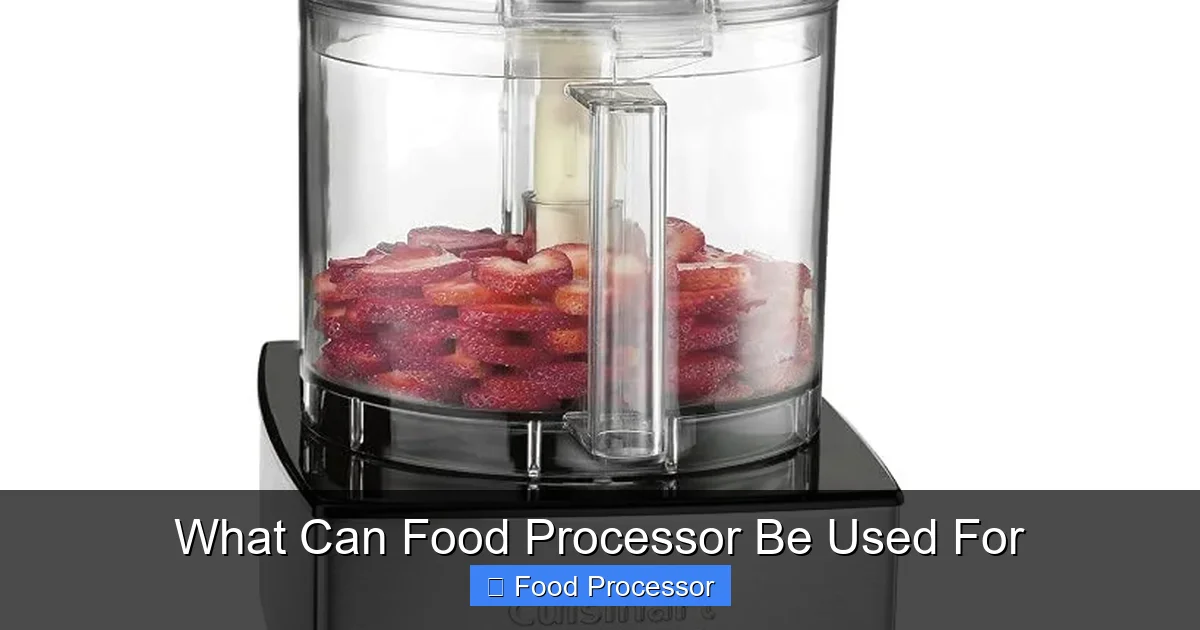
Visual guide about What Can Food Processor Be Used For
Image source: m.media-amazon.com
Making Dips, Spreads, and Sauces
Whip up delicious homemade condiments and spreads that are healthier and tastier than store-bought versions.
- How to Do It: Using the S-blade, combine all ingredients in the work bowl. Process until smooth and well combined, scraping down the sides as needed.
- Examples: Pesto, homemade mayonnaise, salad dressings, creamy vegetable dips, bean dips, tapenade.
Creating Nut Butters
Making your own nut butter is incredibly easy and rewarding with a food processor, allowing you to control ingredients and flavors.
- How to Do It: With the S-blade attached, add roasted nuts (like peanuts, almonds, or cashews) to the work bowl. Process continuously. The nuts will go through several stages: coarse crumbs, fine crumbs, a pasty ball, and finally, a smooth, creamy butter. This can take 5-10 minutes, depending on your machine. Scrape down the sides as needed.
- Practical Tips: For a smoother consistency, you can add a neutral oil (like grapeseed or coconut oil) or a touch of honey or maple syrup for sweetness.
- Examples: Peanut butter, almond butter, cashew butter, mixed nut butter.
Whipping and Emulsifying
While not a dedicated mixer, a food processor can handle certain whipping and emulsifying tasks.
- How to Do It: For emulsifying, like making mayonnaise, combine egg yolk, mustard, and vinegar in the bowl with the S-blade. With the machine running, slowly drizzle oil through the feed tube in a thin, steady stream until the mixture emulsifies and thickens.
- Examples: Mayonnaise, aioli. Note that for light and airy whipping tasks like whipped cream, a stand mixer or hand mixer is generally more effective.
Ricing Vegetables
Transform vegetables like cauliflower into a rice-like texture, perfect for low-carb meals or adding extra nutrition.
- How to Do It: Cut cauliflower (or broccoli) into 1-2 inch florets. Place them in the food processor with the S-blade. Pulse in short bursts until the florets resemble grains of rice. Do not over-process, or you’ll get a puree. Process in batches if necessary.
- Examples: Cauliflower rice, broccoli rice.
Making Smoothies and Frozen Desserts
While blenders are typically better for very smooth liquids, a food processor can handle thicker smoothies and frozen treats.
- How to Do It: Use the S-blade. Add frozen fruit, a little liquid (milk, juice), and any other ingredients. Pulse and process, scraping down the sides as needed, until thick and smooth. For smoothies, you might need more liquid than for a thick “nice cream.” For those curious, a food processor can indeed be used to make smoothies, especially thicker, bowl-friendly varieties, though a blender is generally preferred for liquid-smooth beverages.
- Examples: Banana “nice cream,” thick fruit smoothies, sorbets.
Tips for Optimal Food Processor Use
To get the best results and ensure longevity from your machine, keep these tips in mind:
- Don’t Overfill: Always adhere to the maximum fill line on your work bowl. Overfilling can strain the motor and lead to uneven processing.
- Use the Pulse Function: This is your best friend for control. Short bursts prevent over-processing and help you achieve the perfect consistency for chopping, mincing, or crumbling.
- Cut Food Uniformly: For consistent results, cut larger ingredients into roughly similar-sized pieces before adding them to the bowl, especially when using the S-blade.
- Process in Batches: If you have a large quantity of ingredients, process them in smaller batches rather than trying to fit everything at once.
- Clean Immediately: Food residue can dry and become difficult to remove. Disassemble and wash your food processor components soon after use. Many parts are dishwasher safe, but check your manual.
- Safety First: Always ensure the food processor is unplugged before assembling, disassembling, or cleaning the blades. Never put your hands into the work bowl while the machine is plugged in. Always use the food pusher when using the slicing/shredding discs.
Food Processor vs. Blender: What’s the Difference?
It’s common to wonder about the distinctions between a food processor and a blender, especially since some tasks overlap. The key difference lies in their design and primary functions.
- Food Processor: Designed for solid or semi-solid foods. It uses various blades and discs to chop, slice, shred, grind, and mix. Its wider bowl and powerful motor are ideal for handling drier, thicker ingredients.
- Blender: Primarily designed for liquids. Its tall, narrow pitcher and specialized blade create a powerful vortex, perfect for smooth purees, liquefying fruits and vegetables, and crushing ice for drinks.
While you can use a food processor for some smoothie tasks, a blender will typically yield a much smoother result for liquid-based drinks. Conversely, a blender struggles with tasks like kneading dough or uniformly slicing vegetables. They are complementary tools, each excelling in its own domain.
Troubleshooting Common Food Processor Issues
Even with the best kitchen tools, sometimes things don’t go as planned. Here are quick fixes for common food processor woes.
Food Not Chopping Evenly
If you find some pieces are finely minced while others are still large, it’s usually due to one of two reasons:
- Solution:
- Uneven Initial Cut: Ensure you cut your ingredients into roughly equal-sized pieces before placing them in the bowl.
- Overfilling: Too many ingredients can prevent the S-blade from circulating food properly. Process in smaller batches.
- Not Enough Pulsing: Use short, sharp pulses. Sometimes giving the bowl a gentle shake between pulses helps redistribute the food.
Motor Stalling or Struggling
This often happens when the motor is overworked.
- Solution:
- Too Much Food: Reduce the amount of food in the bowl.
- Too Hard/Dense Ingredients: Cut hard ingredients into smaller pieces. If trying to process something extremely dense (like very thick dough or a huge block of frozen items), your food processor might not be designed for it.
- Incorrect Assembly: Double-check that the bowl and lid are properly locked into place, as safety mechanisms prevent operation if not assembled correctly.
Loud Noises or Vibrations
A little noise is normal, but excessive rattling or vibrations can indicate an issue.
- Solution:
- Unstable Surface: Ensure your food processor is on a flat, stable counter.
- Improper Blade/Disc Installation: Make sure the blade or disc is seated correctly on the spindle.
- Loose Components: Check that the bowl and lid are securely locked.
Choosing the Right Food Processor for You
If you’re in the market for a new food processor or looking to upgrade, consider your typical cooking habits. Do you mostly need it for chopping small amounts, or do you frequently prepare large meals and bake? Bowl capacity (from mini choppers to 14-cup models), motor power, and the range of attachments are all important factors. For guidance on selecting the perfect appliance for your kitchen, exploring what to look for when buying a food processor can provide invaluable insights.
Conclusion
A food processor is far more than just a chopping machine; it’s a versatile, time-saving, and creative powerhouse that can transform your cooking experience. From everyday meal prep tasks like slicing and shredding to more adventurous culinary endeavors like making homemade nut butters and doughs, the possibilities are truly vast. By understanding its various functions, utilizing the right attachments, and following best practices, you can unlock its full potential and enjoy more efficient, enjoyable, and delicious results in your kitchen. So go ahead, experiment, and let your food processor become your new favorite culinary assistant!
