

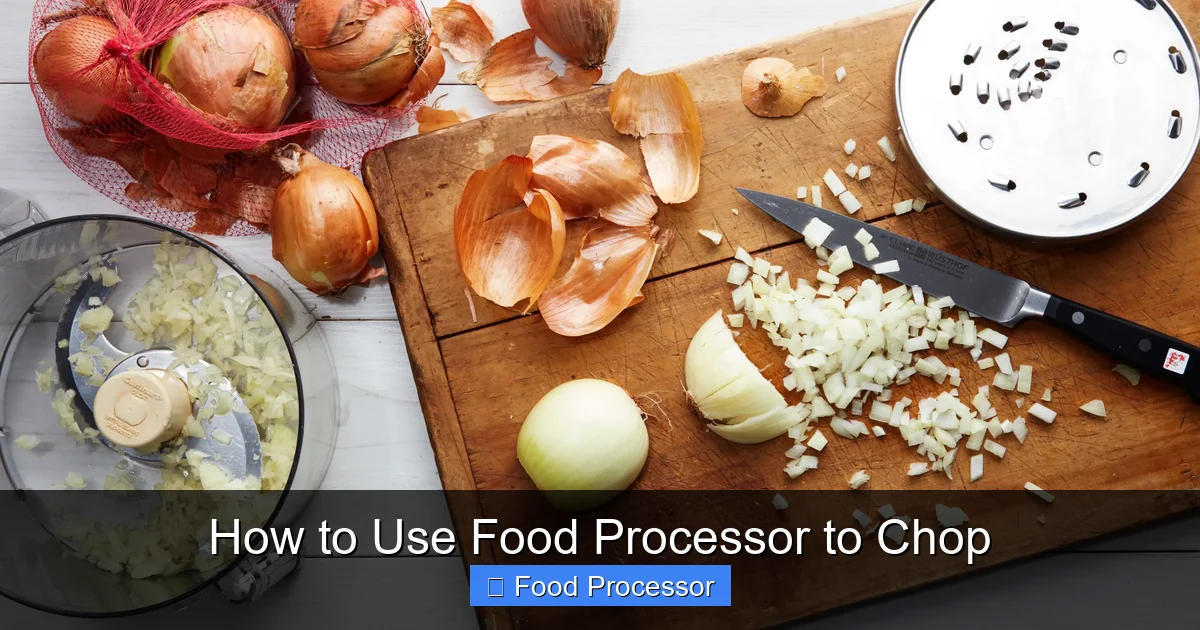
Mastering how to use a food processor to chop ingredients can transform your cooking, saving significant time and effort. This comprehensive guide will walk you through everything from preparing your ingredients and safely assembling your food processor to understanding the pulsed technique for achieving perfect results, whether you need a coarse or fine chop. You’ll learn essential tips for efficient chopping and discover how to troubleshoot common issues, making your kitchen tasks much easier and more enjoyable.
Welcome to the world of efficient cooking! If you’re looking to save time and effort in the kitchen, learning how to use a food processor to chop is a game-changer. This versatile kitchen appliance can tackle a myriad of tasks, but its chopping prowess is arguably one of its most celebrated features. Forget tedious hand-chopping; your food processor is here to deliver consistent results in a fraction of the time.
In this comprehensive guide, we’ll demystify the art of chopping with a food processor. We’ll cover everything from getting to know your machine and preparing your ingredients to mastering the pulse function for various textures. Whether you’re a seasoned chef or a kitchen novice, you’ll learn practical tips and troubleshooting advice to make your chopping experience smooth, safe, and satisfying. Get ready to transform how you prepare meals and enjoy more time doing what you love!
Key Takeaways
- Safety First: Always ensure the food processor is unplugged before assembling or disassembling, and handle the sharp blades with extreme care.
- Prep Your Ingredients: Cut larger items into uniform, manageable pieces (about 1-inch) before adding them to the food processor for even chopping.
- Assemble Correctly: Follow your appliance’s instructions for secure assembly of the bowl, blade, and lid to ensure proper function and safety. If you need a refresher, check out our guide on how to assemble a food processor step by step.
- Use the Pulse Function: The pulse button gives you precise control over the chopping process, allowing you to achieve your desired texture without over-processing.
- Don’t Overload: Fill the food processor bowl no more than half to two-thirds full to allow ingredients to circulate properly and chop evenly.
- Scrape Down Sides: Pause occasionally to scrape down the sides of the bowl with a spatula, ensuring all ingredients are incorporated and chopped consistently.
- Clean Promptly: Disassemble and clean your food processor immediately after use to prevent food residue from drying and becoming harder to remove.
Understanding Your Food Processor
Before you dive into chopping, it’s helpful to understand the basic components and functions of your food processor. Knowing your machine inside out will ensure you use it safely and effectively. Most food processors consist of a base, a work bowl, a lid with a feed tube, and various blades and discs. For chopping, you’ll primarily use the S-blade, also known as the chopping blade or utility blade.
The Power Base
The base houses the motor. This is where the power comes from. Always ensure your food processor base is on a stable, flat surface before you start. It’s also important to make sure it’s unplugged when you’re assembling or disassembling the unit to prevent accidental starts.
The Work Bowl and Lid
The work bowl is where all the action happens. It usually locks onto the base. The lid then locks onto the work bowl, often with a safety interlock mechanism that prevents the motor from running if the lid isn’t properly secured. This safety feature is crucial, so never try to bypass it. The lid usually has a feed tube, which is useful for adding ingredients while the machine is running, though for chopping, you’ll typically add everything before starting.
The S-Blade (Chopping Blade)
This is your primary tool for chopping. It’s an S-shaped blade, incredibly sharp, and designed to rotate rapidly, cutting ingredients into smaller pieces. Always handle it by the central plastic hub, never by the blades themselves. Remember, these blades are very sharp and can cause injury if not handled with care.
Control Panel
Your food processor will have a control panel with buttons for “On,” “Off,” and “Pulse.” The “Pulse” function is your best friend when it comes to chopping. It allows you to run the blade in short bursts, giving you ultimate control over the texture and preventing over-processing. We’ll dive deeper into this vital function later.
Preparing Your Ingredients for Chopping
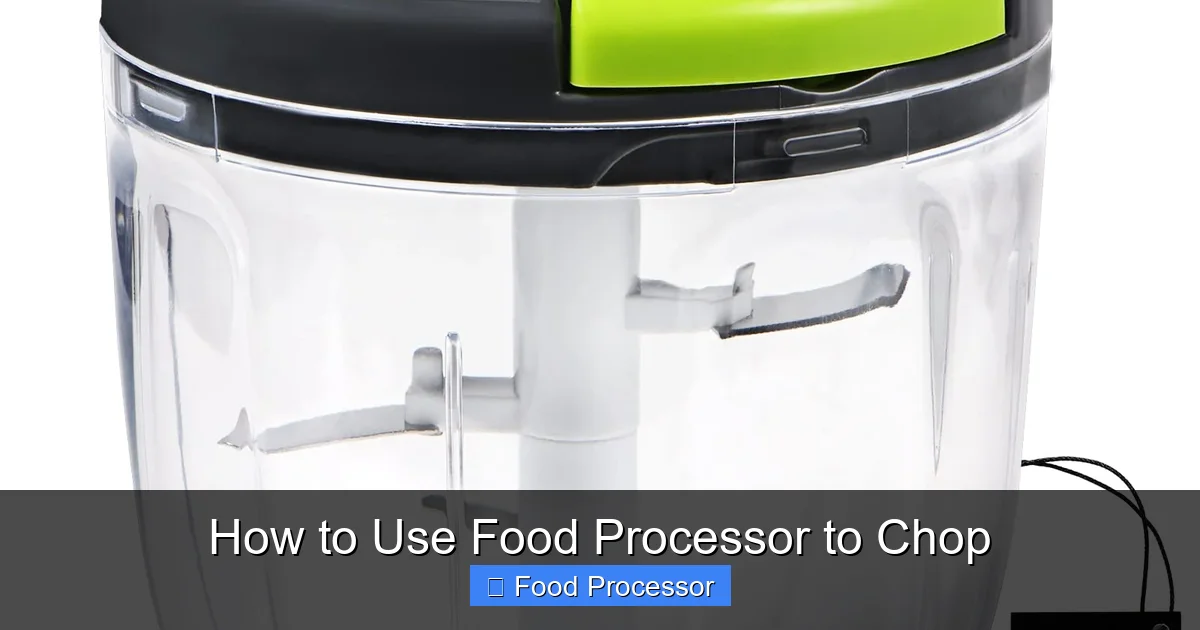
Visual guide about How to Use Food Processor to Chop
Image source: m.media-amazon.com
Proper ingredient preparation is key to achieving consistent and even chops in your food processor. Don’t just toss everything in; a little pre-work goes a long way.
Wash and Dry Thoroughly
Always start by washing your fruits, vegetables, or herbs thoroughly. Excess moisture can make ingredients clump or create a purée instead of a chop, especially with herbs or softer vegetables. Pat them dry with a clean kitchen towel or use a salad spinner for leafy greens.
Cut into Manageable Pieces
This is perhaps the most crucial step. Large, unwieldy chunks won’t chop evenly. Instead, cut your ingredients into roughly uniform 1-inch pieces. For example, if you’re chopping an onion, cut it into quarters or eighths. Carrots should be sliced into 1-inch rounds or sticks. This allows the blade to grab and cut everything efficiently. Think of it this way: the smaller and more uniform the starting pieces, the more uniform your final chop will be. When you are learning how to use a food processor to chop vegetables, this step is particularly important for getting even results.
Remove Unwanted Parts
Core apples, remove seeds from peppers, peel garlic cloves, and trim fibrous ends from celery. These unwanted parts can affect the texture and taste of your final product. For herbs, remove thick stems that might not chop down easily.
Assembling Your Food Processor Safely
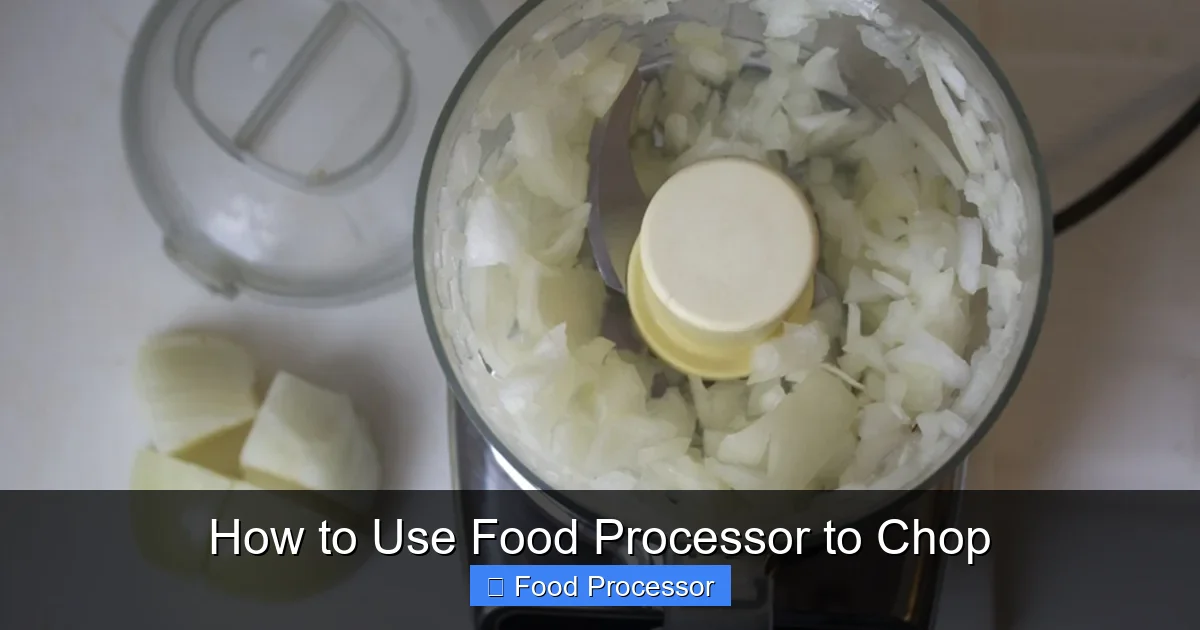
Visual guide about How to Use Food Processor to Chop
Image source: recipes.net
Correct assembly is vital for both safety and performance. A properly assembled food processor will work efficiently and prevent potential mishaps.
Ensure It’s Unplugged
Seriously, this can’t be stressed enough. Always double-check that your food processor is unplugged from the wall socket before you begin assembling any parts. This eliminates any risk of accidental activation.
Attach the Work Bowl
Place the work bowl onto the motor base. Most models require you to twist and lock the bowl into place. You’ll usually hear a click or feel it firmly secure. If the bowl isn’t locked, the unit might not power on due to safety features.
Insert the S-Blade
Carefully pick up the S-blade by its central plastic hub. Gently lower it onto the spindle inside the work bowl. Make sure it sits securely at the bottom. Do not touch the sharp edges of the blade.
Add the Lid
Place the lid securely onto the work bowl. Again, you’ll likely need to twist and lock it into position. The safety interlock mechanism on the lid is a vital feature; if the lid isn’t locked correctly, the food processor won’t turn on. If you’re ever unsure about this process, our guide on how to assemble a food processor step by step provides clear instructions.
Loading Your Food Processor for Chopping
Loading your ingredients correctly is just as important as preparing them. How you fill the bowl impacts the efficiency and uniformity of your chop.
Don’t Overload the Bowl
This is a common mistake that leads to uneven chopping and can strain your food processor’s motor. As a general rule, fill the work bowl no more than half to two-thirds full. Overloading prevents ingredients from circulating freely, leading to some pieces being finely chopped while others remain large. It also puts undue stress on the motor. If you have a large quantity to chop, work in batches.
Layering Ingredients (Optional but Helpful)
For most chopping tasks, simply adding the prepared ingredients to the bowl is fine. However, if you’re chopping a mix of softer and harder items, you might consider layering. Place harder ingredients (like carrots) at the bottom, closer to the blade, and softer ones (like onions) on top. This can sometimes help with more even processing.
Adding Liquids (Sparingly for Chopping)
For most chopping, you won’t need to add liquid. In fact, too much liquid can turn your chop into a purée. If a recipe specifically calls for a tiny bit of liquid to help with circulation (e.g., for some pestos where you’re aiming for a very fine chop with herbs and nuts), add it through the feed tube while pulsing.
The Chopping Process: Mastering the Pulse Function
The pulse button is the secret weapon for perfect chopping. It gives you control, allowing you to achieve precisely the texture you desire without over-processing your ingredients into an unwanted paste.
Plug In Your Food Processor
Once everything is assembled and loaded, plug the food processor into a grounded outlet.
Use the Pulse Function
Instead of holding down the “On” button, which will continuously run the blade, use the “Pulse” button. Press and release it in quick bursts, usually for 1-2 seconds at a time.
Observe and Scrape
After a few pulses, turn off the machine, remove the lid, and observe the consistency. Use a rubber spatula to scrape down any ingredients clinging to the sides of the bowl. This ensures everything gets exposed to the blade for an even chop. Replace the lid securely before continuing.
Repeat Until Desired Consistency
Continue to pulse, scrape, and check until your ingredients reach the desired level of chop. The key is patience and observation. A coarse chop will require fewer pulses than a fine chop. For delicate ingredients like herbs, even one or two pulses might be enough.
Achieving Different Chops
The beauty of the pulse function is its versatility in achieving various textures.
Coarse Chop
For a coarse chop, where you want distinct, larger pieces (think chunky salsa or stew vegetables), use fewer, shorter pulses. About 3-5 quick pulses, with scraping in between, usually does the trick. You want pieces that are roughly pea-sized or slightly larger.
Medium Chop
A medium chop is great for many everyday recipes, like mirepoix for soups or evenly sized vegetables for stir-fries. This will require more pulses than a coarse chop, maybe 6-10 pulses, depending on the ingredient and your machine’s power. Aim for pieces roughly the size of a rice grain or slightly larger.
Fine Chop
When you need a very fine chop, such as for finely minced garlic, ginger, herbs, or ingredients for a smooth dip or sauce, you’ll use more frequent and slightly longer pulses. Keep pulsing, scraping, and checking, ensuring you stop *just before* it turns into a paste. This might take 10-15 pulses or more. For ingredients like garlic or ginger, you might want to add a tiny amount of olive oil to help prevent it from becoming sticky and to ensure an even chop.
Don’t Over-Process!
The biggest mistake when chopping with a food processor is over-processing. A few too many pulses can quickly turn a beautiful chop into a mushy purée. This is especially true for ingredients with high water content, like tomatoes or onions. Always err on the side of caution and check frequently. It’s easier to pulse a few more times than to undo a puréed mess.
Practical Tips for Perfect Chopping
Elevate your food processor chopping game with these handy tips.
Chill Soft Ingredients
For softer items like tomatoes, bell peppers, or even cooked eggs, chilling them slightly before chopping can help them maintain their structure and prevent them from turning mushy too quickly. A quick 15-20 minutes in the freezer can make a difference.
Add a Touch of Oil for Sticky Items
When chopping sticky ingredients like nuts or dates, a tiny drizzle of neutral oil (like vegetable or grapeseed oil) can help prevent them from clumping together and sticking to the blade and bowl. Add it through the feed tube while pulsing.
Dealing with Small Quantities
Chopping very small quantities can be tricky as the ingredients might just fly around above the blade without getting chopped. If your food processor is large, consider using a smaller bowl attachment if your model has one, or a mini food processor. Alternatively, for tiny amounts, traditional hand-chopping might be more efficient. If you want to know how to choose the right size food processor, it’s worth considering your typical batch sizes.
Chopping Herbs
For herbs, ensure they are very dry. A trick is to add a few ice cubes or a tablespoon of flour to the bowl along with the herbs. The ice cubes help keep the herbs cold and crisp, while the flour helps absorb moisture and prevents clumping, leading to a finer, more separate chop. Just remember to rinse the flour off if it’s not part of your recipe!
Processing Dry vs. Wet Ingredients
Always start with dry ingredients if your recipe calls for both. Chop the dry components first, remove them, then process any wet ingredients. This prevents the dry ingredients from absorbing moisture and clumping or becoming pasty.
Emptying and Cleaning Your Food Processor
Once your chopping is done, prompt and proper cleaning is essential.
Unplug and Disassemble
First, always unplug the food processor. Then, carefully remove the lid, followed by the S-blade (handle by the hub!). Use a spatula to scrape out the chopped ingredients from the bowl.
Clean Immediately
Food residue, especially from sticky or strong-smelling ingredients, can dry quickly and become harder to remove. Rinse the bowl, lid, and blade immediately under warm running water. Most parts are top-rack dishwasher safe, but always check your manufacturer’s instructions.
Hand Washing Blades
Even if dishwasher safe, consider hand washing the S-blade for longevity. Use a brush to safely clean around the sharp edges. Be extremely cautious as the blades are very sharp.
Wipe Down the Base
Wipe the motor base with a damp cloth. Never immerse the base in water or any other liquid.
Troubleshooting Common Chopping Issues
Even with the best intentions, you might run into a snag or two. Here are some common problems and their solutions.
Uneven Chop
* **Cause:** Overloading the bowl, unevenly sized starting pieces, or not scraping down the sides.
* **Solution:** Work in smaller batches. Ensure all ingredients are cut to roughly the same size before adding them. Pause and scrape down the sides frequently.
Ingredients Turning into Purée/Paste
* **Cause:** Over-processing (too many pulses, or holding the “On” button).
* **Solution:** Use the pulse function in short bursts. Check the consistency frequently. Err on the side of caution with fewer pulses.
Blade Not Spinning
* **Cause:** Improper assembly of the work bowl or lid, unit not plugged in, or a motor issue.
* **Solution:** Ensure the work bowl and lid are securely locked into place. Check that the unit is plugged in. If these don’t work, refer to your appliance manual or our guide on how to fix a food processor blade not spinning.
Motor Straining/Smoking
* **Cause:** Overloading the bowl, trying to process overly hard ingredients, or a dull blade.
* **Solution:** Reduce batch size. If processing very hard items (like ice, which isn’t recommended for chopping with the S-blade unless your machine specifically allows it), make sure they are within your machine’s capacity. Stop immediately if you see smoke or smell burning. Let the motor cool down.
Ingredients Stuck Under the Blade
* **Cause:** Too many ingredients, or pieces are too large.
* **Solution:** Unplug, remove the blade carefully, and clear any obstructions. Reassemble and continue, ensuring not to overload.
Conclusion
Learning how to use a food processor to chop effectively is a skill that will undoubtedly enhance your culinary journey. It’s about more than just speed; it’s about consistency, efficiency, and freeing up your time for other creative aspects of cooking. By understanding your machine, properly preparing your ingredients, mastering the pulse function, and practicing good technique, you’ll be able to tackle any chopping task with confidence and ease.
Remember to always prioritize safety by unplugging your unit during assembly and disassembly, and by handling the sharp blades with care. With these tips and a little practice, your food processor will become one of your most valued kitchen companions, helping you create delicious meals with minimal effort. Happy chopping!
