

It’s incredibly frustrating when your food processor won’t turn on right when you need it most. Often, the issue isn’t serious and can be resolved with some simple checks. This guide will walk you through common culprits like power supply problems, incorrect assembly, or tripped safety features, helping you diagnose and potentially fix your food processor to get it working again in no time.
Why Won’t My Food Processor Turn On
Picture this: You’re all set to whip up a delicious meal, ingredients prepped, and you go to turn on your trusty food processor, only to be met with… silence. No whir, no hum, just a disheartening nothing. It’s incredibly frustrating, isn’t it? A non-starting food processor can throw a real wrench in your kitchen plans. But don’t panic! More often than not, the reason your food processor won’t turn on isn’t a major malfunction, but something simple you can fix yourself.
In this comprehensive guide, we’re going to dive deep into all the common reasons why your food processor might refuse to power up. We’ll walk through easy, step-by-step troubleshooting methods to help you diagnose the problem and hopefully get your kitchen workhorse back in action. From basic power checks to intricate safety mechanisms, we’ve got you covered. By the end, you’ll be equipped with the knowledge to tackle most “why won’t my food processor turn on” scenarios with confidence.
Key Takeaways
- Safety First: Always unplug your food processor before inspecting or attempting any fixes to prevent electric shock.
- Check Power Supply: Verify the outlet works, the plug is secure, and the circuit breaker hasn’t tripped. This is the most common reason a food processor won’t turn on.
- Ensure Proper Assembly: Food processors have safety interlocks. Make sure the bowl, lid, and blade are correctly locked into place for the unit to power on.
- Address Overload Protection: If the motor overheated or struggled with too much food, the safety shut-off might be activated. Unplug it and let it cool down.
- Inspect for Damage: Look for visible damage to the power cord, plug, or motor housing. Any damage might require professional repair or replacement.
- Consult the Manual: Your appliance’s user manual often has specific troubleshooting tips and diagrams for your model’s unique features.
Safety First: Before You Begin
Before you touch anything or start any troubleshooting, your safety is the absolute priority. Electricity and kitchen appliances can be dangerous if not handled correctly.
Unplug the Appliance
Always, always unplug your food processor from the wall outlet before you start inspecting it, adjusting parts, or attempting any repairs. This simple step prevents accidental power-ups and the risk of electric shock.
Read Your Manual
Every food processor is a little different. While general troubleshooting applies, your specific model’s user manual is an invaluable resource. It will have diagrams showing correct assembly, unique safety features, and specific troubleshooting tips tailored to your appliance. If you can’t find the physical copy, check the manufacturer’s website for a digital version.
Common Reasons Your Food Processor Won’t Turn On
Let’s explore the most frequent culprits behind a food processor that refuses to start. Understanding these can help you pinpoint the issue faster.
Power Supply Issues
This is often the simplest and most overlooked problem. If your food processor isn’t getting electricity, it simply won’t work.
The Wall Outlet Itself
Sometimes, the problem isn’t the appliance but the power source. An outlet might be dead, or it might be controlled by a light switch that’s currently off.
Tripped Circuit Breaker
Kitchens often have dedicated circuits, and using multiple high-wattage appliances at once can trip a breaker, cutting power to that entire section of outlets.
Damaged Power Cord or Plug
A frayed cord, bent prongs on the plug, or loose wiring inside the plug can interrupt the flow of electricity to your food processor. This type of damage can also be a serious safety hazard.
Incorrect Assembly or Safety Interlock Mechanisms
Food processors are designed with safety in mind. They usually won’t operate unless all components are correctly assembled and locked into place. This is where the “safety interlock” comes in.
Bowl Not Properly Locked
The main processing bowl must be securely twisted and locked onto the motor base. If it’s even slightly off, the food processor won’t turn on.
Lid Not Securely Fastened
Similar to the bowl, the lid needs to be firmly attached and locked in place. Many lids have a tab that aligns with a switch on the handle or base, completing the circuit. If it’s not aligned, no power.
Blade or Attachment Not Seated Correctly
The processing blade or other attachments (like shredding discs) must be properly placed onto the central spindle. If it’s wobbly or not fully seated, the safety mechanism might prevent operation. For more specific issues, if you find your food processor blade not spinning, even if the unit appears to turn on, that’s a different but related problem to investigate.
Pusher/Chute Safety (Less Common)
Some larger or older models might have an additional safety feature related to the food pusher in the feed tube, requiring it to be in a certain position.
Overload Protection Activated
Modern food processors have built-in overload protection to prevent the motor from burning out.
Overheating
If you’ve been running the food processor for a long time, or processing very tough ingredients, the motor can overheat. When this happens, the appliance will automatically shut off to protect itself.
Too Much Food
Stuffing the processing bowl with too much food can strain the motor, causing it to struggle and then trigger the overload protection.
Motor or Internal Component Issues
These are less common and usually more serious problems, often requiring professional repair or replacement.
Burnt-Out Motor
If the motor has been overworked repeatedly, or if there’s an electrical surge, it can burn out. You might notice a burning smell or hear no sound at all.
Faulty Switch or Wiring
The power switch, control buttons, or internal wiring within the base could be faulty. This can prevent electricity from reaching the motor even if the power supply is fine.
Step-by-Step Troubleshooting Guide
Now that we know the potential culprits, let’s go through a systematic approach to get your food processor running again. Remember: safety first! Always unplug before handling. This guide outlines what to do if your food processor won’t turn on.
Step 1: Check the Power Source
This is always the first place to start. Don’t assume the outlet is working just because other things are plugged into it.
Test the Outlet
Unplug your food processor. Plug another small appliance, like a lamp or a phone charger, into the same outlet. If that appliance doesn’t work, then the issue is with the outlet, not your food processor. Try plugging your food processor into a different, known-working outlet in another room.
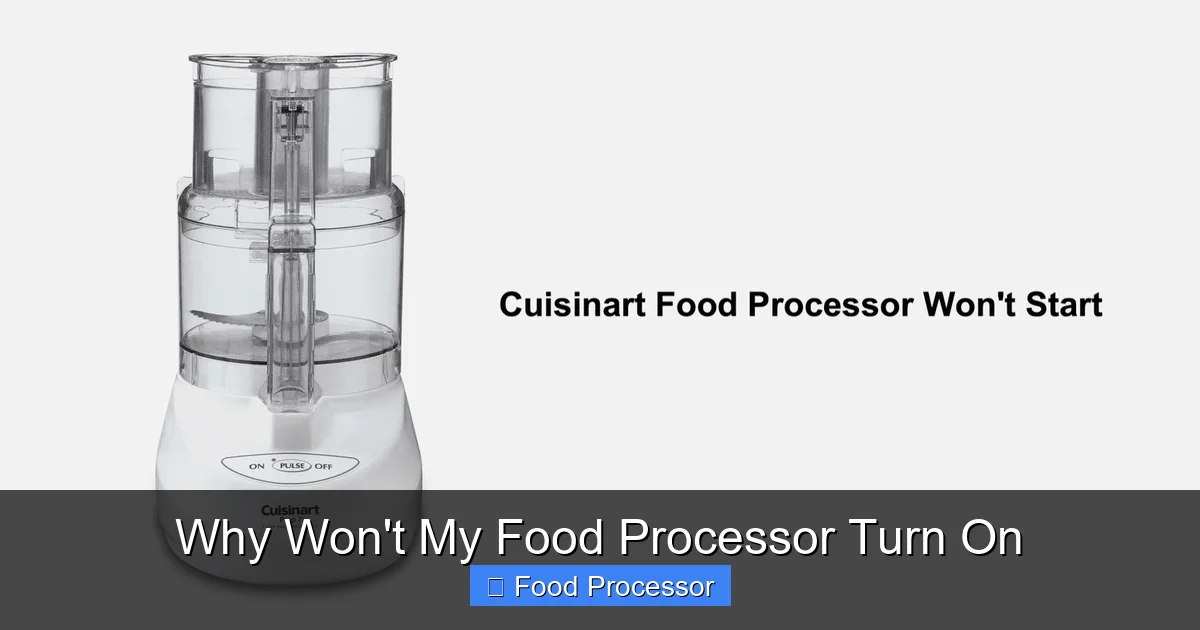
Visual guide about Why Won’t My Food Processor Turn On
Image source: missvickie.com

Visual guide about Why Won’t My Food Processor Turn On
Image source: wepc.com
Reset the Circuit Breaker
If the outlet seems dead, head to your home’s electrical panel (usually in the basement, garage, or a utility closet). Look for a tripped breaker – it will typically be halfway between “on” and “off” or fully “off.” Flip it completely “off” and then firmly back to the “on” position. If it immediately trips again, there might be a deeper electrical issue, and you should call an electrician.
Inspect the Power Cord and Plug
Carefully examine the entire length of the power cord for any cuts, frays, or exposed wires. Check the plug for bent or broken prongs. If you find any damage, do not use the food processor. A damaged cord is a fire and shock hazard and needs to be replaced or professionally repaired.
Step 2: Verify Proper Assembly
Many “why won’t my food processor turn on” issues boil down to incorrect assembly. The safety interlocks are very sensitive. To properly assemble a food processor step by step, follow these instructions carefully.
Ensure the Bowl is Locked
Place the processing bowl onto the motor base. Rotate it clockwise (or counter-clockwise, depending on the model) until it clicks firmly into place. You should feel it lock. If it doesn’t lock securely, check for any obstructions on the base or bowl that might be preventing a proper fit.
Check the Lid Security
After the bowl, place the lid on top. Again, twist and lock it securely. Look for arrows or indicators on the lid and base that need to align. The lid often has a tab that activates a safety switch when properly seated. If the lid is loose or wobbly, it won’t engage the safety switch.
Confirm Blade or Attachment is Seated
Make sure the chosen blade or disc is correctly positioned on the central spindle inside the bowl before you put on the lid. It should sit firmly and not wobble excessively. If it’s a disc, ensure it’s oriented correctly (e.g., shredding side up if you want to shred).
Examine the Pusher (If Applicable)
Some models require the food pusher to be inserted into the feed chute for the safety mechanism to engage. Try putting the pusher into the chute and see if that makes a difference.
Step 3: Reset Safety Features
If your food processor won’t turn on due to an overload or overheat, it simply needs a little break.
Power Cycle the Unit
Unplug the food processor from the wall. Wait for about 10-15 minutes. Plug it back in and try to turn it on again. This simple reset can sometimes clear minor electrical glitches or reset internal safety mechanisms.
Allow for Cooling
If you suspect the food processor overheated (e.g., you were processing tough dough or running it for a long time), give it at least 30 minutes to an hour to cool down completely. Unplug it during this time. Once cool, plug it back in and try again.
Step 4: Inspect for Obstructions or Damage
Sometimes, a physical blockage or hidden damage can prevent your food processor from starting.
Clear Any Jammed Food
With the unit unplugged, remove the lid and bowl. Check the area around the blade spindle and inside the motor base for any bits of food that might have fallen in and are blocking the mechanism or switches.
Look for Visible Damage to Switches or Connectors
Carefully inspect the safety switches on the base, bowl, and lid. These are small plastic tabs or buttons that depress when the components are correctly assembled. Look for any broken or bent tabs that might prevent the switch from engaging. Also, check the connection points between the bowl and the base for any obvious damage.
Step 5: Test with Different Settings/Attachments
If your food processor has multiple speed settings or attachments, trying a different combination can help isolate the problem.
Try Different Speed Settings
If your food processor has “On,” “Off,” “Pulse,” and various speed settings, try cycling through them. It’s possible one specific button or setting is faulty. Try the “Pulse” button specifically, as it often has a direct connection to the motor.
Remove Attachments
If you’re using a specific disc or accessory, try assembling the food processor with just the standard S-blade to see if it powers on. A faulty or improperly seated attachment could sometimes interfere with the safety mechanisms.
When to Call a Professional or Consider Replacement
You’ve followed all the steps, but your food processor still won’t turn on. At this point, it’s time to consider your options.
Complex Electrical or Motor Issues
If you suspect a problem with the internal wiring, the motor itself, or the main power switch, it’s generally best not to attempt a DIY repair unless you are a qualified electrician. Tampering with internal components can be dangerous and could void your warranty. If you’ve tried everything and your food processor still stopped working, how to fix it might involve a professional.
Cost-Benefit Analysis
Get a quote for professional repair. For many older or less expensive food processor models, the cost of repair might approach or even exceed the cost of a brand-new unit. Consider the age of your appliance and its original price. If it’s an older model or a basic one, buying a new food processor might be a more economical and reliable solution. For more serious issues like this, an appliance repair technician can give you an assessment. There are also many articles online that detail how to fix a food processor that is not turning on.
Warranty Check
If your food processor is still under warranty, contact the manufacturer. They might offer a free repair or replacement, especially if the issue is a manufacturing defect.
Preventative Maintenance Tips
To avoid future “why won’t my food processor turn on” headaches, good maintenance is key.
Clean After Every Use
Regularly clean all parts of your food processor. Bits of dried food can accumulate in crevices or around safety switches, preventing proper assembly over time. Refer to your manual for specific cleaning instructions for your model.
Avoid Overloading
Don’t pack the bowl with too many ingredients at once. Process in smaller batches, especially for tough foods like dough, nuts, or hard vegetables. This prevents straining and overheating the motor.
Proper Storage
Store your food processor in a dry, safe place where the cord won’t get crimped or damaged. Keep all attachments together so you don’t misplace crucial parts required for assembly.
Handle with Care
Avoid dropping the food processor or its components. Even small impacts can damage delicate internal wiring or safety switches.
Conclusion
It’s truly frustrating when your kitchen appliances don’t cooperate, especially a workhorse like a food processor. But as we’ve explored, a non-starting food processor often has a simple solution. By systematically checking the power supply, verifying proper assembly, understanding safety interlocks, and allowing for motor cooling, you can resolve most issues without needing a repair technician or a new appliance. Remember to always prioritize safety by unplugging the unit before any inspection or repair.
We hope this guide has empowered you to troubleshoot your food processor effectively. Happy cooking!
