

Finding the right food processor in Ghana involves understanding various factors like brand, capacity, and features. Prices typically range from GHS 300 for basic models to over GHS 2000 for high-end options, with commercial units costing significantly more. This guide helps you navigate the market, from online stores like Jumia to physical appliance shops, ensuring you make an informed purchase that fits your culinary needs and budget.
How Much Is Food Processor in Ghana
Are you tired of spending endless hours chopping, slicing, and dicing in your Ghanaian kitchen? A food processor can be a game-changer, transforming your cooking experience and saving you precious time. From preparing kontomire stew ingredients to making smooth banku dough or grinding spices, a food processor is an incredibly versatile appliance. But if you’re like many home cooks in Ghana, your first question might be: “How much is a food processor in Ghana?”
This comprehensive guide is designed to answer exactly that. We’ll dive deep into the Ghanaian market, exploring the various factors that influence food processor prices, where you can buy them, and what kind of budget you’ll need for different types of models. By the end of this article, you’ll have all the information you need to make an informed decision and find the perfect food processor that fits both your culinary needs and your wallet.
Key Takeaways
- Price Range: Expect to pay anywhere from GHS 300 for basic, compact food processors to GHS 2000+ for premium, feature-rich models in Ghana. Commercial units can cost GHS 5000 and above.
- Key Price Determinants: Brand reputation, motor wattage (power), bowl capacity, and the number of included attachments (blades, discs) are the main factors influencing the cost of a food processor.
- Where to Buy: Both online platforms (Jumia Ghana, Electromart) and physical appliance stores (Melcom, Electroland) offer a wide selection. Online stores often provide convenience, while physical stores allow for in-person inspection.
- Popular Brands: Common brands available in Ghana include Nasco, Sonik, Geepas, Binatone, Philips, and Bosch, catering to various budget segments.
- Budgeting Tips: Look out for seasonal sales, compare prices across different vendors, and consider your actual usage needs to avoid overspending on features you won’t use.
- Warranty & Support: Always check for warranty coverage and the availability of after-sales service to ensure peace of mind, especially for higher-priced models.
Understanding the Ghanaian Market for Food Processors
The market for kitchen appliances in Ghana has grown significantly, offering a wide array of choices for consumers. Food processors are no exception. You’ll find everything from basic, budget-friendly models to advanced, multi-functional machines from both international and regional brands.
Online vs. Physical Stores
In Ghana, you have two primary avenues for purchasing a food processor:
- Online Platforms: Websites like Jumia Ghana, Electromart, and various social media sellers offer convenience and often competitive pricing. You can browse extensive catalogs from the comfort of your home.
- Physical Stores: Large appliance retailers such as Melcom, Electroland, Game, and local electronics shops across cities like Accra, Kumasi, and Takoradi provide the advantage of seeing the product firsthand and speaking with sales staff.
Popular Brands You’ll Encounter
You’ll come across a mix of brands when searching for a food processor in Ghana. Some popular ones include:
- Affordable Brands: Nasco, Sonik, Geepas, Binatone, Akai.
- Mid-Range to Premium Brands: Philips, Bosch, Kenwood, Cuisinart (though Cuisinart might be less common and higher priced).
Each brand offers different features, build quality, and, consequently, different price points.
Factors Influencing Food Processor Prices in Ghana
The cost of a food processor in Ghana isn’t fixed; it varies based on several key characteristics. Understanding these factors will help you gauge why one model might be significantly more expensive than another.
Brand Reputation and Origin
- International Brands: Established international brands like Philips, Bosch, and Kenwood often command higher prices due to their reputation for quality, durability, and advanced technology.
- Regional/Local Brands: Brands like Nasco, Sonik, and Geepas typically offer more budget-friendly options, making food processors accessible to a wider range of consumers. Their prices are usually lower, but product reliability can vary.
Capacity of the Work Bowl
Food processors come in various sizes, measured by the capacity of their work bowl (usually in cups or liters).
- Mini Food Processors (1-4 cups): These are great for small tasks like chopping herbs, nuts, or making dips. They are generally the most affordable.
- Compact Food Processors (5-7 cups): A good option for small families or individuals who cook regularly but don’t need to process large quantities. They strike a balance between price and functionality.
- Full-Size Food Processors (8-14 cups): Ideal for larger families, entertaining, or serious home cooks. These can handle larger batches of ingredients and come with more features, leading to higher prices.
- Commercial Food Processors (15+ cups): Designed for restaurants or catering businesses, these are robust, high-capacity machines that come with a significantly higher price tag.
Consider how to choose the right size food processor based on your household size and typical cooking needs.
Motor Power (Wattage)
The motor’s wattage indicates its power and efficiency.
- Lower Wattage (300-600W): Found in entry-level models, suitable for lighter tasks like chopping vegetables, making sauces, and mixing batters.
- Mid-Range Wattage (600-1000W): Offers more power for tougher jobs like kneading dough, grinding harder ingredients, or processing larger volumes.
- High Wattage (1000W+): Common in premium or commercial models, these powerful motors ensure smooth operation even with heavy loads and continuous use. Higher wattage generally means a higher price.
Features and Attachments
The more versatile a food processor, the higher its cost. Standard features include basic chopping blades. Additional attachments can significantly increase the price:
- Slicing and Shredding Discs: Essential for tasks like slicing vegetables for salads or shredding cabbage for coleslaw.
- Dough Blade: Specifically designed for kneading bread and pastry dough.
- Whisk/Emulsifying Disc: For whipping creams or making mayonnaise.
- Citrus Juicer Attachment: Some models come with an attachment to juice citrus fruits.
- Blender Jar: Many modern food processors offer a 2-in-1 combo with a blender jar, increasing their utility and price.
- Variable Speed Settings & Pulse Function: These offer greater control over processing, leading to better results.
Before buying, think about what to consider when buying a food processor to ensure it has the features you truly need.
Warranty and After-Sales Service
A longer warranty period and reliable after-sales service (availability of spare parts, repair centers) often come with a higher price, but they offer peace of mind and protect your investment in the long run.
Price Ranges for Different Types of Food Processors in Ghana
Let’s break down what you can expect to pay for a food processor in Ghana across different categories. Please note that these are approximate ranges and can fluctuate due to sales, specific vendor pricing, and import costs.
Budget-Friendly Options (GHS 300 – GHS 800)
In this range, you’ll find basic food processors ideal for light everyday tasks. These are typically smaller in capacity (1-7 cups) with lower wattage motors (300-600W).
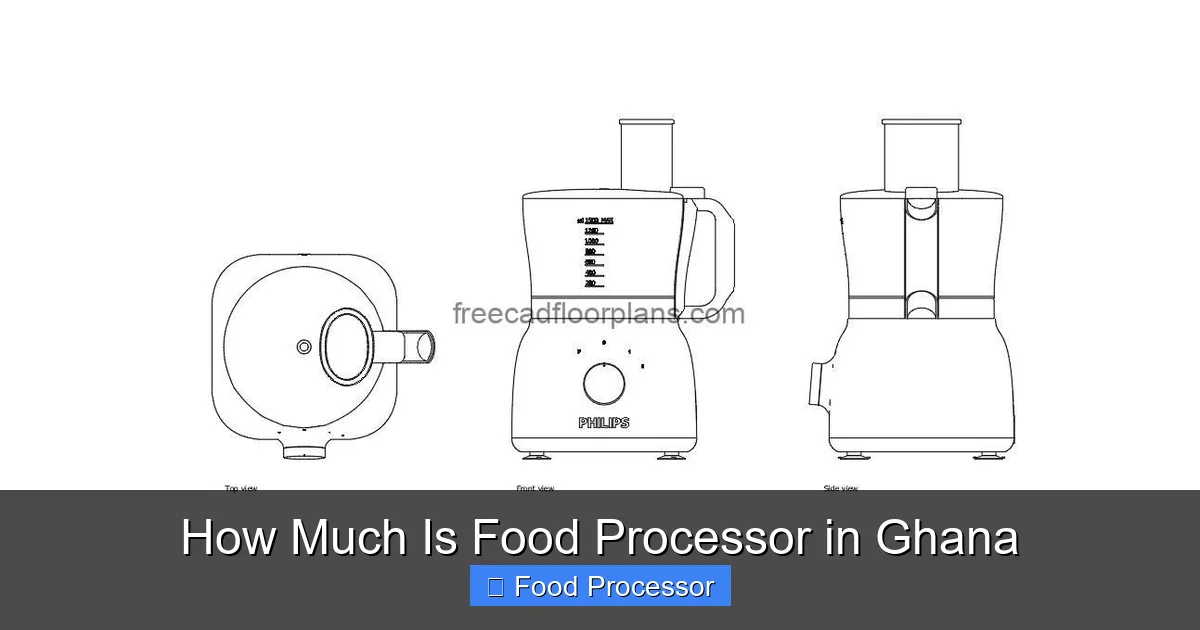
Visual guide about How Much Is Food Processor in Ghana
Image source: freecadfloorplans.com
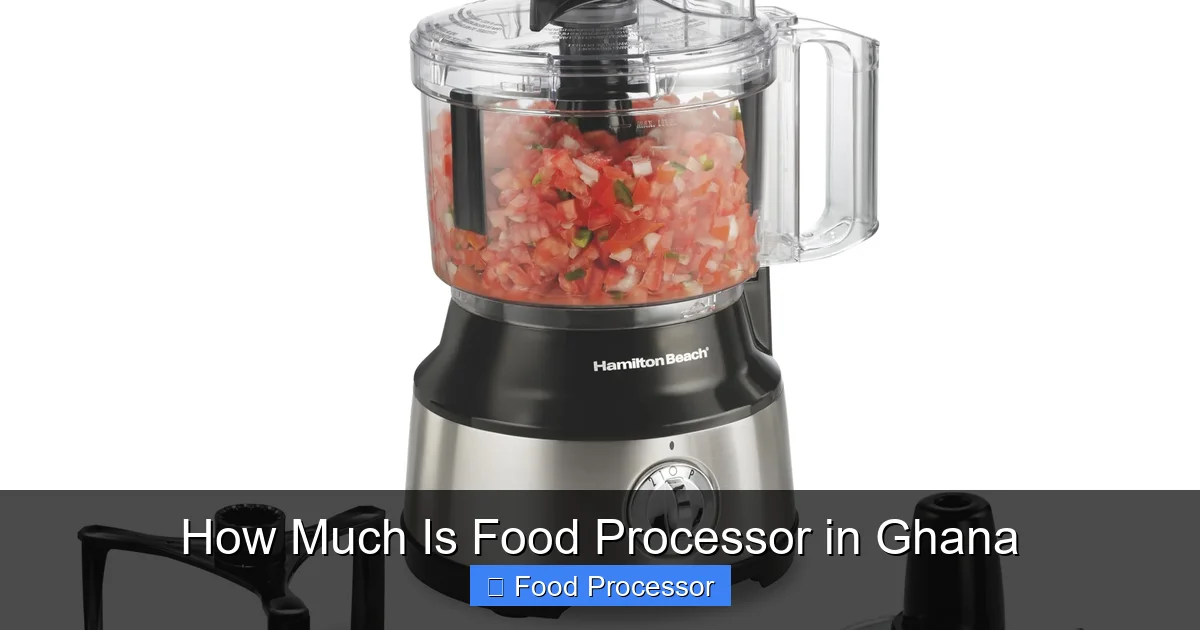
Visual guide about How Much Is Food Processor in Ghana
Image source: m.media-amazon.com
- What to Expect: Basic chopping blade, simple on/off or single-speed settings, plastic construction. They are perfect for chopping onions, garlic, making small batches of sauces, or blending baby food.
- Common Brands: Nasco, Sonik, Geepas, Binatone.
- Examples: Small choppers or compact food processors without many attachments.
Mid-Range Choices (GHS 800 – GHS 1800)
This is where most home cooks will find a good balance between price and performance. Mid-range food processors offer more power, larger capacities, and additional features.
- What to Expect: Capacities ranging from 7-12 cups, motor power between 600-1000W, often include multiple slicing/shredding discs, a dough blade, and sometimes a blender attachment. Better build quality with a mix of plastic and some metal components. Variable speed settings and a pulse function are common.
- Common Brands: Philips, Kenwood (entry-level models), higher-end Nasco/Sonik models.
- Examples: Philips Daily Collection Food Processor, Kenwood MultiPro Compact.
Premium/High-End Models (GHS 1800 – GHS 3500+)
For serious home chefs or those who use a food processor frequently for diverse tasks, premium models offer superior performance, durability, and a wider range of functionalities.
- What to Expect: Large capacities (12-16 cups), powerful motors (1000W+), robust construction (often with brushed metal finishes), a comprehensive set of attachments (various slicing/shredding discs, dough blade, whisk, mini-bowl for small tasks), precise speed controls, and advanced safety features. These are built to last and handle heavy-duty tasks with ease.
- Common Brands: Bosch, higher-end Kenwood, Cuisinart (if available).
- Examples: Bosch MultiTalent, Kenwood MultiPro Classic.
Commercial Food Processors (GHS 5000+)
These are professional-grade machines designed for commercial kitchens. They are built for continuous, heavy-duty use, offer very large capacities, and come with powerful motors and highly durable components. Their prices start from GHS 5000 and can go much higher depending on the brand and features.
Where to Buy a Food Processor in Ghana
Knowing the price ranges is great, but where do you actually go to make the purchase?
Online Platforms
Shopping online offers convenience and the ability to compare prices quickly.
- Jumia Ghana: A leading e-commerce platform in Ghana, Jumia offers a vast selection of food processors from various brands. You can filter by brand, price range, and features. They often have sales and delivery services across Ghana.
- Electromart Ghana: While primarily an electronics retailer, Electromart also has an online presence and often stocks kitchen appliances, including food processors.
- Other E-commerce Sites: Keep an eye out for other local online stores or even Facebook Marketplace and Instagram shops, though always exercise caution and verify sellers on these platforms.
Physical Stores
For those who prefer to see and touch the product before buying, physical stores are your best bet.
- Melcom: One of Ghana’s largest retail chains, Melcom stores across the country carry a good selection of home appliances.
- Electroland Ghana: Specializes in electronics and home appliances, offering various brands and models.
- Game Stores: Located in major shopping malls, Game also stocks a range of kitchen appliances.
- Local Electronics Shops: Smaller, independent electronics stores in markets like Circle (Accra) or Adum (Kumasi) might also carry food processors, sometimes at negotiable prices.
Tips for Getting the Best Deal on a Food Processor in Ghana
Getting a great deal is about more than just finding the lowest price; it’s about value.
H3. Research and Compare Prices
Don’t settle for the first price you see. Check multiple online stores and physical retailers. Prices for the exact same model can vary significantly between vendors.
H3. Look Out for Sales and Promotions
Ghanaian retailers often have sales events, especially during holidays (e.g., Christmas, Easter), Black Friday, or end-of-year clearances. These are excellent times to snag a food processor at a discounted price.
H3. Consider Your Needs Carefully
Avoid overspending on a food processor with features you’ll never use. If you only need it for basic chopping, a mini food processor might be all you need, saving you money. If you plan to make dough or shred large amounts of vegetables regularly, investing in a mid-range or premium model with appropriate attachments will offer better long-term value.
H3. Check for Bundled Offers
Sometimes, retailers offer bundles where you get a food processor along with another small kitchen appliance or accessories at a reduced combined price. This can be a smart way to get more for your money.
Maintenance Tips to Prolong Your Food Processor’s Life
Once you’ve bought your food processor, proper care is crucial to ensure it serves you for years, making your investment worthwhile.
H3. Clean Immediately After Use
Food particles can dry and become difficult to remove. Rinse the bowl, lid, and blades immediately after use. Always handle blades with extreme caution!
H3. Proper Washing Techniques
Most food processor parts (bowls, lids, blades) are top-rack dishwasher safe, but always check the manufacturer’s instructions. If handwashing, use warm, soapy water. Be mindful of the sharp blades. For hard-to-reach areas, a small brush can be helpful. Ever wondered if you can put food processor parts in the dishwasher? Generally, yes, but confirm with your specific model’s manual.
H3. Avoid Overloading
Don’t pack the work bowl to the brim. Overloading strains the motor and can lead to inefficient processing or even damage. Process in batches if necessary.
H3. Let the Motor Rest
For tougher tasks, if the food processor motor feels warm or sounds strained, give it a short break to prevent overheating. Most models have a thermal cut-off, but it’s best to avoid triggering it frequently.
H3. Store Properly
Keep your food processor and its attachments in a dry, safe place where they won’t get damaged. Store blades securely to prevent accidental cuts.
Troubleshooting Common Food Processor Issues
Even with the best care, you might encounter minor issues. Here are quick tips for common problems:
H3. Food Processor Not Turning On
First, check if it’s properly plugged into a functioning power outlet. Food processors also have safety mechanisms; ensure the bowl and lid are correctly assembled and locked into place. If not, the motor won’t engage.
H3. Blade Not Spinning
If the motor runs but the blade isn’t spinning, check if the blade is correctly seated on the motor shaft in the bowl. An overloaded bowl can also prevent the blade from turning freely. Sometimes, the drive shaft might be worn. If you’re wondering why is my food processor blade not spinning, ensuring proper assembly and checking for obstructions are good first steps.
H3. Overheating
If your food processor gets hot or smells like burning plastic, immediately turn it off and unplug it. This usually happens due to overloading or prolonged continuous use. Let it cool down completely before attempting to use it again, and try processing in smaller batches.
Conclusion
Purchasing a food processor in Ghana is an investment that can significantly enhance your kitchen efficiency and culinary repertoire. While prices vary widely from GHS 300 for basic models to GHS 3500+ for premium ones, understanding the factors like brand, capacity, motor power, and features will empower you to make an informed decision.
Whether you choose to shop online via Jumia or visit a physical store like Melcom, remember to compare prices, look for sales, and consider the long-term value offered by warranty and after-sales support. By following this guide, you’re well-equipped to find a food processor that not only fits your budget but also perfectly meets the demands of your Ghanaian kitchen. Happy cooking!
