

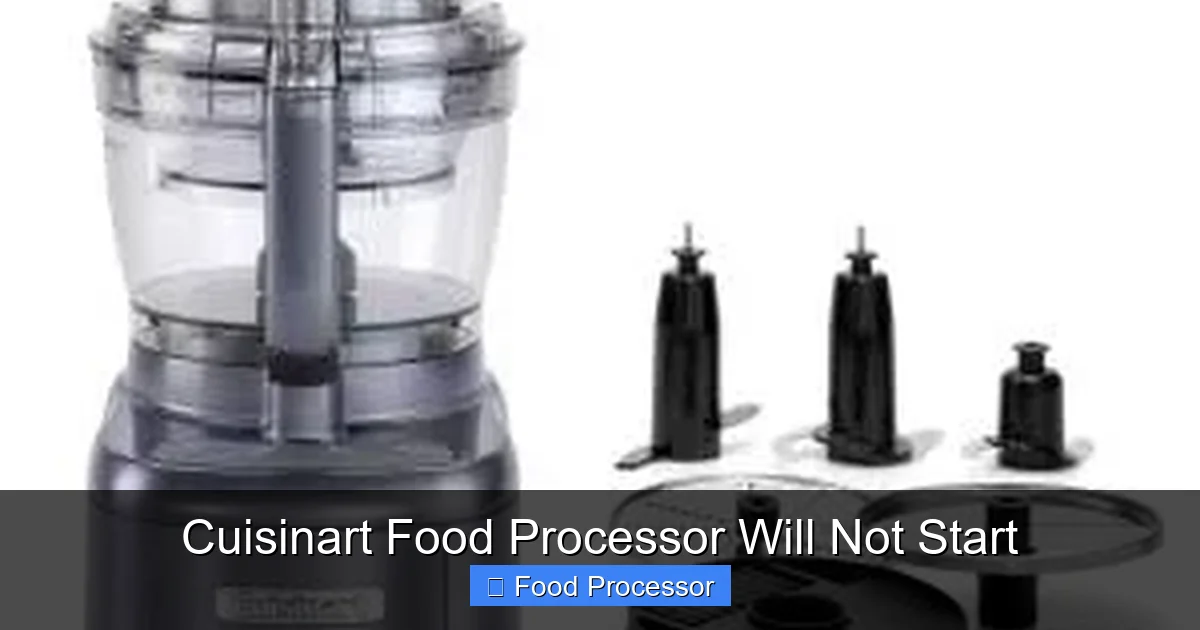
When your Cuisinart food processor will not start, the key is to approach the problem systematically. Always begin by ensuring proper assembly and power connection, as these are the most frequent culprits. From checking the outlet and cord to verifying the bowl and lid are securely locked, many issues can be resolved with simple adjustments before considering motor problems or professional repair.
Cuisinart Food Processor Will Not Start
There’s nothing quite as frustrating as being in the middle of preparing a delicious meal, only for your trusty Cuisinart food processor to suddenly refuse to cooperate. One moment it’s working perfectly, and the next, your Cuisinart food processor will not start. This common issue can bring your kitchen tasks to a grinding halt, leaving you wondering what went wrong.
But don’t worry! Most “Cuisinart food processor will not start” problems are not serious and can be resolved with a few simple checks and adjustments. You don’t need to be a repair expert to troubleshoot these common hiccups. This comprehensive guide will walk you through a series of easy-to-follow steps to diagnose and fix why your Cuisinart food processor won’t turn on. We’ll cover everything from power supply issues and assembly mistakes to motor overload protection. By the end of this article, you’ll be well-equipped to get your Cuisinart food processor back in action and complete your culinary masterpieces.
Key Takeaways
- Safety First: Always unplug your Cuisinart food processor before performing any checks or adjustments to prevent electric shock.
- Check Power Supply Thoroughly: Verify the power outlet, cord, and circuit breaker are all functioning correctly, as a lack of power is a common reason your food processor won’t start.
- Ensure Correct Assembly: Cuisinart food processors have safety interlocks. The bowl, lid, and pusher must be perfectly aligned and locked for the unit to power on. This is often the most overlooked issue.
- Understand Overload Protection: If your Cuisinart food processor stopped working mid-task, it might have overheated. Allow it to cool down and look for a reset button before attempting to restart.
- Listen and Look for Clues: Unusual noises, burning smells, or lack of any response can indicate different problems, from a simple loose connection to a more serious motor issue.
- Consult the Manual: Your specific Cuisinart model’s user manual provides crucial diagrams and troubleshooting tips tailored to its design and safety features.
- When to Seek Professional Help: If basic troubleshooting doesn’t work and you suspect internal electrical or motor problems, it’s best to contact Cuisinart customer service or a qualified technician.
Step 1: Prioritize Safety – Unplug Your Appliance
Before you begin any troubleshooting, the very first and most critical step is to ensure your safety. Electricity and kitchen appliances can be a dangerous combination if not handled with care.
Unplug from the Wall Outlet
Always start by unplugging your Cuisinart food processor from the wall outlet. This cuts off all power to the unit, eliminating any risk of electrical shock while you inspect its components. Even if the appliance isn’t turning on, there could still be live electrical current within its circuits. Safety first, always!
Step 2: Check the Power Supply and Electrical Connections
A surprisingly common reason a Cuisinart food processor will not start is simply a lack of power. It might seem obvious, but it’s often overlooked.
Verify the Wall Outlet
Is the outlet itself working? Plug another small appliance, like a phone charger or a lamp, into the same outlet where your Cuisinart food processor was plugged in. If the other appliance doesn’t work either, the problem is with your outlet, not your food processor. Try plugging your Cuisinart food processor into a different, known-working outlet.

Visual guide about Cuisinart Food Processor Will Not Start
Image source: missvickie.com
Inspect the Power Cord
Carefully examine the power cord of your Cuisinart food processor for any visible damage. Look for kinks, cuts, fraying, or exposed wires. A damaged cord can prevent power from reaching the motor and pose a safety hazard. If you find any damage, the cord will need to be replaced, and it’s best to contact Cuisinart customer service or a qualified technician for this. Do not attempt to use an appliance with a damaged cord.
Check Circuit Breakers or Fuses
If the outlet isn’t working, check your home’s circuit breaker box. Sometimes, high-power kitchen appliances can trip a breaker. Locate the breaker corresponding to your kitchen or the specific outlet and reset it if it’s in the “off” or middle position. For older homes with fuse boxes, check if a fuse has blown.
Step 3: Ensure Proper Assembly – The Most Common Culprit
Cuisinart food processors, like many modern kitchen appliances, are designed with safety interlocks. These mechanisms prevent the motor from starting unless all parts are correctly and securely assembled. If your Cuisinart food processor will not start, improper assembly is frequently the reason. This is a crucial step when trying to figure out how to fix a food processor that is not turning on.
Correct Bowl Placement
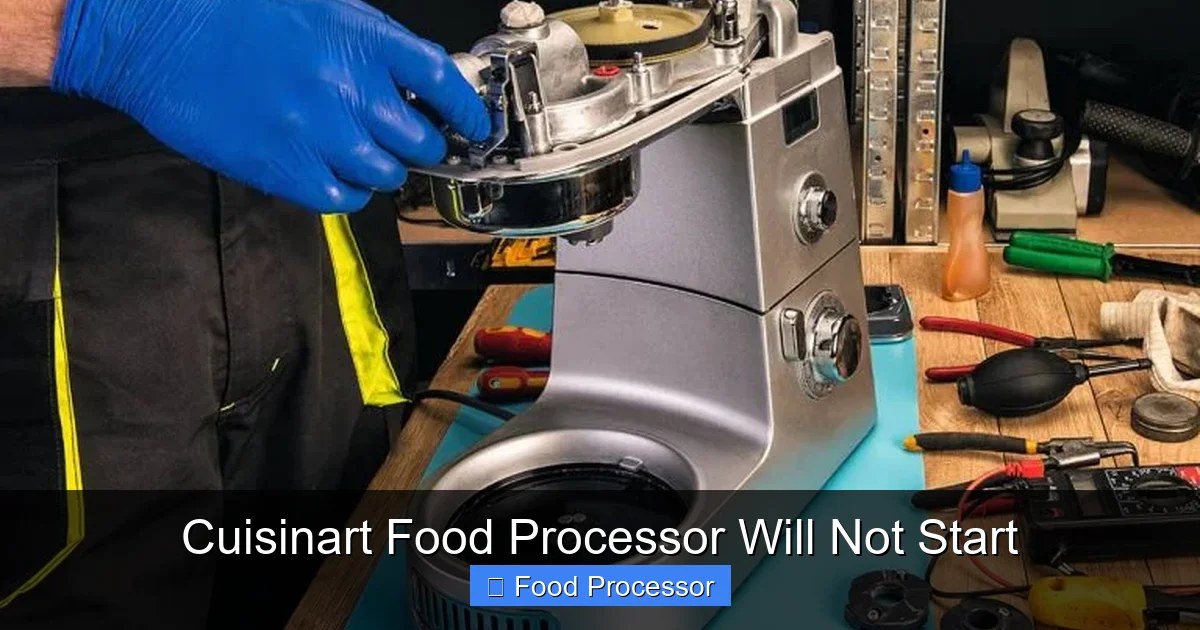
The work bowl must be seated correctly on the motor base. There’s usually a specific alignment, often indicated by arrows or a locking mechanism. The bowl needs to be twisted clockwise until it clicks securely into place. If it’s even slightly misaligned, the safety interlock will prevent the motor from engaging.
Visual guide about Cuisinart Food Processor Will Not Start
Image source: howdykitchen.com
- Tip: Remove the bowl completely, then re-seat it, ensuring it’s firm and locked.
Secure Lid Alignment and Locking
This is perhaps the most common reason for a Cuisinart food processor not starting. The lid also has a safety interlock. It must be placed on top of the work bowl and twisted clockwise until it locks securely. You should hear a distinct click, or feel it firmly lock into position. Many Cuisinart models have a safety tab on the lid that needs to engage with a switch on the handle of the work bowl or motor base.
- Important: Check for any food debris or sticky residue preventing the lid from fully seating or locking. Clean the rim of the bowl and the lid if necessary.
- Example: Some lids require you to push down slightly while twisting to ensure proper engagement.
Proper Pusher Insertion
While not always a primary safety interlock for starting the motor (it’s often more for operating features like pulsing), an improperly placed food pusher in the feed tube can sometimes interfere with the lid’s secure placement, especially in models where the pusher acts as part of the lid’s locking mechanism. Ensure it’s inserted correctly if your model requires it for initial operation.
Blade or Disc Attachment
While the blade itself isn’t typically part of the initial “start” interlock, ensuring it’s correctly placed on the center spindle can prevent issues later. If the blade is wobbly or not fully seated, it might cause resistance that prevents the motor from spinning freely, even if it tries to start. If you’re encountering issues beyond simply not starting, you might wonder how to assemble a food processor step by step to ensure all components are in their right place.
- Note: Always handle blades and discs with extreme caution, as they are very sharp.
Step 4: Check for Overload Protection and Motor Reset
Cuisinart food processors are powerful, but they also have built-in safety features to prevent motor damage from overheating or overworking. If your Cuisinart food processor will not start after heavy use or if it suddenly stopped mid-task, overload protection might be the reason.
Identify and Press the Reset Button
Many Cuisinart models, especially larger ones, feature a manual reset button on the motor base. This button is typically small and red, often located on the underside or back of the unit. If the motor overheats, this button will pop out. To reset it, simply press it firmly back in. After pressing the button, let the unit cool down for 10-15 minutes before attempting to restart it.
Allow for Cooling Down
Even without a visible reset button, if your Cuisinart food processor was working hard and suddenly stopped, or if you notice a faint burning smell, the motor has likely overheated. Unplug it and let it rest for at least 30 minutes, or even an hour. The internal thermal cutoff switch will automatically reset once the motor cools sufficiently. Attempting to restart it too soon can prevent it from turning on or even cause further damage.
- Tip: Avoid overloading your food processor with too much food or very hard ingredients at once. Process in smaller batches to prevent strain on the motor.
Step 5: Listen for Clues – What Does (or Doesn’t) It Do?
The sounds (or lack thereof) your Cuisinart food processor makes can provide valuable diagnostic information.
No Sound, No Lights
If there’s absolutely no response—no motor hum, no lights, no nothing—it almost certainly points to a power supply issue (Steps 1 & 2) or a complete failure of the main safety interlock system (Step 3). Revisit those steps with extra scrutiny.
Humming Sound, But No Blade Movement
If you hear a low humming sound but the blade isn’t spinning, this could indicate a few things:
- Overloaded contents: The motor is trying to turn, but the contents are too dense or packed too tightly, preventing the blade from moving. Remove some food and try again.
- Blade obstruction: Something might be stuck under the blade, preventing its rotation. Unplug and carefully inspect the blade area.
- Motor capacitor issue: Less common, but a failing motor capacitor can cause the motor to hum without fully engaging. This usually requires professional service.
- Stripped drive shaft/gears: The connection between the motor and the blade might be damaged. Again, this points to internal mechanical failure.
Intermittent Starting or Stopping
If your Cuisinart food processor starts and then quickly stops, or only runs for a second, it could be a loose connection within the assembly. Re-check the bowl and lid placement very carefully, making sure they are firmly locked. Sometimes, vibrations can cause a less-than-perfect lock to disengage. It could also point to an intermittent electrical fault, which is harder to diagnose yourself.
Step 6: Inspect for Obvious Damage or Obstructions
Sometimes, the problem is simpler than an electrical fault.
Look for Physical Damage
Carefully inspect the motor base, the work bowl, and the lid for any cracks, chips, or broken plastic pieces. Damage to the housing or safety tabs can prevent the interlocks from engaging properly. If a safety tab on the lid is broken, the unit will not start.
Check for Debris
Food debris, especially sticky or hard bits, can get lodged in the locking mechanisms of the bowl or lid, preventing them from seating correctly. Thoroughly clean all contact points between the bowl and the base, and the lid and the bowl. Use a small brush or a toothpick to dislodge any stubborn pieces.
Step 7: Advanced Troubleshooting (When to Seek Help)
If you’ve gone through all the previous steps and your Cuisinart food processor will not start, the issue might be more complex. At this point, it’s generally recommended to consult a professional, especially if you’re not comfortable with electrical repairs. You may want to consider why is Cuisinart food processor not working if you haven’t already.
Internal Wiring or Switch Problems
Inside the motor base, there are wires, switches, and the motor itself. A faulty power switch, a loose internal wire connection, or a failing motor can prevent the appliance from starting. These issues require opening the unit, which can void warranties and carries a risk of electric shock if done incorrectly.
Motor Failure
While Cuisinart motors are generally robust, they can fail over time, especially with heavy use. If you hear nothing at all, and have ruled out all external factors, a motor failure is a possibility. This often manifests as a complete lack of response, or a persistent humming without movement that doesn’t resolve with cooling. If your food processor stopped working how to fix it might involve more than just a quick check.
Contact Cuisinart Support
If your unit is still under warranty, contact Cuisinart customer service immediately. They can provide specific troubleshooting advice for your model or arrange for repair or replacement. Even if it’s out of warranty, they might offer repair services or guidance on authorized service centers.
Consider Replacement
If the cost of repair is high, or if your Cuisinart food processor is very old, it might be more economical to invest in a new one. Consider factors like the age of the appliance, the estimated repair cost, and the cost of a new model when making this decision.
Conclusion
Having your Cuisinart food processor refuse to start can be a major inconvenience, but with a systematic approach, you can often pinpoint and resolve the issue yourself. Remember the core principles: always start with safety by unplugging the unit, then meticulously check the power supply, and most importantly, ensure every component is perfectly assembled and locked into place. Overload protection is another common, easily fixable cause.
By following the steps in this guide, you’ve empowered yourself to troubleshoot the most common reasons why your Cuisinart food processor will not start. Hopefully, your kitchen companion is now back in full working order, ready to assist you in all your culinary adventures! If, after all these checks, it still remains unresponsive, you’ll have a clear understanding of the potential deeper issues and when it’s time to call in the experts or consider a new addition to your kitchen arsenal. Happy cooking!
