

Understanding how food processing affects nutritional value is key to a balanced diet. While some processes can cause nutrient loss, others like fortification and freezing help preserve or enhance food’s goodness. By learning about different processing methods and how to interpret food labels, you can make smarter choices and ensure your diet remains rich in essential nutrients, balancing convenience with health.
How Does Food Processing Affect Nutritional Value
Have you ever stood in the grocery aisle, looking at two similar products, and wondered which one is “better” for you? Or perhaps you’ve heard that processed foods are inherently unhealthy. It’s a common dilemma, and it often boils down to one critical question: how does food processing affect nutritional value?
Understanding this isn’t just about avoiding “bad” foods; it’s about making informed choices that support your health and well-being. Food processing is a vast and varied topic, encompassing everything from simply washing and cutting produce to creating complex ready-to-eat meals. Each method, whether it’s cooking, canning, freezing, or refining, has a unique impact on the nutrients within our food.
In this comprehensive guide, we’re going to break down the world of food processing. You’ll learn what food processing actually entails, how different methods affect macronutrients and micronutrients, and how to spot the differences between minimally processed and highly processed foods. We’ll also dive into the role of additives, fortification, and, most importantly, provide practical tips to help you navigate your food choices with confidence. By the end, you’ll have a much clearer picture of how processing influences your food’s goodness and how you can make choices that truly nourish your body.
Key Takeaways
- Processing Isn’t Always Bad: Not all food processing negatively impacts nutritional value. Some methods, like freezing or pasteurization, can extend shelf life and food safety without significant nutrient loss.
- Nutrient Loss Varies by Method: Heating, milling, and refining can reduce water-soluble vitamins (like B and C) and fiber, while fat-soluble vitamins (A, D, E, K) are generally more stable.
- Fortification and Enrichment Help: Many processed foods are fortified (adding new nutrients) or enriched (replacing lost nutrients) to boost their nutritional value, such as adding iodine to salt or vitamins to cereals.
- Additives and Preservatives: While essential for safety and shelf life, some additives can be a concern for certain individuals. Always check labels to understand what’s in your food.
- Reading Labels is Crucial: Look beyond marketing claims. Check the ingredients list, nutrition facts panel, and terms like “whole grain” or “no added sugar” to gauge a food’s true nutritional profile.
- Prioritize Minimally Processed Foods: Incorporating more whole, unprocessed foods like fresh fruits, vegetables, and lean proteins into your diet is the best way to ensure optimal nutrient intake.
- Balance is Key: It’s about finding a balance. Enjoy the convenience of some processed foods while being mindful of their nutritional impact and complementing them with nutrient-dense, less-processed options.
Step 1: Understanding What Food Processing Is
Before we dive into the nutritional impacts, let’s clarify what “food processing” means. At its core, food processing involves any intentional change to a food item from its natural state. This can be as simple as washing vegetables or as complex as creating a frozen dinner. The main goals are typically to improve safety, extend shelf life, enhance flavor, or increase convenience. Many people wonder, why is food processing important? It plays a crucial role in modern food systems, making food accessible and safe for billions.
What Are the Different Levels of Food Processing?
Not all processing is created equal. Food scientists often categorize processing into different levels, which helps us understand their varying effects on nutritional value.
*
Minimally Processed Foods
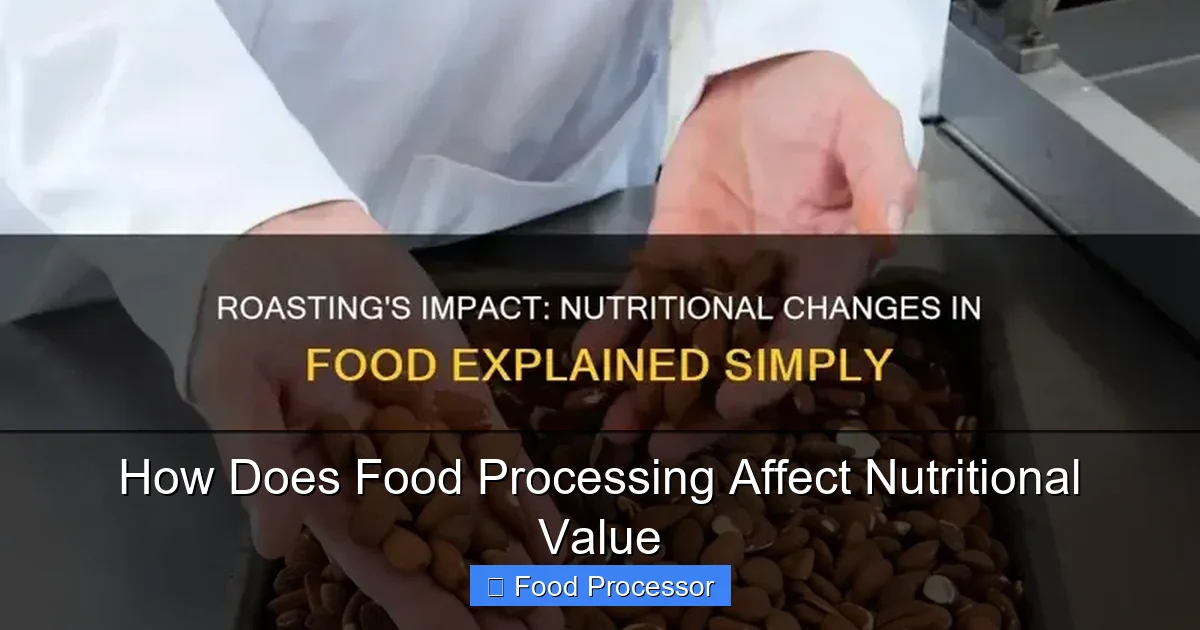
These foods are close to their natural state, with minimal changes. Think washed and pre-cut vegetables, roasted nuts, or dried fruits. The processing methods used here aim to maintain freshness and make them easier to prepare or consume. Examples include pre-cut salad mixes, bagged spinach, or shelled eggs. The nutritional value of these foods is largely preserved. If you’re wondering how do you know if a food has minimal processing, generally it means few ingredients, often just the food itself.
*
Basic Processed Foods (Processed for Preservation)
These foods undergo processing to preserve them or make them edible. This includes methods like pasteurization (milk), fermentation (yogurt, bread), freezing (frozen vegetables), and canning (canned beans, tomatoes). While these processes might cause some minor nutrient changes, they are essential for safety and extend shelf life, making nutrient-rich foods available year-round.
*
Moderately Processed Foods (Processed for Convenience or Palatability)
These foods often combine several ingredients and undergo more significant changes. Examples include packaged bread, cheese, deli meats, or salad dressings. They typically have added salt, sugar, oils, or preservatives to improve taste, texture, or shelf stability. The nutritional value can start to vary more significantly here, depending on the specific ingredients and methods used.
*
Highly Processed Foods (Ultra-Processed Foods)
These are formulations of ingredients, mostly industrial, that are processed through several stages. They often contain high amounts of added sugar, unhealthy fats, salt, artificial flavors, colors, and emulsifiers. Think sugary cereals, sodas, instant noodles, frozen pizzas, or packaged snacks. These foods are designed to be convenient, highly palatable, and inexpensive. They are often energy-dense but nutrient-poor, meaning they provide a lot of calories without many essential vitamins, minerals, or fiber.
Step 2: How Food Processing Affects Macronutrients
Macronutrients – carbohydrates, proteins, and fats – are the main components of our food that provide energy and building blocks for our bodies. Food processing can alter these in various ways.
*
Carbohydrates
The biggest impact on carbohydrates comes from refining grains. When whole grains (like wheat, rice, or oats) are milled to produce refined grains (like white flour or white rice), the bran and germ are removed. These parts are rich in fiber, B vitamins, and minerals. As a result, refined carbohydrates have less fiber and fewer micronutrients than their whole-grain counterparts. This can lead to faster digestion and blood sugar spikes. However, some processed carbohydrate foods, like fermented sourdough bread, can improve digestibility due to the breakdown of starches.
Visual guide about How Does Food Processing Affect Nutritional Value
Image source: shungrill.com
*
Proteins
Processing can affect protein structure. For example, heating meat (cooking, canning) can denature proteins, meaning their natural shape changes. While this might sound negative, denaturation actually aids digestion, making proteins easier for our bodies to break down and absorb. However, excessive heat can sometimes reduce the bioavailability of certain amino acids. Most common processing methods for protein, like pasteurizing milk or cooking poultry, generally don’t significantly degrade its overall nutritional value.
*
Fats
Fats are perhaps the most sensitive macronutrient to certain types of processing. High heat, light, and air exposure during processing can cause fats to oxidize, leading to rancidity and potentially harmful compounds. Hydrogenation, a process used to make liquid oils solid (e.g., in margarine), can create trans fats, which are known to be detrimental to heart health. Many manufacturers have reduced trans fats in recent years due to health concerns. Modern food purchasing, processing, and preservation techniques aim to minimize these negative impacts.
Step 3: How Food Processing Affects Micronutrients
Micronutrients – vitamins and minerals – are vital for countless bodily functions, even though we need them in smaller amounts. They are often more vulnerable to processing.
*
Vitamins
Vitamins are particularly sensitive to heat, light, air, and water.
- Water-soluble vitamins (B vitamins and Vitamin C): These are the most easily lost during processing. High temperatures, prolonged cooking, or leaching into water (e.g., boiling vegetables) can significantly reduce their content. For instance, canning vegetables often results in some loss of Vitamin C and B vitamins, though modern canning techniques are designed to minimize this.
- Fat-soluble vitamins (Vitamins A, D, E, K): These are generally more stable than water-soluble vitamins. While some loss can occur with extreme heat or prolonged storage, they tend to withstand processing better.
Visual guide about How Does Food Processing Affect Nutritional Value
Image source: icmagazine.org
*
Minerals
Minerals are generally more stable to heat than vitamins. However, they can be lost through leaching into water during washing or cooking. For example, soaking beans or blanching vegetables can lead to some mineral loss. On the flip side, some processing methods, like fermentation, can actually increase the bioavailability of certain minerals by breaking down compounds (like phytates) that inhibit their absorption.
Step 4: Specific Processing Methods and Their Nutritional Effects
Let’s look at common processing methods and their unique impacts.
*
Heating Methods (Cooking, Pasteurization, Canning, Blanching)
Heating is one of the most common forms of food processing. It destroys harmful bacteria, making food safe, and can also improve digestibility and flavor. Think about the rich flavors developed through the Maillard reaction advantages in food processing, which is a browning reaction during heating.
- Cooking: Can lead to loss of water-soluble vitamins, especially with boiling. Steaming or stir-frying can preserve more nutrients.
- Pasteurization: Primarily used for milk and juices, it involves heating to a specific temperature for a short time to kill pathogens. It causes minimal loss of vitamins and minerals.
- Canning: Involves sealing food in an airtight container and heating it to sterilize. While initial heat treatment can cause some nutrient loss (especially water-soluble vitamins), the sealed environment prevents further degradation over time, locking in nutrients.
- Blanching: Briefly immersing food in hot water or steam, often used before freezing. It helps preserve color, texture, and stops enzyme activity, but can cause some water-soluble vitamin loss.
*
Freezing
Freezing is an excellent method for preserving nutritional value. Foods are often frozen shortly after harvest, locking in nutrients. While freezing itself causes minimal nutrient degradation, blanching before freezing (especially for vegetables) can result in some water-soluble vitamin loss. However, frozen fruits and vegetables often retain more nutrients than their “fresh” counterparts that have traveled long distances and sat on shelves for days.
*
Drying
Drying removes water, which inhibits microbial growth and extends shelf life. This concentrates nutrients like fiber, minerals, and some vitamins. However, heat-drying methods can reduce heat-sensitive vitamins (like Vitamin C). Freeze-drying is a gentler method that generally preserves more nutrients.
*
Milling and Refining
As discussed with carbohydrates, milling grains removes the nutrient-rich bran and germ. This significantly reduces fiber, B vitamins, and iron. To counteract this, many refined grain products are enriched (adding back some of the lost nutrients) and fortified (adding nutrients not originally present or in larger amounts, like folic acid).
*
Fortification and Enrichment
These are intentional processes to add nutrients to food.
- Enrichment: Replaces nutrients lost during processing (e.g., adding B vitamins and iron back into white flour).
- Fortification: Adds nutrients that were not originally present or adds them in much larger quantities than naturally found (e.g., Vitamin D in milk, iodine in salt, folic acid in bread). These processes are crucial for public health, helping to prevent nutrient deficiencies.
*
Fermentation
Fermentation, used in foods like yogurt, sauerkraut, and kimchi, involves microorganisms breaking down components of food. This process can enhance nutritional value by:
- Producing B vitamins.
- Improving digestibility of certain nutrients.
- Creating beneficial probiotics.
- Reducing antinutrients (compounds that inhibit nutrient absorption).
Step 5: The Role of Additives and Preservatives
Additives and preservatives are substances added to food during processing to maintain or improve safety, freshness, taste, texture, or appearance.
*
Understanding Their Purpose
Preservatives, like nitrates in cured meats or sulfites in dried fruit, prevent spoilage from bacteria, molds, or yeasts. Antioxidants prevent fats from going rancid. Other additives improve texture (emulsifiers), color (dyes), or flavor (flavor enhancers). Many additives are generally recognized as safe (GRAS) by regulatory bodies.
*
Potential Nutritional Concerns
While most approved additives are safe in typical consumption amounts, some individuals may be sensitive to certain ones (e.g., sulfites, artificial colors). The main nutritional concern with foods containing many additives is often that they tend to be highly processed foods, which are also high in added sugars, unhealthy fats, and salt, and low in fiber and essential micronutrients. It’s often the *overall nutritional profile* of the food, rather than the additive itself, that poses a greater health concern.
Step 6: Balancing Convenience with Nutritional Value
In our busy lives, convenience often plays a huge role in our food choices. The key is to find a balance between the convenience of processed foods and maintaining high nutritional value.
*
Reading Labels and Making Informed Choices
This is your most powerful tool!
- Ingredients List: Ingredients are listed in descending order by weight. Look for whole foods listed at the top. The shorter the ingredient list, often the less processed the food.
- Nutrition Facts Panel: Pay attention to serving sizes, calories, fat (especially saturated and trans fats), sodium, and added sugars. Also, look for fiber, vitamins, and minerals.
- Look for Claims: “Whole grain,” “no added sugar,” “low sodium,” “rich in fiber,” “fortified with vitamins” can indicate a more nutritious processed option.
- Compare Products: Don’t just grab the first one. Compare different brands of similar products (e.g., different types of bread or yogurt) to find the one with the best nutritional profile.
*
Practical Tips for Healthier Processed Food Choices
- Prioritize Whole Grains: Choose 100% whole wheat bread, brown rice, or whole-grain pasta over refined versions.
- Opt for Plain Over Flavored: Choose plain yogurt and add your own fruit, or plain oatmeal instead of sweetened packets.
- Smart Snack Choices: Instead of chips or candy, go for nuts, seeds, fruit, or vegetable sticks.
- Frozen is Often Fine: Frozen fruits and vegetables are excellent nutritious options, often retaining more nutrients than “fresh” produce that has traveled far.
- Reduce Added Sugar: Be mindful of hidden sugars in sauces, dressings, and drinks.
- Limit Sodium: Many processed foods are high in sodium. Look for “low sodium” versions.
Step 7: Making Smarter Choices: Practical Tips
Now that you understand how food processing affects nutritional value, here are actionable steps to make healthier choices in your daily life.
*
Cook More at Home
Preparing meals from scratch using fresh, whole ingredients gives you complete control over what goes into your food. This minimizes exposure to unhealthy additives, excessive sodium, and added sugars often found in convenience foods. Even using a food processor to chop vegetables can speed up meal prep, making home cooking more feasible.
*
Embrace Minimally Processed Foods
Fill your cart with fresh fruits, vegetables, lean meats, fish, eggs, legumes, and whole grains. These foods provide the most nutrient bang for your buck and are naturally rich in fiber, vitamins, and minerals. They form the foundation of a healthy diet.
*
Be Selective with Processed Options
Not all processed foods are bad. Items like plain yogurt, whole-grain pasta, canned beans (rinsed to reduce sodium), frozen berries, or roasted nuts can be healthy and convenient. The key is to distinguish between these and ultra-processed foods.
*
Hydrate Smartly
Choose water, unsweetened tea, or coffee over sugary sodas, fruit juices (which can be high in sugar), or other sweetened beverages. Liquid calories from processed drinks often contribute to excess sugar intake without providing much nutritional value.
*
Plan Your Meals and Snacks
Having a plan helps you avoid last-minute, less healthy choices. Pack your own lunches and snacks to ensure you’re consuming nutritious options throughout the day. This reduces reliance on vending machines or fast food.
*
Educate Yourself Continuously
The food landscape is always changing. Stay informed about new research, food labels, and ingredients. The more you know, the better equipped you’ll be to make choices that support your health.
Conclusion
Navigating the world of food processing and its impact on nutritional value can seem daunting, but it doesn’t have to be. We’ve learned that food processing isn’t a single, monolithic entity; it ranges from simple actions like washing to complex industrial transformations. While some processing methods can lead to nutrient loss, others are essential for food safety, preservation, and even enhancing nutrient availability through processes like fermentation or fortification.
The most important takeaway is that understanding empowers you to make better choices. By being aware of the different levels of processing, paying attention to food labels, and prioritizing whole, minimally processed foods, you can balance the convenience of modern food options with your desire for optimal nutrition. Remember, it’s about making informed, balanced decisions rather than demonizing all processed foods. Your diet is a journey, not a destination, and with this knowledge, you are well-equipped to make choices that truly nourish your body and support your health.
