

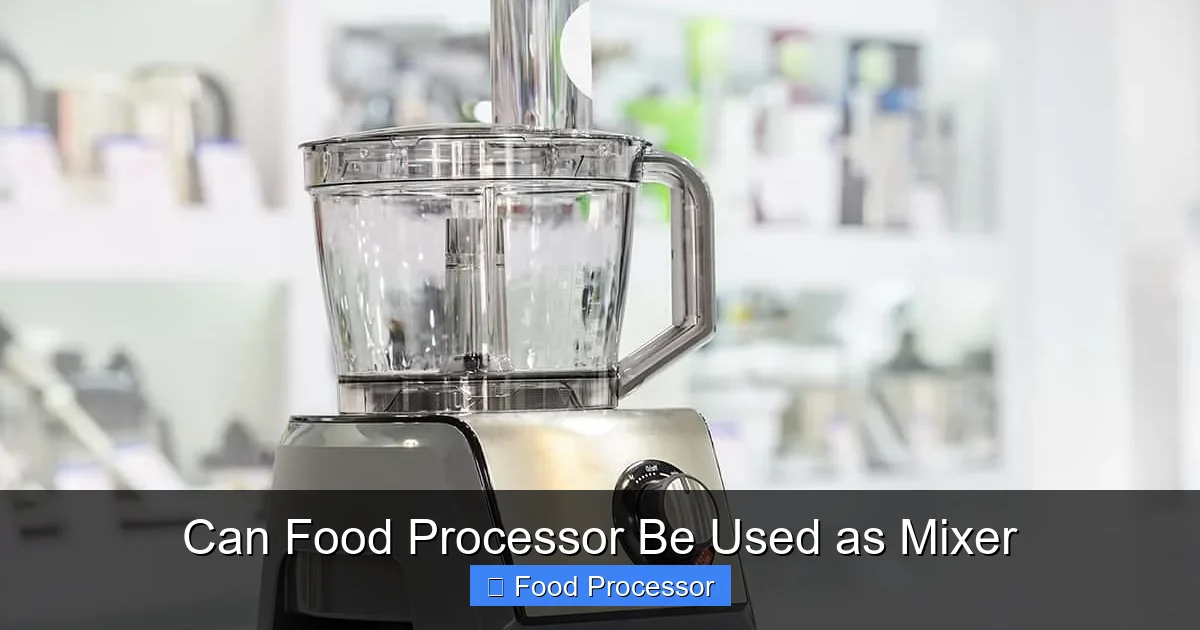
Your food processor can indeed be used as a mixer for many tasks, especially those requiring quick incorporation of ingredients or crumbly textures, like pie crusts and some cookie doughs. While it excels at chopping and blending, its pulsing action makes it a viable alternative for lighter mixing jobs, freeing you from needing a separate stand or hand mixer. However, it’s crucial to understand its limitations, particularly for tasks needing significant aeration or prolonged kneading, where traditional mixers truly shine.
Can Food Processor Be Used as Mixer
Ever found yourself needing to mix ingredients, only to realize you don’t have a stand mixer or a hand mixer handy? Or perhaps you’re simply looking to streamline your kitchen gadgets. The question often pops up: Can a food processor be used as a mixer? The short answer is yes, absolutely! For many tasks, your trusty food processor can effectively step up as a mixer.
However, like any good kitchen hack, there are nuances, advantages, and limitations to consider. This comprehensive guide will walk you through everything you need to know. We’ll explore when your food processor is a fantastic mixer substitute and when it’s best to stick to traditional methods. You’ll learn the techniques, tips, and troubleshooting advice to confidently use your food processor for mixing batters, doughs, and more. By the end, you’ll be a pro at leveraging this versatile appliance for a wider range of culinary creations.
Key Takeaways
- Versatile Alternative: A food processor can effectively act as a mixer for many common kitchen tasks, especially those involving blending dry ingredients, incorporating fats, or creating doughs that don’t require extensive kneading or aeration.
- Best for Quick Mixing: It excels at making pie crusts, crumb toppings, certain cookie doughs, and quick bread batters (like muffins or scones) due to its powerful, quick pulsing action that prevents overmixing.
- Not for Aeration or Heavy Kneading: Avoid using your food processor for tasks that demand significant air incorporation (like whipping cream or meringues) or for heavy, prolonged kneading of yeasted doughs, as it can overwork the gluten and damage the machine.
- Use the S-Blade (or Dough Blade): For most mixing tasks, the standard S-blade is your best friend. Some models also come with a plastic dough blade specifically designed for lighter doughs.
- Master the Pulse Function: The pulse setting is crucial for controlled mixing in a food processor. It allows you to combine ingredients without overprocessing, which is vital for achieving the right texture for batters and doughs.
- Mind the Batch Size: Food processors have a maximum capacity. Avoid overfilling the bowl when mixing, as this can lead to uneven results and strain the motor. Work in batches if necessary.
- Understand Limitations: While a capable substitute, a food processor is not a direct replacement for a dedicated stand or hand mixer. Knowing when to use it and when to opt for a traditional mixer will yield the best results.
Understanding the Difference: Food Processor vs. Mixer
Before diving into the “how-to,” let’s quickly clarify what exactly differentiates a food processor from a traditional mixer. A food processor is primarily designed for chopping, slicing, shredding, and pureeing. It uses powerful, sharp blades that spin at high speeds to break down ingredients quickly. Its strength lies in its ability to process solids efficiently.
A mixer, whether a stand mixer or a hand mixer, is designed specifically for combining ingredients, beating, whisking, and kneading. It typically uses various attachments like whisks, beaters, and dough hooks to incorporate air, cream fats, and develop gluten in doughs. A mixer’s primary goal is often aeration and thorough, gentle blending. When using a food processor as a mixer, you adapt its chopping and blending power for mixing tasks. It’s not always a perfect replacement, especially for delicate aeration or heavy-duty kneading.
When Your Food Processor Can Be Your Mixer
Your food processor truly shines as a mixer for specific types of recipes. It’s particularly good at tasks that benefit from quick, consistent blending without the need for significant air incorporation. You might even find it superior for certain jobs!
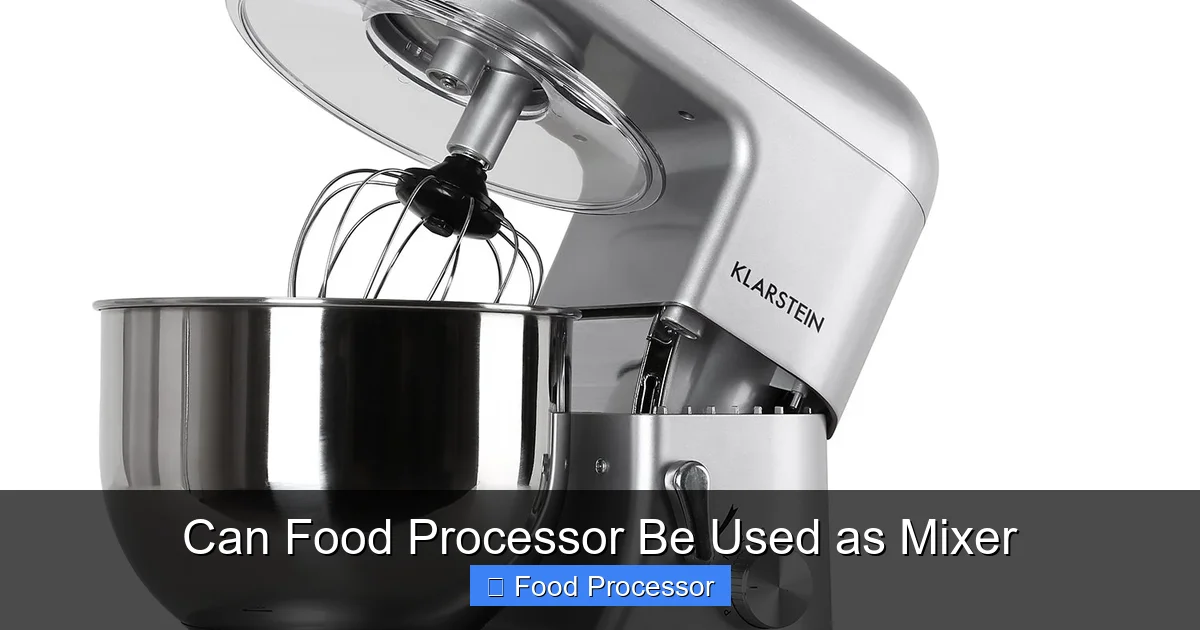
Visual guide about Can Food Processor Be Used as Mixer
Image source: images-na.ssl-images-amazon.com
Mixing Doughs and Batters
For many doughs and batters, the food processor is an excellent choice. While many people wonder if a food processor can truly replace a mixer for every task, it handles many with ease.
- Pie Crusts and Pastry Doughs: This is arguably where a food processor excels the most. Its sharp S-blade quickly cuts cold butter or shortening into flour, creating a perfectly crumbly mixture without overworking the dough. The speed helps keep the fat cold, which is key for flaky crusts.
- Quick Breads: Recipes for muffins, scones, biscuits, and some quick loaves often require simply combining wet and dry ingredients until just mixed. The pulse function of your food processor is ideal for this, preventing overmixing which can lead to tough baked goods.
- Cookie Doughs: For recipes like shortbread, some drop cookies, or bar cookies that don’t rely heavily on creaming butter and sugar for aeration, your food processor can handle the mixing. It quickly brings ingredients together into a cohesive dough.
- Crumb Toppings: Making streusel or other crumbly toppings for pies, crisps, or muffins is a breeze. The S-blade quickly processes butter, flour, sugar, and spices into the perfect texture.
Combining Ingredients for Dips, Spreads, and Sauces
Beyond baking, your food processor is an amazing mixer for a variety of other kitchen creations:
- Hummus and Bean Dips: It effortlessly blends chickpeas, tahini, lemon juice, and other ingredients into a smooth, creamy dip.
- Pesto and Sauces: From classic basil pesto to various creamy sauces, the food processor quickly incorporates herbs, nuts, cheese, and liquids.
- Salad Dressings and Mayonnaise: Emulsifying oil and vinegar or making homemade mayo is straightforward with the food processor’s continuous motor and feed tube for gradually adding liquids.
- Compound Butters: Mixing herbs, garlic, or spices into softened butter for compound butters is quick and easy.
Blending Dry Ingredients
Sometimes, all you need is to combine dry ingredients evenly. A food processor can do this with a few quick pulses, especially useful for spice blends, flour mixtures, or even making your own powdered sugar from granulated sugar.
When to Stick to a Traditional Mixer (or Hand Mixing)
While versatile, your food processor has its limits as a mixer. For these tasks, you’ll want to reach for a dedicated stand mixer, a hand mixer, or good old-fashioned elbow grease:
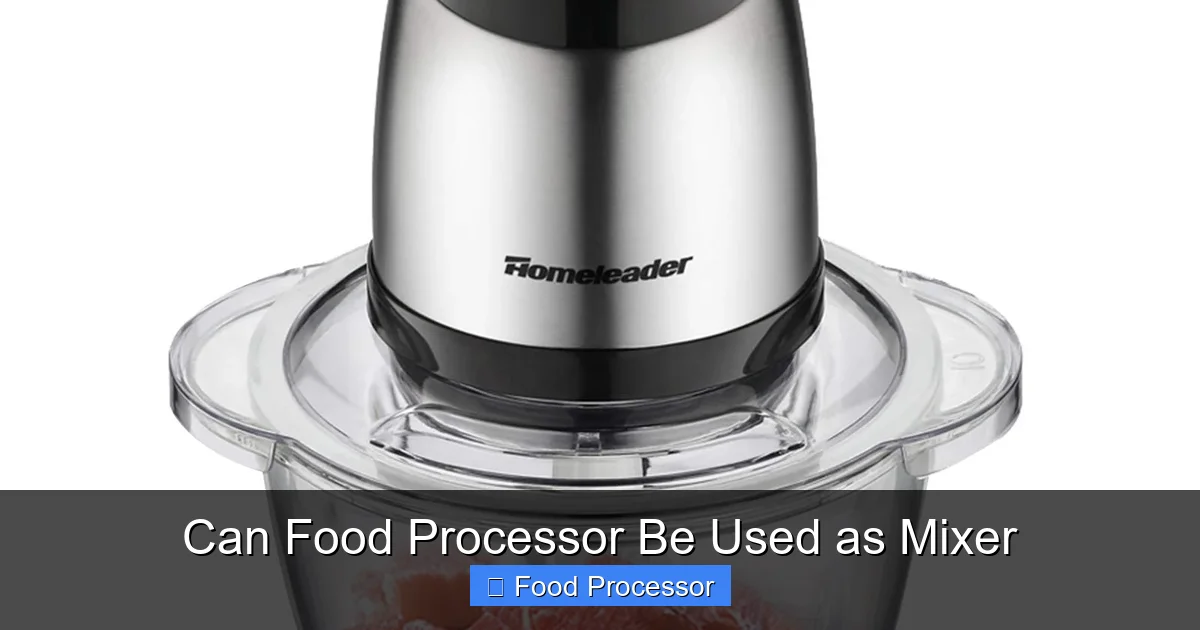
Visual guide about Can Food Processor Be Used as Mixer
Image source: m.media-amazon.com
- Tasks Requiring Significant Aeration: Think whipped cream, meringues, fluffy cakes, or egg whites. Food processors don’t incorporate air into ingredients as effectively as whisks or traditional beater attachments. Their primary action is to chop and blend, not to aerate.
- Heavy-Duty Yeasted Bread Dough: While some food processors come with a plastic dough blade and can handle lighter yeasted doughs for a short period, they are generally not designed for the prolonged, intensive kneading required to develop strong gluten in traditional bread doughs. Overworking the motor can lead to overheating, and the dough might become tough. If you often bake bread, you might often wonder if a food processor can stand in for a robust stand mixer for these tasks, but usually, it’s best to use a dedicated stand mixer with a dough hook.
- Delicate Batters: Recipes that call for gently folding in ingredients (like berries into a cake batter, or egg whites into a soufflé) are not suited for the aggressive action of a food processor.
Setting Up Your Food Processor for Mixing Tasks
Getting started is simple, but choosing the right setup is key for optimal results when using your food processor as a mixer.
Choose the Right Blade
For most mixing tasks, the standard S-blade (or utility blade) is what you’ll use. Its sharp, curved blades are excellent for cutting fats into flour, combining ingredients, and pureeing. Some food processors also come with a plastic dough blade. If you have one, this can be great for mixing lighter doughs like pie crusts or quick breads, as it’s designed to push and fold rather than chop, minimizing gluten development.
Proper Assembly
Ensure your food processor is correctly assembled. The bowl should be securely locked onto the base, the blade firmly placed on the spindle, and the lid locked into position. For safety, the machine won’t operate if these components aren’t correctly aligned. If you need a refresher, familiarize yourself with how to assemble your food processor correctly before starting.
Ingredient Prep
Just like with a traditional mixer, proper ingredient preparation is vital. Measure everything accurately and have it ready before you begin. For recipes involving fats like butter, ensure they are at the correct temperature (cold for pastry, softened for some cookie doughs). Cutting butter into small cubes helps it incorporate more easily.
Step-by-Step Guide: Using Your Food Processor as a Mixer
Let’s walk through the general process of using your food processor as a mixer.
Step 1: Prepare Your Ingredients
Measure Accurately
Gather and measure all your ingredients according to your recipe. This prevents you from rushing or stopping midway through mixing.
Chill Fats (if applicable)
If making pie crusts or biscuits, ensure your butter or shortening is very cold and cut into small, uniform pieces. This helps create flaky textures.
Step 2: Assemble Your Food Processor
Choose the Correct Blade
Insert the standard S-blade (or dough blade if you have one and the recipe calls for light dough). Make sure it’s firmly seated on the spindle.
Secure the Bowl and Lid
Place the work bowl onto the motor base and twist to lock it into place. Secure the lid on top, ensuring all safety mechanisms are engaged.
Step 3: Add Dry Ingredients
Start by adding all your dry ingredients (flour, sugar, salt, baking powder, etc.) to the food processor bowl. If a recipe calls for sifting, you might do so beforehand, though the food processor’s action will often combine them well enough.
Pulse to Combine
Use the pulse function a few times (5-10 short pulses) to thoroughly mix the dry ingredients. This ensures an even distribution before adding wet or fatty ingredients.
Step 4: Incorporate Fats (if applicable)
If your recipe requires incorporating solid fats, such as butter for pastry or shortening for cookies, this is your next step.
Cut into Pieces
Add your cold, cubed butter or shortening to the bowl with the dry ingredients.
Pulse Until Crumbly
Pulse in short bursts (1-2 seconds each) until the fat is cut into the dry ingredients. For pie crusts, you’ll want pea-sized crumbs. For cookie doughs, you might go a bit further until the mixture resembles coarse meal. Keep a close eye on the texture to avoid overprocessing.
Step 5: Add Wet Ingredients
Once the fats are incorporated (or if your recipe starts with wet and dry combined), it’s time to add the liquids.
Drizzle Gradually
With the food processor running on low or pulsing, slowly drizzle in the liquid ingredients (eggs, milk, water, extracts) through the feed tube. This allows for controlled incorporation and prevents splashing.
Pulse to Form Dough/Batter
Continue to pulse until the dough or batter just comes together. Stop as soon as the ingredients are combined. For doughs, it might form a ball that rides around the blade. For batters, it should be smooth but not overworked.
Step 6: Avoid Overmixing
This is perhaps the most critical rule when using a food processor as a mixer. Its powerful motor can overmix ingredients very quickly, leading to tough baked goods (due to overdeveloped gluten) or undesirable textures.
Use Short Pulses
Always use the pulse function for delicate mixing. Avoid letting the motor run continuously for more than a few seconds at a time.
Check Consistency Frequently
Stop, open the lid, and check the consistency often. Scrape down the sides of the bowl with a spatula if needed to ensure even mixing.
Practical Tips for Success
To get the best results when using your food processor as a mixer, keep these tips in mind:
- Don’t Overfill: Food processors have a maximum fill line. Overfilling can strain the motor, lead to uneven mixing, and cause spills. Work in batches if necessary.
- Use the Pulse Function Judiciously: As mentioned, pulsing gives you control. It’s your best friend for preventing overmixing and achieving the right texture.
- Scrape Down the Sides: Ingredients can cling to the sides of the bowl. Periodically stop the machine and use a spatula to scrape down the sides, ensuring everything gets evenly incorporated.
- Watch the Temperature: The friction from the food processor’s blades can generate heat. For recipes like pie dough where cold ingredients are crucial, work quickly to prevent the butter from melting. Also, be mindful of how long you leave a food processor running continuously to prevent the motor from overheating, especially for denser mixtures.
- Know Your Food Processor’s Limits: Every appliance has its strengths and weaknesses. Don’t push your food processor to do tasks it’s not designed for (like heavy bread kneading) to avoid damage.
- Clean Immediately: Especially for sticky doughs or batters, cleaning the bowl and blade right after use makes the job much easier.
Troubleshooting Common Issues
Even with the best intentions, you might run into a few snags. Here’s how to tackle them:
Ingredients Not Mixing Evenly
Problem: Some dry ingredients remain unmixed at the bottom, or wet ingredients aren’t fully incorporated.
Solution: Ensure you pulsed the dry ingredients thoroughly first. Stop the machine, scrape down the sides of the bowl with a spatula, and then pulse again. Adding liquids too quickly can create pockets of unmixed ingredients. Drizzle liquids slowly through the feed tube while pulsing.
Dough Becoming Too Tough or Gummy
Problem: Your pie dough is elastic, or your muffins are chewy.
Solution: This is almost always a sign of overmixing. The food processor is powerful; a few too many pulses can quickly develop gluten. Always use the pulse function in short bursts and stop as soon as the ingredients are just combined. Less is often more.
Food Processor Motor Straining or Overheating
Problem: The motor sounds labored, or you smell a burning odor.
Solution: You might be processing too much at once (overfilling) or attempting a task that’s too heavy for your machine (like very stiff dough or prolonged kneading). Reduce the batch size or consider if the task is appropriate for your food processor. Give the machine a break to cool down. If it continues, consult your appliance’s manual.
Liquids Splashing Out of the Feed Tube
Problem: When adding liquids, they splash out of the feed tube opening.
Solution: Ensure you are adding liquids slowly and steadily, not pouring them all at once. If the machine is running too fast, try a lower speed setting or use short pulses. Some feed tubes come with a smaller opening for drizzling; utilize this if available.
Conclusion
Your food processor is a truly versatile kitchen workhorse, and yes, it absolutely can be used as a mixer for a surprising number of tasks. From crafting flaky pie crusts and quick bread batters to whipping up delicious dips and sauces, it offers convenience and efficiency. It excels where quick incorporation and minimal aeration are desired, making it a fantastic tool for busy cooks and those with limited kitchen space.
However, understanding its limitations is key to successful results. For delicate aeration or heavy-duty bread kneading, traditional mixers still hold the crown. By embracing the pulse function, choosing the right blade, and avoiding overmixing, you can unlock a whole new dimension of culinary possibilities with your existing food processor. So go ahead, experiment, and enjoy the added versatility your food processor brings to your mixing needs!
