
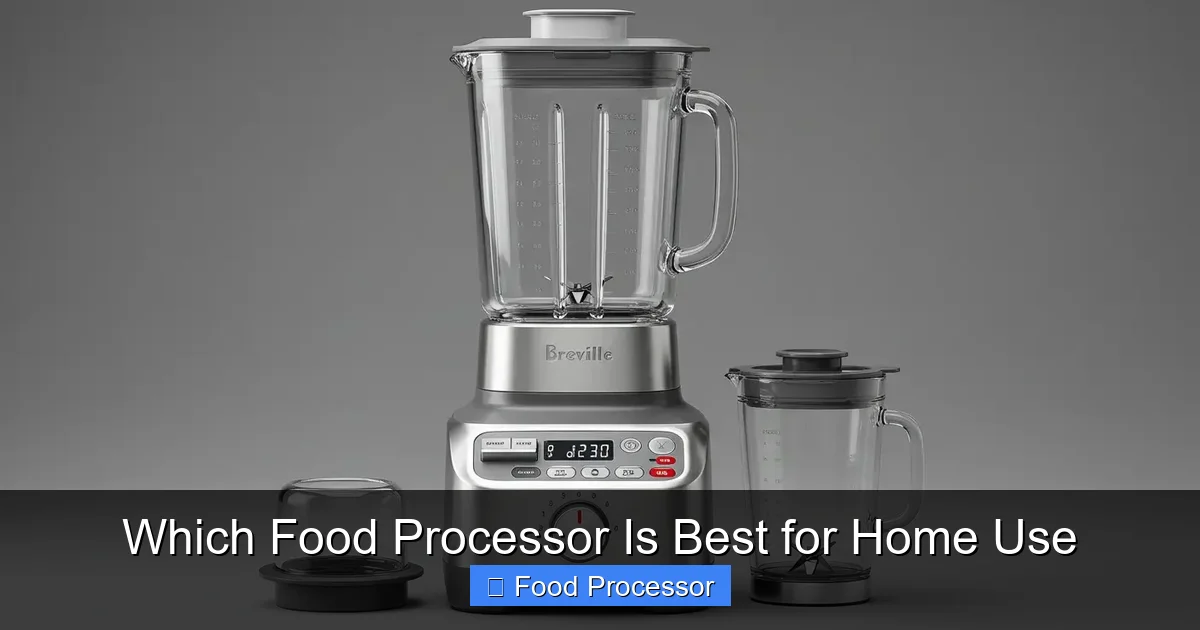
Choosing the best food processor for home use doesn’t have to be complicated. This guide simplifies the process by helping you understand your unique cooking needs, assess different sizes and powers, and identify essential features like blade variety and easy cleaning. By focusing on practical aspects like bowl capacity, motor strength, and versatile attachments, you can confidently select a kitchen companion that truly enhances your culinary adventures.
Which Food Processor Is Best for Home Use?
Welcome to your ultimate guide to finding the perfect food processor for your kitchen! A food processor is a true kitchen hero, ready to chop, slice, shred, knead, and puree almost anything you throw at it. It can save you tons of time and effort, transforming complex recipes into manageable tasks. But with so many options out there, how do you pick the *best food processor for home use*? It’s a question many home cooks ponder.
Don’t worry, we’re here to make that decision easy for you. In this comprehensive guide, we’ll walk you through everything you need to consider. We’ll explore different sizes, power levels, features, and even talk about how to match a food processor to your specific cooking style. By the end, you’ll feel confident in choosing a food processor that will be a valuable and well-used addition to your home kitchen for years to come.
Key Takeaways
- Assess Your Needs First: Before buying, consider your typical cooking tasks, family size, and available kitchen space to determine the ideal bowl capacity and power for your home food processor.
- Size Matters for Home Use: Food processors range from mini (1-4 cups) to full-size (10-16 cups). Match the bowl size to the volume of food you usually prepare to avoid overcrowding or under-filling.
- Power Equals Performance: A higher wattage (generally 600W-1200W for full-size) indicates a more powerful motor, crucial for tough tasks like kneading dough or crushing ice.
- Versatility from Attachments: Look for models with a good range of blades and discs (slicing, shredding, grating, dough blade) to maximize your food processor’s utility in your home kitchen.
- Consider Convenience Features: Easy-to-clean parts, wide feed chutes, simple controls, and compact storage options significantly improve the user experience and daily usability of your food processor.
- Read Reviews and Warranties: Check user reviews for real-world performance insights and always look for a good warranty, as it indicates the manufacturer’s confidence in their product’s durability.
- Balance Budget with Quality: While budget is a factor, investing a bit more in a durable, reliable food processor with the right features for your home use can save money and frustration in the long run.
Step 1: Understand Your Cooking Habits and Needs
Before diving into models and specs, take a moment to think about *how* you cook. This is the most important step in finding the best food processor for home use.
What Do You Cook Most Often?
Are you a baker who frequently kneads dough for bread and pies? Do you prepare large batches of meals for the week? Or are you mostly chopping vegetables for daily dinners and whipping up quick sauces?
- Daily Chopper: If you often chop onions, garlic, or herbs, a smaller, compact model might be perfect.
- Meal Prepper: For those who do a lot of meal prep, slicing and shredding vegetables in bulk, a medium to large capacity food processor is ideal. It can also be a great choice if you’re looking for the best food processor for salad prep at home.
- Baker/Dough Maker: If you frequently make dough, look for a powerful motor and a sturdy dough blade.
- Sauce & Puree Maker: For making hummus, pesto, or baby food, most food processors handle this well, but larger capacities are good for bigger batches. In fact, if you’re a new parent, you might want to look into the best food processor for making baby puree at home.
How Many People Do You Cook For?
The size of your household greatly influences the bowl capacity you’ll need.
- 1-2 People: A compact (3-5 cup) or even a mini (1-4 cup) food processor might be enough for small tasks. For just two people, a smaller unit can be the best food processor for two people.
- Small Family (3-4 People): A mid-size (7-10 cup) food processor is usually a good fit. This size offers versatility without taking up too much counter space. Specifically, if you have a small family, you might be interested in finding the best food processor for small family home use.
- Large Family (5+ People) or Entertainers: A full-size (10-16 cup) food processor is almost certainly what you need to handle larger quantities efficiently.
How Much Counter and Storage Space Do You Have?
Food processors come in various footprints. Measure your available space before you buy. A large food processor might be powerful, but if it’s too cumbersome to store or use, it won’t be the *best food processor for home use* for *you*. If space is a premium, consider a compact model or one designed for small kitchens. You might find great options for the best compact food processor for small cabinets.
Step 2: Choose the Right Bowl Capacity
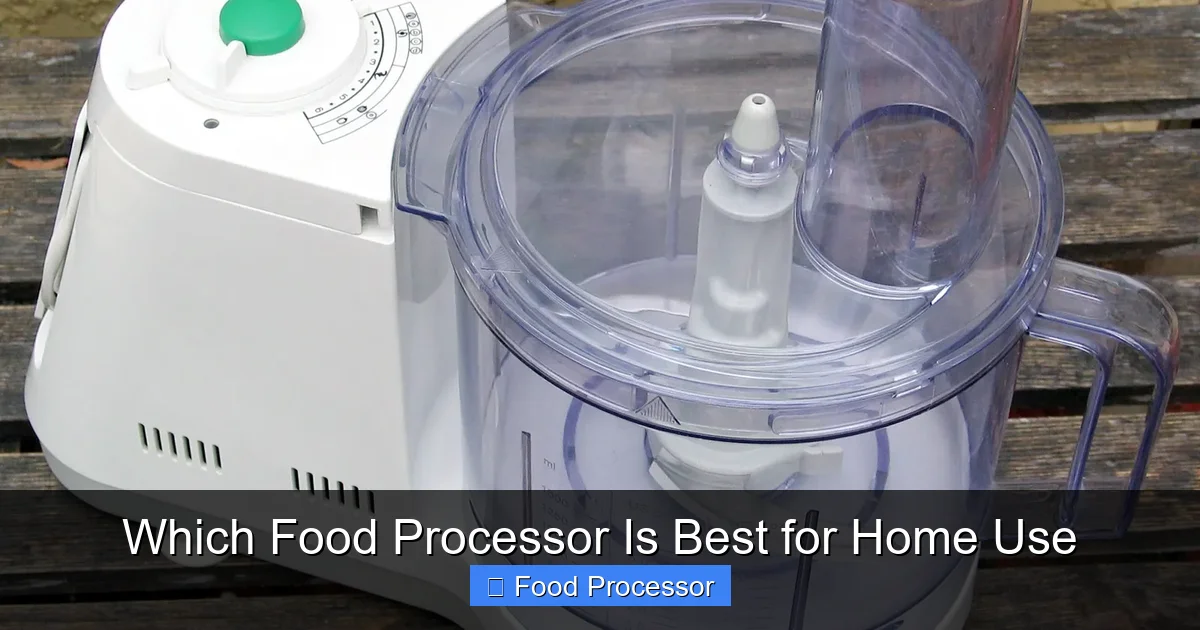
Visual guide about Which Food Processor Is Best for Home Use
Image source: cdn.britannica.com
Once you know your needs, matching them to the right bowl size is crucial.
Mini Food Processors (1-4 cups)
These are perfect for tiny tasks:
- Chopping nuts or herbs.
- Making small batches of dressings or dips.
- Minced garlic or ginger.
They are space-savers and often more affordable. However, they lack the power and versatility for bigger jobs.
Compact Food Processors (5-7 cups)
A good middle ground for singles or couples:
- Chopping a few onions or bell peppers.
- Making a small batch of salsa.
- Pureeing small portions.
They offer more versatility than mini models but are still relatively easy to store.
Full-Size Food Processors (8-16 cups)
These are the workhorses for most home kitchens:
- 8-10 cups: Excellent for everyday cooking for 3-4 people. Can handle most chopping, slicing, and shredding tasks.
- 11-14 cups: A very popular size, great for larger families, meal prep, and entertaining. Can handle dough, large batches of vegetables, and more demanding tasks. This is often considered the sweet spot for the overall best food processor for home use.
- 15-16 cups: Best for very large families, serious entertainers, or those who do extensive batch cooking. These are powerful machines designed for high volume.
Step 3: Evaluate Power and Motor Strength
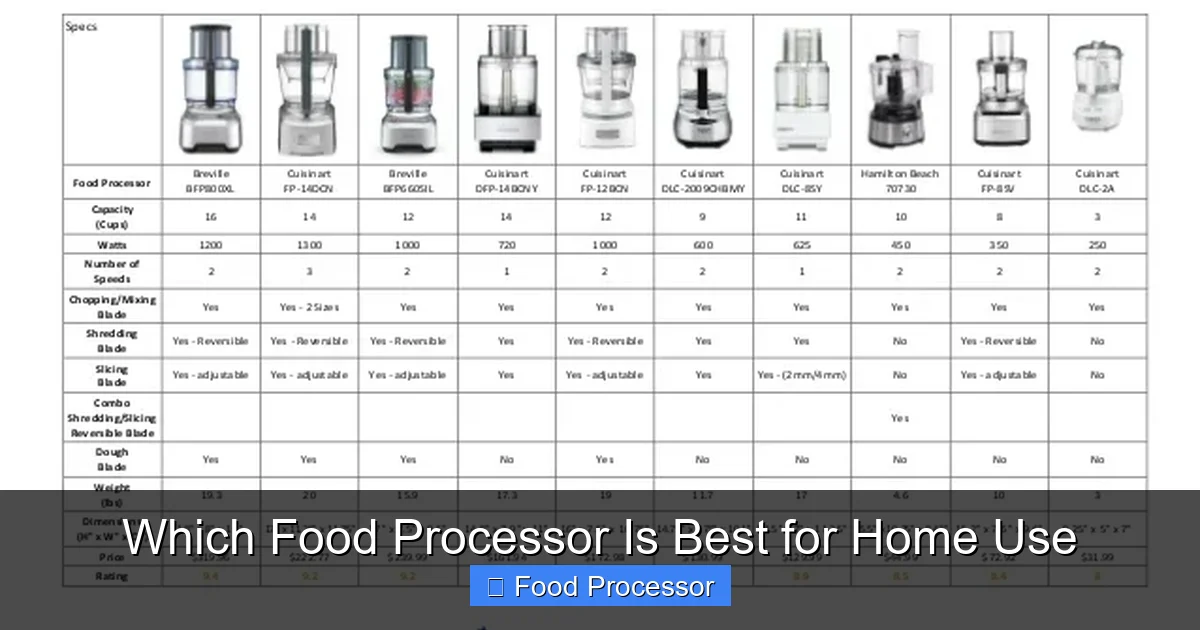
Visual guide about Which Food Processor Is Best for Home Use
Image source: image.slidesharecdn.com
The wattage of a food processor’s motor is a key indicator of its strength and efficiency.
Wattage and Performance
- Lower Wattage (250-600W): Typically found in mini and compact food processors. Suitable for light chopping, pureeing soft ingredients, and mixing.
- Medium Wattage (600-1000W): Common in mid-size to full-size models. These food processors can handle most tasks, including shredding firm vegetables, making nut butter (though dedicated models are better for beginners), and light dough kneading.
- High Wattage (1000W+): Found in premium full-size food processors. Essential for heavy-duty tasks like kneading thick dough, crushing ice, or processing tough ingredients with ease. A powerful motor also means less bogging down during use, leading to smoother results.
A powerful motor means your food processor can tackle tough jobs without straining, leading to a longer lifespan for the appliance. Also, consider if you want an energy efficient food processor for home, as some models are designed with this in mind.
Step 4: Explore Blades and Attachments
The versatility of your food processor often comes down to the accessories it includes.
Essential Blades and Discs
- S-Blade (Chopping Blade): This is the standard blade found in every food processor. It’s used for chopping, mincing, pureeing, and mixing.
- Slicing Disc: Essential for uniformly slicing vegetables like potatoes, cucumbers, or carrots. Many models offer adjustable slicing discs for various thicknesses, which is great for tasks like finding the best food processor for slicing vegetables.
- Shredding/Grating Disc: Perfect for shredding cheese, carrots, cabbage, or potatoes. Again, coarse and fine options are a plus.
- Dough Blade: A plastic blade designed for kneading dough without overworking it. A must-have for bakers.
Specialty Attachments (Nice-to-Haves)
- Julienne Disc: Creates thin matchstick cuts for salads or stir-fries.
- French Fry Disc: Cuts potatoes into perfect fries.
- Whisk/Emulsifying Disc: For whipping cream or making mayonnaise.
- Citrus Juicer: Some models come with an attachment for juicing citrus fruits.
- Storage Case for Blades: A convenient feature to keep sharp blades organized and safe.
Think about what specific tasks you’ll perform. If you’re often doing daily chopping, make sure the standard S-blade is robust. If you’re a big fan of fresh salads, the slicing and shredding discs will be invaluable.
Step 5: Look for Convenient Features
Beyond core functionality, certain features make a food processor much more user-friendly.
Feed Chute Size
A wider feed chute allows you to process larger pieces of food (like whole potatoes or onions) without pre-cutting, saving you time. Smaller feed chutes require more prep work but can be useful for adding liquids or smaller ingredients while the machine is running.
Controls and Settings
Most food processors offer “On,” “Off,” and “Pulse” settings. The “Pulse” function is incredibly useful for controlling consistency, preventing over-processing, and achieving precise results (e.g., chunky salsa vs. smooth puree). Some advanced models might offer multiple speeds, dedicated dough settings, or even pre-programmed functions.
Noise Level
Food processors, by nature, can be noisy. If you live in an apartment or prefer a quieter kitchen, some brands offer models specifically designed for lower noise levels. You can actually find the best quiet food processor for apartment kitchen if noise is a major concern.
Ease of Cleaning
This is a big one! Look for:
- Dishwasher-safe parts: Most bowls, lids, and blades are top-rack dishwasher safe.
- Simple design: Fewer nooks and crannies mean easier hand washing.
- Sealed bowls and lids: Prevents leaks, especially with liquids.
Stability and Safety
A heavy, stable base with non-slip feet prevents the food processor from “walking” across your counter during use. Safety features like interlocking lids (the machine won’t operate unless correctly assembled) are standard and essential.
Step 6: Consider Materials, Durability, and Brand Reputation
A food processor is an investment, so you want one that lasts.
Materials
- Bowls: Most are made from durable, BPA-free plastic. Glass bowls exist but are heavier and more prone to breaking.
- Blades: Stainless steel is standard and preferred for sharpness and longevity.
- Base: Plastic bases are common, but some premium models have metal or brushed stainless steel for added durability and aesthetic appeal.
Durability and Warranty
A good warranty (typically 1-5 years for the entire unit, sometimes longer for the motor) suggests the manufacturer stands behind their product. Read user reviews to get a real-world sense of how well a particular model holds up over time. Brands known for quality and reliability often cost more, but the investment often pays off in fewer replacements and better performance.
Step 7: Set Your Budget
Food processors range widely in price, from under $50 for mini choppers to several hundred dollars for professional-grade home models.
Price Tiers
- Entry-Level ($50-$100): Often smaller, less powerful, and with fewer attachments. Good for basic tasks or occasional use.
- Mid-Range ($100-$250): Where most home users find their sweet spot. These offer a good balance of capacity, power, features, and durability for daily use.
- High-End ($250+): Premium brands often offer superior build quality, more powerful motors, extensive attachments, longer warranties, and advanced features. These are for serious home cooks or those who use their food processor very frequently.
Remember, the “best food processor for home use” isn’t necessarily the most expensive. It’s the one that best meets your individual needs and budget.
Troubleshooting Common Buying Dilemmas
It’s easy to get overwhelmed, so let’s tackle a couple of common thoughts.
“Is Bigger Always Better?”
Not necessarily! If you only cook for one or two people and have limited space, a large 14-cup food processor will be overkill. It will take up valuable counter and storage space, and its large bowl might not effectively process small quantities of food. Conversely, trying to make a big batch of soup in a 4-cup mini chopper will be frustrating and inefficient. Match the size to your typical cooking volume.
“Should I Get a Food Processor and Blender Combo?”
Some appliances offer both food processor and blender functions in one base. These can be great space-savers. However, be aware that sometimes a combo unit might excel at one function more than the other, or might not be as powerful as two dedicated appliances. If you use both extensively, consider if a combo truly meets your high demands for each.
Tips for Maintaining Your New Food Processor
Once you’ve chosen your best food processor for home use, proper care will ensure it lasts.
- Clean Immediately: Food particles dry and stick. Rinse parts right after use.
- Handle Blades Carefully: They are extremely sharp! Use a brush for cleaning and always store them safely.
- Don’t Overload: Respect the bowl’s capacity and the motor’s limits. Overloading can strain the motor and lead to premature wear.
- Read the Manual: Every food processor has specific care instructions and usage guidelines.
Conclusion
Choosing the *best food processor for home use* truly boils down to understanding your personal cooking style, family size, and kitchen space. There’s no single “best” model for everyone, but by carefully considering bowl capacity, motor power, included attachments, and convenience features, you can make an informed decision.
Whether you’re a budding chef looking to tackle complex recipes or simply seeking to make daily chopping less of a chore, a well-chosen food processor will become an indispensable tool in your culinary arsenal. Take your time, weigh your options, and soon you’ll be enjoying the countless benefits of having the perfect food processor in your home kitchen. Happy cooking!
