

Chopping onions with a food processor is a game-changer for home cooks, saving time and tears. This guide will walk you through the entire process, from preparing your onions to achieving the perfect chop. You’ll learn essential steps like proper assembly, loading techniques, and the magic of short pulses to get uniform results without over-processing, making your cooking much more efficient and enjoyable.
How to Use Food Processor to Chop Onions
Welcome, fellow home cooks! Are you tired of watery eyes and the endless chore of dicing onions by hand? Do you wish there was a faster, more efficient way to get perfectly chopped onions for all your favorite recipes? Well, you’re in luck! Your food processor is here to save the day. It’s an incredibly versatile kitchen appliance, and chopping onions is one of its superpowers.
In this comprehensive guide, we’re going to dive deep into exactly how to use a food processor to chop onions. We’ll cover everything from the initial preparation of your onions to the final cleaning of your machine. By the end of this article, you’ll be a pro at quickly and effortlessly chopping onions, transforming a once dreaded task into a quick and simple step in your cooking routine. Get ready to embrace tear-free onion prep!
Key Takeaways
- Preparation is Key: Always peel and quarter your onions before placing them in the food processor to ensure even chopping and prevent overloading the machine.
- Assemble Correctly: Ensure your food processor is properly assembled with the S-blade securely in place and the lid locked for safe and effective operation.
- Don’t Overcrowd: Process onions in batches if necessary, filling the work bowl no more than two-thirds full to allow the blade sufficient space to work effectively.
- Master the Pulse: Use short, quick “pulse” bursts, typically 1-2 seconds each, to control the chopping consistency and prevent turning your onions into a watery purée.
- Check and Adjust: Pause frequently to check the size of the chopped onions. Scrape down the sides if needed and continue pulsing until your desired consistency is achieved.
- Safety First: Always unplug the food processor before reaching into the work bowl or changing blades, and handle the sharp S-blade with extreme care.
Why Use a Food Processor to Chop Onions?
Using a food processor to chop onions offers several fantastic benefits. First and foremost, it’s a huge time-saver. What might take several minutes of careful knife work can be done in mere seconds. Secondly, it helps you achieve a consistent chop, which is important for even cooking and presentation in many dishes. And perhaps the most celebrated benefit for many: it significantly reduces eye irritation! The enclosed environment of the food processor bowl keeps those tear-inducing compounds from reaching your eyes. It truly is a kitchen essential for anyone who cooks regularly.
Step 1: Gather Your Tools and Ingredients
Before you begin, it’s always a good idea to have everything you need within arm’s reach. This makes the process smooth and efficient.
What You’ll Need:
- Food Processor: Of course! Make sure it’s clean and ready to go. A medium to large-sized food processor (8-12 cups) works best for most onion chopping tasks. If you’re wondering which size is right for you, consider what you’ll typically be making.
- S-Blade (Chopping Blade): This is the standard blade that comes with your food processor, often shaped like a letter “S.” It’s specifically designed for chopping, mincing, and puréeing.
- Onions: Your main ingredient! Any type of onion will work – yellow, white, red, sweet, or even shallots.
- Cutting Board and Knife: For preparing the onions before they go into the processor.
- Spatula: For scraping down the sides of the work bowl and removing the chopped onions.
- Storage Container: If you’re not using all the onions immediately.
Step 2: Prepare Your Onions
Proper preparation of your onions is crucial for getting the best results from your food processor. This step ensures even chopping and prevents the machine from struggling.
Peel the Onions:
Start by trimming off both the stem and root ends of each onion. Cut the onion in half from pole to pole. Peel away the dry, papery outer layers. Discard the peels.
Cut Onions into Manageable Pieces:
Once peeled, cut each onion half into quarters or eighths, depending on the size of the onion and your food processor’s capacity. The goal here is to create pieces that are roughly uniform in size and small enough to fit comfortably in the work bowl without jamming the blade. For a standard medium onion, cutting it into quarters is usually sufficient. For larger onions, you might need to cut them into smaller chunks.
Pro Tip: Don’t cut them too small at this stage, or they might become mushy too quickly in the food processor. We’re looking for chunks, not already diced pieces.
Step 3: Assemble Your Food Processor
Safety and proper assembly are paramount when using any kitchen appliance with sharp blades. Take a moment to ensure everything is set up correctly.
Place the S-Blade:
Carefully position the S-blade onto the central spindle in the work bowl. These blades are incredibly sharp, so always handle them by the central hub.
Attach the Work Bowl and Lid:
Place the work bowl onto the motor base, twisting it until it locks securely into place. Then, put the lid on the work bowl and twist it until it also locks. Most food processors have safety mechanisms that prevent them from operating if the bowl and lid are not properly secured. If you’re unsure about the assembly process, you can find a detailed guide on how to assemble a food processor step-by-step.
Plug In the Food Processor:
Once everything is assembled, plug the food processor into a grounded electrical outlet.
Step 4: Load the Onions into the Food Processor
How you load the onions can impact the final chop.
Fill the Work Bowl:
Add your prepared onion pieces to the work bowl. It’s important not to overcrowd the bowl. Fill it no more than two-thirds full. If you have a lot of onions, it’s better to process them in batches. Overfilling can lead to uneven chopping, over-processing, or even strain on your food processor’s motor.
Pro Tip: For best results, ensure the onion pieces are spread somewhat evenly around the blade, not just piled high on one side.
Step 5: Process the Onions
This is where the magic happens! The key to perfectly chopped onions is using the “pulse” function.
Use the “Pulse” Function:
Instead of continuously running the food processor, you’ll want to use the “pulse” button. The pulse function gives you short bursts of power, allowing you to control the chopping much more precisely. This prevents the onions from turning into a purée or an uneven mix of finely chopped and large pieces.
Short Bursts are Best:
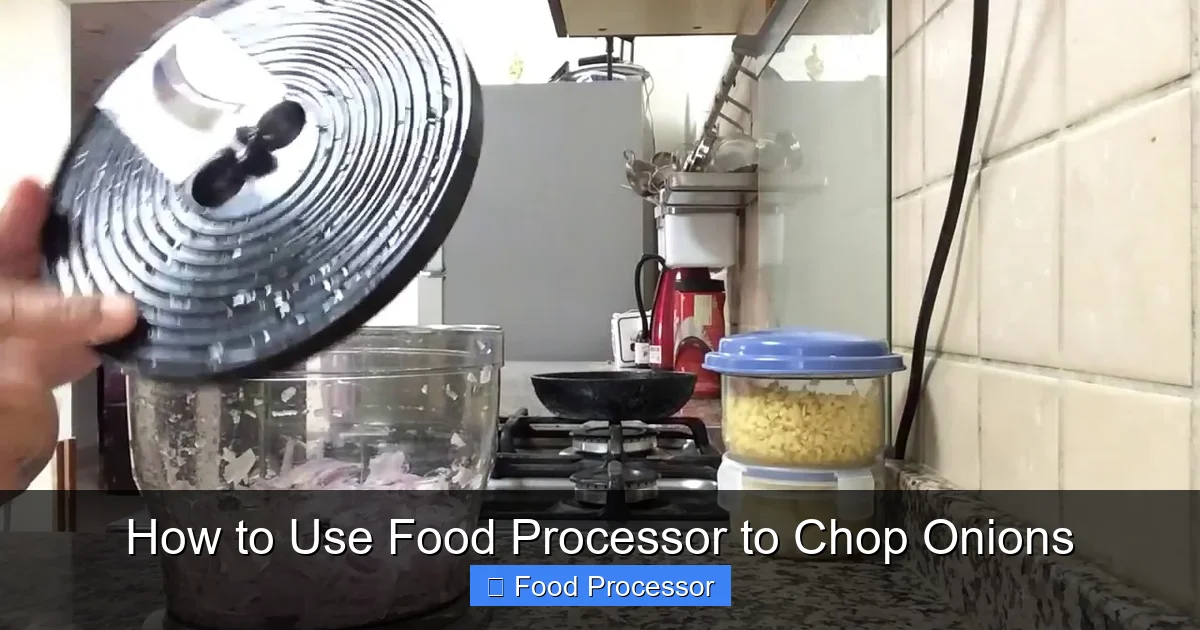
Press the “pulse” button for 1-2 seconds, then release. Repeat this action. You’ll hear the blade whir and see the onions begin to break down.
As a general rule for how to use a food processor to chop vegetables, short pulses give you more control.

Visual guide about How to Use Food Processor to Chop Onions
Image source: garlicstore.com
Visual guide about How to Use Food Processor to Chop Onions
Image source: recipes.net
Step 6: Check Consistency and Repeat If Necessary
Patience is a virtue, especially when aiming for that perfect chop.
Check After a Few Pulses:
After 5-10 pulses, stop the machine and remove the lid. Use your spatula to scrape down any onion pieces that have stuck to the sides of the bowl. This helps ensure all pieces are exposed to the blade for an even chop.
Assess the Size:
Look at the size of the onion pieces. Are they roughly the size you want? If you need a finer chop, replace the lid and continue pulsing in short bursts.
Pro Tip: It’s always better to under-chop and continue pulsing than to over-chop and end up with onion soup!
Continue Pulsing:
Keep pulsing and checking until you reach your desired consistency. For most recipes, a finely diced onion is preferred, but you might want chunkier pieces for some dishes.
Remember, different types of onions might require slightly different pulsing times due to their water content and texture.
Step 7: Remove and Store Chopped Onions
Once your onions are perfectly chopped, it’s time to get them ready for cooking or storage.
Unplug the Food Processor:
Before reaching into the work bowl, always unplug the food processor. Safety first!
Carefully Remove the Blade:
Gently lift the S-blade off the central spindle. Remember, it’s very sharp.
Scoop Out the Onions:
Use a spatula or spoon to scoop the chopped onions out of the work bowl.
Immediate Use or Storage:
If you’re using them right away, fantastic! If not, transfer them to an airtight container and refrigerate. Chopped onions can typically be stored in the refrigerator for 3-5 days. You can also freeze them for longer storage.
Step 8: Clean Your Food Processor
Cleaning up immediately after use makes the task much easier.
Disassemble:
Separate the lid, work bowl, and S-blade from the motor base.
Wash Components:
Wash the blade, lid, and work bowl with warm, soapy water. Most food processor parts are top-rack dishwasher safe, but always check your manufacturer’s instructions. Be extra careful when washing the S-blade due to its sharpness.
Clean the Base:
Wipe down the motor base with a damp cloth. Never immerse the motor base in water.
Once everything is clean and dry, you can reassemble or store your food processor for its next culinary adventure.
Troubleshooting Common Issues
Even with the best intentions, you might run into a few snags. Here are some common problems and their solutions:
Issue: Onions Are Unevenly Chopped
Cause: This usually happens if the work bowl is overcrowded, if the onion pieces were not uniform to begin with, or if you didn’t scrape down the sides frequently enough.
Solution: Process in smaller batches. Ensure your initial onion chunks are roughly the same size. Stop and scrape down the sides every few pulses to ensure all pieces get exposed to the blade.
Issue: Onions Turned into Purée/Mush
Cause: This is the classic sign of over-processing. You pulsed too long or ran the machine continuously.
Solution: Less is more with the pulse function! Use very short, quick pulses (1-2 seconds) and check the consistency frequently. Remember, you can always pulse more, but you can’t un-purée.
Issue: Food Processor Won’t Start
Cause: Most often, this is a safety feature. The work bowl or lid might not be locked into place correctly, or it’s simply not plugged in.
Solution: Double-check that the work bowl is securely twisted onto the base and the lid is firmly locked into position. Ensure the power cord is fully inserted into a working outlet. If it still doesn’t start, and you’ve tried all the basics, you might need to look into how to fix a food processor blade not spinning or other general troubleshooting for your machine.
Issue: Onions Get Stuck Under the Blade
Cause: This can happen with larger pieces or if the blade gets jammed.
Solution: Unplug the machine, carefully remove the blade, and clear any stuck pieces. Then, cut your initial onion chunks into slightly smaller, more uniform sizes before processing.
Advanced Tips for Chopping Onions with a Food Processor
Chill Your Onions:
Placing your onions in the refrigerator for 30 minutes before chopping can help reduce the release of tear-inducing compounds, making the process even more comfortable.
Use the Right Size Processor:
While most medium to large food processors are great for onions, if you’re frequently chopping large quantities, a larger capacity unit will save you batches. For smaller amounts, a mini food processor might suffice, but be wary of over-processing due to smaller blade clearance. If you are in the market for a new appliance, consider what to consider when buying a food processor to ensure you get one that fits your needs.
Experiment with Different Chops:
The beauty of the food processor is its versatility. A few pulses will give you a coarse chop perfect for soups or stews. More pulses will give you a fine dice suitable for sauces, salsas, or salad dressings. Practice makes perfect in finding your ideal consistency.
Don’t Wash Onions After Chopping:
Some people think washing chopped onions removes some of their strong flavor or helps with tears, but it can also make them watery and dilute their taste. It’s generally best to avoid rinsing them after they’ve been processed.
Consider Onion Type:
Different onions have different water content. Red onions and sweet onions tend to be a bit softer and may require fewer pulses than yellow or white onions to achieve the same consistency. Adjust your pulsing technique accordingly.
Conclusion
Congratulations! You’ve just mastered the art of using your food processor to chop onions. No more tears, no more uneven dices, just perfectly chopped onions ready to elevate your culinary creations. This simple technique will not only save you precious time in the kitchen but also make your cooking experience much more enjoyable.
The food processor is a powerful tool, and once you get the hang of chopping onions, you’ll find countless other ways to put it to good use. So go forth, chop with confidence, and enjoy the delicious results of your newfound efficiency. Happy cooking!
