
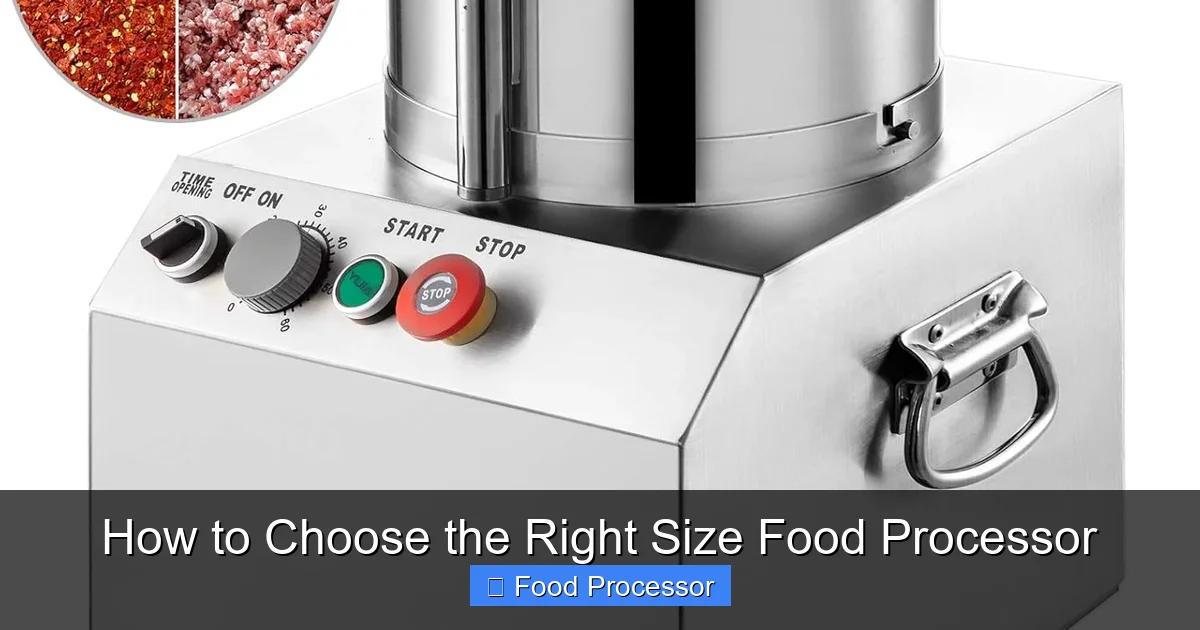
Choosing the ideal food processor size is crucial for kitchen efficiency and satisfaction. This guide walks you through assessing your cooking habits, family size, and available space to ensure you pick a model that perfectly fits your needs. Learn about different capacities, essential features, and how to make a smart investment in your culinary journey.
How to Choose the Right Size Food Processor
Are you ready to elevate your cooking game? A food processor is a true kitchen workhorse, capable of tackling everything from chopping vegetables to kneading dough with remarkable speed and efficiency. But with so many models and sizes available, how do you pick the one that’s just right for your culinary adventures? Choosing the right size food processor is perhaps the most important decision you’ll make. Too small, and you’ll be doing multiple batches for every recipe. Too large, and it might sit unused, hogging precious counter space.
Don’t worry, we’re here to help you navigate the options. In this comprehensive guide, we’ll walk you through everything you need to consider to select the perfect food processor for your kitchen. By the end, you’ll know exactly how to choose the right size food processor that perfectly matches your lifestyle, cooking habits, and kitchen space. Let’s get started and find your ideal kitchen companion!
Key Takeaways
- Assess Your Needs First: Before looking at models, consider how often you cook, what you cook, and for how many people. This will guide your food processor size decision.
- Understand Capacity Ranges: Food processors come in mini (1-4 cups), compact (5-7 cups), full-size (8-14 cups), and extra-large (16+ cups) options. Each is suited for different tasks and quantities.
- Consider Kitchen Space: A larger food processor requires more counter space and storage. Make sure your chosen size fits comfortably in your kitchen.
- Features and Attachments Matter: Beyond size, think about the included blades, discs, and motor power. These features enhance versatility and efficiency for various culinary tasks.
- Don’t Oversize or Undersize: Buying a food processor that’s too big can be cumbersome, while one that’s too small can lead to multiple batches and frustration. Aim for a balanced fit.
- Research and Reviews are Your Friends: Always check user reviews and compare specifications to ensure the food processor you choose is reliable and performs well for your specific needs.
Step 1: Understand Food Processor Sizes and Capacities
The most fundamental aspect of choosing a food processor is its size, typically measured by the capacity of its work bowl in cups. Food processors generally fall into a few main categories. Knowing these will give you a clear starting point.
Mini Food Processors (1-4 cups)
These pint-sized powerhouses are perfect for small tasks. Think of them as your go-to for quick jobs that don’t require much volume.
- Ideal For: Chopping a single onion, mincing garlic, making salad dressings, preparing small batches of pesto or hummus, grinding spices, or pureeing baby food.
- Pros: Compact, easy to store, quick to clean, often more affordable.
- Cons: Limited capacity means multiple batches for larger recipes, generally less powerful motors.
- Who It’s For: Singles, couples, those with limited kitchen space, or as a secondary food processor for small tasks.
Compact Food Processors (5-7 cups)
A step up from the mini, these models offer a good balance for everyday cooking without taking up too much room.
- Ideal For: Slicing a few cups of vegetables for a stir-fry, shredding cheese for a small pizza, making dips and salsas for 2-4 people, or preparing small batches of dough.
- Pros: Versatile enough for many common recipes, still relatively easy to store, more powerful than mini versions.
- Cons: May still require multiple batches for larger families or entertaining.
- Who It’s For: Small families (2-3 people), individuals who cook regularly but not in large quantities, or those with moderately sized kitchens.
Full-Size Food Processors (8-14 cups)
This is the most popular category for many home cooks. A full-size food processor offers significant capacity and power, making it incredibly versatile.
- Ideal For: Shredding large amounts of cheese or vegetables, slicing ingredients for big salads, making family-sized batches of dough for bread or pies, preparing sauces, pureeing soups, and creating meals for larger gatherings. You can also make things like hummus, nut butters, and even grind meat if your machine is powerful enough.
- Pros: Highly versatile, handles most cooking tasks with ease, often comes with a wider range of blades and discs, powerful motors.
- Cons: Takes up more counter and storage space, can be more expensive.
- Who It’s For: Families (4+ people), avid home cooks, those who entertain frequently, or anyone who wants a do-it-all kitchen appliance.
Extra-Large Food Processors (16+ cups)
These are the titans of the food processor world, often blurring the lines into commercial-grade appliances. They are built for serious volume.
- Ideal For: Batch cooking, preparing food for very large families or parties, catering, making large quantities of dough, or processing tough ingredients.
- Pros: Maximum capacity and power, handles the biggest jobs effortlessly, highly durable.
- Cons: Very large and heavy, expensive, may be overkill for most home kitchens.
- Who It’s For: Professional chefs, large-scale home entertainers, or those who truly need to process huge quantities of food at once.
Step 2: Assess Your Cooking Habits and Needs
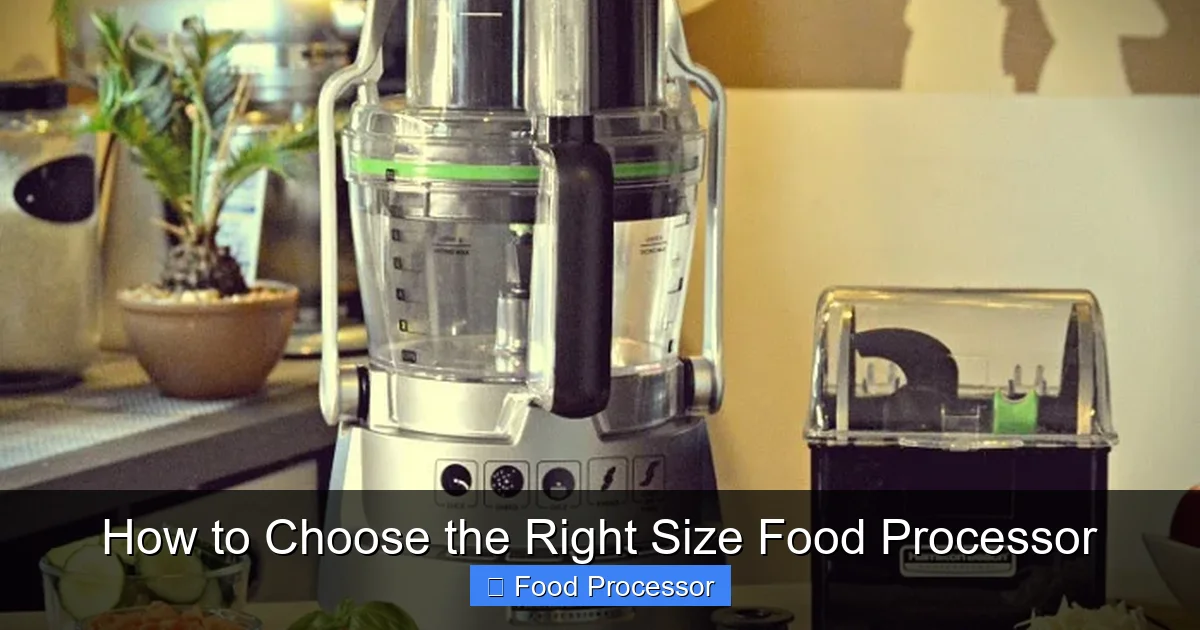
Visual guide about How to Choose the Right Size Food Processor
Image source: phxcooks.com
Now that you know the general sizes, it’s time for some self-reflection. The perfect food processor size isn’t just about capacity; it’s about how you cook.
How Many People Do You Usually Cook For?
This is often the biggest determinant of food processor size.
- 1-2 People: A mini or compact (4-7 cups) food processor might be perfectly adequate. You won’t be overwhelmed by a bulky machine.
- 3-4 People: A compact to full-size (7-11 cups) model is a good fit. It can handle most family meals without multiple batches.
- 5+ People or Frequent Entertaining: You’ll definitely want a full-size (12-14 cups) or even an extra-large (16+ cups) food processor to manage larger quantities efficiently.
What Kinds of Foods Do You Prepare Most Often?
The type of tasks you envision for your food processor also plays a huge role.
- Small Tasks (chopping herbs, nuts, making dips): A mini or compact food processor will shine here.
- Everyday Meal Prep (slicing veggies, shredding cheese, pureeing soups): A compact to full-size machine (7-11 cups) offers the best balance of power and capacity.
- Baking (kneading dough, making pie crusts): Dough blades and powerful motors are usually found in full-size (10-14 cups) models. Smaller machines might struggle or simply not have the capacity for standard recipes.
- Batch Cooking or Large-Scale Prep: If you love to meal prep for the week or frequently cook for large groups, a 12-cup or larger food processor is your best bet to avoid constant emptying and refilling.
- Specialty Items: If you plan to make large batches of homemade nut butter, for example, a larger, more powerful machine is essential. For tips on maximizing your appliance’s potential, you might find value in exploring how to get the most out of your food processor.
How Often Will You Use Your Food Processor?
An infrequently used, giant machine can be a hassle. A frequently used, perfectly sized one is a joy.
- Occasional Use: If it’s just for holiday baking or rare projects, a smaller or mid-sized food processor might be fine, even if you sometimes have to do things in batches.
- Regular, Daily Use: Invest in a full-size, robust model that can handle daily demands without strain. You’ll appreciate the power and capacity for routine tasks.
Step 3: Consider Your Kitchen Space
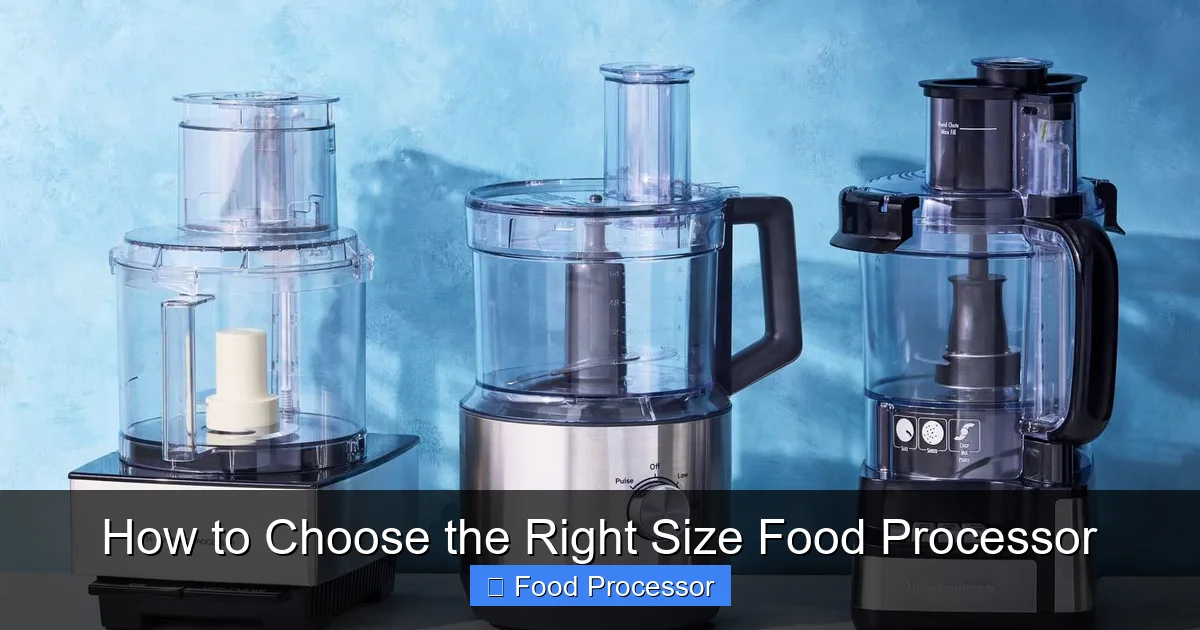
Visual guide about How to Choose the Right Size Food Processor
Image source: realsimple.com
Don’t underestimate this step! Even the most powerful food processor is useless if it doesn’t fit in your kitchen.
Countertop Space
Think about where your food processor will live.
- Limited Counter Space: Mini or compact models are ideal. They have a smaller footprint and won’t make your kitchen feel cluttered.
- Ample Counter Space: You have more flexibility. A full-size food processor can sit proudly on your counter, ready for action.
Storage Space
If you plan to store your food processor away, consider its dimensions.
- Cabinet or Pantry Space: Measure the height, width, and depth of your available storage. Don’t forget to account for the feed tube and pusher, which often add to the overall height.
- Weight: Larger food processors are heavier. If you plan to move it frequently, consider how manageable its weight is for you.
Step 4: Think About Features and Attachments
Visual guide about How to Choose the Right Size Food Processor
Image source: artinbulk.com
While size is key, the features that come with your food processor will greatly enhance its utility.
Motor Power (Wattage)
Generally, larger food processors come with more powerful motors (e.g., 600W to 1200W). This is crucial for:
- Tough Ingredients: A higher wattage motor can handle hard vegetables, cheese, and even knead stiff dough without bogging down.
- Longevity: A more powerful motor is less likely to strain and burn out under heavy use.
Included Blades and Discs
Most food processors come with a standard S-blade for chopping and pureeing. But many also include:
- Slicing Discs: For uniform slices of vegetables (cucumbers, potatoes). Some offer adjustable thickness.
- Shredding Discs: For cheese, carrots, cabbage. Coarse and fine options are common.
- Dough Blade: Essential for baking enthusiasts.
- Whisking/Emulsifying Discs: For making mayonnaise or whipped cream.
Consider what tasks you want to perform. If you are specifically thinking about what to look for when buying a food processor, a range of attachments and a powerful motor should be high on your list.
Feed Tube Size
A wider feed tube means less pre-chopping of ingredients, saving you time. This is often a feature of larger food processors.
Controls and Settings
Look for simple, intuitive controls, typically pulse and continuous on/off settings. Some models offer varying speeds.
Bowl-within-a-Bowl Systems
Some full-size models come with smaller nested work bowls. This is a fantastic feature, offering the versatility of a compact food processor for small tasks without needing to switch machines. It effectively gives you two food processors in one.
Step 5: Budget Considerations
Food processors range widely in price, from under $50 for mini choppers to several hundred dollars for high-end, large-capacity models.
- Entry-Level (under $100): Often mini or compact models, suitable for basic tasks.
- Mid-Range ($100-$300): This is where most full-size, versatile home food processors fall. You get a good balance of power, capacity, and features.
- High-End ($300+): Premium brands, extra-large capacities, superior build quality, and powerful motors, often with extended warranties.
Consider your budget and balance it with your needs. A cheaper, too-small food processor that you rarely use is not a good investment.
Step 6: Read Reviews and Compare Models
Once you’ve narrowed down the ideal size and considered the features you need, it’s time to do some research.
- User Reviews: Look for real-world feedback on performance, durability, ease of cleaning, and noise levels.
- Expert Reviews: Check out reputable kitchen appliance review sites for in-depth analysis and comparisons.
- Brand Reputation: Some brands are known for their robust motors and long-lasting quality.
Pay particular attention to comments about the food processor’s actual capacity versus its stated capacity, and how well it handles the types of tasks you intend to use it for. For instance, if you’re curious about its versatility, you might ask, can a food processor be used to make smoothies? Checking reviews for such specific use cases can be very helpful.
Practical Tips for Choosing Your Food Processor
- Err on the Side of Slightly Larger: If you’re truly torn between two sizes, it’s often better to go for the slightly larger one. You can always process smaller amounts in a larger bowl, but you can’t increase the capacity of a small one without doing multiple batches. However, be mindful of kitchen space.
- Consider a Dual-Bowl System: If you’re a keen cook but short on space, a full-size food processor with a nested smaller bowl is a fantastic compromise, offering flexibility.
- Motor Power is Key for Performance: Don’t just look at bowl size. A powerful motor ensures your food processor can handle tough jobs and lasts longer. A weak motor will struggle and frustrate you, regardless of bowl size.
- Ease of Cleaning: Look for models with dishwasher-safe parts and minimal nooks and crannies where food can get stuck. An easy-to-clean food processor is one you’ll use more often.
What If You Chose the Wrong Size Food Processor?
Sometimes, despite all the planning, you might realize your food processor isn’t the perfect fit.
- Too Small: If your food processor is consistently too small, requiring multiple batches for everything, consider upgrading to a larger model. You might be able to repurpose your smaller one for quick, mini tasks like chopping herbs or making dressings.
- Too Large: If your large food processor feels like overkill and is a pain to clean for small jobs, don’t despair! Embrace its power for batch cooking, meal prepping, or even learn some advanced techniques to make the most of its capabilities. Alternatively, you could invest in a mini chopper specifically for those tiny tasks, letting your large machine handle the heavy lifting.
Conclusion
Choosing the right size food processor doesn’t have to be a daunting task. By carefully considering your cooking habits, family size, available kitchen space, and desired features, you can confidently select a kitchen appliance that will serve you well for years to come. Remember, the goal is to find a food processor that makes your time in the kitchen more efficient and enjoyable, not more frustrating. Take your time, do your research, and you’ll soon be chopping, slicing, shredding, and pureeing your way to culinary success! Happy cooking!
