
The food processing industry is a vast sector responsible for transforming raw agricultural products into edible food items. It involves a range of operations, from basic cleaning and cutting to complex manufacturing, preservation, and packaging. This industry is crucial for ensuring food safety, extending shelf life, creating convenience, and providing diverse food choices to consumers worldwide. Understanding its scope reveals its profound impact on our daily lives and global food systems.
What Is the Meaning of Food Processing Industry
Have you ever stopped to think about where your favorite snack, bottled juice, or even that fresh-cut salad mix comes from? It’s more than just a farm and a store shelf. Behind every bite is a complex, fascinating world known as the food processing industry. This guide will walk you through exactly what this industry means, how it works, why it’s so vital, and even clear up some common misunderstandings.
By the end of this read, you’ll have a clear, comprehensive understanding of the entire journey your food takes, appreciating the intricate systems that bring sustenance and variety to your table every single day. Let’s dive in!
Key Takeaways
- Core Definition: The food processing industry takes raw agricultural ingredients and transforms them into consumable food products through various physical, chemical, and biological processes.
- Stages of Processing: It encompasses multiple stages, including harvesting, cleaning, sorting, primary processing (e.g., milling), secondary processing (e.g., baking), preservation (e.g., canning, freezing), packaging, and distribution.
- Key Functions: Its primary roles are to enhance food safety, extend shelf life, increase convenience, add nutritional value, improve palatability, and facilitate global food distribution.
- Economic and Societal Impact: This industry is a major economic driver, creating jobs, reducing food waste, and ensuring food security for growing populations by making diverse foods available year-round.
- Beyond “Bad” Food: Food processing isn’t solely about highly processed foods; it includes everything from washing vegetables to pasteurizing milk. It’s a spectrum, with many methods contributing positively to our diets.
- Technological Advancements: The industry continuously evolves with new technologies, focusing on automation, sustainability, improved safety protocols, and innovative product development to meet changing consumer demands.
Understanding the Core: What Is Food Processing?
At its heart, “food processing” refers to any method used to transform raw agricultural ingredients into food or to transform food into other forms for consumption. Think of it as adding value and preparing food for safe, convenient, and enjoyable eating. The “food processing industry” is simply the collective term for all the businesses, technologies, and people involved in these transformative steps.
It’s a huge and diverse sector. It covers everything from simply washing and cutting vegetables to baking bread, making cheese, canning fruits, or even creating complex ready-to-eat meals. The goal is often to make food safer, extend its shelf life, make it more convenient to prepare, or improve its taste and nutritional profile.
More Than Just Cooking
When we think of processing food at home, we often think of cooking. While cooking is a form of processing, the industrial scale goes far beyond. It involves a vast array of techniques and technologies that aren’t typically found in a home kitchen. These include:
- Cleaning and sorting raw ingredients to remove impurities.
- Milling grains into flour.
- Extracting oils from seeds.
- Pasteurizing milk to kill harmful bacteria.
- Freezing vegetables to preserve freshness.
- Mixing various ingredients to create new products.
- Packaging food to protect it and provide information.
Understanding what is the meaning of food processing industry truly begins with recognizing this broad scope of activities.
The Journey of Food: Steps in the Food Processing Industry
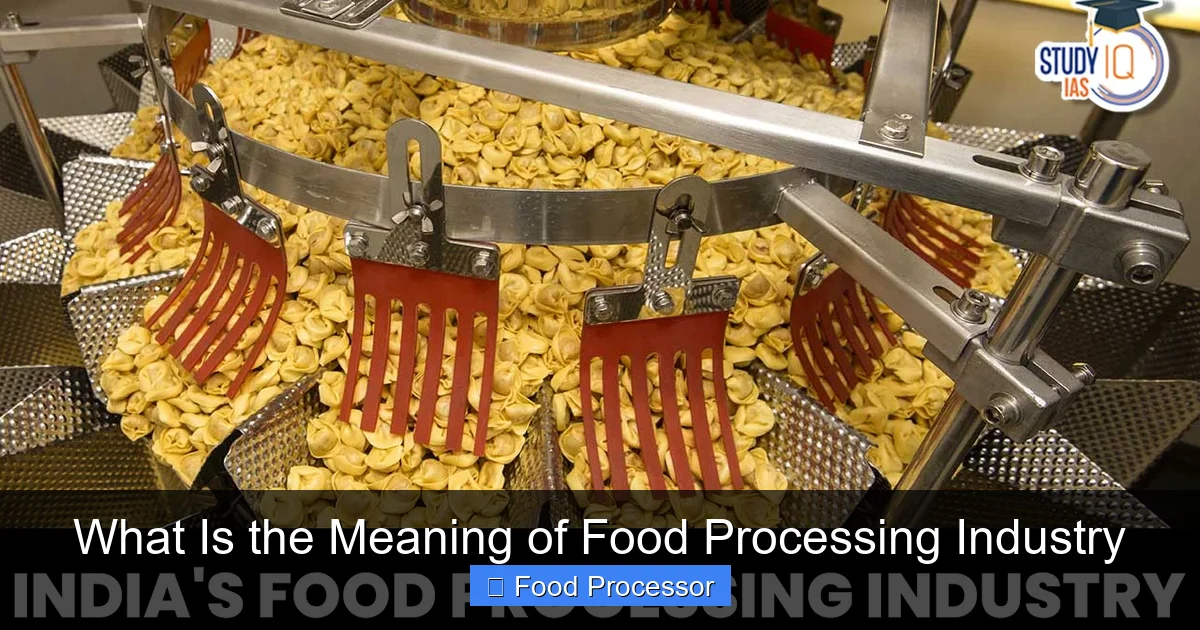
Visual guide about What Is the Meaning of Food Processing Industry
Image source: studyiq.com
Let’s trace the path of food from its origin to your plate. It’s a fascinating journey involving many critical stages within the food processing industry.
Step 1: Sourcing and Harvesting Raw Materials
The first stage involves getting the ingredients. This means farming and harvesting crops like wheat, corn, fruits, and vegetables, or raising livestock for meat and dairy. These raw materials are the foundation of all processed foods. Quality control often begins right here, ensuring only the best ingredients move forward.
Step 2: Pre-Processing and Initial Preparation
Once raw materials arrive at a processing facility, they typically undergo initial preparation. This can include:
- Cleaning: Washing away dirt, pesticides, and other contaminants.
- Sorting and Grading: Separating items by size, quality, and ripeness.
- Trimming and Cutting: Removing unwanted parts (e.g., stems, leaves, skin) and portioning for further processing.
These steps are crucial for hygiene and efficiency.
Step 3: Primary Processing – Basic Transformations
Primary processing involves the first major transformation of raw ingredients into more usable forms. These are often foundational ingredients for other products.
- Milling: Grinding grains like wheat into flour.
- Crushing/Pressing: Extracting juices from fruits or oils from seeds.
- Butchering: Cutting and deboning meat.
- Shelling/Peeling: Removing outer layers from nuts or vegetables.
At this stage, food items are still relatively close to their original state but are now prepared for more complex creations.
Step 4: Secondary Processing – Creating Finished Products
This is where ingredients are combined and further transformed into the final products we recognize. This stage is often more complex, involving recipes and specific manufacturing techniques.
- Mixing and Blending: Combining various ingredients to create dough, sauces, or mixtures.
- Cooking and Baking: Applying heat through methods like baking, frying, boiling, or steaming.
- Fermentation: Using microorganisms to transform food, like in making yogurt, cheese, or bread.
- Extrusion: Shaping food through a die under high pressure, common for snacks and pasta.
This stage is where the magic happens, turning simple ingredients into complex, delicious foods.
Step 5: Preservation Techniques – Extending Shelf Life and Ensuring Safety
A vital part of the food processing industry is preservation. These methods prevent spoilage, ensuring food remains safe and edible for longer periods, which is incredibly important for global food supply. For more details on this crucial aspect, you might want to read about food purchasing, processing, and preservation. Common techniques include:
- Canning: Heating food in sealed containers to kill microbes, then vacuum-sealing.
- Freezing: Lowering temperature to stop microbial growth and enzymatic activity.
- Drying/Dehydration: Removing water content to inhibit microbial growth.
- Pasteurization: Heating liquids (like milk or juice) to kill pathogens without significantly altering quality.
- Curing/Smoking: Using salt, sugar, and smoke to preserve meat.
- Chemical Preservatives: Adding approved substances to slow spoilage.
These methods are fundamental to our modern food system, allowing us to enjoy seasonal foods year-round and reduce waste.
Step 6: Packaging and Labeling
Once processed and preserved, food needs to be packaged. Packaging serves several vital functions:
- Protection: Shielding food from physical damage, contamination, and environmental factors (light, oxygen).
- Convenience: Making food easy to store, transport, and use.
- Information: Providing consumers with essential details like ingredients, nutritional facts, allergens, shelf life, and cooking instructions.
Labeling is highly regulated to ensure accuracy and consumer safety.
Step 7: Distribution and Logistics
The final stage brings the processed food to consumers. This involves:
- Storage: Holding products in warehouses, often temperature-controlled.
- Transportation: Moving goods via trucks, trains, ships, or planes to distribution centers and retail stores.
- Retail: Selling products to customers in supermarkets, convenience stores, and online.
This entire chain ensures that the food processed reaches you efficiently and safely.
Why Is the Food Processing Industry So Important?
Visual guide about What Is the Meaning of Food Processing Industry
Image source: centpro.com
The importance of the food processing industry cannot be overstated. It plays a pivotal role in feeding the world and shaping our daily lives. In fact, if you’re curious to delve deeper, you can explore what is the importance of food processing in more detail.
1. Food Security and Availability
The industry makes food available globally, regardless of seasons or local growing conditions. It helps bridge the gap between harvest and consumption, ensuring a consistent food supply for a growing global population.
2. Enhanced Food Safety
Processing methods like pasteurization, canning, and proper packaging significantly reduce the risk of foodborne illnesses by eliminating harmful bacteria and preventing contamination. Strict regulations and quality controls are in place to uphold high safety standards.
3. Reduced Food Waste
By preserving foods and transforming imperfect raw materials into usable products, the food processing industry helps minimize waste at the farm and retail levels. For example, bruised fruits can be turned into juice or jam, extending their usable life.
4. Convenience and Lifestyle
Modern lifestyles demand convenience. Processed foods, from ready-to-eat salads to microwaveable meals, save consumers time and effort in the kitchen, fitting into busy schedules.
5. Nutritional Enhancement
Some processed foods are fortified with vitamins and minerals (like vitamin D in milk or iodine in salt), addressing common nutritional deficiencies. Processing can also make nutrients more bioavailable or reduce anti-nutrients.
6. Economic Impact
The food processing industry is a massive employer, creating jobs in manufacturing, research and development, logistics, marketing, and sales. It contributes significantly to national economies worldwide.
7. Product Diversity and Innovation
From exotic flavors to new textures and dietary options (e.g., plant-based alternatives, gluten-free products), the industry constantly innovates, offering an incredible variety of choices to consumers.
Addressing Common Misconceptions About Food Processing
When people hear “processed food,” they often jump to negative conclusions. However, it’s essential to understand the nuances.
Misconception 1: All Processed Food Is Bad
This is perhaps the biggest misunderstanding. “Processed” is a very broad term. A simple act like washing a carrot, chopping lettuce, or roasting coffee beans is technically food processing.
- Minimally Processed Foods: These are foods that have been altered very little from their natural state, usually for convenience or preservation, without changing their nutritional value. Examples include pre-cut vegetables, roasted nuts, or pasteurized milk. Learning how to know if a food has minimal processing can help you make informed choices.
- Moderately Processed Foods: These involve a few more steps, like adding sweeteners, flavors, or preservatives. Think of canned fruits, cheeses, or breads.
- Highly Processed (Ultra-Processed) Foods: These are typically ready-to-eat or heat, contain many ingredients (often including artificial colors, flavors, and emulsifiers), and are designed for convenience and palatability. Examples include sugary cereals, instant noodles, and most fast food items. While some ultra-processed foods can be high in unhealthy fats, sugar, and sodium, the issue is about *excessive* consumption, not processing itself.
It’s more accurate to focus on the nutritional content and overall dietary pattern rather than demonizing all processed foods.
Misconception 2: Processing Always Removes Nutrients
While some processing methods can reduce certain heat-sensitive nutrients (like Vitamin C), many methods actually preserve nutrients or make them more accessible. Freezing, for example, locks in nutrients, and fortification adds nutrients that might otherwise be missing from a diet.
Misconception 3: It’s Just About Big Factories
While large-scale industrial operations are a significant part of the food processing industry, it also includes small-scale artisanal producers making cheese, bread, jams, or fermented products. The principles of transforming raw ingredients into a finished product remain the same.
The Evolving Landscape of the Food Processing Industry
The food processing industry is not static; it’s constantly adapting to new challenges and consumer demands.
Focus on Sustainability
There’s a growing emphasis on environmentally friendly practices, including reducing water and energy consumption, minimizing waste, and sourcing ingredients sustainably.
Plant-Based and Alternative Proteins
The rise of plant-based diets has fueled innovation in meat and dairy alternatives, creating a whole new segment within the industry.
Clean Label and Transparency
Consumers want to know what’s in their food and where it comes from. This has led to a demand for “clean labels” with fewer artificial ingredients and greater transparency about sourcing and production methods.
Technological Advancements
Automation, artificial intelligence, and advanced analytics are being used to improve efficiency, ensure quality, and enhance food safety throughout the production chain. This also includes innovative preservation techniques and new product development methods.
Health and Wellness Trends
The industry is responding to consumer desires for healthier options, including reduced sugar, salt, and unhealthy fats, as well as products catering to specific dietary needs like gluten-free or allergen-friendly.
Conclusion
The food processing industry is a complex, dynamic, and absolutely essential sector that defines how we eat today. It’s the silent giant that connects farms to our tables, transforming raw ingredients into the incredible variety of safe, nutritious, and convenient foods we enjoy.
From the simplest act of washing and cutting to the sophisticated science of preservation and product development, every step serves a purpose: to make food more accessible, safer, and better suited to our modern lives. By understanding what is the meaning of food processing industry, we gain a deeper appreciation for the intricate systems that nourish billions, drive economies, and continuously evolve to meet the challenges of tomorrow. So, the next time you pick up a packaged food item, remember the remarkable journey it took to get there.
