

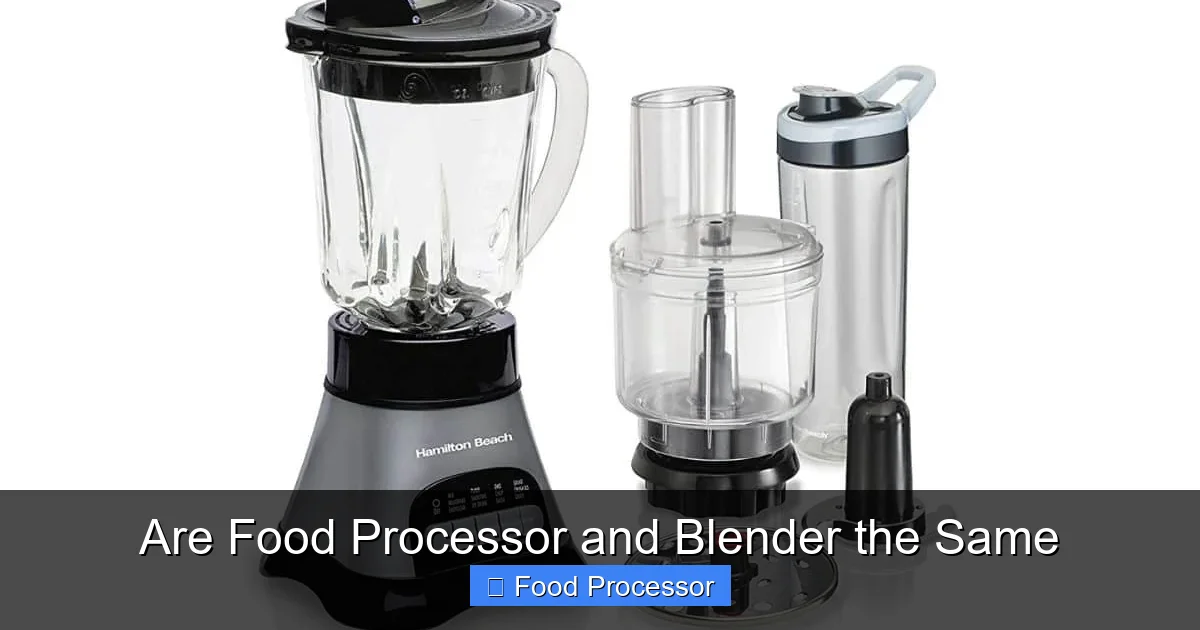
Many home cooks wonder, “Are food processor and blender the same?” While both are powerful kitchen appliances, they are designed for distinct purposes. A food processor excels at handling solid ingredients for tasks like chopping, slicing, shredding, and kneading. In contrast, a blender is optimized for liquid-based mixtures, creating smooth purées, drinks, and sauces. Understanding their unique features will help you choose the right tool for every culinary task.
Are Food Processor and Blender the Same?
It’s a common question that pops up in many kitchens: “Are food processor and blender the same?” At first glance, these two kitchen workhorses might seem quite similar. Both have powerful motors, sharp blades, and containers designed to transform ingredients. You might even hear people use the terms interchangeably. However, while they share some basic principles of operation, a food processor and a blender are actually distinct appliances, each with its own strengths and ideal uses.
Understanding the differences between a food processor and a blender can save you time, improve your cooking results, and help you decide which one (or both!) deserves a spot on your countertop. In this comprehensive guide, we’ll dive deep into what makes each appliance unique, explore their primary functions, and help you determine which tool is best suited for your culinary adventures. By the end, you’ll be a pro at knowing exactly when to reach for your food processor and when to grab your blender.
Key Takeaways
- Fundamental Difference: Food processors are designed for solid ingredients, focusing on chopping, slicing, shredding, and kneading, while blenders specialize in liquids, creating smooth purées and drinks.
- Blade Design: Food processors use a variety of interchangeable blades (S-blade, slicing discs, shredding discs) to process solids. Blenders typically have fixed blades optimized for drawing liquids down and crushing ice.
- Container Shape: Food processor bowls are wide and shallow, allowing ingredients to move freely and be processed evenly. Blender pitchers are tall and narrow, creating a vortex ideal for liquid blending.
- Motor Power & Speed: While both have powerful motors, blenders often have higher RPMs (revolutions per minute) to create smooth consistencies. Food processors prioritize torque for cutting through tougher, solid ingredients.
- Versatility: Food processors are highly versatile with multiple attachments for different prep tasks beyond just chopping. Blenders are best for tasks requiring a liquid base or very smooth results.
- Cross-Functionality: A food processor can sometimes handle light blending tasks if enough liquid is present, but it won’t achieve the same smoothness as a blender. A blender struggles with thick doughs or precise chopping.
- Choosing the Right Tool: Your choice depends on your primary cooking needs. If you make a lot of smoothies and soups, a blender is ideal. If you frequently chop vegetables, make doughs, or shred cheese, a food processor is indispensable.
Understanding the Food Processor
Let’s start by getting to know the food processor. This versatile kitchen gadget is a true multi-tasker, designed to handle a wide range of food preparation tasks that involve solid ingredients.
What is a Food Processor?
A food processor is an electric kitchen appliance used to facilitate repetitive tasks in the preparation of food. Think of it as your personal sous chef, ready to chop, slice, shred, grate, purée, and even knead dough with minimal effort from you. Its primary goal is to process solid foods efficiently and consistently.
Key Features of a Food Processor
Food processors come with several distinguishing features that set them apart:
- Wide Work Bowl: Unlike a blender’s tall pitcher, a food processor has a wide, relatively shallow work bowl. This design allows ingredients to spread out, making it easy to process larger quantities and diverse shapes evenly.
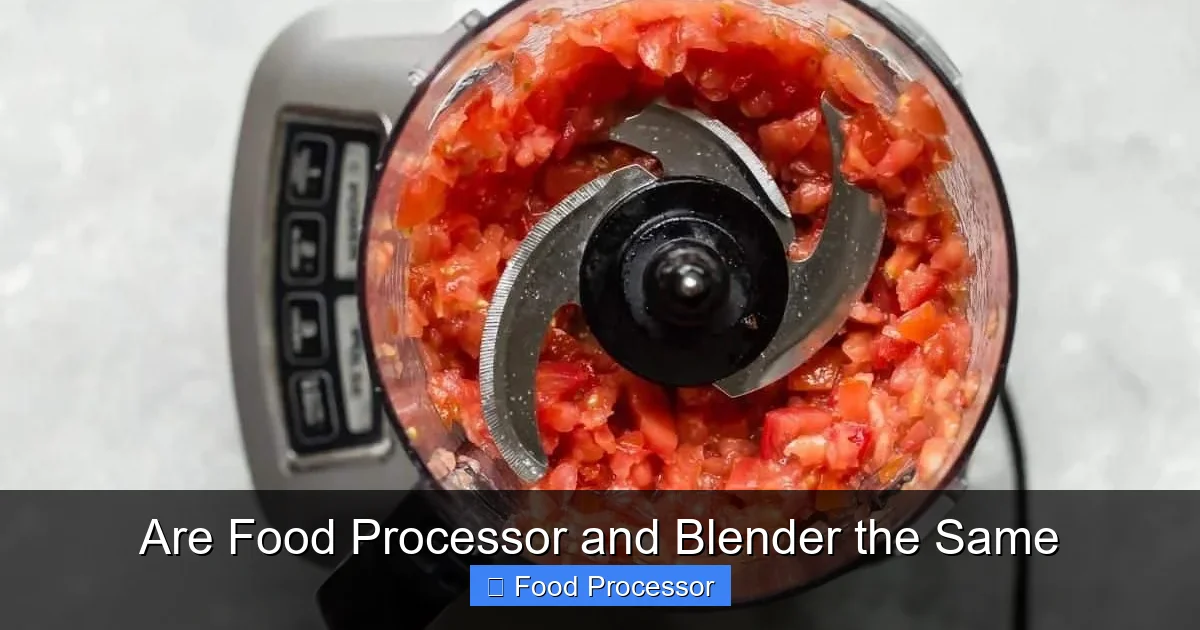
- Interchangeable Blades and Discs: This is perhaps the biggest differentiator. Food processors don’t just have one blade. They typically come with an S-shaped blade for chopping and puréeing, plus various interchangeable discs for slicing, shredding, grating, and sometimes even julienning.
- Powerful Motor with Torque: Food processors are built with motors that deliver high torque. This power is essential for cutting through hard vegetables, shredding cheese, or kneading thick dough without stalling.
- Feed Chute and Pusher: A feed chute on the lid allows you to add ingredients while the machine is running, which is particularly useful for continuous slicing or shredding. The pusher helps guide ingredients down to the blades safely.
- Lid with Locking Mechanism: For safety, food processors usually have a secure lid that locks into place before the motor can engage.
Common Uses for a Food Processor
The versatility of a food processor truly shines through its many applications:
- Chopping and Mincing: Quickly chop onions, garlic, herbs, and nuts without tears or tedious knife work.
- Slicing and Shredding: Prepare uniform slices of vegetables for salads or gratins, or shred cheese for pizzas and tacos using the specialized discs. You can even use a food processor to shred chicken for meals.
- Dough Making: Many food processors come with a dough blade, making them excellent for kneading bread dough, pizza dough, or pie crusts in minutes.
- Making Purées and Sauces (thick ones): Perfect for hummus, pesto, thick salsas, nut butters, and chunky sauces where a coarser texture is desired or where there isn’t much liquid. For those wondering, “should I make hummus in blender or food processor?”, a food processor is generally preferred for its texture.
- Grinding: Grind nuts into flour, make breadcrumbs from stale bread, or even grind coffee beans if you don’t have a dedicated grinder.
- Ricing Cauliflower: A food processor makes quick work of turning cauliflower florets into “rice.”
Understanding the wide array of tasks this appliance can handle highlights the numerous advantages of a food processor in any kitchen.
Understanding the Blender
Visual guide about Are Food Processor and Blender the Same
Image source: culinaryhill.com
Now, let’s turn our attention to the blender, an appliance famous for its ability to create smooth, liquid concoctions.
What is a Blender?
A blender is an electric kitchen appliance primarily used to mix, purée, or emulsify food and other substances. Its design is optimized for creating smooth, often liquid-based, results. Blenders are the go-to tool for drinks, smooth soups, and creamy sauces.
Key Features of a Blender
Blenders have distinct characteristics tailored for liquid processing:
- Tall, Narrow Pitcher: Blenders feature a tall, often tapered pitcher (made of glass, plastic, or stainless steel) with a handle and pouring spout. This shape helps create a powerful vortex that pulls ingredients down into the blades for thorough blending.
- Fixed Blades: Most blenders have a set of fixed blades at the bottom of the pitcher. These blades are typically sharper and designed to pulverize ingredients when combined with liquid.
- High-Speed Motor: Blenders often boast high RPM (revolutions per minute) motors, enabling them to achieve incredibly smooth consistencies and effectively crush ice.
- Lid with Filler Cap: Blender lids usually have a removable cap in the center, allowing you to add ingredients while blending without stopping the machine.
- Simpler Controls: Blenders typically have fewer speed settings and fewer specialized functions compared to food processors, focusing more on simple blending.
Common Uses for a Blender
Blenders excel in tasks where liquids are involved and a smooth consistency is desired:
- Smoothies and Shakes: This is perhaps the most common use, perfectly blending fruits, vegetables, ice, and liquids into creamy drinks.
- Soups and Purées: Create perfectly smooth creamy soups (like tomato or squash soup) directly in the blender, or purée cooked vegetables into baby food.
- Sauces and Dressings: Ideal for making smooth salad dressings, marinades, and liquid-based sauces without chunks.
- Crushing Ice: Many blenders are powerful enough to crush ice for frozen drinks or cocktails.
- Making Nut Milks: Easily blend nuts and water to create homemade almond milk or other plant-based milks.
Core Differences: Food Processor vs. Blender
Visual guide about Are Food Processor and Blender the Same
Image source: culinaryhill.com
Now that we’ve looked at each appliance individually, let’s directly compare their core differences to fully answer the question: “Are food processor and blender the same?”
Blades and Attachments
This is the most significant divergence.
- Food Processor: Comes with a variety of blades and discs. The standard S-blade is great for chopping and puréeing, but the real power comes from attachments like slicing discs (for perfectly uniform vegetable slices), shredding discs (for cheese, cabbage, carrots), and dough blades.
- Blender: Typically features a single, fixed blade assembly designed to create a vortex and pulverize ingredients into a smooth liquid. While some high-end blenders have specialized blades for different tasks, they are nowhere near as diverse as a food processor’s attachments.
Bowl vs. Pitcher Design
The shape of their containers dictates their function.
- Food Processor: Its wide, shallow work bowl provides ample space for solid ingredients to tumble and be processed evenly by the blades or discs. This design is excellent for processing items without turning them into a paste too quickly.
- Blender: The tall, narrow pitcher concentrates ingredients around the blades, creating a powerful vortex. This design is crucial for drawing down liquids and solids to achieve a smooth, consistent blend, especially for thin mixtures.
Motor Power and Speed
While both are powerful, their power delivery differs.
- Food Processor: Prioritizes torque. Its motor is designed to push through dense, solid ingredients efficiently, even when the bowl is packed. It typically operates at lower speeds but with greater force.
- Blender: Often boasts higher RPMs, meaning the blades spin much faster. This high speed is vital for breaking down fibers, liquefying ingredients, and creating ultra-smooth textures in liquid-heavy mixtures.
Texture and Consistency
The desired output texture is a key factor.
- Food Processor: Excels at tasks where you want distinct pieces, varying textures (e.g., chunky salsa, coarse crumbs), or uniform slices/shreds. It can purée, but usually to a thicker, less uniform consistency than a blender.
- Blender: Is the champion of smoothness. It can turn fibrous fruits, vegetables, and ice into a perfectly uniform, liquid consistency, whether it’s a silky soup or a frothy smoothie.
Versatility and Specialized Tasks
Who wins in overall kitchen utility?
- Food Processor: Highly versatile for prep tasks. It replaces many manual knife tasks and can handle everything from chopping nuts to making pastry dough. The advantages of using a food processor for daily cooking are significant, especially for meal prep.
- Blender: More specialized for liquid-based creations. While some powerful blenders can handle light chopping or grinding, their primary strength lies in making beverages, soups, and smooth sauces.
Can a Food Processor Do What a Blender Does?
A food processor can perform *some* blender-like tasks, but with limitations. If you add enough liquid, you can purée ingredients in a food processor, like making a thicker smoothie or a chunkier soup. However, it usually won’t achieve the same silky-smooth consistency as a dedicated blender because of its blade design and wider bowl. It’s not ideal for crushing large amounts of ice or making frothy drinks. While a food processor can be used in place of a blender for certain specific recipes, it’s not a true substitute.
Can a Blender Do What a Food Processor Does?
Generally, a blender struggles to perform food processor tasks effectively. Its tall, narrow pitcher and fixed blades are not designed for chopping dry, solid ingredients evenly. You might end up with a few pulverized pieces at the bottom and larger chunks on top. A blender is unsuitable for slicing, shredding, kneading dough, or making coarse crumbs. Attempting these tasks can overwork the motor, dull the blades, or simply yield unsatisfactory results.
When to Choose Which Appliance (Decision Guide)
Making the right choice depends on your cooking habits and needs.
When a Food Processor Shines
- You regularly chop, mince, or dice vegetables for cooking.
- You bake often and need to make doughs or pie crusts.
- You enjoy making homemade dips like hummus, pesto, or chunky salsa.
- You want to shred cheese, cabbage, or carrots quickly.
- You need to make breadcrumbs or grind nuts into flour.
- You process large quantities of ingredients for meal prep.
If these tasks sound like your regular kitchen routine, a food processor is an invaluable asset.
When a Blender is Best
- You make smoothies, milkshakes, or protein shakes daily.
- You love creamy, smooth soups and want to purée them directly.
- You prepare liquid-based sauces, dressings, or marinades frequently.
- You need to crush ice for cocktails or frozen desserts.
- You make homemade nut milks or fruit juices.
For these liquid-centric tasks, a blender is the undisputed champion.
The Hybrid Solution: Food Processor and Blender Combos
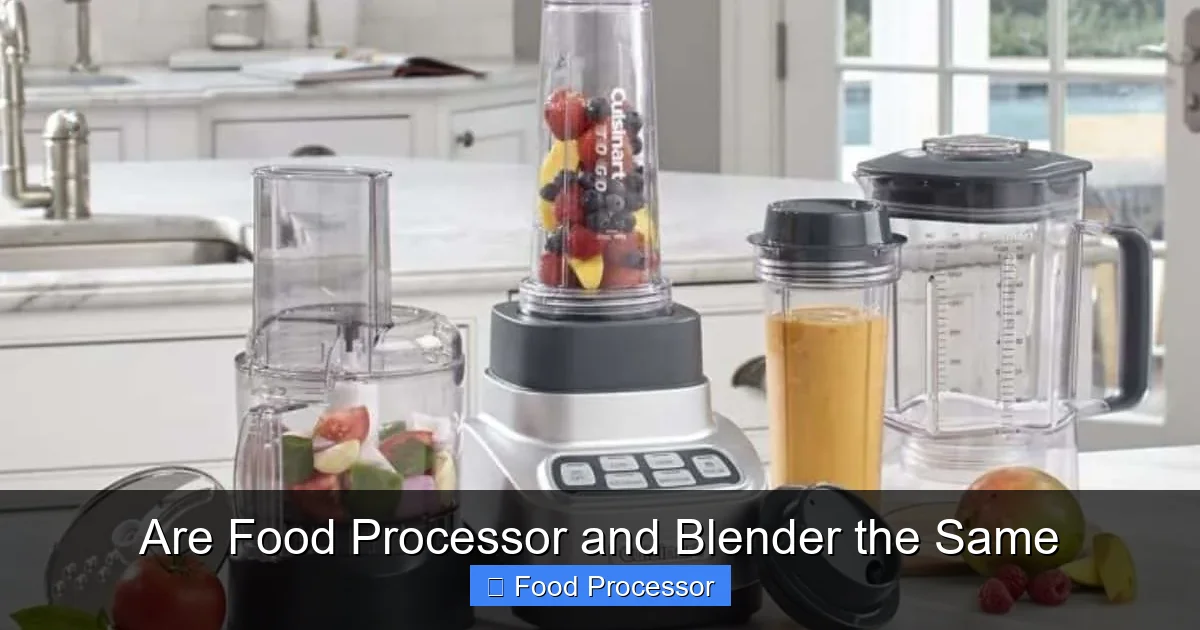
If you find yourself needing both appliances regularly, you’re in luck! Many manufacturers offer “combo” units or multi-functional kitchen systems that include both a food processor work bowl and a blender pitcher, often using the same motor base. These can be a great space-saving solution, offering the best of both worlds without cluttering your counter with two separate large appliances. When considering a combination unit, you might want to look into what is the best food processor and blender combo for your specific needs.
Practical Tips for Maximizing Your Appliances
- Read the Manual: Always read your appliance’s manual. It will provide specific instructions on proper usage, attachments, cleaning, and safety.
- Don’t Overfill: Whether it’s a food processor or a blender, avoid overfilling. Overfilling can lead to uneven processing, spills, and strain on the motor.
- Cut Ingredients Properly: For food processors, cut ingredients into uniform sizes that fit the feed chute to ensure even processing. For blenders, smaller pieces blend more easily.
- Add Liquids First to Blenders: When making smoothies, always add liquids to the blender pitcher first. This helps the blades catch and pull down solids more efficiently.
- Pulse for Control: Use the “pulse” function on both appliances for better control over texture. A few short pulses are better than continuous blending for many tasks.
- Clean Immediately: Cleaning your food processor parts and blender pitcher immediately after use prevents food from drying and sticking, making cleanup much easier. Many parts are often dishwasher safe, but check your specific model.
Common Misconceptions to Avoid
- “They’re just different sizes of the same thing”: This is a common misconception. As we’ve seen, their fundamental design and purpose are quite different.
- “A powerful blender can do everything a food processor can”: While some high-powered blenders might manage very light chopping, they cannot replicate the slicing, shredding, or dough-kneading capabilities of a food processor.
- “A food processor can make perfectly smooth smoothies”: While it can blend ingredients for a smoothie, the consistency will likely be thicker and less uniform than what a blender produces, often leaving small fibrous bits.
Conclusion
So, are food processor and blender the same? Absolutely not! While they both play crucial roles in modern kitchens, they are specialized tools designed for different jobs. The food processor is your workhorse for solid food preparation, excelling at chopping, slicing, shredding, and kneading. The blender is the king of liquids, creating perfectly smooth purées, drinks, and sauces.
Understanding these distinctions empowers you to choose the right tool for the task at hand, making your cooking more efficient and enjoyable. Whether you opt for a dedicated food processor, a powerful blender, or a convenient combo unit, knowing their unique strengths will help you get the most out of your kitchen appliances and elevate your culinary creations. Happy cooking!
