

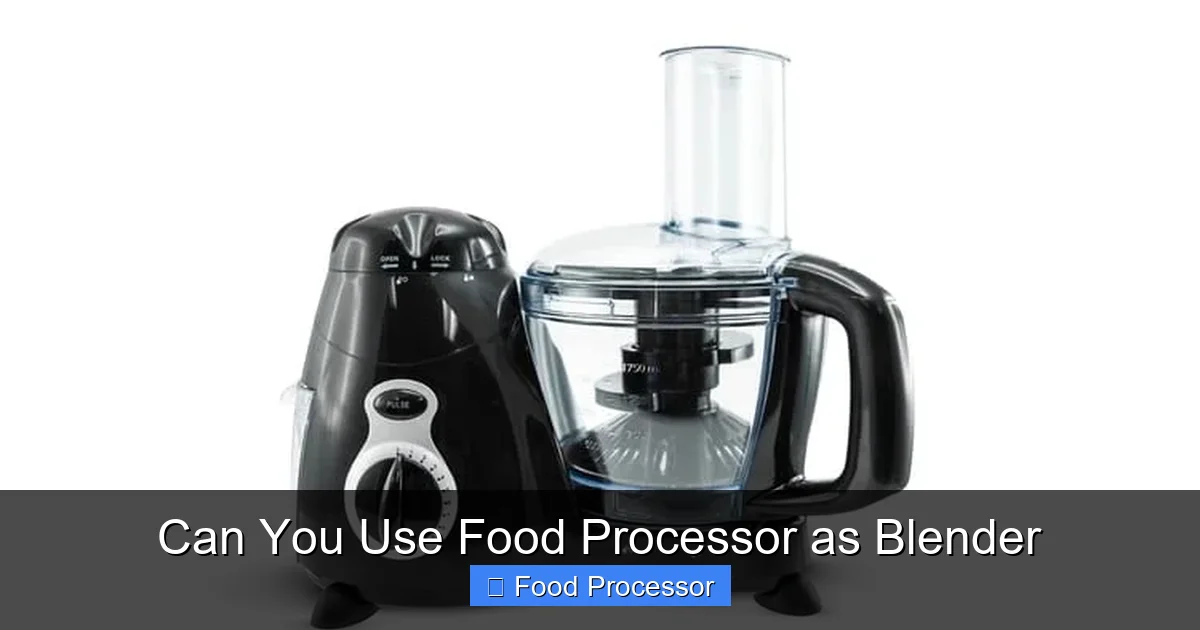
Wondering if you can use a food processor as a blender? The short answer is yes, you can use a food processor as a blender for many tasks, especially for thicker mixtures like sauces, dips, and some smoothies. However, it’s important to understand their fundamental differences and adapt your technique. While a food processor excels at chopping and mixing, it might not achieve the super-smooth consistency of a dedicated blender for very liquidy items or crushing ice.
Can You Use Food Processor as Blender?
In the bustling world of kitchen gadgets, few appliances are as versatile as the food processor. It chops, slices, shreds, and mixes with remarkable efficiency. But what happens when you need a blender, and all you have is your trusty food processor? Many home cooks find themselves asking: “Can I use a food processor as a blender?”
The exciting news is, yes, you absolutely *can* use a food processor as a blender for a wide range of tasks! However, it’s not a perfect one-to-one replacement, and understanding their differences is key to successful results. This comprehensive guide will walk you through exactly when and how to leverage your food processor’s blending capabilities, ensuring you get the most out of this kitchen workhorse.
We’ll cover the fundamental differences between these two appliances, explore the types of blending tasks a food processor excels at, provide step-by-step instructions for getting the best blend, and offer practical tips to troubleshoot common issues. By the end, you’ll be a pro at making your food processor pull double duty!
Key Takeaways
- Functionality Differences: Food processors are designed for chopping, slicing, shredding, and mixing, using wider, sharper blades. Blenders are built for pulverizing and pureeing, with powerful motors and specialized blades to create smooth liquids.
- Best Use Cases: A food processor works well as a blender substitute for thick mixtures like hummus, pesto, salsa, nut butters, and pureeing cooked vegetables for soups.
- Limitations: It struggles to create super-smooth beverages (like thin smoothies or juices) or crush large amounts of ice effectively due to its blade design and lower RPM compared to most blenders.
- Technique is Key: To use a food processor as a blender, always cut ingredients into smaller pieces, add liquids first, and use the “pulse” function frequently, scraping down the sides as needed.
- Blade Selection: Always use the S-blade (also known as the processing blade or chopping blade) when attempting to blend in a food processor.
- Avoid Overfilling: Process ingredients in smaller batches if necessary to prevent strain on the motor and achieve a more uniform consistency.
- Consider a Combo: If you frequently need both functionalities, a dedicated food processor and blender combo appliance might be the best long-term solution.
Understanding the Core Differences: Food Processor vs. Blender
Before we dive into “how-to,” let’s quickly review why blenders and food processors are built differently. Knowing these distinctions will help you understand the strengths and limitations of using a food processor as a blender.
Blenders: Power for Smoothness
Blenders, with their tall, narrow jars and usually a single stack of sharp blades at the bottom, are designed to create smooth, homogeneous mixtures. They typically have powerful motors that spin at high RPMs (revolutions per minute), creating a vortex effect that pulls ingredients down into the blades. This design is perfect for:
- Smoothies and shakes
- Soups (pureeing hot liquids)
- Nut milks
- Crushing ice
- Thin sauces and dressings
Food Processors: Versatility for Chunks and Doughs
Food processors, on the other hand, feature a wider, shorter bowl and typically use a detachable S-shaped blade (or “chopping blade”) that sits lower in the bowl. Their strength lies in their ability to handle solid ingredients, chop them uniformly, and mix them together. While they can chop very finely, their primary design goal isn’t to create perfectly smooth liquids. They excel at:
- Chopping vegetables and nuts
- Shredding cheese or cabbage
- Slicing fruits and vegetables with different discs
- Making doughs, crusts, and purees
- Grinding meats or nuts
- Thick dips and spreads like hummus or pesto
The main takeaways? Blenders pull ingredients down to create smooth liquids; food processors push ingredients around to chop and mix. This difference in blade design and motor strength dictates what each appliance does best. But with the right technique, your food processor can mimic some of a blender’s actions surprisingly well.
What Can a Food Processor Blend Like a Blender?
You can use a food processor as a blender for many tasks, especially those that involve thicker consistencies or require a chunky texture rather than a completely smooth liquid. Think of it this way: if your recipe leans more towards a “paste,” “puree,” or “thick sauce,” your food processor is likely up to the task.
Visual guide about Can You Use Food Processor as Blender
Image source: appliancesforlife.com
- Thick Smoothies and Shakes: If you love a hearty, fruit-and-yogurt based smoothie that’s not too watery, your food processor can absolutely handle it. Just don’t expect it to make a super-thin, juice-like consistency or perfectly pulverize lots of fibrous greens without effort. In fact, a food processor can be used to make smoothies, but with some adjustments.
- Hummus and Dips: This is where a food processor shines! The wide bowl and S-blade are perfect for creating creamy hummus, rich pesto, vibrant salsas, and other chunky or smooth dips. If you’re pondering should I make hummus in blender or food processor, the food processor usually wins for its consistency.
- Nut Butters: Making homemade peanut, almond, or cashew butter is a breeze in a food processor. It can grind nuts down to a smooth, creamy consistency, though it takes patience and scraping.
- Pureed Soups and Sauces: For pureeing cooked vegetables into a thick soup base or creating creamy pasta sauces, a food processor works very well. Just make sure your ingredients are already cooked and soft.
- Baby Food: Small batches of pureed fruits and vegetables for baby food are easily made in a food processor.
- Dressings and Marinades: For thicker dressings where you want some texture, like a chunky blue cheese dressing, or marinades that incorporate herbs and spices, your food processor is an excellent choice.
Step-by-Step Guide: How to Use Your Food Processor as a Blender
Ready to make your food processor mimic a blender? Follow these steps for the best results.
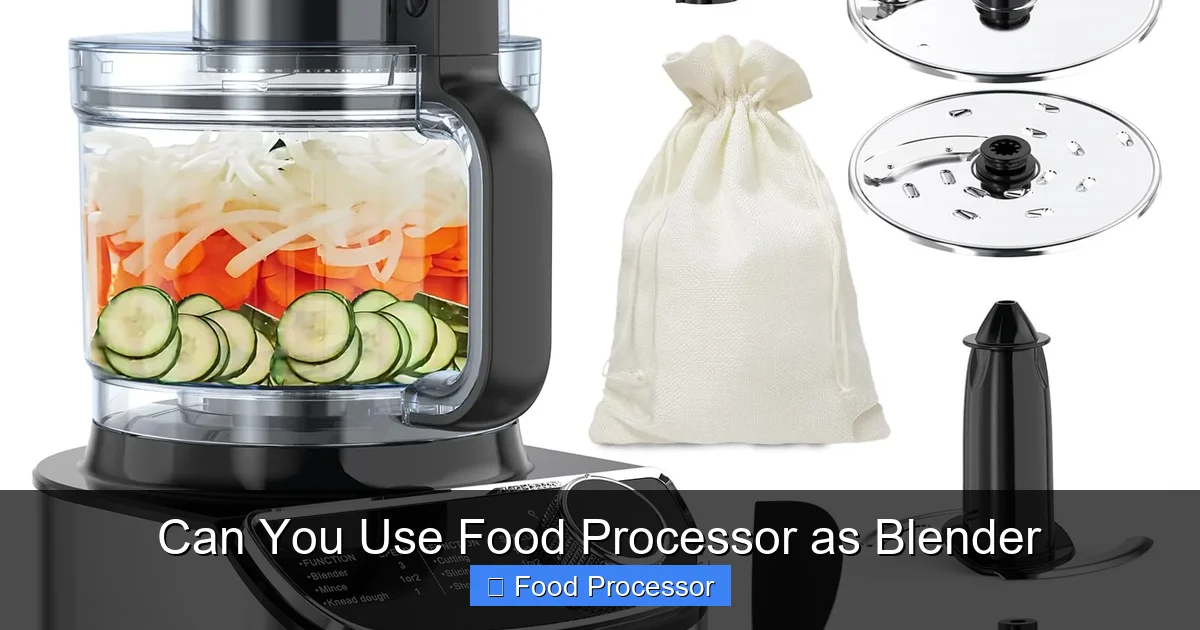
Visual guide about Can You Use Food Processor as Blender
Image source: m.media-amazon.com
Step 1: Choose the Right Blade
Always use the standard S-shaped blade (also known as the chopping blade or processing blade). This is the blade designed for most general food processing tasks, including chopping, mixing, and pureeing.
Step 2: Prepare Your Ingredients
This is crucial when using a food processor as a blender. Unlike a blender that can often handle larger chunks, a food processor benefits from smaller pieces. Chop all solid ingredients (fruits, vegetables, nuts, ice) into pieces no larger than 1 inch (2.5 cm). Smaller pieces mean less strain on the motor and a smoother, faster blend.
Step 3: Add Liquids First (or Layer Smartly)
For most blending tasks, especially smoothies or sauces, adding some of your liquid ingredients to the bottom of the food processor bowl first can help the blades get traction. This creates a base for the solids to be pulled into. If you have both solids and liquids, try layering: liquid, some solids, more liquid, then the remaining solids.
Step 4: Don’t Overfill the Bowl
Food processors generally have a wider bowl, but they also have a maximum fill line for liquids. Never exceed this line. For thicker mixtures, it’s often better to work in smaller batches to ensure everything gets processed evenly and to prevent the motor from straining.
Step 5: Master the “Pulse” Function
This is your best friend when using a food processor as a blender. Instead of continuous running, use short bursts of the “pulse” button. Pulsing helps to:
- Control Consistency: You can stop and check the texture more easily.
- Prevent Overheating: Short bursts prevent the motor from getting too hot, especially with thick mixtures.
- Re-distribute Ingredients: The momentary stop allows ingredients to fall back down towards the blade for more even processing.
Step 6: Scrape Down the Sides Frequently
Because of the food processor’s wider bowl, ingredients often get pushed up the sides, away from the blade. Stop, remove the lid, and use a spatula to scrape down the sides of the bowl frequently. This ensures all ingredients are incorporated and helps achieve a uniform consistency.
Step 7: Add More Liquid as Needed
If your mixture is too thick and isn’t processing smoothly, add more liquid (water, broth, milk, oil, etc.) one tablespoon at a time through the feed tube while pulsing. This helps thin the mixture and aids in achieving your desired consistency. Be cautious not to add too much at once, as you can always add more but can’t take it away.
Step 8: Monitor and Adjust
Keep an eye on the consistency. For thinner blends, you might need to pulse more frequently and scrape more often. For thicker purees, you might be able to run it for slightly longer continuous bursts, but always listen to your motor and avoid straining it.
Practical Tips for Best Results
- Chill Ingredients: For cold items like smoothies, using frozen fruit and chilled liquids helps maintain a thick, cold consistency without needing too much ice, which a food processor struggles with.
- Small Batches Are Your Friend: Especially for larger recipes, processing in two or three smaller batches will yield better results than trying to cram everything in at once.
- Don’t Over-Process: While you’re aiming for a “blend,” continuous running can sometimes generate heat, altering the flavor or texture of delicate ingredients. Use the pulse button for better control.
- Handle Hot Liquids with Care: If pureeing hot soups, be very cautious. Fill the bowl only about halfway, and make sure the lid is securely locked. The steam from hot liquids can build pressure and blow the lid off. Some food processors aren’t designed for hot liquids, so check your manual.
- Consider a Ninja: If you own a Ninja food processor, it can be used as a blender for many tasks. Some Ninja models even come with interchangeable blender cups, blurring the lines between the two appliances.
When to Stick to a Blender
Despite its versatility, there are times when a food processor simply can’t replace a dedicated blender effectively. These are situations where a blender’s powerful motor and specific blade design truly shine:
- Super Smooth Drinks: If you want a completely smooth, thin fruit juice or a very liquidy green smoothie with no discernible pulp, a blender is the superior choice. A food processor will likely leave a slightly granular texture.
- Crushing Large Amounts of Ice: While a food processor can handle a few ice cubes when making a thick shake, it’s not designed for crushing large quantities of ice for frozen drinks or snow cones. A blender’s robust blades and powerful motor are built for this task.
- Pulverizing Seeds and Small Fibers: For recipes requiring seeds to be completely pulverized (like chia seeds in a smoothie) or tough fibrous greens to disappear entirely, a blender’s high-speed action is unmatched.
- Making Smooth Pureed Soups from Whole, Hard Vegetables: While a food processor can puree *cooked* soft vegetables for soup, a blender is better for raw, hard vegetables (after cooking) to get an exceptionally smooth consistency. In many cases, you should use a blender or food processor for soup depending on the desired texture.
Troubleshooting Common Issues
1. Ingredients Aren’t Blending or Are Stuck
- Issue: Solids are just spinning around on top of the blade, or liquids aren’t incorporating.
- Solution:
- Add More Liquid: The mixture might be too thick. Add liquid 1-2 tablespoons at a time through the feed tube while pulsing.
- Chop Smaller: If your ingredients are too large, they won’t make good contact with the blade. Stop, remove, and chop them into smaller pieces.
- Scrape Down Sides: Ingredients get stuck on the sides. Stop, remove the lid, and scrape everything down towards the blade.
- Increase Amount: Sometimes, there isn’t enough material for the blade to grab. If it’s a very small amount, the blade might just spin without contact. Try adding more ingredients up to the minimum fill line.
2. Motor Straining or Overheating
- Issue: The motor sounds labored, or you smell a burning odor.
- Solution:
- Don’t Overload: You’ve probably put too much in the bowl. Remove some ingredients and process in smaller batches.
- Add More Liquid: A very thick mixture forces the motor to work harder. Thin it out with more liquid.
- Give it a Break: If the motor is straining, turn it off immediately. Let it cool down for a few minutes before trying again.
- Pulse, Don’t Continuously Run: Continuous running for thick mixtures can stress the motor. Use short pulses instead.
3. Uneven Consistency
- Issue: Some parts are smooth, others are chunky.
- Solution:
- Scrape More Often: This is almost always the culprit. Ensure you’re frequently stopping and scraping the sides and bottom of the bowl.
- Process Longer: You might just need more processing time and more scraping.
- Add More Liquid: A slightly thinner mixture tends to circulate better, leading to more even blending.
- Smaller Pieces Initially: Revisit step 2. If your starting pieces are too varied in size, you’ll get uneven results.
Conclusion
So, can you use a food processor as a blender? Absolutely! While it might not replace a high-powered blender for every single task, your food processor is a highly capable alternative for a wide variety of blending needs. From creamy hummus to thick pureed soups and even some hearty smoothies, it proves its worth time and again.
By understanding the fundamental differences, preparing your ingredients properly, mastering the pulse function, and being diligent about scraping down the bowl, you can achieve excellent results. Don’t be afraid to experiment and push the boundaries of what your food processor can do. With these tips and techniques, you’ll be blending like a pro, making the most of your versatile kitchen appliance!
