

Yes, a food processor can be used as a blender for many tasks, but there are important differences. While it excels at thicker mixtures like purees, nut butters, and hummus, it often struggles with achieving the super-smooth consistency of thin liquids or crushing ice like a dedicated blender. This guide will show you when and how to effectively use your food processor as a blender, highlighting its strengths and limitations for various culinary creations.
Can Food Processor Be Used as Blender?
Have you ever found yourself in the kitchen, staring at a recipe that calls for a blender, but all you have is your trusty food processor? It’s a common dilemma! Many home cooks wonder if these two seemingly similar appliances are interchangeable. The short answer is: yes, often, but with some important caveats and understanding.
This comprehensive guide will demystify the relationship between food processors and blenders. We’ll explore when your food processor can confidently step in as a blender substitute, what tasks it truly excels at, and where it might fall short. You’ll learn the best techniques, practical tips, and even some delicious recipes to try. By the end, you’ll be a pro at making the most of your food processor, whether it’s chopping veggies or pureeing a silky soup!
Key Takeaways
- Food processors can substitute for blenders in many situations: They are excellent for tasks that require chopping, grinding, or creating thick, textured purees, sauces, and dips.
- Understand the core differences: Food processors have wider bowls and S-blades for chopping, while blenders have taller jars and angled blades for creating a vortex and smoother liquids.
- Not ideal for all blending tasks: A food processor struggles with achieving very smooth, thin liquids or efficiently crushing large amounts of ice due to its blade design and bowl shape.
- Technique is crucial for success: Use the pulse function, scrape down the sides frequently, and add liquids gradually to help your food processor achieve a more consistent “blended” texture.
- Best for specific recipes: It excels at making hummus, pesto, nut butter, chunky salsa, thicker smoothies, and pureed soups where a slightly textured result is acceptable or desired.
- Mind the liquid level: Food processors are not designed for very thin liquids, which can leak through the spindle if overfilled or processed for too long.
- Consider a combo if you need both regularly: If you frequently switch between chopping and blending, a dedicated appliance or a food processor and blender combo might be more efficient.
Understanding the Core Differences: Food Processor vs. Blender
Before we dive into how to use a food processor as a blender, it’s helpful to understand what makes each appliance unique. While both chop and mix ingredients, their designs are optimized for different tasks. Knowing these distinctions will help you decide when your food processor can genuinely replace a blender.
Blade Design
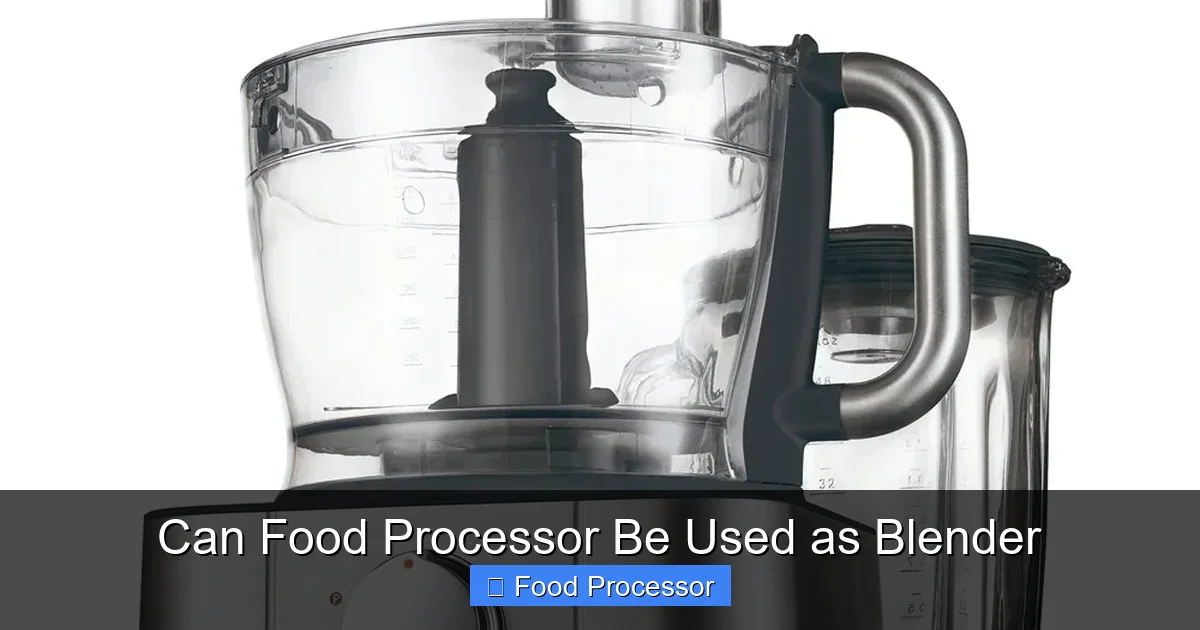
The blades are arguably the most significant difference. A food processor typically comes with a sharp S-shaped blade that sits low in a wide bowl. This design is fantastic for chopping, slicing, dicing, and kneading. It moves ingredients around the bowl, ensuring even processing of solids.
Blenders, on the other hand, usually feature a multi-pronged blade assembly fixed at the bottom of a tall, narrow pitcher. These blades are designed to create a vortex, pulling ingredients down towards the blades and liquefying them quickly and efficiently.
Bowl Shape and Size
Food processor bowls are generally wide and squat. This wide base allows ingredients to spread out, making it easy to process larger quantities of solid foods like vegetables, nuts, or dough. It’s less ideal for thin liquids because they tend to slosh around rather than being pulled into a central vortex.
Blender pitchers are tall and slender. This shape, combined with the blade design, is perfect for liquids. It encourages ingredients to circulate through the blades, resulting in exceptionally smooth purees, drinks, and sauces.
Motor Power and Speed
While both appliances have powerful motors, blenders often have higher speeds specifically geared towards pulverizing ingredients into smooth consistencies and crushing ice. Food processors focus more on torque and consistency for chopping and grinding.
Best Uses for Each
- Food Processors Excel At: Chopping vegetables, slicing, shredding, grating, making dough, grinding nuts, making nut butter, pesto, hummus, and chunky salsa.
- Blenders Excel At: Smoothies, milkshakes, pureed soups, thin sauces, crushing ice, protein shakes, and achieving perfectly smooth liquids.
When Can a Food Processor Be Used as a Blender?
Great news! Your food processor is more versatile than you might think. It can absolutely serve as a blender substitute for many kitchen tasks. The key is to know its strengths. Generally, if your recipe calls for a thick, textured consistency rather than a super-smooth liquid, your food processor is up to the challenge. In fact, for some tasks, like making a thick and creamy hummus, a food processor might even be preferred! You might be surprised at how well a food processor can be used in place of a blender for many recipes.
What Your Food Processor CAN Do Well as a Blender Substitute:
- Thick Purees: Think baby food, vegetable purees, or fruit purees for pies and tarts.
- Sauces and Dips: Pesto, chunky salsa, a hearty marinara, and especially creamy dips like hummus or baba ghanoush.
- Nut Butters: Almond butter, peanut butter, cashew butter – the food processor’s strong motor and S-blade are perfect for breaking down nuts into a smooth, oily spread.
- Soup Bases: For pureed soups, it can blend cooked vegetables into a creamy base. You might just need to do it in batches and accept a slightly thicker texture than a blender would produce.
- Thicker Smoothies/Bowls: If you prefer a smoothie with some texture, or you’re making a smoothie bowl where you want a very thick consistency that holds toppings, a food processor works well. For more on this, check out our guide on can a food processor be used to make smoothies.
- Crumbing and Grinding: While not strictly “blending,” a food processor excels at turning bread into crumbs or grinding nuts and spices, tasks a blender might also perform but less efficiently for solids.
What Your Food Processor Might Struggle With:
- Super Smooth Liquids: If you want a perfectly thin, lump-free juice or a very silky soup, a food processor may leave behind tiny pieces, especially with fibrous ingredients.
- Crushing Ice: While it can handle small amounts of ice, a food processor isn’t designed for large batches of ice crushing like a powerful blender. The ice tends to bounce around rather than being continuously pulled into the blades.
- Very Large Batches of Liquid: Due to the wider, shallower bowl, processing a big volume of thin liquid can be messy and inefficient, as liquids can slosh up the sides or even leak.
Step-by-Step Guide: How to Use Your Food Processor as a Blender
Ready to put your food processor to work as a blender? Follow these steps for the best results!
1. Prepare Your Ingredients
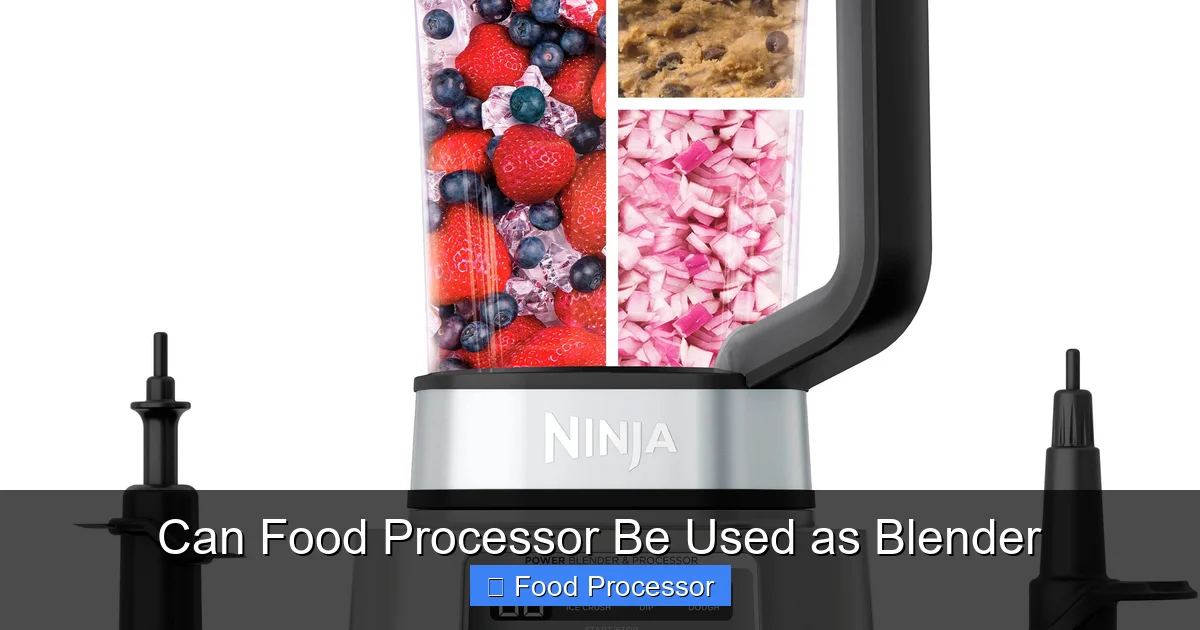
Before you start, make sure all your ingredients are cut into small, uniform pieces. This is crucial for a food processor, as its blades aren’t as aggressive at breaking down large chunks as a blender’s. Aim for pieces no larger than 1 inch.
Visual guide about Can Food Processor Be Used as Blender
Image source: pisces.bbystatic.com
Visual guide about Can Food Processor Be Used as Blender
Image source: static.petersofkensington.com.au
2. Assemble Your Food Processor
Ensure your food processor is properly assembled with the standard S-blade (also known as the chopping blade) in place. Lock the bowl and lid securely. Leaks are a common issue if the lid isn’t sealed tightly, especially when dealing with liquids.
3. Add Ingredients Strategically
Always add liquids first if your recipe calls for them, as they help the blades move. Then add softer ingredients, followed by harder ones like nuts or ice (if using sparingly). Remember the food processor’s wide bowl; don’t overfill it, especially with liquids, to prevent spills and ensure even processing. A general rule is to fill it no more than halfway to two-thirds full.
4. Pulse, Don’t Continuously Blend
Unlike a blender, which often benefits from continuous high-speed blending, a food processor usually works best with the “pulse” function. Pulsing gives you more control over the consistency and prevents over-processing. It also allows ingredients to settle between pulses, encouraging more even chopping. Press the pulse button for a second or two, then release. Repeat until you reach the desired consistency.
5. Scrape Down the Sides
During the blending process, ingredients will inevitably stick to the sides of the bowl. Periodically stop the machine, remove the lid, and use a spatula to scrape down the sides, pushing ingredients back towards the blade. This ensures everything gets processed evenly.
6. Add Liquid Gradually
If your mixture is too thick or isn’t blending smoothly, add liquids a tablespoon or two at a time through the feed tube while the machine is running (if your model allows, otherwise stop and add). This helps to thin the mixture and allow the blades to catch everything.
7. Check Consistency
Stop the machine and check the consistency regularly. If you’re aiming for a smoother texture, keep pulsing and scraping. Remember that a food processor might not achieve the perfectly silky-smooth texture a high-powered blender can, but it can get very close for many applications.
8. Pour and Clean
Once your mixture is to your liking, carefully remove the lid and blade, then pour out your creation. Clean your food processor promptly. Many parts are dishwasher safe, but always check your manufacturer’s instructions. For more details on cleaning, you can refer to can you put food processor parts in the dishwasher.
Practical Tips for Blending with a Food Processor
To get the best “blending” results from your food processor, keep these practical tips in mind:
- Don’t Overfill: As mentioned, filling the bowl too high, especially with liquid ingredients, can lead to uneven processing, spills, and strain on the motor.
- Use the Right Blade: Always use the standard S-blade for blending tasks. The other discs (slicing, shredding) are for different functions entirely.
- Chill Ingredients: If making a smoothie or a cold sauce, using chilled ingredients can help maintain a thick, desirable consistency and prevent the mixture from warming up too much during processing.
- Patience is Key: Don’t rush the process. Blending with a food processor might take a bit longer than with a dedicated blender, especially for smoother results.
- Consider a Combination Appliance: If you frequently need both chopping and high-performance blending, investing in a food processor and blender combo might be a worthwhile solution for your kitchen needs.
- Cut Food into Small Pieces: This bears repeating. The smaller and more uniform your ingredients are, the easier it will be for the food processor to “blend” them evenly.
- Use the Feed Tube Wisely: If your recipe requires adding liquids or small solids while processing, utilize the feed tube with the pusher for safety and efficiency.
Specific Recipes Where a Food Processor Shines as a Blender Substitute
Let’s look at some popular recipes where your food processor truly excels as a blender, often even outperforming it for the desired texture.
Hummus
This is where a food processor truly shines! Its wide bowl and S-blade are perfect for breaking down chickpeas and tahini into a rich, creamy, and wonderfully textured hummus. While a blender can also make hummus, many prefer the slight texture a food processor provides. If you’re wondering which to choose, we have a detailed article on should I make hummus in blender or food processor.
Pesto
For vibrant, fresh pesto, the food processor is the go-to tool. It effortlessly chops herbs, nuts, cheese, and garlic while gradually incorporating olive oil to create that classic chunky-smooth consistency.
Nut Butters
Making your own fresh nut butter, like peanut or almond butter, is incredibly satisfying. The food processor, with its powerful motor and efficient S-blade, transforms nuts into a smooth, creamy spread by grinding their natural oils out. This task requires a bit of patience and scraping, but the results are far superior to what most blenders can achieve.
Thicker Smoothies and Smoothie Bowls
While traditional blenders are great for thin, drinkable smoothies, if you love a super thick smoothie that you eat with a spoon or a nutrient-packed smoothie bowl, your food processor is an excellent choice. Its ability to handle less liquid means you get that perfect, dense consistency.
Salsa
For a perfect chunky salsa, a food processor is often preferred over a blender. It allows you to finely chop tomatoes, onions, peppers, and cilantro without turning them into a watery soup. Use the pulse function sparingly to control the texture. You can dive deeper into this topic with our guide on should I use a blender or food processor for salsa.
Pureed Soups (Thicker Varieties)
After cooking, many vegetable soups benefit from being pureed for a creamier texture. For heartier, thicker pureed soups (like butternut squash or potato soup), a food processor can do a fantastic job. You might need to work in batches and accept a slightly less silken finish than a high-speed blender, but the results are still delicious. For more on this, check out our article should I use a blender or food processor for soup.
Troubleshooting Common Issues
Even with the right technique, you might encounter a few hiccups when using your food processor as a blender. Here’s how to tackle them:
Uneven Texture
If you have some finely blended bits and some larger chunks, it usually means your ingredients weren’t uniformly cut to begin with, or you haven’t scraped down the sides enough. Stop the machine, scrape everything towards the center, and try pulsing again. Adding a little more liquid can also help.
Ingredients Sticking to the Sides or Bottom
This is very common. The solution is simple: stop the machine, remove the lid, and use a rubber spatula to scrape all the ingredients down to the bottom and center of the bowl. Repeat this as often as needed. Sometimes, adding a tiny bit of liquid can also help create enough moisture for the blades to catch the dry ingredients.
Motor Struggling or Grinding Noise
If your food processor’s motor sounds like it’s struggling, you might have overfilled the bowl, or the ingredients are too dense/dry. Remove some ingredients, or add more liquid. Ensure your ingredients are cut into smaller pieces. If the blade isn’t spinning, check out why is my food processor blade not spinning for potential solutions.
Leaking from the Bowl or Lid
Leaks often occur when the bowl or lid isn’t properly locked into place, or if you’ve overfilled the bowl with too much liquid. Double-check that all components are securely fastened according to your model’s instructions. Avoid filling above the maximum liquid line, which is typically well below the top of the bowl.
When to Stick to a Traditional Blender
While your food processor is a formidable and versatile kitchen tool, there are still times when a traditional blender is the undisputed champion.
- Very Smooth, Thin Liquids: For perfectly silky fruit juices, thin pureed soups, or completely smooth nut milks without any discernible pulp, a high-speed blender is almost always the better choice. Its ability to create a strong vortex pulls everything into the blades for maximum pulverization.
- Crushing Large Amounts of Ice: If your primary goal is to make pitchers of frozen margaritas or slushies, a blender designed for ice crushing will be faster and more efficient.
- Large Volume of Thin Batches: When you need to process a big batch of liquid consistently, a blender’s tall pitcher is more suitable.
Conclusion
So, can a food processor be used as a blender? Absolutely, for many applications! Your food processor is a highly versatile workhorse that can effortlessly handle tasks like creating thick purees, dips, sauces, and even delicious nut butters that might challenge a traditional blender. By understanding its design strengths and limitations, and by employing the right techniques like strategic pulsing and ingredient preparation, you can unlock a whole new world of culinary possibilities without needing a second appliance.
While it might not give you the perfectly silky-smooth texture of a dedicated high-speed blender for very thin liquids or easily crush massive amounts of ice, for the majority of “blending” tasks in a home kitchen, your food processor is more than capable. Embrace its capabilities, experiment with different recipes, and enjoy the convenience of a multi-functional appliance that saves you counter space and simplifies your cooking adventures!
