
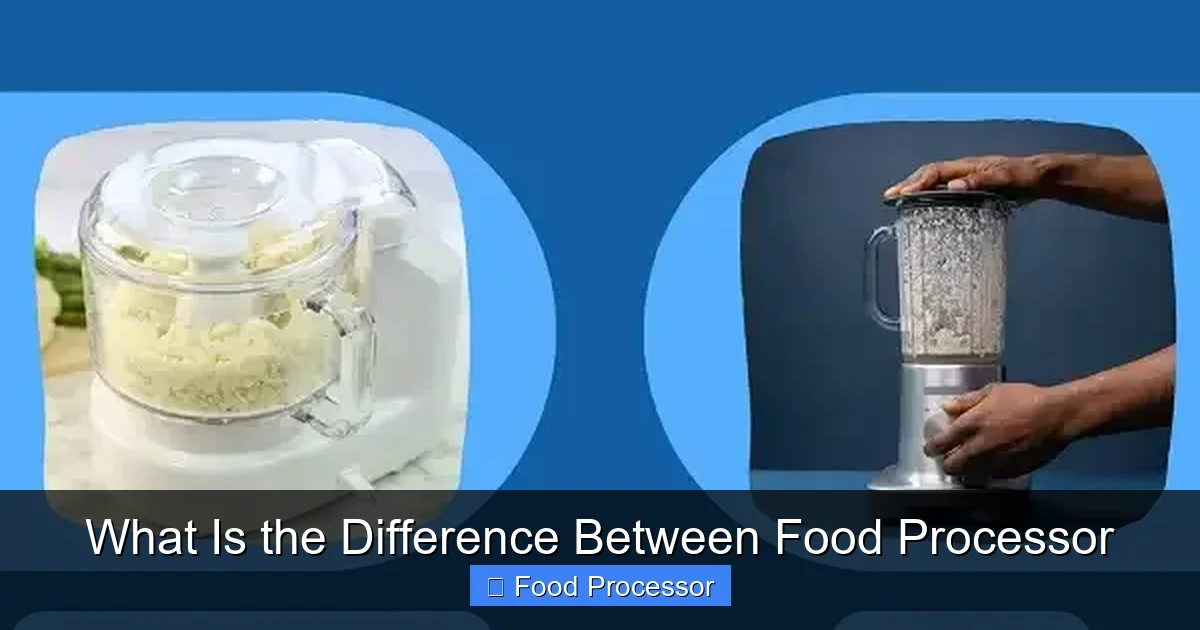
A food processor is a versatile kitchen appliance designed to automate repetitive tasks like chopping, slicing, shredding, and pureeing. Unlike blenders or mixers, it excels at handling solid ingredients and creating varied textures, from coarse to smooth. Understanding its core functions and how it compares to other appliances is key to maximizing its utility and selecting the right model for your culinary adventures.
What Is the Difference Between Food Processor
Welcome, home cooks and culinary adventurers! Are you curious about that powerful, multi-talented appliance sitting on many kitchen counters? You’ve heard the name “food processor,” but perhaps you’re wondering, “What *is* the difference between food processor and other kitchen gadgets?” Or maybe you’re just looking to truly understand what a food processor *is* and what makes it unique. You’ve come to the right place!
In this comprehensive guide, we’re going to demystify the food processor. We’ll explore its core functions, break down its essential components, and show you why it’s such an indispensable tool for preparing meals, from simple weeknight dinners to elaborate feasts. We’ll also clearly explain how it differs from other common kitchen appliances like blenders, mixers, and choppers, helping you understand when to grab which tool. By the end, you’ll be an expert on all things food processor and ready to make informed decisions for your own kitchen needs. Let’s dive in!
Key Takeaways
- Versatile Workhorse: A food processor excels at processing solids, performing tasks like chopping, slicing, shredding, pureeing, and mixing dough with ease, making it a cornerstone for diverse cooking needs.
- Distinct from Blenders: While both process food, a food processor is designed for less liquid-heavy tasks and offers a wider range of textures for solids, whereas a blender is optimized for smooth liquids and purees.
- Not a Mixer: Food processors can mix dough but are not substitutes for stand or hand mixers when it comes to whipping air into ingredients or handling large quantities of batter.
- Key Components: Essential parts include the motor base, work bowl, S-blade, various slicing/shredding discs, and a feed tube for adding ingredients safely.
- Capacity Matters: Food processors come in various sizes (mini, compact, full-size); choosing the right capacity is crucial for efficient cooking and prevents overloading or under-processing.
- Beyond Basic Chopping: With the right attachments, a food processor can do much more than just chop, offering capabilities like grating cheese, kneading dough, making nut butters, and emulsifying sauces.
- Smart Selection: When buying, consider motor power, work bowl capacity, available attachments, and ease of cleaning to ensure it meets your specific culinary demands and frequency of use.
Understanding the Core: What is a Food Processor?
A food processor is an electric kitchen appliance designed to automate various repetitive food preparation tasks. Think of it as your extra set of hands in the kitchen, dramatically cutting down on prep time for chopping, slicing, shredding, and more. It’s built to handle solids and semi-solids with powerful precision, making it incredibly versatile.
The Basic Components of a Food Processor
Every food processor, regardless of brand or size, shares a common set of components that work together to transform your ingredients:
- Motor Base: This is the heart of the appliance, housing a powerful motor that drives the blades and discs. It’s typically heavy to provide stability during operation.
- Work Bowl: A transparent bowl, usually made of sturdy plastic, that locks onto the motor base. This is where your food is processed. Work bowls come in various capacities, from small 3-cup models to large 16-cup ones.
- Lid with Feed Tube: The lid seals the work bowl and often features a “feed tube” or chute through which you can safely add ingredients while the machine is running.
- Pusher: A plunger that fits into the feed tube, used to guide food down towards the blades or discs. It also doubles as a cap for the feed tube.
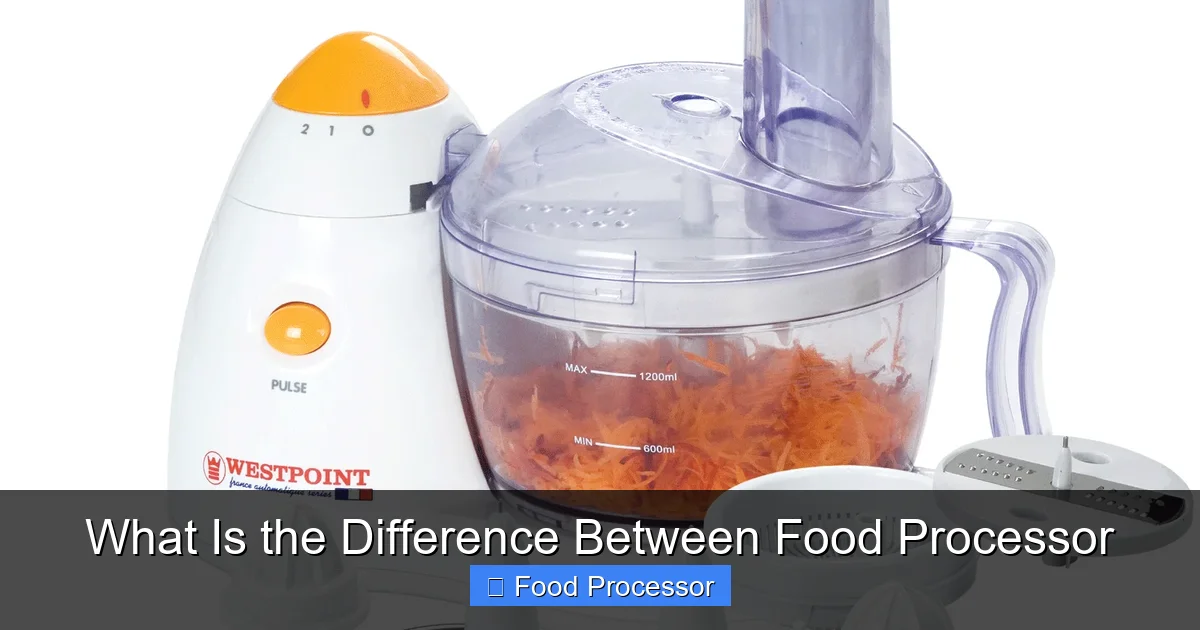
- S-Blade (or Chopping Blade): This is the most frequently used attachment, a metal blade shaped like an “S.” It sits at the bottom of the work bowl and is perfect for chopping, pureeing, mixing, and kneading.
- Discs: Beyond the S-blade, food processors typically come with a variety of flat discs that attach to a central spindle. These are used for tasks like slicing (thin or thick) and shredding (fine or coarse).
Primary Functions of a Food Processor
The beauty of a food processor lies in its ability to perform multiple functions quickly and efficiently:
- Chopping: Quickly chop vegetables, nuts, herbs, and even meat.
- Slicing: Achieve perfectly uniform slices of fruits, vegetables, and cheeses in seconds, using specialized slicing discs.
- Shredding/Grating: Effortlessly shred cheese, cabbage, carrots, or potatoes with a shredding disc.
- Pureeing: Create smooth purees for soups, sauces, baby food, or hummus using the S-blade.
- Mixing/Kneading Dough: With a plastic dough blade or the S-blade, a food processor can quickly mix and knead dough for breads, pizzas, and pastries.
- Emulsifying: Make dressings, mayonnaise, and other emulsions by slowly drizzling liquids through the feed tube while the machine runs.
The Heart of the Matter: Key Features and Capabilities
What truly differentiates various food processor models are their features and capabilities. These impact performance, versatility, and ease of use.
Motor Power and Speed Settings
The motor’s wattage indicates its power. Higher wattage generally means better performance, especially when dealing with tough ingredients like nuts, hard cheeses, or dough. Most food processors offer at least two speeds (on/off) and a pulse function. The advantages of using a food processor with a powerful motor are significant for heavy-duty tasks. The pulse function is crucial for precise control, allowing you to achieve desired textures (coarse chop vs. fine mince) without over-processing.
Work Bowl Capacity
Food processors come in a range of sizes:
- Mini Food Processors (1-4 cups): Ideal for small tasks like chopping herbs, nuts, or making single-serve sauces.
- Compact Food Processors (5-9 cups): A good middle-ground for everyday cooking for 1-3 people, handling most standard recipes.
- Full-Size Food Processors (10-16+ cups): Best for larger families, entertaining, or bulk food prep. If you frequently make large batches of dough or shred large quantities of vegetables, a larger capacity is essential. To choose wisely, you might consider how to choose the right size food processor based on your typical cooking volume.
Blade and Disc Variety
While all food processors come with an S-blade, the range of included discs can vary greatly:
- S-Blade (Metal Chopping Blade): For most general chopping, mixing, and pureeing.
- Dough Blade (Plastic): A blunt plastic blade designed to mix and knead dough without overworking it.
- Slicing Discs: Available in different thicknesses (e.g., 2mm, 4mm) for thin or thick slices.
- Shredding Discs: For fine, medium, or coarse shredding of vegetables and cheeses.
- Specialty Discs: Some high-end models offer dicing kits, julienne discs, French fry discs, or even whipping discs for cream or egg whites.
Distinguishing the Food Processor from Other Kitchen Appliances
This is where we really clarify “what is the difference between food processor” and other common kitchen tools. Each appliance has its strengths!
Food Processor vs. Blender
This is perhaps the most common point of confusion. While both have blades and spin, their primary purposes are quite different.
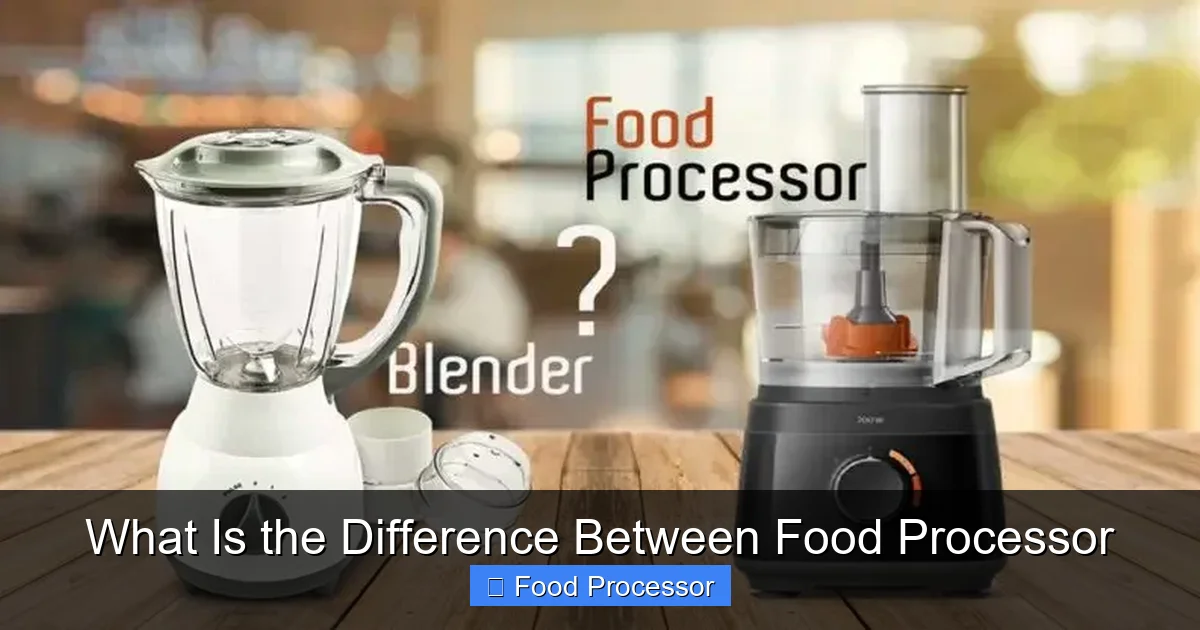
A food processor is designed for handling mostly solid and semi-solid ingredients with minimal liquid. Its wide work bowl and powerful S-blade are optimized for chopping, slicing, shredding, and creating various textures, from chunky salsa to smooth hummus. It excels at tasks where you want distinct pieces or a thick paste. If you’re wondering why is a food processor different from a blender, it truly comes down to consistency and ingredient type.
Visual guide about What Is the Difference Between Food Processor
Image source: betterfood.co
Visual guide about What Is the Difference Between Food Processor
Image source: stepbystep.com
A blender, on the other hand, is built for liquefying ingredients. Its tall, narrow pitcher and powerful blades are perfect for making smoothies, pureed soups, sauces, and crushing ice. It requires sufficient liquid to create a vortex that pulls solids down into the blades for a smooth, uniform consistency. Blenders struggle with dry, thick, or very solid ingredients that a food processor handles with ease.
Food Processor vs. Mixer (Stand Mixer/Hand Mixer)
While a food processor can mix dough, it’s generally not a direct replacement for a dedicated mixer.
A food processor uses its S-blade or dough blade to quickly combine ingredients and knead dough, often in a matter of minutes. It’s great for stiff doughs like pie crusts or shortbread, and can handle some yeast doughs. However, it doesn’t incorporate air into mixtures like a mixer does, and its capacity for dough is limited by the work bowl size.
A stand mixer or hand mixer is specifically designed for aeration and thorough mixing of batters, doughs, and creams. Its planetary mixing action (in stand mixers) ensures even distribution of ingredients, and attachments like whisks are perfect for whipping egg whites, cream, or light batters to airy perfection. If you’re curious about what is the difference between food processor and mixer, it boils down to aeration capabilities and capacity for softer, wetter mixtures.
Food Processor vs. Chopper (Mini Chopper)
A chopper is essentially a very small, simplified food processor.
A food processor offers much greater versatility, capacity, and power. It comes with multiple blades and discs for various tasks beyond simple chopping, such as slicing, shredding, and pureeing larger quantities. Its motor is more robust, allowing it to tackle tougher ingredients and bigger batches.
A mini chopper or food chopper is a compact, often single-function appliance typically used for small quantities of ingredients like garlic, herbs, or nuts. It usually only has a basic chopping blade and a very limited capacity (1-3 cups). It’s convenient for quick, minor tasks but lacks the power and multi-functionality of a full-size food processor. If you’re comparing a difference between food processor and chopper, think size, power, and versatility.
Food Processor vs. Juicer
These appliances perform entirely different functions.
A food processor prepares ingredients for cooking or direct consumption in solid or semi-solid form (e.g., purees, chopped veggies). It retains the pulp and fiber of the food.
A juicer extracts liquid from fruits and vegetables, separating the juice from the pulp. Its sole purpose is to produce beverages, leaving behind the fibrous material. So, if you’re looking for the difference between food processor and juicer, it’s simply about solid food preparation versus liquid extraction.
Choosing the Right Food Processor for Your Needs
Now that you understand what a food processor is and how it stands apart, how do you pick the right one? Considering a few key factors will help.
Assess Your Cooking Habits and Family Size
- Small Kitchen/Single Person: A compact (5-7 cup) model or even a mini chopper might suffice for occasional use.
- Average Family (3-5 people): A full-size (10-12 cup) food processor is often the best choice, offering enough capacity for most recipes without being overly bulky.
- Large Family/Entertaining/Batch Cooking: Opt for a large (14-16+ cup) model to handle big quantities effortlessly.
Consider Motor Power and Versatility
If you plan to frequently process tough ingredients like dense vegetables, nuts for butter, or knead dough, invest in a model with higher wattage (600W+). Look at the included attachments. Do you need multiple slicing and shredding discs? A dough blade? Some models even offer a dicing kit. Understanding what to consider when buying a food processor will guide you towards a suitable appliance.
Budget and Brand Reputation
Food processors vary widely in price. While more expensive models often offer better build quality, stronger motors, and more attachments, there are many excellent mid-range options. Researching brands known for durability and good customer service is always a smart move.
Tips for Maximizing Your Food Processor’s Potential
To truly get the most out of your food processor, keep these tips in mind:
- Use the Pulse Function: This is your best friend for control. Short bursts prevent over-processing and help you achieve the exact texture you want.
- Process Similar-Sized Pieces: For even chopping or slicing, cut ingredients into uniform pieces that fit easily down the feed tube.
- Don’t Overfill: Respect the “max fill” line on your work bowl. Overfilling can strain the motor and lead to uneven processing.
- Add Liquids Slowly: When making dressings or mayonnaise, drizzle liquids through the feed tube while the machine is running to create smooth emulsions.
- Clean Promptly: Wash the work bowl, lid, and blades immediately after use. Many parts are dishwasher safe, but check your manual.
- Safety First: Always ensure the lid is properly locked before operating. Never reach into the work bowl while the blade is moving.
Troubleshooting Common Food Processor Issues
Even with a reliable food processor, you might encounter a minor hiccup. Here are quick fixes for common problems:
Food Processor Not Turning On
Solution: The most frequent culprit is the safety interlock mechanism. Ensure the work bowl and lid are correctly aligned and fully locked onto the motor base. If they aren’t, the machine won’t power on. Also, check that it’s plugged into a working outlet.
Blade Not Spinning
Solution: If the motor hums but the blade doesn’t spin, the blade might not be properly seated on the drive shaft. Turn off and unplug the unit, then re-seat the S-blade or disc securely. Also, check for any large pieces of food jamming the blade. Sometimes, if the bowl is overloaded or ingredients are too hard, the motor might be struggling. For more specific issues, you might consult resources on why is my food processor blade not spinning.
Uneven Processing
Solution: This often happens due to overloading or inconsistent ingredient size. Try processing in smaller batches. Ensure all ingredients are cut to a similar size before adding them. Using the pulse function for short bursts allows ingredients to settle and get processed more evenly.
Conclusion
The food processor is far more than just a fancy kitchen gadget; it’s a powerful, versatile tool that can revolutionize your meal preparation. Understanding “what is the difference between food processor” and other appliances helps you appreciate its unique strengths and choose the right tool for every culinary task. From chopping mountains of vegetables to kneading dough for homemade bread, its ability to tackle demanding tasks with speed and precision makes it an invaluable asset in any kitchen. By selecting the right size and model for your needs, and mastering its functions, you’ll unlock a world of culinary possibilities and enjoy more efficient, enjoyable cooking experiences. Happy processing!
