

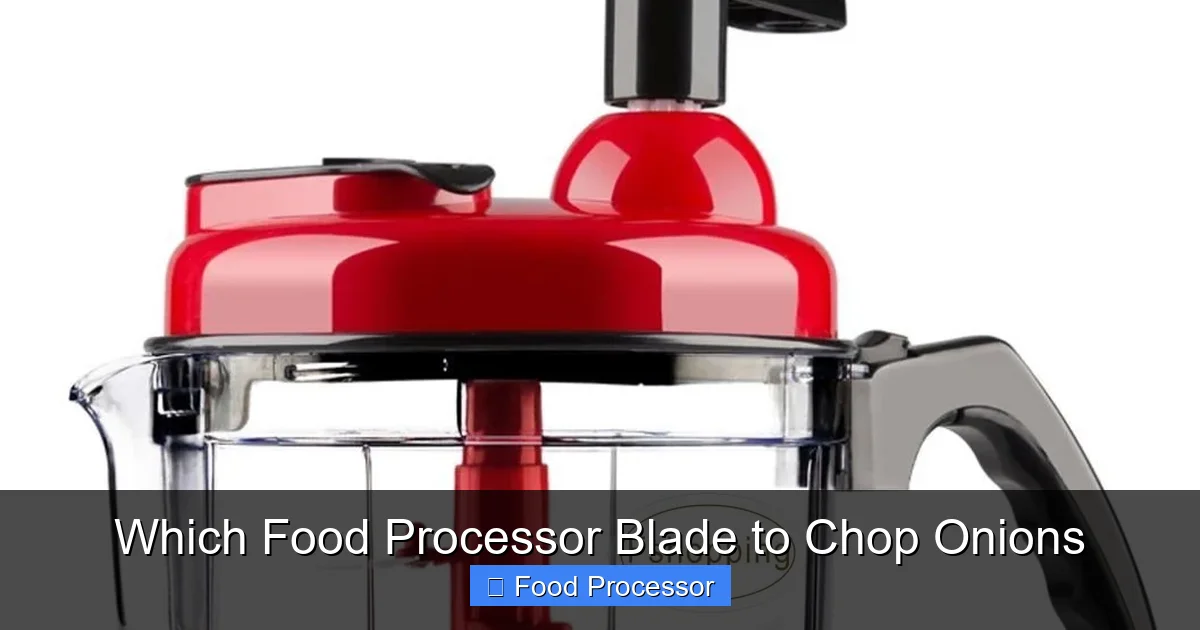
Achieving perfectly chopped onions in your food processor is all about using the right blade and technique. The standard S-blade (or chopping blade) is your best friend for this task. Instead of continuous processing, mastering the “pulse” function is crucial to avoid onion mush and get consistent results. This guide will walk you through preparing your onions, safely operating your food processor, and getting ideal chopped onions for all your culinary needs.
Which Food Processor Blade to Chop Onions
Preparing onions is often the first step in countless recipes. From soups and stews to sauces and stir-fries, a perfectly chopped onion lays the foundation for delicious flavors. However, the task of dicing onions by hand can be time-consuming, tedious, and yes, often brings tears to your eyes. This is where your trusty food processor comes in! But if you’re new to using this kitchen marvel for chopping vegetables, you might wonder:
Which food processor blade to chop onions is the correct choice?
You’ve come to the right place! In this comprehensive guide, we’ll walk you through everything you need to know. We’ll show you exactly which food processor blade to chop onions with, how to prepare your onions for processing, the step-by-step technique to achieve perfect results, and even some clever tips to prevent watery mush. Get ready to save time, reduce tears, and master the art of chopping onions with your food processor!
Key Takeaways
- The S-Blade is Essential: Always use your food processor’s standard “S” shaped chopping blade for processing onions. Discs for slicing or shredding are not suitable for this task.
- Master the Pulse Technique: Short, controlled pulses are key to achieving an even chop and preventing your onions from turning into an over-processed, watery paste. Avoid continuous running.
- Proper Onion Preparation: Peel and quarter your onions, ensuring pieces are sized appropriately for the feed tube or bowl to prevent overloading and ensure uniform chopping.
- Don’t Overfill the Bowl: Process onions in smaller batches if necessary. Overfilling can lead to uneven results, with some pieces finely chopped and others left too large.
- Cold Onions Help: Chilling your onions before chopping can sometimes reduce the tear-inducing fumes and make them slightly firmer for a cleaner chop.
- Check Consistency Often: Stop and scrape down the sides of the bowl between pulses to ensure all onion pieces are reaching the blade and getting chopped evenly.
- Safety First: Always ensure your food processor is properly assembled and the lid is securely locked before operating. Never reach into the bowl while the blade is spinning.
Understanding Your Food Processor Blades
Before you even think about tossing an onion into your food processor, it’s crucial to understand the different blades and their functions. Most food processors come with a variety of attachments, but only one is designed for chopping.
The Standard S-Blade (Chopping Blade)
This is your go-to blade for chopping onions, garlic, nuts, herbs, and creating purees. It’s typically a metal blade with two curved arms that resemble the letter “S” when viewed from above. It sits directly on the central spindle in the bottom of your food processor bowl.
- Why it’s perfect: The S-blade is incredibly sharp and spins at high speeds, effectively cutting through food rather than crushing it. The “S” shape ensures that ingredients are continuously pushed into the path of the blades, resulting in an even chop when used correctly.
- When to use it: Use this blade for any task where you need to finely chop, mince, grind, or puree ingredients. For tasks like how to use food processor to chop vegetables like carrots, celery, or bell peppers, the S-blade is always the answer.
Other Blades (And Why They’re Not For Chopping Onions)
Your food processor might also come with various discs that sit at the top of the bowl, usually for slicing or shredding. While these are fantastic for other tasks, they are not suitable for chopping onions.
- Slicing Discs: These produce uniform slices (e.g., for onion rings or potato gratin). If you put an onion in with a slicing disc, you’ll get thin slices, not a chop. If you’re looking for how to slice onions, check out resources on the best food processor for slicing onions.
- Shredding Discs: These are designed to shred ingredients into strands (e.g., cheese or cabbage). Using this for onions would result in shredded onion strands, not a dice, and likely a lot of watery pulp.
So, to reiterate: when it comes to chopping onions, always reach for the standard S-blade.
Preparing Your Onions for the Food Processor
Proper preparation is key to getting the best results and ensuring your food processor operates efficiently. Don’t just toss a whole onion in!
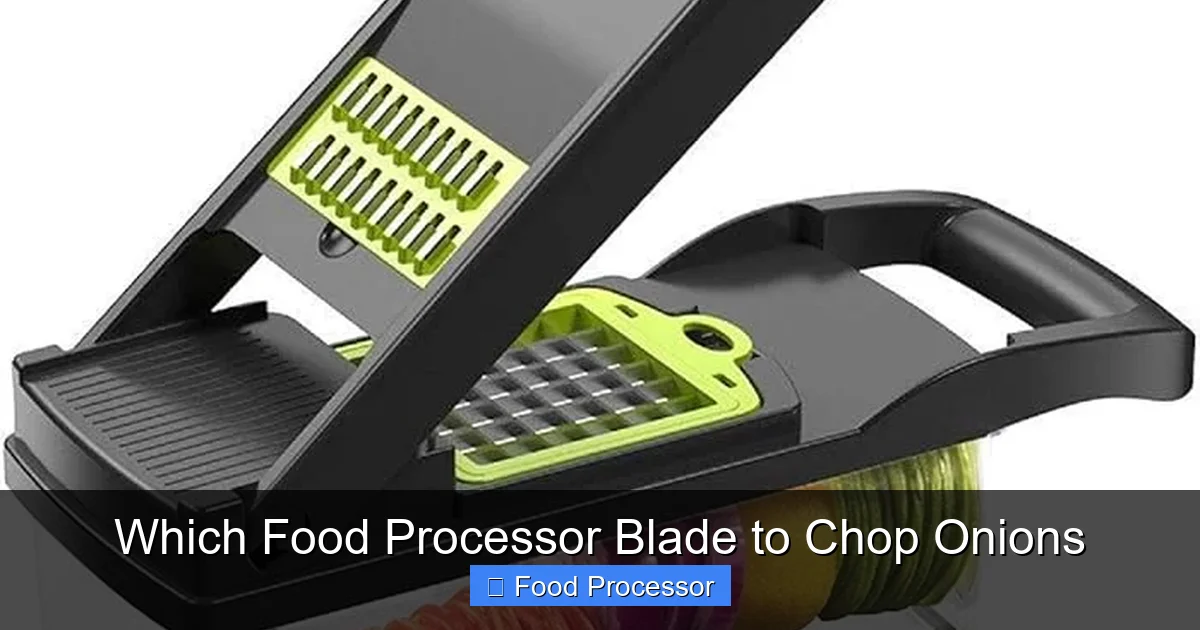
Visual guide about Which Food Processor Blade to Chop Onions
Image source: images-na.ssl-images-amazon.com
Peeling and Quartering
- Peel the Onion: First, cut off both ends of the onion. Then, carefully peel away the papery outer skin.
- Halve or Quarter: Cut the peeled onion in half through the root end. Depending on the size of your onion and your food processor’s capacity, you might need to cut each half into quarters. The goal is to create pieces that are small enough to tumble freely in the bowl and reach the blades evenly, but not so small that they get lost or over-processed immediately. For most standard size food processors, quartered medium onions work perfectly.
- Remove the Root End (Optional but Recommended): While you’ve cut off the root, sometimes a small, tough core remains. Removing this can help ensure a more uniform chop and prevent stubborn pieces from resisting the blade.
Batch Size Matters
It’s tempting to fill the food processor bowl to the brim, especially if you have a lot of onions to chop. However, this is a common mistake that leads to uneven chopping and sometimes even strains your motor. For the best results when using your chosen food processor blade to chop onions:
- Don’t Overfill: Only fill the bowl about halfway to two-thirds full with onion pieces. This allows enough space for the onions to circulate freely and ensures all pieces come into contact with the blade. If you have a smaller capacity machine, it’s useful to know how to choose the right size food processor for your typical cooking needs.
- Process in Batches: If you’re chopping several onions, work in smaller batches. It takes a little more time, but the consistent results are well worth it.
Step-by-Step Guide: Chopping Onions with the S-Blade
Now that your onions are prepped and you know which food processor blade to chop onions with, let’s get chopping!
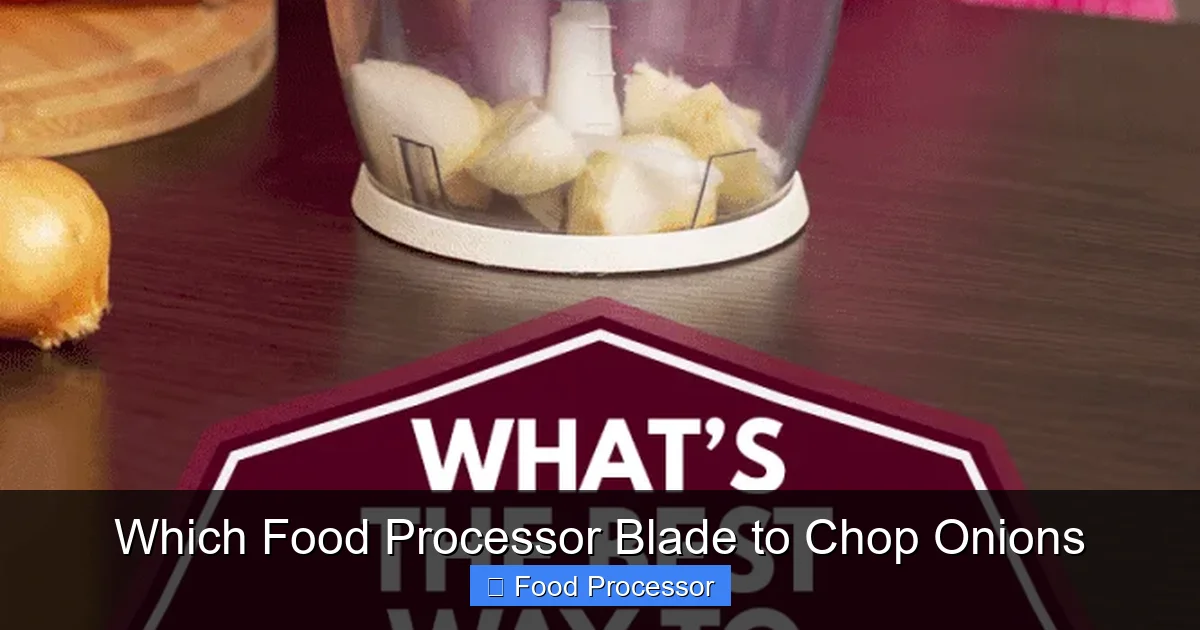
Visual guide about Which Food Processor Blade to Chop Onions
Image source: kitchenseer.com
Step 1: Assemble Your Food Processor Correctly
Safety first! Before you do anything, ensure your food processor is properly assembled.
- Place the S-Blade: Carefully attach the S-blade onto the central spindle in the bottom of your food processor bowl. Be very careful, as these blades are extremely sharp.
- Add the Bowl: Secure the work bowl onto the motor base, twisting it until it locks into place. If your food processor isn’t assembled correctly, it might not turn on. For a full refresher, see our guide on how to assemble food processor step by step.
- Secure the Lid: Place the lid onto the work bowl and twist it until it securely locks. Most food processors have safety mechanisms that prevent them from operating if the lid isn’t properly locked.
- Plug It In: Finally, plug the food processor into a grounded outlet.
Step 2: Load the Onions
Carefully place your quartered (or halved) onion pieces into the food processor bowl. Remember the batch size advice – don’t overfill!
Step 3: Pulse, Don’t Process Continuously
This is the most critical step for achieving a perfect chop without making onion soup.
- Use the “Pulse” Button: Instead of pressing “on” or a continuous setting, use the “pulse” button. The pulse function allows you to have short, controlled bursts of power.
- Short Bursts: Press the pulse button for 1-2 seconds, then release. Repeat this action. You’ll hear the blades chop, then the pieces will settle.
- Scrape Down Sides (If Needed): After a few pulses, you might notice some larger pieces sticking to the sides of the bowl or lurking at the top. Stop the machine, remove the lid, and use a spatula to push these pieces down towards the blade. Replace the lid securely before continuing.
Step 4: Check Consistency
Keep pulsing and checking the consistency of your chopped onions. The number of pulses needed will depend on the power of your food processor, the amount of onion, and your desired chop size.
- Coarse Chop: A few pulses (typically 5-8) might be enough for a coarse chop suitable for chili or stews. The pieces will still be distinct but smaller than your initial quarters.
- Fine Chop (Mince): For a finer chop, like for sauces or dressings, you’ll need more pulses (perhaps 10-15 or more). Keep pulsing until the pieces reach your desired size. Be vigilant here – one or two too many pulses can quickly turn your onions into mush.
Step 5: Remove Chopped Onions Safely
Once you’ve reached your desired consistency:
- Unplug the Appliance: Always unplug your food processor before reaching into the bowl.
- Remove the Lid and Blade: Carefully remove the lid. Then, *very cautiously*, grip the S-blade by its central plastic hub and lift it straight up and out of the bowl. Place it safely on a cutting board or directly into the sink for cleaning.
- Empty the Bowl: Use a spatula to scrape out the perfectly chopped onions.
Tips for Perfect Chopped Onions Every Time
Beyond the basic steps, these extra tips will help you become a true onion-chopping master with your food processor.
The “Pulse” Technique is Your Best Friend
We can’t stress this enough. Continuous processing will lead to a watery, uneven mess. The pulse function gives you control. Think of it like a rapid on/off switch. This allows the onions to fall back down towards the blade between pulses for a more even chop. It also prevents the onions from releasing too much liquid too quickly, which causes the mushy texture.
Don’t Overload the Bowl
As mentioned, overloading is a recipe for disaster. If the blade is struggling or the onions aren’t circulating, it’s a sign you’ve put too much in. Half to two-thirds full is the sweet spot for the S-blade to do its best work.
Cold Onions are Better
Pop your onions in the fridge for 30 minutes or the freezer for 15 minutes before chopping. Chilling the onions can help reduce the tear-inducing compounds. It also makes them slightly firmer, which can result in a cleaner, less watery chop. Plus, if you often find yourself tearing up, investing in the best food processor for chopping onions without tears can be a game-changer.
Consider the Type of Onion
Different onions have different moisture content. Red onions and sweeter onions tend to be juicier than yellow or white onions. Be extra cautious with the pulse technique when chopping high-moisture varieties to prevent them from becoming too watery.
Achieving Different Chop Sizes
- For a Fine Mince: You’ll need more pulses, but be very attentive. Stop and check frequently.
- For a Coarse Chop: Fewer pulses are needed. You’ll want distinct, small pieces.
- Never aim for a paste unless the recipe specifically calls for it, as this typically means you’ve over-processed the onions.
Preventing “Onion Mush”
This is the most common complaint when using a food processor for onions. It’s almost always due to over-processing or overloading. Stick to the pulse technique, process in batches, and don’t try to get a super-fine chop if your recipe only needs a medium dice. Remember, the S-blade is designed to chop, not liquefy (unless you want it to!).
Troubleshooting Common Issues
Even with the right food processor blade to chop onions, sometimes things don’t go perfectly. Here are solutions to common problems:
Onions Are Too Watery or Mushy
- Cause: Over-processing. You pulsed too many times or ran the machine continuously.
- Solution: Learn to trust the pulse button and stop *before* you think they’re done. A slightly coarser chop is better than watery mush. Next time, aim for fewer pulses and check more frequently.
Some Pieces Are Too Large, Others Too Small
- Cause: Overloading the bowl or not scraping down the sides. Pieces at the bottom get chopped finely, while those at the top or stuck to the sides remain large.
- Solution: Reduce batch size. Stop every few pulses and use a spatula to push larger pieces from the sides and top down towards the blade.
The Blade Isn’t Spinning
- Cause: This is almost always a safety mechanism. The bowl or lid isn’t properly locked into place, or the food processor is unplugged. It could also be a problem with the motor or overloaded food.
- Solution: Double-check that the bowl is twisted and locked onto the base, and the lid is securely in position. Ensure the appliance is plugged in. If these checks don’t work, refer to your appliance manual or our guide on how to fix food processor blade not spinning for further steps.
Tearing Up While Chopping
- Cause: Onions release sulfur compounds that irritate your eyes.
- Solution: Chill the onions beforehand. Work quickly. Some people find wearing swimming goggles or working near a fan helps. While the food processor significantly reduces exposure, the initial peeling and quartering can still be tear-inducing.
Maintaining Your Food Processor and Blades
Once you’re done, proper cleaning ensures your food processor is ready for its next task.
- Immediate Cleaning: Rinse the bowl, lid, and blade immediately after use. This prevents onion residue from drying and becoming harder to clean.
- Dishwasher Safe: Most food processor bowls, lids, and blades are top-rack dishwasher safe, but always check your manufacturer’s instructions.
- Hand Washing Blades: If hand washing, use a brush and be extremely cautious of the sharp S-blade. Never wipe the blade with your fingers.
- Safe Storage: Store the blade carefully, perhaps in a dedicated blade storage container if your model comes with one, to prevent accidental cuts.
Conclusion
Chopping onions doesn’t have to be a dreaded task that makes you cry! By understanding which food processor blade to chop onions with—the versatile S-blade—and mastering the crucial “pulse” technique, you can quickly and efficiently achieve perfectly uniform results every time. Remember to prepare your onions properly, work in sensible batches, and always prioritize safety. With a little practice, your food processor will become your go-to tool for this essential kitchen chore, saving you time and tears, and making your cooking experience much more enjoyable. Happy chopping!
