

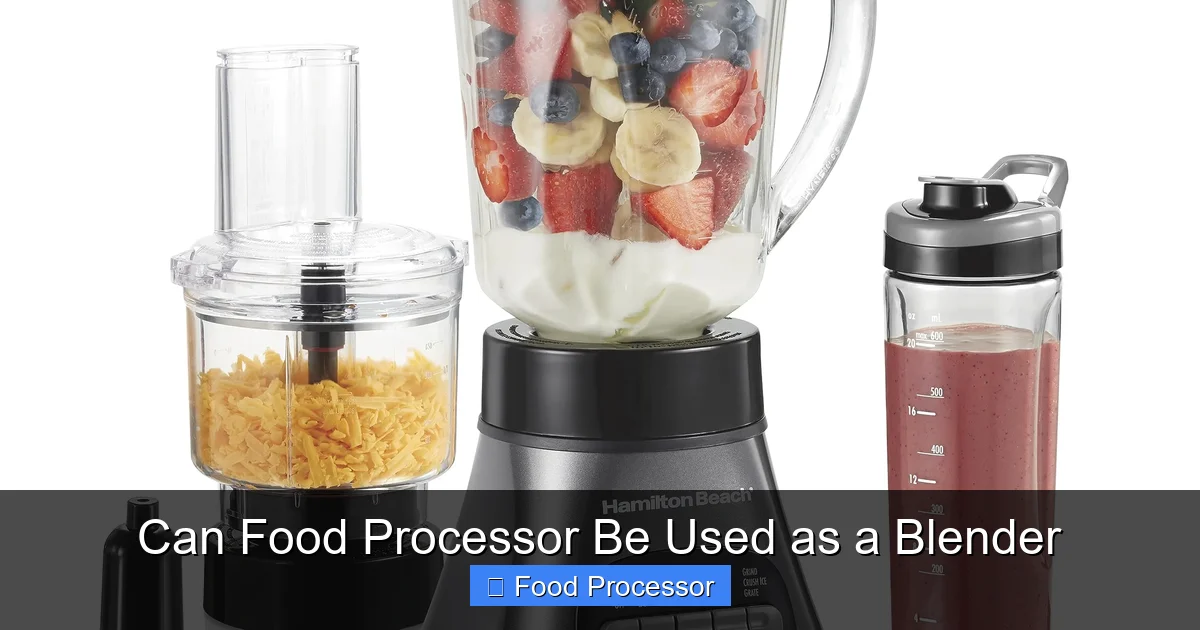
Yes, a food processor can be used as a blender for many tasks, especially those requiring a thicker consistency. While it won’t replace a dedicated blender for super smooth liquids or crushing large amounts of ice, it excels at making dips, sauces, purees, and even some thicker smoothies. Understanding its strengths and limitations, along with proper technique, will help you maximize its versatility in your kitchen.
Can Food Processor Be Used as a Blender
Have you ever found yourself in the middle of a recipe, needing to blend something, only to realize your blender is in the dishwasher or you simply don’t own one? Or perhaps you’re wondering if you really need both appliances cluttering your counter. It’s a common kitchen dilemma! Many home cooks ask, “Can a food processor be used as a blender?” The short answer is: absolutely, yes, it can! However, there’s a bit more to it than just tossing ingredients in and pressing a button.
This comprehensive guide will walk you through everything you need to know about using your food processor as a blender. We’ll explore its capabilities, limitations, and provide step-by-step instructions to help you get the best results. You’ll learn how to tackle various blending tasks, understand when your food processor shines, and when it’s better to consider other options. By the end, you’ll be a pro at maximizing the versatility of your trusty food processor.
Key Takeaways
- Understand the Differences: Food processors are designed for chopping and dicing with a wider bowl and S-blade, while blenders excel at liquefying with a tall jar and specialized blades for smooth results.
- Best for Thicker Consistencies: Your food processor is ideal for tasks like making hummus, pesto, nut butters, thick sauces, and pureeing cooked vegetables, where a perfectly smooth, liquid consistency isn’t the primary goal.
- Add Liquid Strategically: Always include enough liquid to help ingredients circulate and blend evenly. Adding it gradually can prevent your food processor from struggling.
- Use the Pulse Function: Short bursts are key to achieving desired textures and preventing over-processing or overheating your machine. Avoid continuous running, especially for thick mixtures.
- Prepare Ingredients Properly: Cut ingredients into smaller, uniform pieces before adding them to the food processor. This ensures more consistent blending and reduces strain on the motor.
- Mind the Limitations: Food processors generally struggle with creating very fine, thin purees, quickly crushing large quantities of ice into a slush, or efficiently blending very small amounts of liquid.
- Safety First: Always ensure the lid is securely locked before operating, never reach into the bowl while the machine is running, and unplug it before cleaning or assembling/disassembling.
Understanding the Core Differences: Food Processor vs. Blender
Before we dive into how to use a food processor for blending, it’s crucial to understand the fundamental differences between these two kitchen workhorses. While they both feature motors and blades, their design and primary functions vary significantly. This understanding will help you know when your food processor can confidently step in for a blender and when it might struggle.
Blenders: Designed for Liquefying
Blenders are built for one main purpose: to liquefy. They typically feature a tall, narrow jar and powerful blades designed to create a vortex, pulling ingredients down into the blade for super smooth results. This design is ideal for:
- Smoothies and shakes
- Thin purees and soups
- Crushing ice quickly and efficiently into a fine slush
- Making nut milks
Their sealed lids are often designed to handle hot liquids without much risk of splashing, and their powerful motors can often pulverize fibrous ingredients into a perfectly smooth consistency.
Food Processors: The Multi-Tasking Chopper
On the other hand, food processors are the ultimate multi-taskers. They come with a wider, shallower bowl and a variety of attachments, with the standard “S-blade” being the most common for processing. Their design is focused on:
- Chopping and mincing vegetables
- Shredding cheese
- Slicing fruits and vegetables
- Mixing dough
- Making dips, spreads, and thick sauces
The S-blade is excellent for cutting through ingredients and creating uniform pieces, but it’s not primarily designed to create the deep vortex needed for truly smooth liquids. This means a food processor might handle chunky salsa beautifully, but struggle to produce a completely smooth fruit juice.
When considering if a food processor can be used in place of a blender, it boils down to the consistency you’re aiming for. If you need something very thick and chunky, your food processor is an excellent choice.
When Your Food Processor Can Shine as a Blender
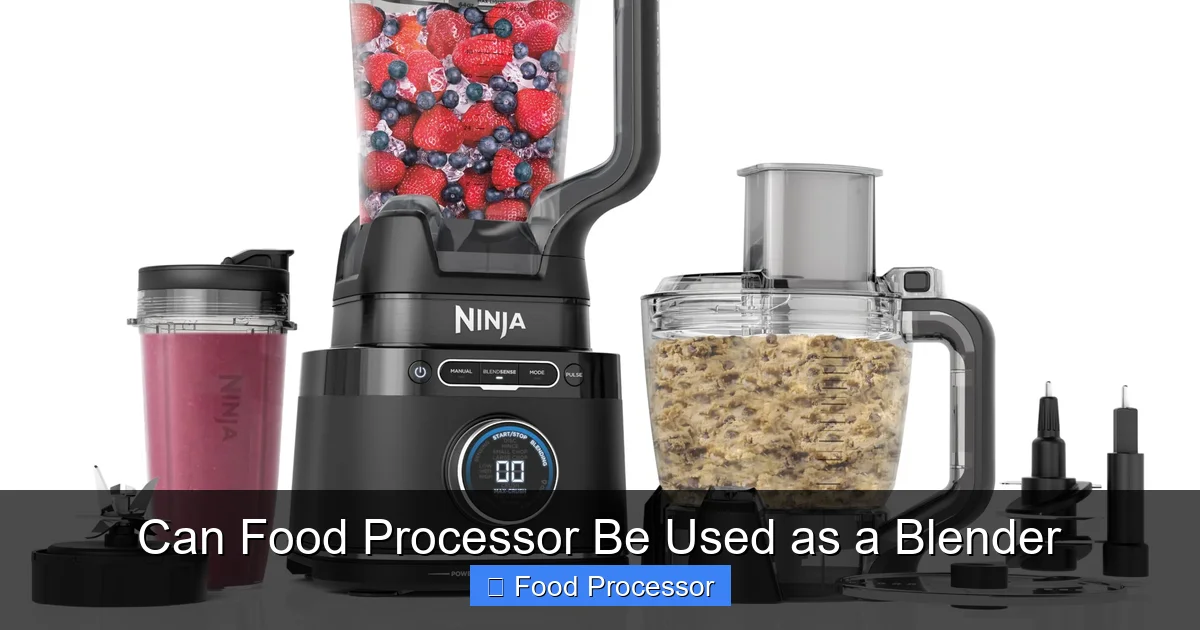
Visual guide about Can Food Processor Be Used as a Blender
Image source: m.media-amazon.com
Your food processor is surprisingly capable when it comes to certain blending tasks. It truly shines when you’re aiming for a thicker, more textured consistency rather than a completely liquid one.
Making Thick Dips and Spreads
This is where the food processor truly excels. Its wider bowl and powerful S-blade are perfect for:
- Hummus: The classic example! Food processors make incredibly creamy hummus from chickpeas, tahini, lemon juice, and olive oil. In fact, many people prefer a food processor for hummus over a blender.
- Pesto: Blending fresh basil, pine nuts, garlic, Parmesan, and olive oil into a vibrant, chunky or smooth pesto is a breeze.
- Nut Butters: Making your own peanut butter, almond butter, or cashew butter from roasted nuts is one of the most rewarding tasks for a food processor. It takes time but delivers amazing results.
- Salsa: Whether chunky or a bit smoother, a food processor is ideal for combining tomatoes, onions, peppers, and herbs into a delicious salsa.
- Guacamole: While many prefer hand-mashing, a food processor can create a smoother guacamole quickly.
Pureeing Cooked Foods
For cooked vegetables and fruits, your food processor can create wonderful purees:
- Creamy Soups: After cooking, you can transfer your vegetable soup to the food processor to achieve a smooth, creamy texture. Just be cautious with hot liquids (see safety tips below). If you’re wondering, should I use a blender or food processor for soup, the answer often depends on how much liquid and how fine a texture you desire.
- Baby Food: Homemade baby food is easy to make by pureeing cooked fruits and vegetables.
- Applesauce: Cooked apples can be easily processed into smooth applesauce.
Thick Smoothies and Shakes
While not ideal for super-thin, icy smoothies, a food processor can handle thicker variations, especially if you add enough liquid.
- Thick Smoothie Bowls: If you love making thick, spoonable smoothie bowls, a food processor can work well, provided you don’t overload it with ice and frozen fruit. You’ll need to stop and scrape down the sides frequently. For more specific guidance, you can check out this article on can a food processor be used to make smoothies.
- Milkshakes: Combining ice cream, milk, and flavorings can result in a delicious, thick milkshake.
Emulsifying Dressings and Sauces
Making homemade mayonnaise or creamy salad dressings is another area where the food processor excels. The feed tube is perfect for slowly drizzling oil while the blades emulsify the mixture.
When to Stick to a Blender
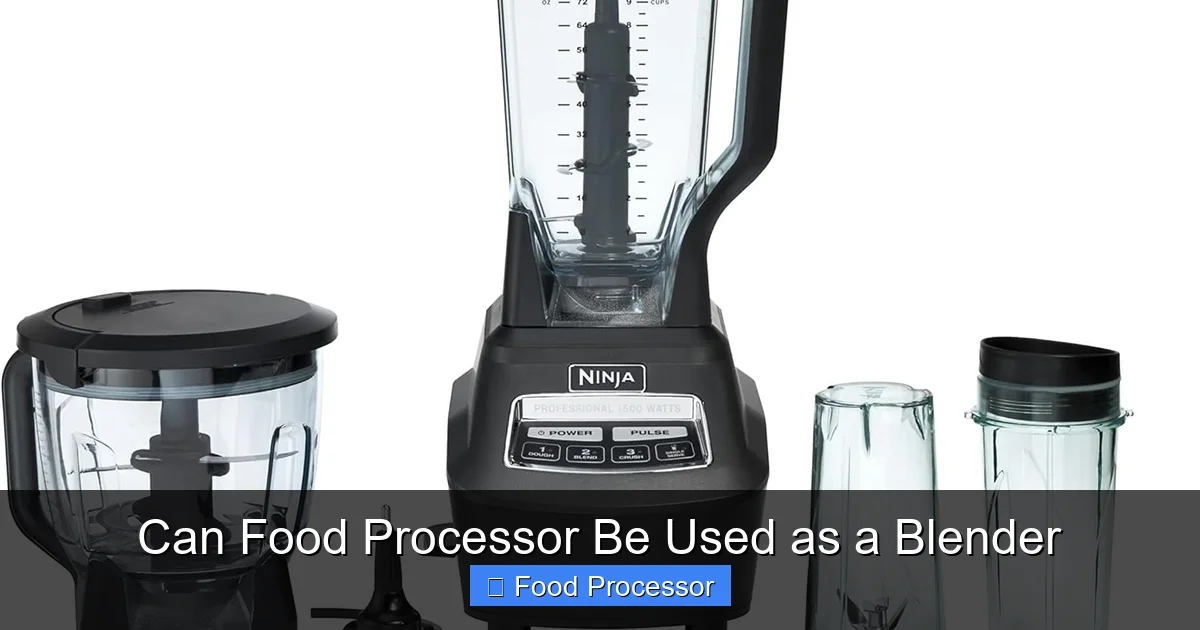
Visual guide about Can Food Processor Be Used as a Blender
Image source: images-na.ssl-images-amazon.com
Despite its versatility, there are certain blending tasks where your food processor simply can’t compete with a dedicated blender. Knowing these limitations will save you frustration and potential damage to your appliance.
- Very Smooth, Thin Liquids: If you need a perfectly smooth, thin liquid like a green juice with no pulp, or a super-fine smoothie without any trace of seeds or fibers, a blender (especially a high-powered one) will deliver superior results. The food processor’s S-blade design isn’t optimized for creating that deep vortex action.
- Crushing Large Amounts of Ice Quickly: While a food processor can handle some ice, it’s not designed to efficiently crush large quantities into a fine, slushy consistency without significant effort and potential strain on the motor. Blenders, particularly those with ice-crushing settings, do this much better. Always be cautious if attempting to put ice in a food processor, as it can be hard on the blades.
- Hot Liquids (with Caution): While some modern food processors have better seals, the wide bowl and typical lid design make them less suitable for blending hot liquids. There’s a higher risk of steam pressure buildup, splashing, or even the lid coming off. Blenders with vented lids are generally safer for hot soups. If you must process hot liquids, do it in small batches, fill the bowl only halfway, and ensure a tight seal.
- Very Small Quantities of Liquid: The wide bowl of a food processor means the blades might not be able to effectively catch and blend very small amounts of liquid (e.g., a few tablespoons of dressing) without additional ingredients.
How to Use Your Food Processor for Blending Tasks: A Step-by-Step Guide
Ready to turn your food processor into a blending marvel? Follow these steps for the best results.
Step 1: Choose the Right Blade
For almost all blending tasks, you’ll want to use the standard “S-blade” or “chopping blade.” This is the two-pronged metal blade that usually comes pre-installed or is the most frequently used attachment. Ensure it’s properly secured on the spindle before adding ingredients.
Step 2: Prepare Your Ingredients
This step is crucial for success.
Cut into Small, Uniform Pieces
Unlike a blender that can often handle larger chunks, a food processor benefits greatly from smaller, relatively uniform pieces. Cut fruits, vegetables, or nuts into 1-inch (2.5 cm) pieces or smaller. This ensures even processing and reduces strain on the motor.
Don’t Overload
Respect your food processor’s capacity. Filling it too full will prevent proper circulation and lead to uneven blending. Generally, don’t fill the bowl more than two-thirds full for blending tasks, especially with thicker mixtures.
Step 3: Add Liquid Strategically
Liquid is your best friend when using a food processor as a blender. It helps the ingredients move around, preventing them from just sitting at the bottom and becoming a sticky paste.
Add Liquid First for Smoother Blends
For smoothies or purees, add liquids (water, milk, juice, broth) to the bottom of the bowl first. This allows the blades to start cutting through the liquid immediately and create a smoother motion for the solid ingredients.
Add Gradually for Thicker Mixtures
For dips like hummus or nut butters, you might add some liquid initially and then gradually add more through the feed tube while the machine is running, until you reach your desired consistency.
Step 4: Load the Bowl Correctly
Think layers!
- Liquid at the Bottom: If applicable, add your liquid first.
- Soft Ingredients Next: Follow with softer fruits, cooked vegetables, or leafy greens.
- Harder Ingredients Last: Add frozen fruits, ice (in small quantities), or nuts on top.
This layering helps the blades grab and process everything efficiently.
Step 5: Secure the Lid
This might seem obvious, but it’s vital. Ensure the lid is properly aligned and locked into place according to your food processor’s specific design. If the lid isn’t secure, the machine won’t operate, or worse, it could leak or splash.
Step 6: Use the “Pulse” Function
The pulse button is your secret weapon.
Short Bursts are Key
Instead of holding down the “on” button, use short, quick pulses (1-2 seconds each). This allows you to control the texture precisely, prevents overheating, and helps push ingredients down towards the blades.
Scrape Down As Needed
After a few pulses, you’ll often see ingredients clinging to the sides of the bowl. Stop the machine, remove the lid, and use a spatula to scrape everything down towards the blades. This ensures even blending. Repeat this step as often as necessary.
Step 7: Add More Liquid (If Needed)
If your mixture is too thick and the blades are just spinning without processing, or the motor sounds strained, add a tablespoon or two of liquid at a time through the feed tube while pulsing. Continue until the mixture starts to move freely.
Step 8: Process Until Desired Consistency
Continue pulsing and scraping until you reach your desired texture. Be patient; achieving a smooth consistency with a food processor might take longer and require more stops than with a blender. For a really fine texture, you might need to process for a minute or two of cumulative pulsing, always keeping an eye on the motor.
Step 9: Check and Adjust
Once you think it’s ready, stop the machine, taste, and check the texture. Adjust seasonings or add more liquid if needed, then give it a final pulse.
Practical Tips for Best Results
- Don’t Overfill: As mentioned, overloading is the enemy of good blending in a food processor. Work in batches if you have a large quantity of ingredients.
- Process in Batches: If you’re making a large amount of soup or a big batch of a dip, don’t try to do it all at once. Process smaller quantities, then combine them in a separate bowl.
- Use Cold Liquids for Ice/Smoothies: If you’re incorporating ice or frozen fruit, very cold liquids will help maintain the desired temperature and texture.
- Chop Tough Ingredients First: If you have very tough or fibrous ingredients (like raw carrots in a soup base, even if cooked), give them a quick chop with the food processor first before adding other, softer ingredients and liquid.
- Listen to Your Machine: If the motor sounds strained or it’s making unusual noises, stop immediately. It might be overloaded, or the mixture might be too thick.
- Clean Immediately: Food processors can be a pain to clean if food dries on the blades and in crevices. Rinse all parts immediately after use. Many parts are dishwasher safe, but check your manual.
- Consider a Mini Food Processor for Small Jobs: If you frequently need to blend small quantities of herbs or make a tiny sauce, a mini food processor might be a more convenient option than a large one, and more effective than trying to use a large blender for small amounts.
Troubleshooting Common Issues
Even with the best techniques, you might run into some hiccups. Here’s how to troubleshoot them.
Ingredients Not Blending / Sticking to the Sides
- Too Dry: This is the most common issue. Your mixture needs more liquid to move freely around the blades. Add a tablespoon or two of water, broth, or other liquid, and pulse again.
- Not Enough Liquid Initially: Ensure you’ve added enough liquid at the start to create a base for the blades to work with.
- Overloaded: The bowl is too full, and ingredients can’t circulate. Remove some ingredients and process in batches.
- Too Large Chunks: Your ingredients might be too big for the food processor to effectively break down. Cut them into smaller pieces.
Leaking from the Lid or Bowl
- Lid Not Secured: Double-check that the lid is properly locked into place. Most food processors have safety mechanisms that prevent them from running if the lid isn’t aligned.
- Overfilled: You’ve exceeded the maximum fill line, especially with liquids. Reduce the quantity.
- Thin Liquids: Food processors are not always airtight like blenders. If you’re trying to blend very thin, watery liquids, some minor leakage might occur through the lid or spindle. This is a limitation, not a malfunction.
Overheating or Motor Struggling
- Running Too Long Continuously: Food processors are designed for pulsing, not continuous blending for several minutes, especially with thick mixtures. Use short pulses.
- Mixture Too Thick: The motor is working too hard to process a very dense or dry mixture. Add more liquid or reduce the batch size.
- Overloaded: Again, an overloaded machine strains the motor. Reduce the quantity of ingredients. If your food processor is running hot, switch it off and let it cool down before continuing. This helps prolong its lifespan. For more information on usage duration, consider checking how long can you leave a food processor running.
Safety First
Using any kitchen appliance requires common sense and adherence to safety guidelines.
- Always Ensure Lid is Locked: Never operate the food processor without the lid securely in place.
- Unplug Before Cleaning or Assembling: Before reaching into the bowl, changing blades, or cleaning, always unplug the unit from the power outlet.
- Keep Hands Away from Blades: The blades are extremely sharp. Use a spatula to scrape down the sides, and never use your hands or fingers while the machine is plugged in.
- Check for Damage: Before each use, inspect the bowl, lid, and blades for any cracks or damage. Do not use if parts are broken.
Conclusion
So, can a food processor be used as a blender? Absolutely! While it might not completely replace a dedicated blender for every single task, your food processor is a highly versatile appliance that can handle a surprising number of blending jobs. From making delicious homemade hummus and pesto to creamy soups and thick smoothie bowls, it’s a fantastic stand-in, especially if you understand its strengths and limitations.
By following the tips and techniques outlined in this guide – understanding the blade, preparing ingredients properly, adding liquid strategically, and mastering the pulse function – you can confidently use your food processor to expand your culinary repertoire. Don’t be afraid to experiment, and remember to always prioritize safety. With a little practice, you’ll be blending like a pro with your food processor in no time! For a deeper dive into the distinctions, you might find why is a food processor different from a blender an interesting read.
