

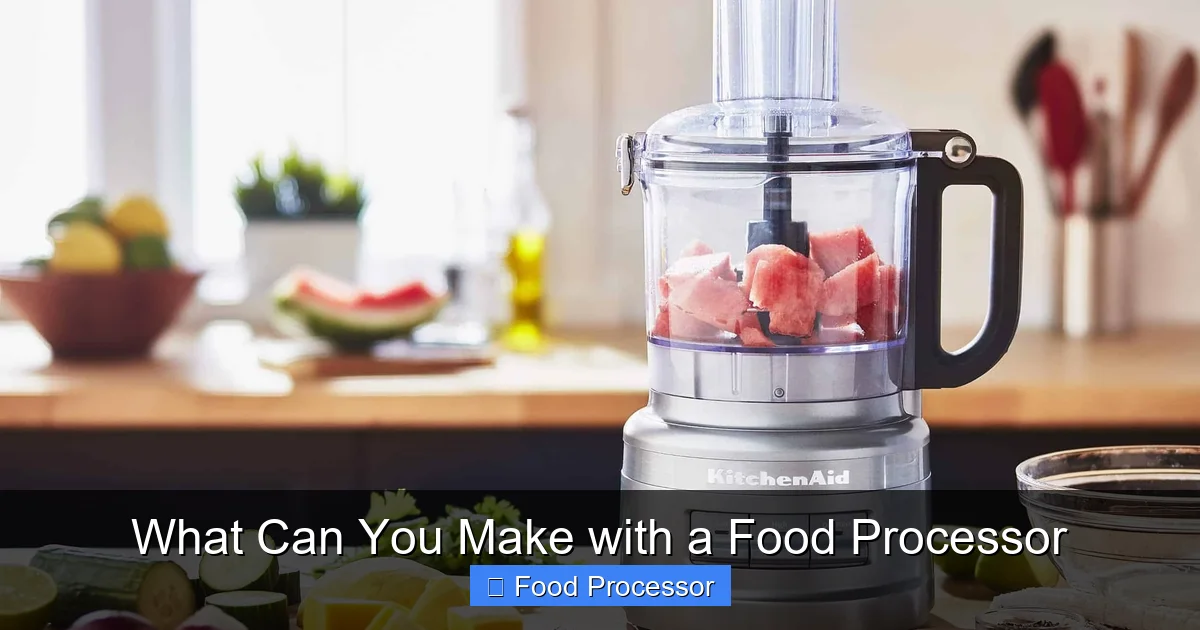
A versatile kitchen powerhouse, a food processor can transform your cooking by tackling a wide array of tasks. From chopping and slicing vegetables to kneading dough and pureeing dips, it significantly reduces prep time and expands your culinary horizons. This guide will explore the many creative and practical uses for your food processor, helping you unlock its full potential.
The food processor is often hailed as a kitchen workhorse, and for good reason! This mighty appliance can tackle an incredible array of tasks that would otherwise require significant manual effort, time, and multiple specialized tools. If you’ve ever wondered about the full potential of your food processor, or if you’re considering investing in one, you’re in the right place. This comprehensive guide will walk you through exactly what you can make with a food processor, demonstrating its versatility and showing you how to unlock its power for more efficient and creative cooking.
From everyday meal prep to gourmet creations, a food processor can revolutionize your time in the kitchen. We’ll explore various applications, provide practical tips, and give you plenty of examples to inspire your next culinary adventure. Get ready to chop, slice, shred, puree, and much more with ease!
Key Takeaways
- Master Multitasking: A food processor excels at a multitude of kitchen tasks, including chopping, slicing, shredding, pureeing, grinding, and even kneading dough, making it an indispensable tool for home cooks.
- Save Time and Effort: This appliance dramatically reduces manual labor and prep time for tasks like dicing vegetables, grating cheese, and preparing complex sauces, allowing you to create meals faster and more efficiently.
- Explore Culinary Creativity: Beyond basic prep, a food processor enables you to effortlessly make homemade nut butters, pestos, hummus, baby food, and even some dessert bases, opening up a world of culinary possibilities.
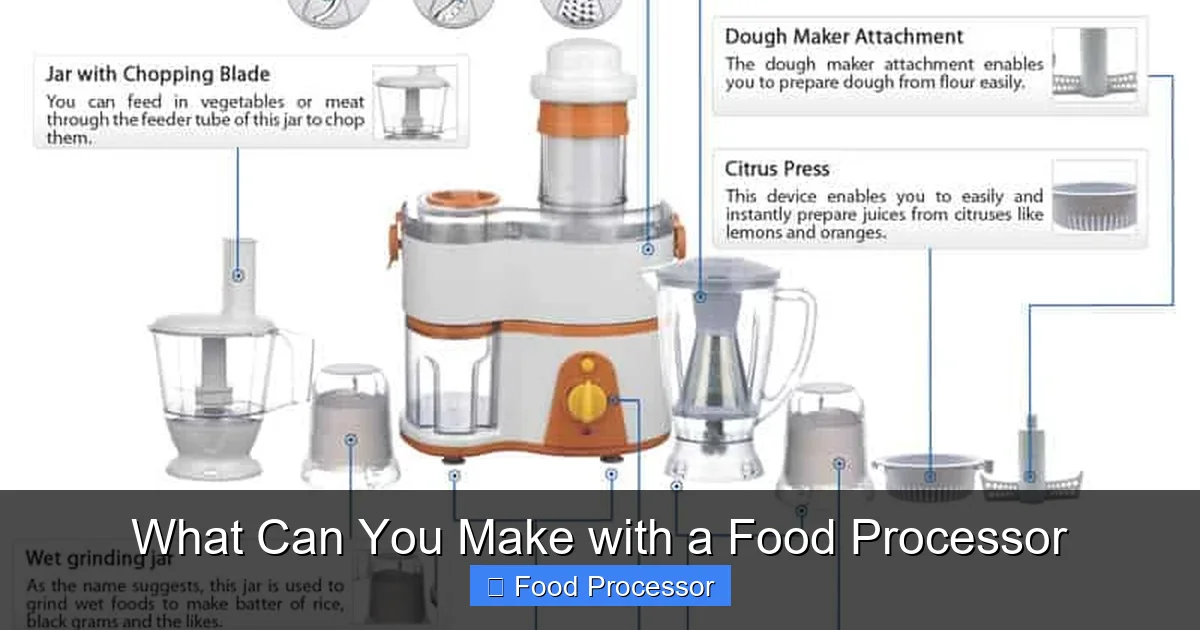
- Understand Blade Functions: Different blades and discs are designed for specific tasks – the S-blade for chopping and pureeing, and various discs for slicing and shredding – understanding their uses is key to optimal results.
- Utilize Pulse and Speed Settings: The pulse function offers precise control for preventing over-processing, while variable speed settings allow you to achieve desired textures, from coarse chops to smooth purees.
- Proper Loading and Maintenance: For best performance and longevity, avoid overfilling the work bowl, cut ingredients into uniform pieces, and clean the appliance promptly after each use.
- Versatility for Various Diets: Whether you’re making gluten-free dough, vegan pates, or fresh baby food, a food processor is incredibly adaptable, supporting a wide range of dietary needs and preferences.
1. Chopping, Mincing, and Dicing
This is arguably the most common use for a food processor, and where it truly shines in saving you time. Forget tedious knife work; your food processor can handle large quantities of ingredients in mere seconds.
Chopping Vegetables for Soups, Stews, and Salsas
Whether it’s onions, carrots, celery, bell peppers, or garlic, the food processor can chop them uniformly and quickly. This is a game-changer for mirepoix, sofrito, or any recipe requiring a base of finely chopped aromatics.
- How-to: Cut vegetables into roughly 1-inch pieces. Place them in the work bowl with the S-blade. Pulse in short bursts until you reach your desired consistency. Be careful not to over-process, or you’ll end up with a puree!
- Example: Quickly chop several onions for a large batch of French onion soup or a week’s worth of meal prep.
Mincing Herbs
Fresh herbs add incredible flavor to dishes, but mincing them by hand can be time-consuming. The food processor makes short work of parsley, cilantro, basil, and more.
- How-to: Wash and dry your herbs thoroughly. Remove tough stems. Place herbs in the work bowl with the S-blade. Pulse until finely minced. Adding a tiny bit of olive oil can help prevent them from sticking to the sides.
- Example: Mince a large bunch of cilantro for guacamole or a vibrant chimichurri sauce.
Dicing Nuts
Need chopped nuts for baking or a salad topping? The food processor handles this task efficiently, giving you consistent pieces.
- How-to: Place whole or halved nuts in the work bowl with the S-blade. Pulse gently in very short bursts. Watch closely, as nuts can quickly turn into nut butter if over-processed.
- Example: Dice almonds for an almond crust or pecans for a praline topping.
2. Slicing and Shredding
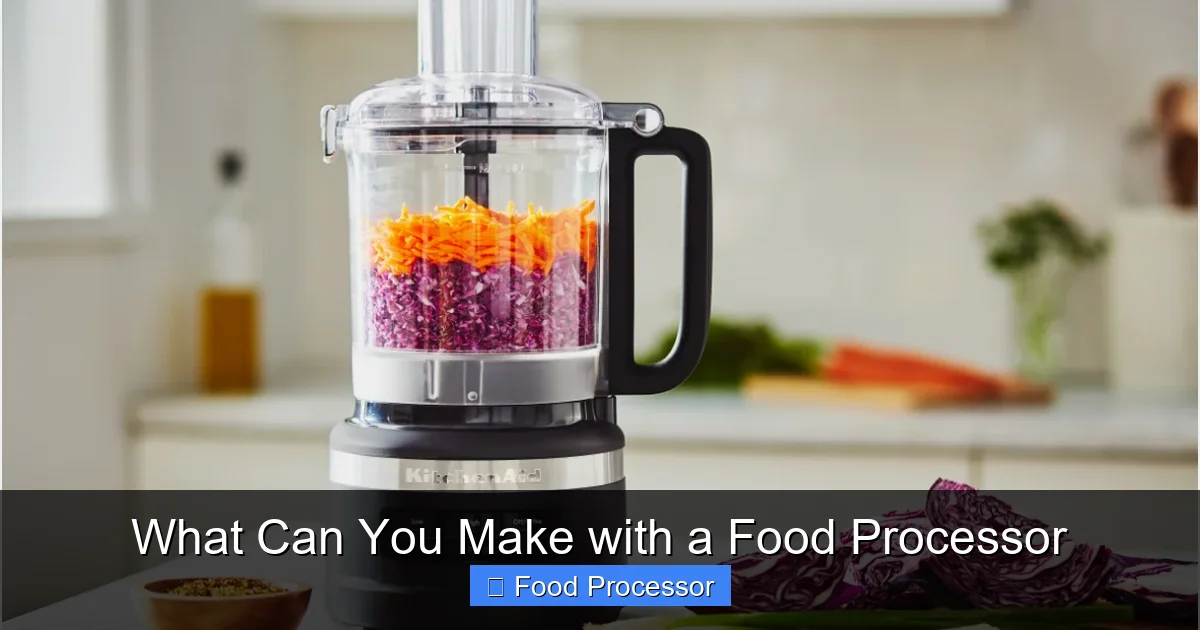
Many food processors come with reversible slicing and shredding discs, turning them into efficient machines for processing large quantities of ingredients with perfect uniformity.
Visual guide about What Can You Make with a Food Processor
Image source: dreamkitchen.solutions
Shredding Cheese
Store-bought pre-shredded cheese often contains anti-caking agents and can be more expensive. Shredding your own cheese is fresh, melts better, and saves money. This is where your food processor truly shines for efficiency.
- How-to: Ensure the cheese is cold and firm. Cut it into pieces that fit easily into the feed tube. Install the shredding disc. Turn the food processor on, then feed the cheese through the tube using the pusher. You’ll be amazed at how quickly you can shred cheese with a food processor! For more specific guidance, you can learn more about how you can use a food processor to shred cheese.
- Example: Shred blocks of cheddar for tacos, mozzarella for pizza, or parmesan for pasta dishes.
Slicing Vegetables
Perfectly even slices are tricky to achieve by hand, but effortless with a food processor. This is ideal for salads, gratins, or dehydrated snacks.
- How-to: Install the slicing disc. Cut vegetables (like cucumbers, zucchini, potatoes, or carrots) to fit the feed tube. Turn on the food processor and feed them through.
- Example: Create uniform potato slices for a gratin, cucumber slices for a salad, or apple slices for a tart.
Shredding Vegetables for Slaws and Fritters
Shredding cabbage, carrots, or even potatoes by hand can be tiresome. The food processor makes it fast and easy.
- How-to: Use the shredding disc as you would for cheese. Feed appropriately sized pieces of vegetables through the feed tube.
- Example: Quickly shred cabbage and carrots for coleslaw or zucchini for fritters.
Shredding Cooked Meats
Shredding cooked chicken or pork for tacos, sandwiches, or casseroles is usually a messy, time-consuming task. Your food processor can do it in seconds.
- How-to: Ensure the meat is cooked and slightly cooled. Cut into chunks that fit comfortably in the work bowl with the S-blade. Pulse in short bursts until shredded. Be careful not to over-process, or you’ll end up with a paste. Find out more about how to use your food processor to shred chicken efficiently.
- Example: Shred chicken breasts for pulled chicken sandwiches or pork shoulder for carnitas.
3. Pureeing and Emulsifying
When you need a smooth, creamy texture, the food processor’s S-blade is your best friend. It excels at breaking down ingredients into fine purees and perfectly blending emulsions.
Visual guide about What Can You Make with a Food Processor
Image source: chopchoplabz.com
Making Dips and Spreads
Homemade hummus, pesto, salsa, and nut butters are far superior to their store-bought counterparts. The food processor makes them simple to create.
- How-to: Combine ingredients in the work bowl with the S-blade. Process continuously until smooth, scraping down the sides as needed. For liquids like oil (for pesto) or water (for hummus), add them slowly through the feed tube while the processor is running.
- Example: Whip up a batch of creamy hummus from chickpeas, tahini, lemon juice, and garlic.
Crafting Sauces and Dressings
From fresh tomato sauces to vinaigrettes, the food processor ensures all ingredients are well combined and smooth.
- How-to: Follow the same method as for dips. For emulsions like mayonnaise or aioli, slowly drizzle oil through the feed tube while the processor is running to create a stable emulsion.
- Example: Blend fresh tomatoes, herbs, and garlic for a quick pasta sauce or make a vibrant vinaigrette.
Preparing Baby Food
Making your own baby food is cost-effective and allows you to control the ingredients. The food processor can turn cooked fruits and vegetables into smooth purees perfect for little ones.
- How-to: Cook fruits or vegetables until very soft. Place them in the food processor with a little breast milk, formula, or cooking water. Process until smooth.
- Example: Puree steamed sweet potatoes, peas, or apples for healthy baby food.
4. Kneading Dough and Mixing Batters
While often associated with stand mixers, a food processor can handle certain doughs and batters with surprising efficiency, especially those that require minimal kneading or benefit from quick mixing to avoid over-developing gluten.
Making Pie Crusts and Pastries
The food processor is fantastic for pie crusts, biscuits, and scones because it quickly cuts cold butter or shortening into flour without warming it up, resulting in flaky, tender baked goods.
- How-to: Add flour, salt, and cold, cubed butter to the work bowl with the S-blade. Pulse until the butter is pea-sized. Add ice water (or other liquid) a tablespoon at a time through the feed tube while pulsing until the dough just comes together. Avoid overmixing. If you’re wondering, yes, you can use a food processor instead of a mixer for this task, and often with superior results for pastry.
- Example: Prepare a perfect flaky pie crust for sweet or savory pies.
Kneading Yeast Doughs (Certain Types)
Some food processors, especially larger, more powerful models, can handle kneading certain yeast doughs for bread. It’s much faster than hand kneading.
- How-to: Use the S-blade. Combine dry ingredients, then add wet ingredients while pulsing. Process continuously until the dough forms a ball and kneads for a few minutes. Check your food processor’s manual, as some models are better suited for this than others.
- Example: Make a quick pizza dough or a simple focaccia dough.
Mixing Light Batters
For quick breads, muffins, or even some cake batters, a food processor can combine wet and dry ingredients efficiently.
- How-to: Be careful not to overmix! Add dry ingredients, then wet. Pulse just until combined.
- Example: Whip up a quick muffin batter for breakfast or a simple scone dough.
5. Grinding and Crushing
Beyond chopping, the food processor can transform solid ingredients into powders or coarse grinds, opening up possibilities for homemade ingredients.
Grinding Coffee Beans
If you don’t have a dedicated coffee grinder, your food processor can step in. While it might not give you the ultra-fine, even grind of a specialized grinder, it works well for French press or drip coffee.
- How-to: Place whole coffee beans in the work bowl with the S-blade. Pulse in short bursts until you reach your desired grind. Shake the bowl occasionally to redistribute beans. If you’re interested in the specifics, you can learn more about using a food processor to grind coffee beans.
- Example: Grind whole beans for your morning coffee.
Crushing Spices
Whole spices have incredible flavor, and grinding them just before use maximizes their impact. The food processor can crush harder spices like peppercorns or cardamom pods.
- How-to: Ensure the work bowl and blade are completely dry. Place whole spices in the bowl with the S-blade. Pulse until ground to your desired fineness.
- Example: Grind whole cumin seeds for a fresh spice blend or peppercorns for fresh black pepper.
Making Breadcrumbs
Forget stale, dry store-bought breadcrumbs. Homemade breadcrumbs from fresh or slightly stale bread are superior in flavor and texture.
- How-to: Tear bread into chunks and place in the work bowl with the S-blade. Pulse until you have fine crumbs. For seasoned breadcrumbs, add herbs and garlic powder.
- Example: Make fresh breadcrumbs for meatloaf, crispy topping for casseroles, or coating for schnitzel.
Grinding Nuts for Flours or Butters
The food processor can turn nuts into coarse flours for baking or smooth, creamy nut butters.
- How-to: For flour, pulse nuts (like almonds or cashews) with a bit of flour or sugar to prevent oil release, until finely ground. For nut butter, process roasted nuts continuously until oils release and a creamy consistency forms. This can take several minutes, scraping down the sides as needed.
- Example: Make almond flour for gluten-free baking or homemade peanut butter.
6. Making Frozen Desserts and Smoothies
While often associated with blenders, a food processor can handle certain frozen tasks, especially for thicker mixtures.
Creating Ice Cream and Sorbet Bases
If you’re making homemade ice cream or sorbet and need to blend the base ingredients until smooth before churning, your food processor can do the job.
- How-to: Combine ingredients for your ice cream or sorbet base in the work bowl with the S-blade. Process until smooth and well combined.
- Example: Blend fruit, sugar, and liquids for a sorbet base before freezing.
Blending Thicker Smoothies and Smoothie Bowls
While blenders are generally preferred for thin, drinkable smoothies, a food processor can be used for thicker smoothie bowls, especially if you’re incorporating a lot of frozen fruit with minimal liquid. However, it’s worth noting that for very liquidy smoothies, a blender is often more efficient. For more details on this, you can explore the question: Can a food processor be used to make smoothies?
- How-to: Add frozen fruit and a minimal amount of liquid to the work bowl with the S-blade. Pulse and scrape down sides until a thick, uniform consistency is achieved.
- Example: Make a thick acai bowl or a creamy banana “nice” cream.
7. Other Creative Uses
Crushing Ice
Some robust food processors can crush ice, though it’s generally recommended for models with powerful motors and sturdy blades to avoid damage. Always check your appliance’s manual.
- How-to: Place a handful of ice cubes in the work bowl with the S-blade. Pulse in short bursts until crushed. Do not overload.
- Example: Prepare crushed ice for cocktails or slushies.
Making Mayonnaise
Homemade mayonnaise is a revelation, and the food processor makes it almost foolproof by allowing for slow, controlled addition of oil.
- How-to: Combine egg yolk, mustard, and lemon juice in the food processor with the S-blade. With the motor running, slowly drizzle in vegetable oil through the feed tube until a thick emulsion forms.
- Example: Craft fresh, creamy mayonnaise for sandwiches or dips.
Preparing Crumb Toppings
From streusel for muffins to savory breadcrumb toppings for casseroles, the food processor quickly combines ingredients.
- How-to: Combine flour, sugar, butter, and spices in the work bowl with the S-blade. Pulse until crumbly.
- Example: Make a buttery streusel topping for an apple crumble.
Food Processor Tips for Best Results
To get the most out of your food processor and ensure its longevity, keep these tips in mind:
- Don’t Overfill: Most food processors have a maximum fill line. Overfilling can lead to uneven processing, a strained motor, or even leaks. Process in batches if necessary.
- Use the Pulse Function: The pulse button is your best friend. It allows you precise control, preventing over-processing and ensuring you get the exact texture you desire, especially for chopping or dicing.
- Cut Food into Even Pieces: For uniform chopping, slicing, or shredding, ensure your ingredients are cut into roughly even, manageable pieces that fit comfortably in the feed tube or around the S-blade.
- Keep Blades Sharp: While most food processor blades are self-sharpening to an extent, exceptionally dull blades can be less efficient. Replace worn blades when necessary.
- Clean Immediately: Food particles can dry and stick, making cleanup harder. Disassemble and wash parts promptly after use. Many parts are dishwasher safe – check your manual!
Troubleshooting Common Food Processor Issues
Even with the best intentions, you might run into a few common snags. Here’s how to troubleshoot them:
Uneven Chops or Purees
- Problem: Some pieces are perfectly chopped while others are still large, or your puree isn’t smooth.
- Solution: Ensure ingredients are cut into similar sizes before processing. Don’t overload the bowl, as this prevents proper circulation. For purees, scrape down the sides of the bowl frequently to reincorporate ingredients. For chopping, use the pulse function in short bursts.
Over-Processing
- Problem: Your chopped vegetables turned to mush, or your nuts became butter when you just wanted a coarse grind.
- Solution: The number one rule is to use the pulse function and watch your ingredients closely. It’s easy to go from perfectly chopped to pureed in seconds. Stop and check often.
Motor Overheating
- Problem: The motor sounds strained, gets hot, or even shuts off.
- Solution: This usually happens when processing very dense or large quantities of food for too long without a break. Don’t overload the food processor. If processing thick dough or nut butter, give the motor short breaks. If it shuts off, allow it to cool down completely before attempting to use it again.
Conclusion
As you can see, a food processor is an incredibly versatile and powerful tool that can significantly simplify and enhance your cooking experience. From the foundational tasks of chopping and slicing to more advanced creations like homemade nut butters and delicate pastry doughs, its capabilities are extensive. By understanding the different attachments and techniques, you can confidently tackle a vast array of recipes, save valuable time, and elevate the quality of your homemade meals. So, dust off your food processor, experiment with these ideas, and unlock a world of culinary possibilities in your kitchen!
