

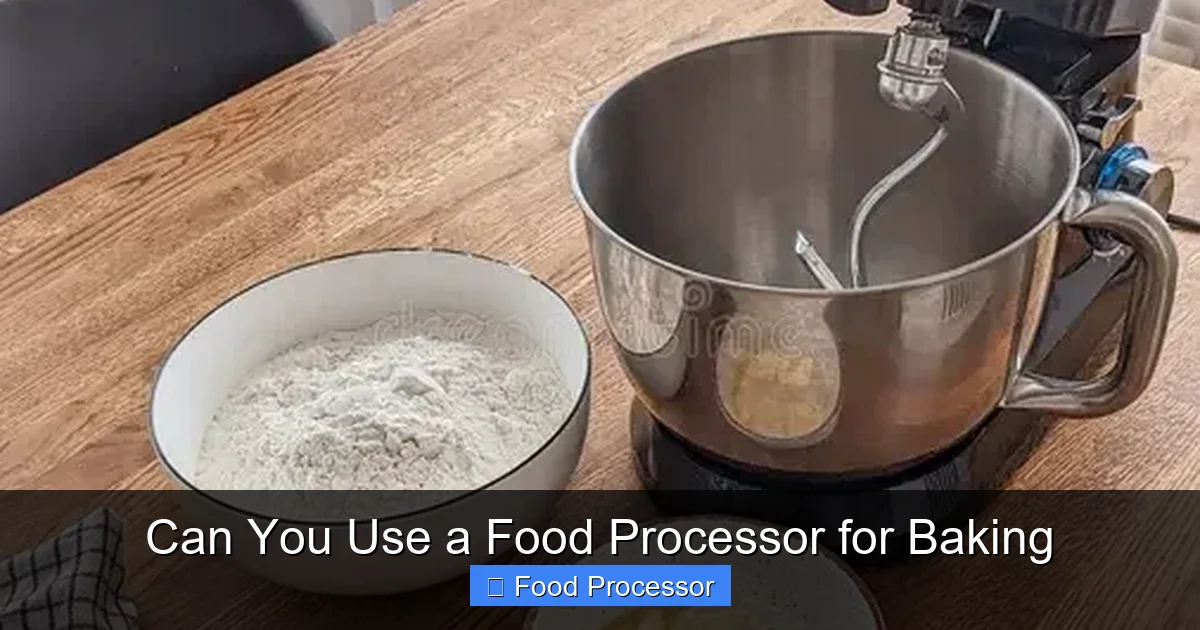
Yes, you absolutely can use a food processor for baking, and it can be a real game-changer! This versatile kitchen appliance streamlines many baking tasks, from effortlessly mixing doughs to creating perfect pie crusts and crumbles. Learn how to leverage its power to save time and achieve consistent, professional-quality results in your homemade treats.
Ever wondered if that powerful appliance sitting on your counter, usually reserved for chopping vegetables or making hummus, could also be a secret weapon in your baking arsenal? The answer is a resounding yes! A food processor for baking can dramatically change how you approach many recipes, making tasks quicker, easier, and often more consistent.
In this comprehensive guide, we’ll dive deep into the world of using a food processor for baking. You’ll learn which baking tasks are perfect for this handy machine, how to master essential techniques like making dough and crumb toppings, and crucial tips to avoid common pitfalls. We’ll also cover when it’s best to stick to traditional methods and how to troubleshoot if things don’t go quite as planned. By the end, you’ll feel confident harnessing the power of your food processor to create delicious homemade baked goods with less effort and more success.
Key Takeaways
- Versatility is Key: A food processor is incredibly versatile for baking, handling tasks from making dough to grinding nuts.
- Excellent for Doughs: It excels at making pastry doughs like pie crusts, shortbread, and biscuits, ensuring a perfectly cold and crumbly texture.
- Master the Pulse: Using the pulse function is crucial to avoid overmixing and developing too much gluten, which can lead to tough baked goods.
- Cold Ingredients Matter: Especially for pastry, keep butter and other fats very cold before processing to achieve flakiness.
- Not for All Tasks: Avoid using it for delicate tasks like whipping egg whites or kneading large quantities of yeasted bread dough, which require more aeration or gentle handling.
- Time-Saving Appliance: It significantly speeds up prep time for many baking recipes, making homemade treats more accessible.
- Easy Clean-Up: For many tasks, the food processor simplifies clean-up compared to traditional hand-mixing methods.
The Basics: Why Use a Food Processor for Baking?
Before we jump into specific recipes, let’s explore why a food processor for baking is such a valuable tool. It offers several significant advantages:
Speed and Efficiency
One of the biggest benefits is speed. What might take minutes of hand-mixing or kneading can be done in mere seconds with a food processor. This makes spontaneous baking sessions more realistic and reduces overall prep time for even complex recipes. If you’re looking to speed up your kitchen tasks, understanding what are the advantages of a food processor can be very helpful.
Consistency
The consistent chopping and mixing action of the blades ensure ingredients are evenly distributed and processed to a uniform texture. This is especially beneficial for tasks like cutting butter into flour for pastry, where consistent fat distribution is key to flakiness.
Less Mess
With most of the mixing happening inside the closed work bowl, you’ll often find less flour dust or batter splatters compared to using a stand mixer or mixing by hand. This translates to quicker clean-up and a tidier kitchen.
Temperature Control
For recipes requiring cold ingredients, like pie crusts, a food processor keeps contact with warm hands to a minimum. This helps maintain the desired cold temperature of butter or other fats, which is crucial for a tender, flaky result.
Essential Food Processor Attachments for Baking
Most baking tasks in a food processor will primarily use one key attachment:
Visual guide about Can You Use a Food Processor for Baking
Image source: thumbs.dreamstime.com
The S-Blade (Chopping/Mixing Blade)
This is your go-to blade for almost all baking applications. Its sharp, curved design efficiently chops, mixes, and blends ingredients. It’s perfect for cutting butter into flour, mixing doughs, grinding nuts, and pureeing fruit for fillings.
Grating/Slicing Discs (Less Common for Core Baking)
While not for mixing batters, the grating disc can be incredibly useful for preparing baking ingredients like shredding carrots for carrot cake, zucchini for zucchini bread, or even frozen butter for some pastry techniques. The slicing disc can quickly slice fruits like apples for pies or tarts.
Baking Tasks Perfect for Your Food Processor
Let’s explore some of the best ways to incorporate your food processor for baking:
Visual guide about Can You Use a Food Processor for Baking
Image source: thumbs.dreamstime.com
Making Pie Crust and Pastry Dough
This is arguably where the food processor shines brightest. It perfectly cuts cold butter into flour, creating pea-sized pieces quickly and efficiently. This minimizes gluten development and ensures a tender, flaky crust. If you don’t have this tool, you might be asking what to do without a food processor for pie crust, but with one, it’s a breeze.
Mixing Biscuit Dough
Similar to pie crusts, biscuit dough benefits from quick processing to keep the butter cold and prevent overmixing. The result is light, fluffy biscuits with minimal effort.
Producing Crumb Toppings (Streusel)
For delicious streusel toppings on muffins, crisps, or coffee cakes, the food processor makes light work of combining butter, flour, sugar, and spices into a perfect crumbly mixture.
Making Graham Cracker or Cookie Crumbs for Crusts
Forget crushing cookies in a bag! Pop graham crackers, Oreos, or other cookies into the food processor, and in seconds, you’ll have perfectly fine crumbs for cheesecake or pie crusts.
Preparing Quick Breads and Muffins
For many quick bread and muffin batters, a food processor can handle the initial mixing of wet ingredients and then the gentle incorporation of dry ingredients. Just be careful not to overmix, as this can lead to tough results.
Blending Frostings and Fillings
Certain frostings (like cream cheese frosting) and fruit fillings can be whipped or pureed smoothly in a food processor, especially those that don’t rely heavily on aeration.
Grinding Nuts for Flour or Toppings
Need almond flour for macarons or finely chopped nuts for a cake topping? Your food processor can grind nuts quickly and evenly. Be careful not to over-process, or you’ll end up with nut butter!
Shredding Ingredients
Utilize the grating disc to shred carrots for carrot cake, zucchini for bread, or even apples for fillings. It’s much faster than hand-grating. You can even use the slicing disc for various tasks; to understand more generally how do you use a food processor step by step, check out our detailed guide.
Baking Tasks Where a Food Processor Excels (Step-by-Step)
Let’s walk through a couple of classic baking recipes where the food processor for baking truly shines.
How to Make Perfect Pie Crust Dough in a Food Processor
Making flaky, tender pie crust has never been easier. This method ensures your butter stays cold and is evenly distributed.
Gather Your Ingredients
- 2 ½ cups all-purpose flour
- 1 teaspoon salt
- 1 cup (2 sticks) unsalted butter, very cold and cut into ½-inch cubes
- ½ cup ice water (you might need a little more or less)
Combine Dry Ingredients
Add the flour and salt to the bowl of your food processor fitted with the S-blade. Pulse a few times to combine. This ensures an even distribution of salt throughout the flour.
Add Cold Butter
Scatter the cold butter cubes over the flour mixture. Secure the lid. Now, here’s the crucial part: pulse the food processor in short bursts (1-second pulses) about 10-15 times. You’re looking for the butter to be cut into pea-sized pieces, some even smaller, some slightly larger, resembling coarse meal. Don’t over-process here; visible bits of butter are what create flakiness.
Add Ice Water Gradually
With the food processor running on low or pulsing, slowly drizzle in the ice water through the feed tube, one tablespoon at a time. Watch the dough carefully. As soon as it starts to come together and form clumps, stop adding water. This usually takes about ½ cup, but humidity and flour type can vary this. The dough should look shaggy but hold together when pressed between your fingers.
Finish and Chill
Immediately turn the dough out onto a lightly floured surface. Gently gather it into two equal discs. Avoid kneading! Flatten each disc, wrap them tightly in plastic wrap, and refrigerate for at least 30 minutes, or up to 2 days. Chilling allows the gluten to relax and the butter to firm up, making the dough easier to roll and resulting in a flakier crust.
How to Make Crumb Topping (Streusel) in a Food Processor
A crumbly, buttery streusel adds amazing texture and flavor to muffins, pies, and coffee cakes. Your food processor makes it incredibly simple.
Gather Your Ingredients
- ½ cup all-purpose flour
- ¼ cup granulated sugar (or brown sugar for a richer flavor)
- ¼ teaspoon ground cinnamon (optional)
- ¼ cup (½ stick) unsalted butter, very cold and cut into ½-inch cubes
Combine Dry Ingredients
Place the flour, sugar, and cinnamon (if using) into the food processor bowl fitted with the S-blade. Pulse 2-3 times to combine them thoroughly.
Add Cold Butter
Scatter the cold butter cubes over the dry mixture. Secure the lid. Pulse in short bursts (1-2 seconds each) about 10-15 times, or until the mixture resembles coarse crumbs with some larger pieces of butter still visible. The key is to keep it crumbly, not smooth.
Use Immediately or Chill
Your streusel is ready to sprinkle! You can use it immediately or store it in an airtight container in the refrigerator for up to a week, or freeze it for longer.
When NOT to Use a Food Processor for Baking
While incredibly versatile, a food processor for baking isn’t a miracle worker for every task. Knowing its limitations will help you avoid baking disasters:
Whipping Egg Whites or Cream
For light, airy results like meringue or whipped cream, you need to incorporate a lot of air. The food processor’s blades are designed to chop and mix, not aerate. A stand mixer or hand mixer is essential for these tasks.
Kneading Large Yeast Doughs
While some smaller, softer yeast doughs might work, a food processor can quickly over-develop gluten and overheat the dough, leading to tough bread. It also struggles with the intensive, prolonged kneading that many yeasted breads require. In these cases, you might prefer to use a food processor instead of a mixer only for initial ingredient combination, then switch to hand kneading or a dedicated stand mixer.
Very Light, Airy Batters
For delicate cakes like genoise or sponge cake that rely on gently folded-in air, the aggressive action of a food processor will deflate the batter, resulting in a dense cake.
Tips for Successful Baking with a Food Processor
To ensure your baking adventures with a food processor are always a success, keep these tips in mind:
Don’t Overmix! (The Golden Rule)
This is the most critical rule for baking with a food processor. Its powerful motor and sharp blades can develop gluten rapidly in doughs, leading to tough, chewy results. Always use the pulse function in short bursts and stop as soon as the ingredients are just combined or reach the desired texture.
Keep Ingredients Cold (Especially Butter)
For pastries, pie crusts, and biscuits, cold butter is non-negotiable. It creates pockets of steam during baking, which results in flakiness. The food processor helps keep butter cold by minimizing handling, but starting with very cold butter is key.
Scrape Down Sides
Periodically stop the machine and use a rubber spatula to scrape down any ingredients clinging to the sides of the work bowl. This ensures everything is evenly incorporated.
Add Liquids Gradually
When adding liquids to dough, do so slowly through the feed tube while the processor is running or pulsing. This allows you to control the consistency and avoid adding too much, which can make dough sticky and difficult to work with.
Check for Proper Consistency
Always trust your instincts and the visual cues. Stop the machine, open the lid, and feel the dough or examine the mixture. Does it feel right? Is it crumbly enough? Is it just coming together?
Know Your Machine
Different food processors have varying power levels and blade designs. Start with shorter pulses and observe how your specific machine handles ingredients. You’ll quickly learn its quirks and capabilities.
Troubleshooting Common Baking Issues with a Food Processor
Even with the best intentions, things can sometimes go awry. Here are a few common issues and how to fix them:
Dough is Too Sticky
If your dough, especially pie crust or biscuit dough, becomes too sticky, it means you’ve likely added too much liquid or overmixed it. Try adding a tablespoon or two of flour and pulsing briefly. For pie crust, gather it gently, wrap it, and chill it for longer. Cold dough is less sticky.
Pastry is Tough or Not Flaky
A tough pastry usually indicates too much gluten development, which comes from overmixing or overworking the dough. It can also happen if the butter wasn’t cold enough or was fully incorporated, rather than remaining in pea-sized bits. Unfortunately, once dough is overmixed, it’s hard to fully reverse. Ensure your butter is ice-cold and use quick pulses only, stopping as soon as the dough just comes together.
Ingredients Not Evenly Combined
If you notice pockets of unmixed flour or large chunks of butter, it might be due to not scraping down the sides of the bowl enough or adding all the ingredients at once without pulsing in between. Stop, scrape, and pulse again. Sometimes, pulsing without any liquid first helps break down larger pieces.
Motor Overheating
If you’re running your food processor for an extended period, especially with thick doughs, the motor can get hot. Most modern food processors have safety features that will shut them off if they overheat. To prevent this, process in shorter bursts, take breaks, and avoid overloading the bowl. Always refer to your appliance’s manual for recommended run times.
Conclusion
So, can you use a food processor for baking? Absolutely! This versatile kitchen workhorse is a fantastic asset for any baker, from novice to experienced. It excels at tasks like making perfect pie crusts, crumbly streusel, and quick bread batters, saving you time and effort while delivering consistent, delicious results.
By understanding its strengths, knowing its limitations, and following our expert tips, you’ll soon be whipping up a wide array of baked goods with confidence. Don’t be afraid to experiment and discover all the ways your food processor can simplify and enhance your baking journey. Happy baking!
