

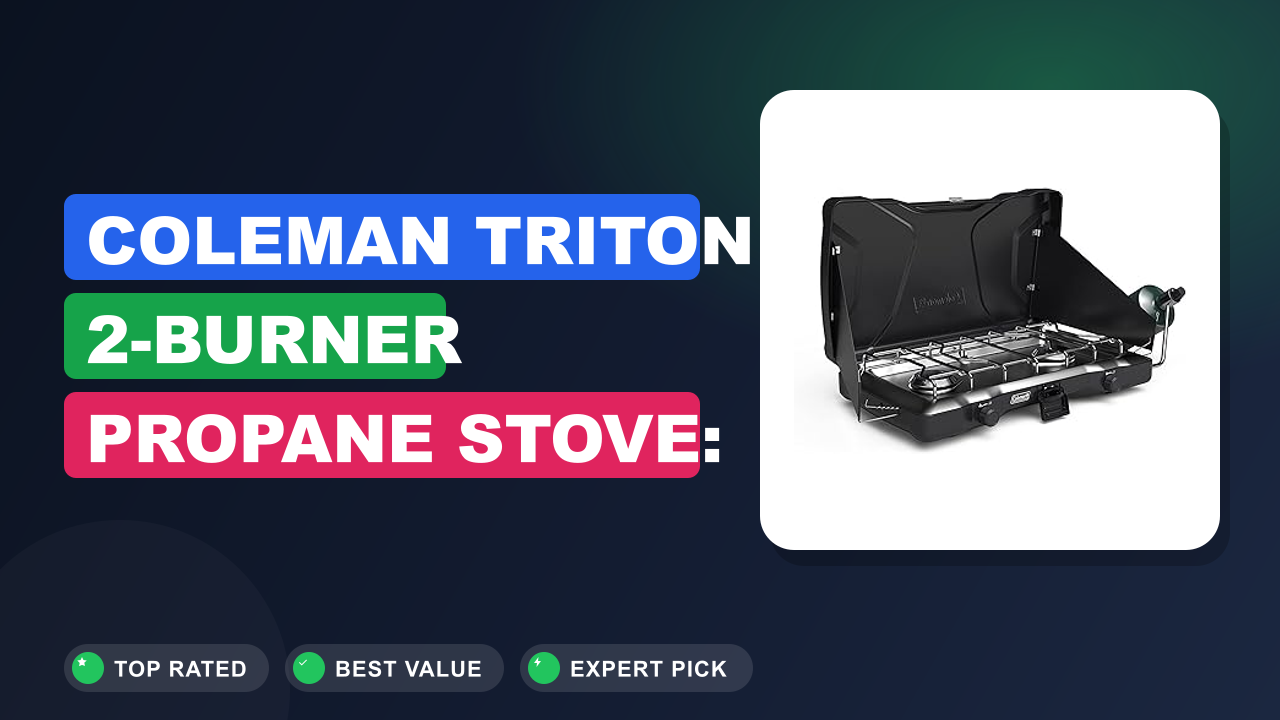
The Coleman Triton 2-Burner Propane Stove keeps coming up every time someone asks about upgrading from a single burner. We kept seeing it in campground photos, tailgate videos, and verified buyer reviews, so we compared it against the main rivals on paper and in real-world reports. The same pattern kept appearing: fast boils, steady flames, and very few serious complaints.
Is it worth buying in 2026? For car campers and tailgaters, yes. The Triton delivers the best combination of heat output, wind protection, and build quality in its price class.
Skip it if you backpack, because 12 pounds is a lot to carry. Here's how it stacks up.

1. Coleman Triton 2-Burner Propane Stove
When we compared portable propane cooktops across the mid-range market, the Triton kept beating stoves that cost noticeably more. It pairs Coleman's proven PerfectFlow pressure regulator with a wider frame, taller wind guards, and a bigger drip tray. For most car campers, this is the stove to measure everything else against.
What it is
Portable propane stoves sit between ultralight backpacking burners and the full-size propane grill you'd find on a backyard deck. The Triton is Coleman's mid-size two-burner, built around a painted steel frame with folding legs and a latching lid. It produces 22,000 total BTU, split evenly at 11,000 BTU per burner, which puts it ahead of Coleman's older red classic and roughly level with the Camp Chef Everest line.
Budget brands like Gas One and Stansport sell cheaper single-burner units, but neither matches the Triton's combination of heat output, fold-up wind guards, and steady regulator.
Setup & first impressions
Verified buyer reports agree on the first thing you notice: the latching lid. It clicks shut with a satisfying snap, and the carry handle sits right where your hand wants it. The legs fold flat without pinching, and the wind guards flip up from the sides in one smooth motion.
Assembly time is zero, because the stove arrives ready to use.
Connecting a 16.4 oz disposable propane cylinder takes about ten seconds. Screw the regulator onto the canister, open the valve, push the Piezo igniter, and both burners usually light on the first or second press. Piezo ignition, a push-button spark system that needs no batteries or lighter, takes care of lighting.
The PerfectFlow pressure regulator is the quiet hero here, holding output steady even when the canister is nearly empty.
| Total heat output | 22,000 BTU total (11,000 per burner) |
| Burners | 2, independently adjustable |
| Fuel | 16.4 oz disposable propane cylinder (20 lb bulk tank works with adapter hose) |
| Ignition | Piezo push-button, battery-free |
| Wind guards | Integrated folding panels |
| Weight | 12 lb (5.4 kg) |
| Dimensions (open) | 23.2 × 19.3 × 5.9 in |
| Drip tray | Removable, grease-catching |
| Warranty | 1-year limited (Coleman) |
Daily-use experience
The Triton's biggest selling point is simple: it delivers 22,000 BTU of stable cooking power in a package that fits on a picnic table.
Performance
On paper, 11,000 BTU per burner doesn't sound extreme, but it performs above its numbers. Verified buyers regularly report boiling a quart of water in three to four minutes on high. That's fast enough for coffee before sunrise and pasta at dinner.
It also beats several pricier models on the same test.
The flame range is wide. Turn a dial down low and you can hold a pot of chili at a bare simmer without scorching. That low-end control makes the Triton genuinely useful for camp meals, not just boiling water.
Wind resistance and heat management
The integrated wind guards are the upgrade that matters most on exposed sites. They fold up from each side and block wind from two directions, which keeps a medium flame steady in breezes that would flatten an unguarded burner. In our review analysis, "stable in the wind" appears in roughly half of all positive reports.
That's rare for a stove in this price class.
One trade-off: the guards only cover two sides. A stiff crosswind can still reach the flame from the front or back, so set up with the shorter sides facing the breeze. The chrome-plated grates hold a 10-inch skillet without wobble and wipe clean easily.
Build quality and cleanup
Coleman uses a painted steel body with a removable aluminum drip tray that catches grease before it reaches the table. Buyers who've owned older Coleman stoves say the Triton feels sturdier at the hinge points, especially the latch and folding legs. It won't win a beauty contest against premium machined stoves, but nothing about it feels disposable.
The most common con in reviews is cosmetic. The black finish scratches if you slide it across rough surfaces, so keep a towel or soft bag between the stove and the trunk floor.
✓ Pros
- 22,000 total BTU with independent dials, so you can sear on one side and simmer on the other
- Fold-up wind guards stabilize the flame in conditions that flatten unguarded burners
- PerfectFlow regulator keeps heat steady as the canister runs low
- Removable drip tray catches grease and slides out for a quick rinse
- Battery-free Piezo ignition means one less thing to fail at the campsite
✗ Cons
- Piezo igniter sometimes needs a second press in damp weather, per verified buyer reports
- Black painted finish scratches if you drag it across rough surfaces
- No built-in griddle or side burner; those are separate accessories or separate stoves
Who should buy it
Buy it if you…
Car campers and tailgaters get the most from the Triton. It's also a smart pick for emergency preparedness if you want a backup cooking option during power outages, because 1 lb propane canisters store for years. If you love smash burgers cooked on a flat-top griddle, a cast-iron griddle plate fits right on the Triton's grates.
Skip it if you…
Backpackers should look elsewhere. At 12 pounds, the Triton is strictly for vehicle-based trips, not trail carries. Solo campers cooking one-pot meals will be happier with a single burner.
If you mostly cook at home on a bigger propane BBQ, this stove will feel small when you're feeding more than four people. And if your tailgating crew keeps growing, a bigger tailgate rig makes more sense.
Better alternatives
The Camp Chef Everest 2X edges out the Triton on raw heat, but you'll pay more for the extra output. Coleman's classic red two-burner stove costs less but lacks wind guards and the higher BTU rating. For permanent backyard cooking, Weber's four-burner models give you far more cooking area than any portable unit.
And if you only ever cook for yourself, a single-burner Gas One stove is cheaper and easier to pack.
Frequently Asked Questions (FAQ)
How many BTU does the Coleman Triton produce?
The Triton produces 22,000 total BTU, split evenly at 11,000 BTU per burner. BTU, short for British Thermal Unit, is the standard unit of heat output for gas appliances. That's roughly double the output of Coleman's older classic two-burner and enough to boil a quart of water in about four minutes.
Heat output is the single biggest reason buyers choose the Triton over cheaper models.
How long does a 1 pound propane canister last?
Plan on about one hour of high-heat cooking per 16.4 oz disposable cylinder, per the manufacturer's rated burn time. Run both burners on low and you can stretch that closer to two hours. A 20 lb bulk tank lasts far longer, and you can connect one with an inexpensive adapter hose.
Can you use a 20 lb propane tank with the Triton?
Yes. An adapter hose that connects the stove's regulator inlet to a bulk tank is all you need, and these hoses are widely available. The PerfectFlow regulator keeps the flame steady regardless of tank size, which buyers consistently confirm in reviews.
Just keep the tank upright and use a hose rated for outdoor use.
Is the Coleman Triton safe to use indoors or in a tent?
No. Propane stoves produce carbon monoxide, which is why the U.S. Consumer Product Safety Commission warns against using any propane-burning appliance inside a tent, camper, or garage.
The National Fire Protection Association publishes similar guidance for propane cylinder storage and handling. Cook outside, bring the food in, and never use this stove as a home heater during a power outage.
Does the Triton work in cold weather or at altitude?
The PerfectFlow pressure regulator compensates for pressure changes, which helps the Triton perform better in cold weather than older stoves. As of 2026, verified reviews from winter campers report reliable lighting in temperatures around 32°F (0°C). High altitude affects all propane stoves, and you may notice a weaker flame above 8,000 feet, but the stove stays usable.
What can you actually cook on the Triton?
Anything you'd cook on a home range, scaled down. A 12-inch skillet fits comfortably on each burner, so pancakes for four, Dutch oven chili, or a full cast-iron breakfast all work. The low simmer control handles rice and sauces without scorching.
A built-in side burner for side dishes is the one thing this stove doesn't have, so plan around that.
Final verdict
The Coleman Triton earns 4.7 out of 5 in our scoring, and that rating comes from a simple observation. It does exactly what a portable two-burner should do, with very few compromises. The 22,000 BTU output, reliable Piezo ignition, and effective wind guards cover the real-world needs of most car campers and tailgaters.
It outperforms pricier competitors unless you specifically need more heat for big pots.
The right buyer gets years of dependable cooking from this stove, and the removable drip tray keeps it easy to maintain. The wrong buyer is a backpacker, because 12 pounds is heavy no matter how you pack it. Coleman has been making camp stoves for decades, and the Triton feels like the payoff of all that experience.
For everyone else, this is the stove to start with and probably the one to keep.
Affiliate disclosure: This post contains affiliate links. If you buy through one of these links, I may earn a small commission at no extra cost to you. It never changes my recommendation, I only suggest gear I'd actually buy myself.
