

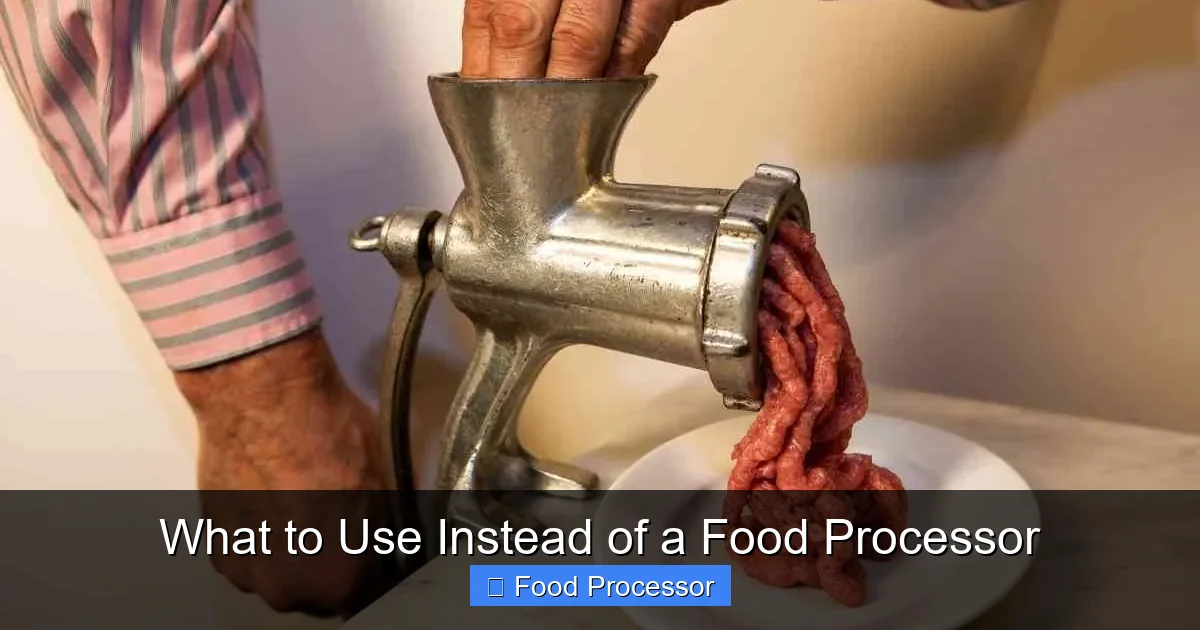
Don’t have a food processor? No problem! This guide reveals numerous effective alternatives, from sharp knives and box graters to blenders and mortar and pestles. Learn how to achieve perfect results for chopping, shredding, pureeing, and more using common kitchen tools, ensuring your recipes never miss a beat. You’ll discover that a food processor isn’t always necessary for delicious homemade meals.
In today’s fast-paced kitchens, a food processor often feels like an essential tool. It promises to chop, shred, slice, and puree ingredients in mere seconds, saving precious time and effort. But what if you don’t own one? Perhaps you’re cooking in a small space, on a budget, or simply prefer a more hands-on approach. The good news is, you absolutely do not need a food processor to create incredible meals. Many traditional and modern kitchen tools can perform similar tasks, often with results that rival, or even surpass, what a machine can do. You might be surprised at just what you can use if you don’t have a food processor available.
This comprehensive guide will walk you through a variety of effective alternatives to a food processor, demonstrating how common kitchen gadgets and a little technique can handle almost any food prep task. We’ll cover everything from fine mincing and coarse chopping to smooth pureeing and perfect pastry dough, ensuring you’re never stumped by a recipe that calls for a food processor again.
Key Takeaways
- Master Your Knife Skills: A sharp chef’s knife is the most versatile tool for chopping, dicing, and mincing, effectively replacing many food processor functions with precision.
- Embrace Manual Grating: For shredding cheese, vegetables, or nuts, a simple box grater or microplane offers excellent results, often with better texture control than a food processor.
- Utilize Blenders for Pureeing: An immersion blender or standard blender can easily handle pureeing soups, sauces, and making smoothies, providing a smooth consistency a food processor might overprocess for liquids.
- Discover the Mortar and Pestle: This ancient tool is perfect for grinding spices, making pastes, and creating small batches of dips with unique textures that a food processor can’t replicate.
- Practice Patience and Batch Processing: Working in smaller batches and taking your time are crucial for achieving consistent results when using manual methods instead of a food processor.
- Choose the Right Tool: Different tasks require different alternatives; understanding which manual tool best suits a specific food processor function will greatly improve your cooking efficiency and results.
Mastering Manual Chopping and Dicing
When a recipe asks for finely chopped vegetables or minced garlic, your first thought might be to reach for a food processor. However, with a good knife and a bit of practice, you can achieve superior results manually.
The Chef’s Knife: Your Best Friend
A sharp chef’s knife is arguably the most important tool in any kitchen, and it’s the ultimate alternative to a food processor for most chopping tasks. It offers precision and control that a machine sometimes lacks, especially when you need specific cuts or varying textures.
- Chopping Vegetables: For onions, carrots, celery, and bell peppers, start by cutting them into uniform pieces. Then, use a rocking motion with your chef’s knife to chop them into smaller bits. Keep your non-dominant hand curled into a claw shape to protect your fingertips.
- Dicing: To dice, first slice your ingredient, then cut those slices into strips, and finally, cut across the strips to create small, even cubes. This technique works wonderfully for potatoes, firm fruits, and vegetables.
- Coarse Chopping: If you need a coarse chop, simply cut larger pieces, making fewer passes with your knife. This is perfect for salsas or rustic soups where you want some texture.
Tip: Always ensure your knife is sharp. A dull knife is more dangerous and less effective. Invest in a good knife sharpener and learn how to use it.
Precision with a Paring Knife
While the chef’s knife handles the heavy lifting, a paring knife is excellent for smaller, more delicate tasks that a food processor would typically pulverize. Think about peeling, trimming, or mincing tiny ingredients.
- Trimming and Peeling: Use a paring knife for precision peeling of fruits and vegetables, or for removing blemishes.
- Small Mincing Jobs: For a tiny amount of minced chili or ginger, a paring knife gives you superior control over the size and texture.
Mincing Herbs and Garlic
Mincing herbs and garlic by hand is often preferred by chefs because it releases more flavor and prevents bruising that can occur in a food processor. Plus, the aroma is incredible!
- Herbs: Stack leafy herbs like basil or parsley, roll them tightly, and slice thinly (chiffonade). Then, gather the slices and chop repeatedly until finely minced.
- Garlic: Smash garlic cloves with the side of your chef’s knife, peel, and then chop finely. For a paste, add a pinch of salt while mincing and smear it across the cutting board with the side of your knife.
Shredding and Grating with Ease
Shredding cheese or vegetables for salads, casseroles, or baked goods is a common food processor task. Luckily, manual graters are highly effective and widely available.
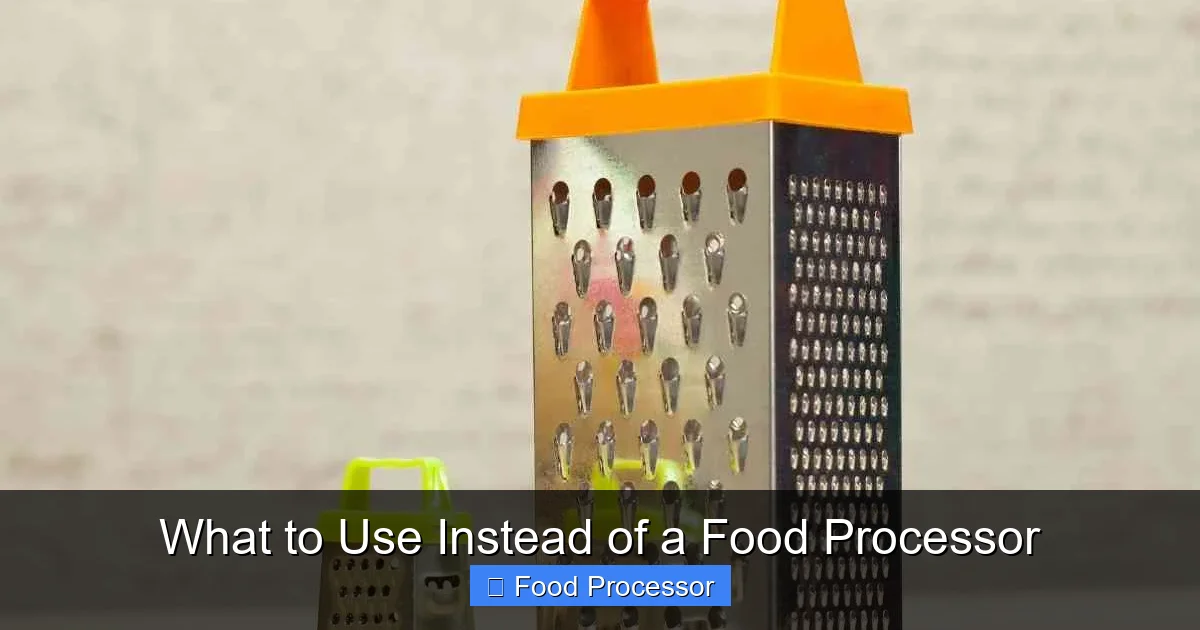
Visual guide about What to Use Instead of a Food Processor
Image source: foodiesfamily.com
The Mighty Box Grater
A four-sided box grater is a kitchen staple and an excellent food processor alternative for shredding cheese, vegetables, and even nuts. Each side offers a different grating size.
- Coarse Shredding: Use the largest holes for cheese, cabbage, carrots, or zucchini. This is ideal for coleslaw or hash browns.
- Medium Shredding: The medium holes are great for softer cheeses or for creating slightly finer vegetable shreds.
- Fine Grating: The smallest holes produce a fine grate, perfect for hard cheeses like Parmesan, ginger, or nuts for baking.
- Slicing: Some box graters have a slicing side, which can be used for thin slices of cucumbers, potatoes, or radishes, though a mandoline is usually better for consistency.
Tip: For easier shredding of soft cheeses, chill them in the freezer for about 15-20 minutes before grating.
Microplanes for Fine Zests and Pastes
For ultra-fine grating, like zesting citrus fruits, grating ginger into a paste, or shaving hard spices like nutmeg, a microplane zester is indispensable. A food processor can’t achieve this level of delicate fineness.
- Citrus Zest: Gently rub citrus fruit across the microplane, rotating it to avoid grating the bitter white pith.
- Ginger and Garlic Paste: Grate fresh ginger or garlic directly into your dish or onto a cutting board for an instant paste.
- Hard Spices: Freshly grated nutmeg or cinnamon will elevate your dishes to a new level.
Blending and Pureeing Alternatives
While a food processor can puree ingredients, often for smoother results, other tools might be more suitable, especially for liquids or smaller batches.
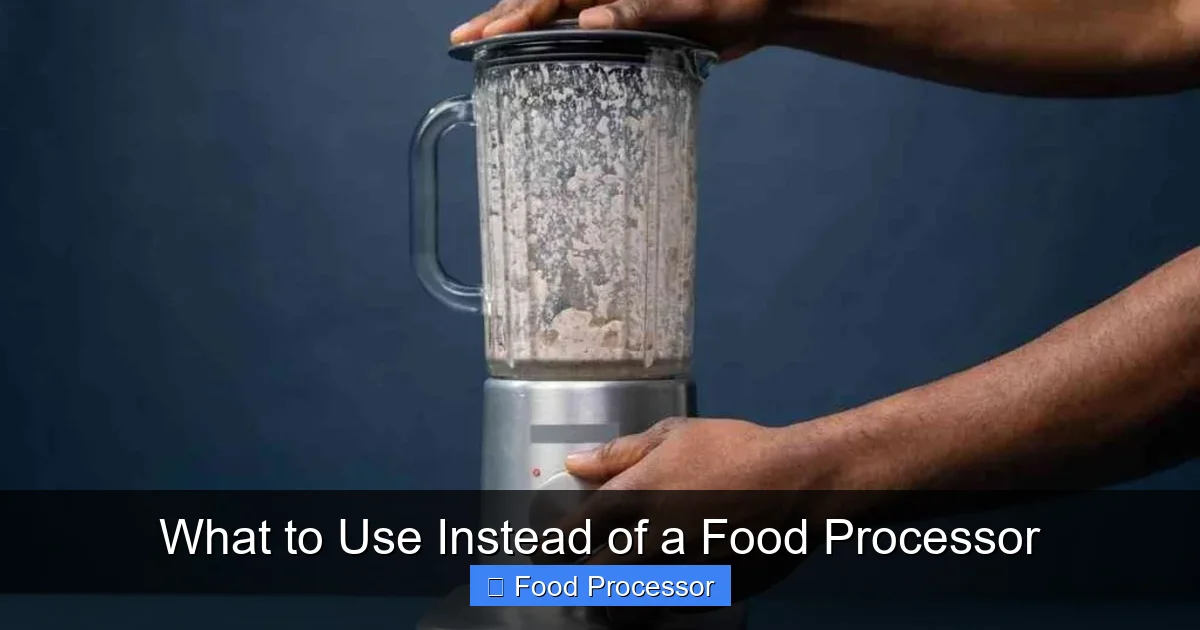
Visual guide about What to Use Instead of a Food Processor
Image source: foodiesfamily.com
The Immersion Blender: A Handheld Powerhouse
An immersion blender (also known as a hand blender or stick blender) is fantastic for pureeing soups directly in the pot, making sauces, or creating smoothies in a tall glass. It offers excellent control over texture, from chunky to perfectly smooth.
- Soups and Sauces: Submerge the blender head into your hot soup or sauce and blend until your desired consistency is reached.
- Smoothies and Shakes: Combine ingredients in a deep container and blend until smooth.
- Baby Food: Small batches of pureed fruits and vegetables are quick and easy with an immersion blender.
Standard Blenders: For Smoother Consistencies
A regular countertop blender is excellent for tasks requiring a very smooth, liquid consistency. It often outperforms a food processor when dealing with high-liquid content mixtures.
- Smoothies and Juices: This is where a blender truly shines.
- Creamy Soups and Sauces: For an exceptionally smooth texture, transfer your cooked ingredients to a blender and process.
- Nut Butters (with caution): While a food processor can make nut butter, a powerful blender can also achieve very smooth results, though it might require more scraping down the sides. For something like hummus, consider if you should use a blender or food processor for hummus for the best texture.
Note: Always be careful when blending hot liquids. Fill the blender only halfway, vent the lid, and hold it down firmly with a towel.
Manual Mashing with Forks and Potato Mashers
For chunky textures or simply breaking down soft ingredients, manual mashers are ideal. A food processor might turn these into a paste too quickly.
- Potato Masher: Perfect for potatoes, sweet potatoes, avocados for guacamole, or even cooked apples.
- Fork: A humble fork can mash bananas for bread, avocados, or berries for compotes.
The Traditional Mortar and Pestle
This ancient tool is making a comeback, and for good reason. A mortar and pestle excels at grinding spices, making pastes (like pesto or curry paste), and emulsifying small quantities of ingredients. It releases oils and flavors in a way a food processor simply can’t, offering a more aromatic and nuanced result.
- Grinding Spices: Crack whole spices like peppercorns, cumin, or coriander seeds to unlock their full fragrance.
- Making Pastes: Create fresh pesto, curry pastes, or garlic-ginger paste. The friction of the pestle coaxes out flavors beautifully.
- Aromatics: Mash garlic, ginger, and chilies together for marinades and stir-fries.
Crushing and Grinding Dry Ingredients
Need to crush crackers for a topping, nuts for a crust, or even make breadcrumbs? You don’t need a food processor for these tasks.
Rolling Pin Prowess
A rolling pin is not just for dough. It’s fantastic for crushing dry, brittle ingredients.
- Breadcrumbs: Take stale bread, break it into pieces, place it in a sturdy zip-top bag, and roll over it repeatedly with a rolling pin until you have crumbs.
- Nuts: Crush nuts for toppings or crusts using the same bag and rolling pin method.
- Crackers/Cookies: Great for making crumb crusts for pies or cheesecake.
Tip: For even finer crumbs, you can sift them after crushing and re-crush any larger pieces.
Mallet Magic
For more robust crushing, like breaking up candy for sprinkles or larger nuts, a meat mallet or even a sturdy pan can do the trick.
- Candy or Hard Nuts: Place in a bag and gently tap with a mallet or the bottom of a heavy pan.
Preparing Dough and Crusts
Making pie crusts or certain doughs is a common food processor task, as it quickly incorporates cold butter into flour without overworking it. But manual methods are equally effective, and often preferred by seasoned bakers.
Pastry Blenders and Forks for Dough
A pastry blender is specifically designed to cut cold butter or shortening into flour, which is crucial for flaky pie crusts, biscuits, and scones. If you’re wondering what to do without a food processor for pie crust, this is your answer.
- Using a Pastry Blender: Add cold, cubed butter to your flour mixture. Use the pastry blender to press and cut the butter into the flour until it resembles coarse crumbs or small peas.
- Using Two Knives: If you don’t have a pastry blender, you can use two butter knives, moving them in opposite directions to cut through the butter and flour.
- Using a Fork: For smaller amounts or softer fats, a sturdy fork can also be used to mash and combine ingredients.
Hands-On for Perfect Pastry
Many bakers swear by using their hands for pastry. The warmth of your hands can be a concern for cold butter, but with quick movements, it’s very effective.
- Quick Movements: Work quickly to rub the butter into the flour with your fingertips, minimizing contact time to keep the butter cold. This is an old-school technique that yields incredibly tender results.
General Tips for Cooking Without a Food Processor
Embracing manual methods can transform your cooking experience. Here are some general tips to make it even smoother:
Sharpen Your Tools
This cannot be stressed enough. A sharp knife, a clean grater, and sturdy mashers make all the difference in efficiency and safety.
Work in Smaller Batches
Unlike a food processor, which can handle larger quantities at once, manual methods are often more effective when dealing with smaller amounts. Don’t overload your cutting board or grater.
Embrace Patience
Manual food prep takes more time than pressing a button on a food processor. Approach it with a calm mindset, and enjoy the process. Good cooking often requires a touch of patience.
Use Proper Technique
Whether it’s the claw grip for chopping or the rocking motion for mincing, learning and applying proper knife techniques will make your work safer, faster, and more enjoyable.
Troubleshooting Common Manual Challenges
Even with the right tools, you might encounter a few hurdles when cooking without a food processor. Here’s how to overcome them:
Uneven Consistencies
Challenge: Your chopped vegetables are a mix of large chunks and tiny bits.
Solution: Focus on cutting ingredients to a uniform size before chopping them further. For example, if you’re dicing an onion, ensure all your initial slices are of similar thickness. Work deliberately and don’t rush. For certain dishes, slight unevenness can add character.
Sticky Situations
Challenge: Ingredients like soft cheeses or herbs stick to your knife or grater.
Solution: For sticky cheeses, chill them thoroughly before grating. For herbs, try wetting your knife blade slightly with cold water or oil before mincing. For sticky purees, a rubber spatula is your best friend for scraping down bowls and blades.
Fatigue Factor
Challenge: Your hand or arm gets tired from extended chopping or grating.
Solution: Take short breaks. Ensure your cutting board is stable (place a damp towel underneath). Practice good posture. For large quantities, consider prepping in stages throughout the day or splitting tasks if cooking with someone else. Remember, building up stamina takes time.
Conclusion
While a food processor is undoubtedly a convenient appliance, it is by no means essential for a well-equipped kitchen. As we’ve explored, a variety of everyday tools, combined with a bit of technique and patience, can accomplish nearly every task a food processor performs. From the precision of a sharp chef’s knife to the rustic charm of a mortar and pestle, you have a wealth of options at your fingertips.
So, the next time a recipe calls for a food processor, don’t despair! Embrace the challenge, enjoy the tactile experience of preparing food by hand, and take pride in knowing you can create delicious meals with fundamental kitchen tools. Happy cooking!
