
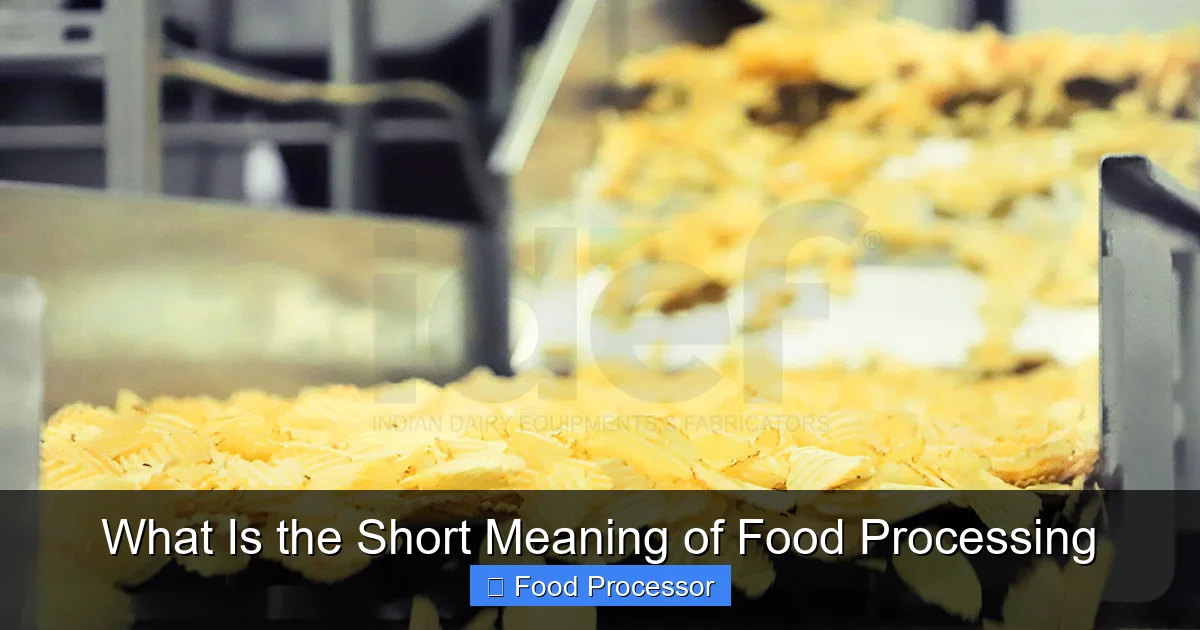
Food processing, in its short meaning, refers to any operation that changes raw food into a new form, making it safer, more palatable, digestible, or extending its shelf life. It involves a range of techniques, from simple washing and cutting to complex industrial transformations, all aimed at delivering food from farm to table. Understanding food processing helps us make informed choices about what we eat.
What Is the Short Meaning of Food Processing
Have you ever wondered what exactly happens to your food before it reaches your plate? We often hear the term “food processing,” but its meaning can sometimes feel a bit vague or even a little intimidating. Don’t worry, you’re not alone! In this comprehensive guide, we’re going to break down the short meaning of food processing. We’ll explore its core definition, unravel the different levels, discuss common techniques, and help you understand its vital role in our daily lives. By the end, you’ll have a clear, easy-to-understand grasp of this important concept.
Key Takeaways
- Core Definition: Food processing is essentially any method or technique that transforms raw agricultural products into food, or converts food into other forms, for human or animal consumption.
- Purpose-Driven: Its main goals include enhancing safety, improving shelf life, increasing convenience, boosting palatability, and making food more accessible.
- Spectrum of Processing: Food processing isn’t a single thing; it ranges from minimal changes (like washing fruits) to extensive alterations (like creating ready-to-eat meals or snacks).
- Diverse Techniques: Methods involve physical (chopping, heating), chemical (additives, fermentation), and biological (fermentation) changes to food.
- Benefits and Concerns: While offering significant advantages in safety and availability, food processing also raises concerns about nutritional impact and the use of certain additives, especially in highly processed items.
- Empowered Choices: Understanding food processing helps consumers make informed decisions by deciphering labels and recognizing the journey of their food.
How to Grasp the Core Meaning of Food Processing
Let’s start with the absolute simplest explanation. The short meaning of food processing is quite straightforward: it’s any action that changes a raw food product from its natural state into something else. Think of it as a journey your food takes from the farm or ocean to your kitchen.
Start with the Simplest Definition
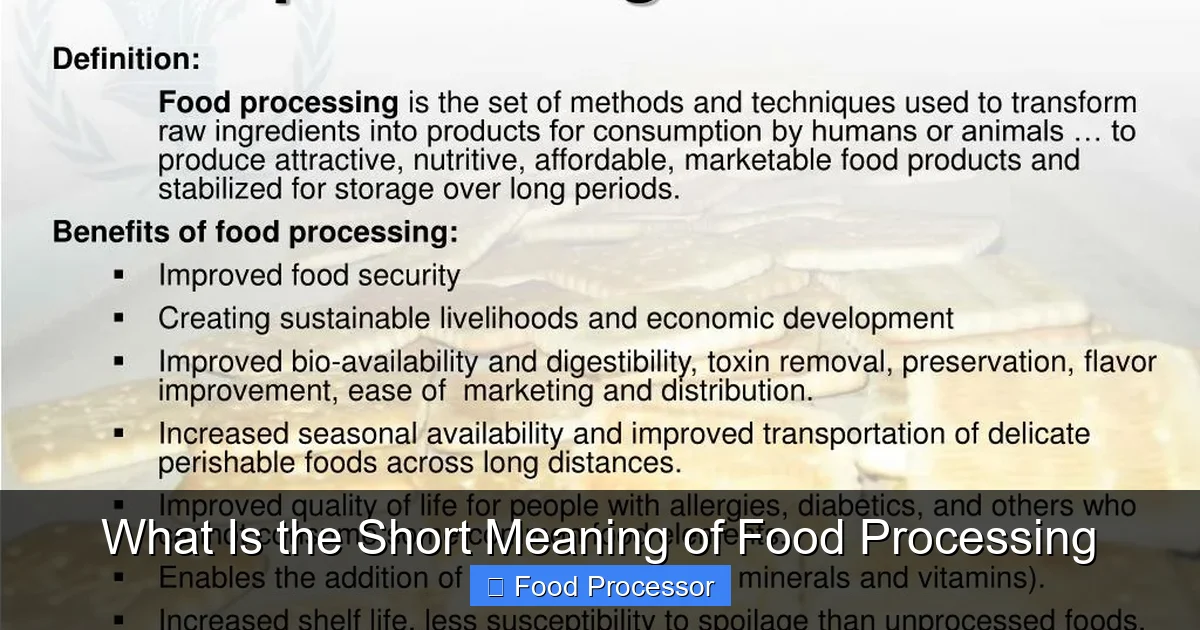
At its heart, food processing is simply the transformation of agricultural products into food, or one form of food into other forms. This can be as basic as washing, cutting, or cooking ingredients. It also includes more complex methods like packaging, pasteurizing, or fermenting. The key takeaway here is change. Any step that alters a food item from its original, raw state counts as food processing.
Recognize the Underlying Purpose
Why do we process food? The reasons are numerous and vital. The primary goals of food processing include:
- Safety: To make food safe to eat by eliminating harmful bacteria or toxins.
- Preservation: To extend shelf life, preventing spoilage and reducing waste.
- Convenience: To make food easier and quicker to prepare at home.
- Palatability: To improve taste, texture, and appearance.
- Accessibility: To allow foods to be available year-round or in locations far from where they are grown.
- Nutrition: To enhance nutritional value, for example, through fortification with vitamins and minerals.
Without food processing, our diets would be extremely limited, and food safety would be a constant concern. It’s truly central to our modern food supply. If you’re curious to dive deeper into why these processes are so vital, you can read more about what is the importance of food processing.
How to Identify the Different Levels of Food Processing
It’s important to understand that “food processing” isn’t a single, uniform thing. There’s a wide spectrum, from minimal changes to extensive industrial transformations. Recognizing these levels helps you make more informed decisions about the foods you choose.
Minimally Processed Foods: The Basics
These foods are closest to their natural state. They’ve undergone very little processing, usually just enough to make them ready for consumption or to preserve them for a short period. The goal is to retain their natural qualities as much as possible.
Visual guide about What Is the Short Meaning of Food Processing
Image source: image.slideserve.com
- Examples: Washed and chopped vegetables, pre-cut fruit, roasted coffee beans, dried fruits, bagged salads, pasteurized milk, shelled nuts.
- Characteristics: Generally recognizable as their original form, with few added ingredients. If you want to know more about how to know if a food has minimal processing, check out our dedicated guide.
Basic Processed Foods: Simple Changes
These foods have been processed slightly more than minimally processed items, often to combine ingredients or enhance palatability. They typically have a short list of familiar ingredients.
- Examples: Canned vegetables (with just water and salt), cheeses, freshly baked bread, jarred sauces (made from a few simple ingredients), ground meats.
- Characteristics: Still recognizable, often made from minimally processed ingredients, and have a slightly longer shelf life than raw foods.
Moderately Processed Foods: More Complex Alterations
This category involves more extensive processing, often combining multiple ingredients and using various techniques to create convenience foods or items with a significantly longer shelf life.
- Examples: Instant oatmeal, breakfast cereals, frozen dinners, canned soups, deli meats, flavored yogurts, breaded chicken nuggets.
- Characteristics: Often contain added sugars, salts, fats, and preservatives to improve taste, texture, and preservation.
Highly Processed (Ultra-Processed) Foods: The Industrial Scale
These are the most extensively processed foods, often containing many ingredients, including various additives (flavors, colors, emulsifiers, sweeteners). They are typically designed for maximum convenience, palatability, and long shelf life. They often bear little resemblance to their original raw ingredients.
- Examples: Soft drinks, packaged snacks (chips, cookies), candy, instant noodles, many frozen pizzas, reconstituted meat products, most fast food items.
- Characteristics: Ready-to-eat or ready-to-heat, often marketed aggressively, and can be high in calories, unhealthy fats, added sugars, and sodium, while being low in fiber and essential nutrients.
How to Understand Common Food Processing Techniques
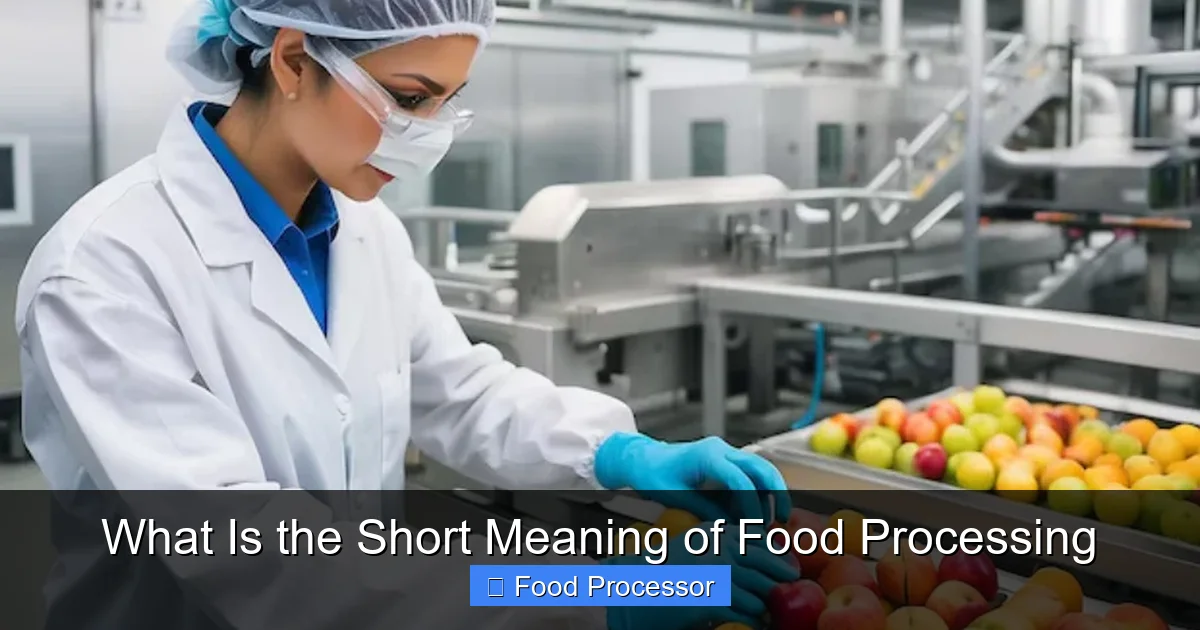
Food processing involves a vast array of methods. These techniques can be broadly categorized into physical, chemical, and biological processes.
Physical Methods: Changing Form and Texture
These techniques involve altering the physical state or structure of food.
Visual guide about What Is the Short Meaning of Food Processing
Image source: hydrobenz.com
- Cutting, Slicing, Dicing: Preparing food into smaller, uniform pieces (e.g., pre-chopped vegetables).
- Grinding, Milling: Reducing food to a powder or paste (e.g., flour from wheat, nut butters).
- Mixing, Blending: Combining ingredients evenly (e.g., creating sauces or dough).
- Heating (Cooking, Pasteurization, Sterilization): Using heat to cook food, destroy microorganisms, or extend shelf life (e.g., pasteurized milk, canned goods).
- Cooling (Refrigeration, Freezing): Lowering temperature to slow down spoilage and microbial growth (e.g., frozen vegetables, refrigerated meats).
- Drying, Dehydration: Removing water to inhibit microbial growth and enzyme activity (e.g., dried fruit, jerky).
Chemical Methods: Modifying Composition
These techniques involve adding or altering chemical components in food.
- Adding Preservatives: Using substances like salt, sugar, vinegar, or specific chemical compounds to prevent spoilage (e.g., cured meats, jams, pickled vegetables). This is a crucial aspect of food purchasing, processing, and preservation.
- Fortification: Adding vitamins and minerals to enhance nutritional value (e.g., iodine to salt, vitamin D to milk).
- Flavoring, Coloring: Adding natural or artificial flavors and colors to improve sensory appeal.
Biological Methods: Harnessing Microorganisms
These methods involve using beneficial microorganisms to transform food.
- Fermentation: Using yeast, bacteria, or molds to convert carbohydrates into alcohol or acids, which can preserve food and create distinct flavors (e.g., yogurt, cheese, bread, beer, sauerkraut).
How Food Processing Benefits Us
Despite some negative connotations, the benefits of food processing are extensive and crucial to our modern society.
Ensuring Food Safety and Extending Shelf Life
One of the most significant advantages of food processing is its role in making food safe and keeping it that way for longer. Techniques like pasteurization kill harmful bacteria, while canning and freezing prevent spoilage. This dramatically reduces foodborne illnesses and waste.
Enhancing Convenience and Accessibility
Processed foods offer unparalleled convenience. Pre-cut vegetables, ready-to-eat meals, and easily prepared ingredients save time and effort in the kitchen. Furthermore, processing allows foods grown in one region to be transported and enjoyed worldwide, making a wider variety of foods accessible to more people, regardless of season or location.
Improving Nutritional Content and Variety
In many cases, processing can enhance nutrition. Fortification adds essential vitamins and minerals to staples, helping to combat deficiencies. Processing also allows for a diverse range of food products, catering to different dietary needs and preferences, and making healthy eating more achievable for busy individuals. Understanding why food processing is important helps highlight these benefits.
How to Use Your Home Kitchen for Food Processing
Food processing isn’t just for big factories; it happens every day in your own kitchen! When you cook, bake, or prepare meals, you are, in fact, engaging in food processing.
Everyday Examples with Basic Tools
Think about these common kitchen tasks:
- Washing and chopping: Turning a whole head of lettuce into a salad.
- Cooking: Heating raw chicken to make it safe and palatable.
- Baking: Combining flour, eggs, and sugar to make a cake.
- Making sauces: Blending tomatoes, herbs, and spices into a pasta sauce.
- Freezing: Storing leftover soup for later consumption.
All these actions transform raw ingredients into prepared food, which is the very definition of food processing.
Leveraging Modern Appliances like a Food Processor
Modern kitchen appliances make home food processing even easier and more efficient. A food processor, for example, is a versatile tool for chopping, slicing, shredding, and pureeing ingredients quickly. It transforms whole vegetables into finely diced components for soups or salsas, grinds nuts into flour, or blends ingredients for smooth sauces. Knowing what are the advantages of using a food processor can truly revolutionize your home cooking and food preparation.
How to Navigate the Concerns and Misconceptions of Food Processing
While food processing offers many advantages, it’s also important to address common concerns and misconceptions. Not all processed foods are created equal, and it’s helpful to understand the nuances.
Understanding the Impact on Nutrition
One of the main concerns with some processed foods, particularly highly processed or ultra-processed items, is their nutritional profile. These foods often contain high levels of added sugars, unhealthy fats, and sodium, and may lack fiber, vitamins, and minerals. Over-consumption of such foods can contribute to various health issues.
However, it’s a misconception to believe all processed food is bad. Minimally processed foods, like frozen vegetables or whole grain bread, can be excellent sources of nutrition and convenience. The key is to differentiate between the levels of processing and prioritize options that retain more of their natural nutritional value.
Deciphering Food Labels and Ingredients
Becoming an informed consumer means learning to read food labels. Look beyond the marketing claims and examine the ingredient list and nutritional information. For healthier choices:
- Check the ingredient list: A shorter list with recognizable ingredients is often better. Watch out for ingredients you don’t recognize or those that appear high on the list (meaning they are present in larger quantities).
- Look at nutritional facts: Pay attention to added sugars, sodium, saturated and trans fats, and dietary fiber content.
- Understand serving sizes: Be aware that nutritional information is often based on a single serving, which might be smaller than what you typically consume.
By taking these steps, you can navigate the supermarket aisles with confidence, making choices that align with your health goals, even within the realm of processed foods.
Conclusion: Embracing an Informed View of Food Processing
So, what is the short meaning of food processing? It’s simply the act of changing food from its raw state to a more desirable, safe, convenient, or preserved form. This can be as basic as washing an apple or as complex as manufacturing a ready-to-eat meal.
Far from being inherently “good” or “bad,” food processing is an essential, multi-faceted aspect of our modern food system. It plays a critical role in ensuring food safety, extending shelf life, making food accessible, and providing convenience. By understanding the different levels of processing and the techniques involved, you gain the power to make more informed choices about the food you eat. Embrace this knowledge, and you’ll be well on your way to a more thoughtful and balanced approach to your diet.
