
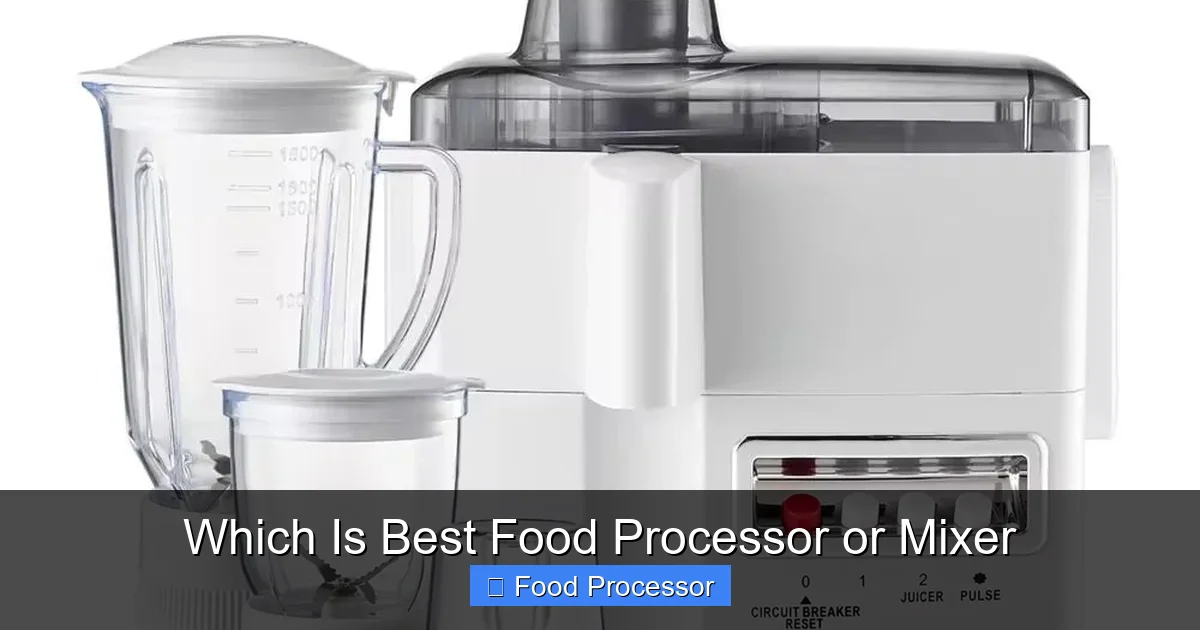
Deciding which is best, a food processor or a mixer, boils down to your primary culinary tasks. A food processor excels at heavy-duty chopping, slicing, shredding, and pureeing, while a mixer is indispensable for baking tasks like whipping, creaming, and kneading doughs. Understanding their distinct functions and attachments will guide you to the right appliance for your kitchen.
Which Is Best Food Processor or Mixer
Hello, home cooks and culinary enthusiasts! Are you standing in your kitchen, dreaming of efficiency, but wondering whether a food processor or a mixer is the right tool to bring your culinary visions to life? You’re not alone! This is a common dilemma for many, as both appliances promise to simplify kitchen tasks, yet they serve very different purposes.
Choosing between a food processor and a mixer isn’t just about picking a gadget; it’s about investing in the right kitchen partner that aligns with your cooking style. This comprehensive guide will walk you through the distinct features, strengths, and ideal uses of both a food processor and a mixer. By the end, you’ll clearly understand which appliance will best serve your needs, helping you make an informed decision and upgrade your kitchen arsenal with confidence. Let’s dive in!
Key Takeaways
- Distinct Purposes: Food processors are designed for chopping, slicing, shredding, and pureeing, while mixers specialize in aeration, whipping, creaming, and kneading dough for baking.
- Attachment Focus: Food processors use various blades (S-blade, slicing/shredding discs) for breaking down solids. Mixers use whisks, beaters, and dough hooks for incorporating air and developing gluten.
- Texture Achieved: A food processor typically yields chunky to smooth pureed textures. A mixer produces light, airy mixtures and well-developed, elastic doughs.
- Motor Strength & Speed: Food processors often have powerful motors for tough ingredients and offer pulse functions. Mixers prioritize multiple speeds for controlled mixing and aeration.
- Consider Your Needs: If you frequently prepare savory dishes requiring prep work (salsa, shredded vegetables), a food processor is ideal. If baking cakes, cookies, or bread is your passion, a mixer is essential.
- Space & Budget: Evaluate kitchen space and budget. Combo units can save space, but dedicated appliances often perform better for specific tasks.
Understanding the Basics: What Each Appliance Does
Before we compare, let’s establish a clear understanding of what each machine is designed to do.
What is a Food Processor?
A food processor is a versatile kitchen appliance primarily used for a wide range of tasks that involve cutting, blending, or pureeing food. Think of it as your personal sous chef, ready to tackle tedious manual prep work. It typically features a large work bowl, a powerful motor in the base, and a set of interchangeable blades and discs.
Its core function is to speed up repetitive tasks like chopping vegetables, grinding nuts, kneading dough, and pureeing sauces. The powerful motor and sharp blades allow it to handle tough ingredients with ease, quickly transforming whole foods into chopped, sliced, shredded, or pureed forms.
What is a Mixer?
A mixer, on the other hand, is designed specifically for combining, beating, whipping, and kneading ingredients, primarily in baking and confectionary. There are two main types: stand mixers and hand mixers.
A stand mixer is a stationary appliance with a motor in its head, featuring a heavy base and a bowl that locks into place. It comes with various attachments like a whisk (for whipping cream or egg whites), a flat beater (for creaming butter and sugar or mixing batters), and a dough hook (for kneading bread dough).
A hand mixer is a portable, handheld device with two beaters that you hold and move through ingredients. While less powerful and versatile than a stand mixer, it’s excellent for lighter tasks like whipping cream, mixing thin batters, or mashing potatoes.
Key Differences: Food Processor vs. Mixer
Understanding the fundamental differences in design and function is crucial. Many people often confuse their capabilities or wonder about the practical differences between food processor and mixer units.
Primary Functions
The most significant difference lies in their primary functions.
- Food Processor: Its strength lies in chopping, slicing, shredding, mincing, dicing (with specific attachments), and pureeing. It excels at breaking down solid ingredients. For example, it can shred cheese in seconds or finely chop vegetables for salsa.
- Mixer: Its purpose is to combine ingredients smoothly, incorporate air, and develop gluten. It’s built for whipping, beating, creaming, and kneading. Think fluffy cakes, airy meringues, or elastic bread dough.
Blade/Attachment Differences
This is where the magic happens for each machine.
- Food Processor: The core attachment is the S-blade (also called a chopping blade), a sharp, two-pronged blade that sits at the bottom of the work bowl. Beyond this, it includes various discs for slicing (thin or thick), shredding (fine or coarse), and sometimes even grating or julienning. These attachments are all about cutting and processing solids. A good food processor will often come with multiple blades and discs, allowing you to achieve various textures. For instance, if you are looking to make peanut butter, a food processor is an excellent choice for achieving that creamy consistency.
- Mixer: Mixers use different types of agitators. The most common are:
- Wire Whisk: For incorporating air into liquids (egg whites, cream).
- Flat Beater (Paddle Attachment): For creaming butter and sugar, mixing batters, or mashing potatoes.
- Dough Hook: For kneading yeast doughs for bread, pizza, or pasta.
These attachments are designed for movement within a bowl to blend, aerate, and develop structure.
Motor Power & Speed
The motors are built for different kinds of tasks.
- Food Processor: These often have very powerful motors designed for short bursts of high-intensity work, like grinding tough nuts or processing large quantities of vegetables. They usually have fewer speed settings, often just “on” and “pulse,” prioritizing raw power and quick processing.
- Mixer: Mixers, especially stand mixers, feature motors designed for sustained operation at various speeds, from a gentle stir to a fast whip. The multiple speed settings allow for precise control, crucial for delicate baking tasks where overmixing can be detrimental.
Bowl Capacity & Design
The design of the bowls also reflects their primary use.
- Food Processor: The work bowl is typically wider and shorter, designed to house the S-blade or various discs and allow ingredients to circulate efficiently for even processing. Most food processors have a feed chute to add ingredients while the machine is running.
- Mixer: Mixer bowls are generally deeper and narrower, perfect for containing liquid batters and doughs, and preventing splashes during vigorous mixing or whipping. They are shaped to ensure the attachments reach all parts of the bowl for thorough mixing.
Texture & Consistency Achieved
The final output is very different.
- Food Processor: It creates textures from chunky (chopped onions) to finely ground (breadcrumbs) to smooth (hummus, pureed soup). It excels at transforming solids into smaller pieces or smooth pastes.
- Mixer: It specializes in producing light, airy textures (whipped cream, meringue) and developing the elastic structure of doughs (bread). It blends wet and dry ingredients into smooth, uniform batters.
When to Choose a Food Processor
A food processor truly shines when you need to automate time-consuming prep tasks.
Chopping, Slicing, Shredding
If your recipes frequently call for finely chopped onions, uniformly sliced cucumbers, or shredded carrots and cabbage, a food processor is your best friend. It handles these tasks in seconds, saving you immense time and effort compared to manual chopping. Shredding cheese smoothly in a food processor is also remarkably efficient.
Pureeing & Blending (Thick Mixtures)
For making smooth purees, sauces, or dips like hummus, pesto, or baby food, a food processor is ideal. Its powerful motor can handle thicker consistencies that might strain a blender.
Dough Making (Certain Types)
While a stand mixer is king for yeast doughs, some food processors can handle lighter doughs like pie crusts, biscuit dough, or even some cookie doughs, thanks to their S-blade and pulse function which helps to cut butter into flour efficiently.
Making Nut Butters, Hummus, Pesto
These tasks require significant power and the ability to process solid ingredients into a smooth, thick consistency. A food processor excels at this, transforming nuts into creamy butter or herbs and oil into vibrant pesto.
When to Choose a Mixer
A mixer is an indispensable tool for anyone who loves to bake.
Baking (Whipping, Creaming, Kneading)
This is where mixers truly dominate. For cakes, cookies, and other baked goods, a mixer provides the consistent, powerful action needed for:
- Whipping: Creating airy meringues, whipped cream, or fluffy egg whites.
- Creaming: Thoroughly combining butter and sugar until light and fluffy, essential for many cookie and cake recipes.
- Kneading: Developing the gluten in yeast doughs for bread, rolls, and pizza crusts, resulting in a perfect texture.
Aerating Ingredients
Achieving a light, fluffy texture in baked goods often depends on incorporating air into ingredients. A mixer, especially with its whisk attachment, is unmatched for this task.
Mixing Batters & Doughs
From thin pancake batter to thick cookie dough, a mixer ensures all ingredients are thoroughly combined without overworking them, which is critical for tender baked goods.
Making Frostings & Meringues
The consistent beating action of a mixer is perfect for making smooth, lump-free frostings and stable, voluminous meringues.
The “Which Is Best” Decision Tree
So, after all this, which is best for *you*? It’s not about one being superior overall, but which is superior for your specific needs. If you’re still not sure, you might wonder if you can use a food processor instead of a mixer for certain tasks. The answer is sometimes, but often with limitations.
Assess Your Culinary Habits
- Are you a savory cook? Do you frequently make stir-fries, salsas, soups, purees, homemade dips, or need to chop/shred lots of vegetables? If so, a food processor will be a game-changer.
- Are you a baker? Do you often bake cakes, cookies, bread, or pastries? Do you love making meringues, whipped cream, or homemade frosting? A stand mixer will be your most valuable appliance.
- Do you do both equally? Many passionate cooks fall into this category. In this case, you might find yourself needing both a food processor and a mixer eventually.
Consider Your Kitchen Space & Budget
Both appliances can take up significant counter or cabinet space.
- Space Savers: If space is limited, consider a compact food processor for small kitchens or a hand mixer which stores away easily.
- Budget: High-quality stand mixers and food processors can be investments. Prioritize the one you’ll use most often first.
Look for Hybrid or Combo Units
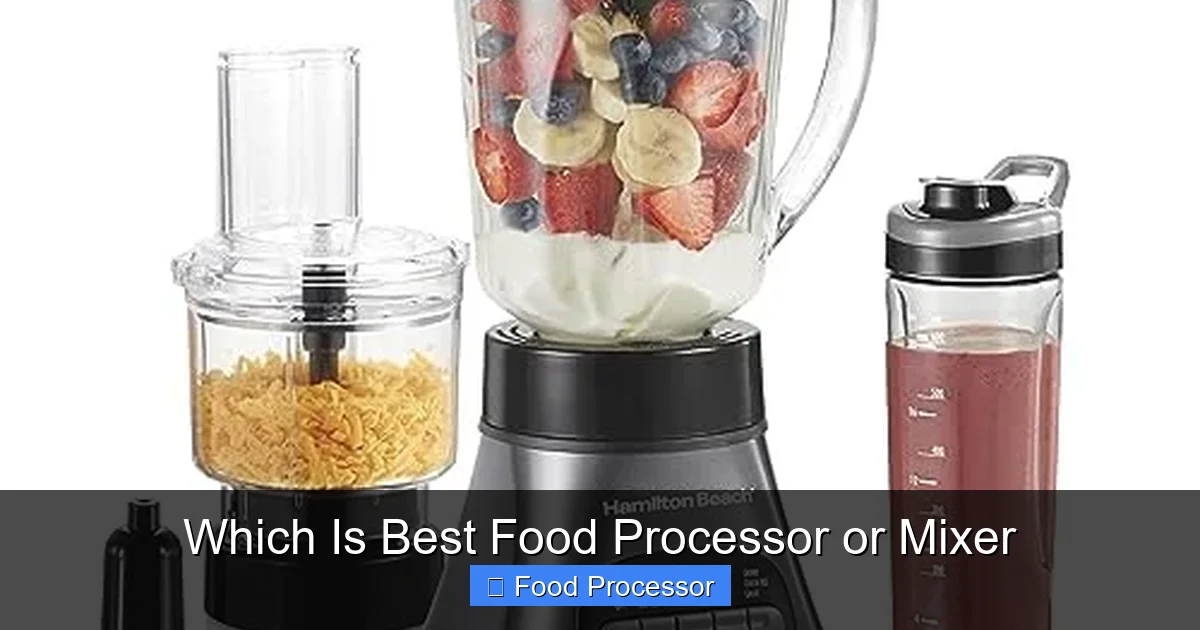
For those who want the best of both worlds without buying two large machines, some manufacturers offer food processor and blender combo units, or even stand mixers with food processor attachments. While these can be convenient and save space, remember that dedicated appliances often perform their primary functions with superior power and efficiency. A combo might be a good starting point if you have very limited space and budget, but a dedicated food processor and a dedicated stand mixer will typically offer better performance for their respective tasks.
Tips for Getting the Most Out of Your Appliance
Once you’ve made your choice (or choices!), here are some general tips for use.
Read the Manual
Seriously! Every appliance has its quirks. The manual will detail safe operation, specific attachments, and cleaning instructions.
Use the Right Attachments
Using the correct blade or beater for the task at hand is crucial for optimal results and to prevent damage to your machine. Don’t try to knead bread dough with a flat beater or whip cream with an S-blade.
Don’t Overload
Respect the capacity limits of your appliance. Overloading can strain the motor, lead to uneven processing, or even damage the machine. Process in batches if necessary.
Clean Immediately
Food particles can dry and become difficult to remove. Wash bowls, blades, and attachments immediately after use. Most are dishwasher safe, but always check the manual.
Troubleshooting Common Issues
Even the best appliances can have an off day. Here are a couple of common issues you might encounter.
Ingredient Not Processing Evenly
Food Processor
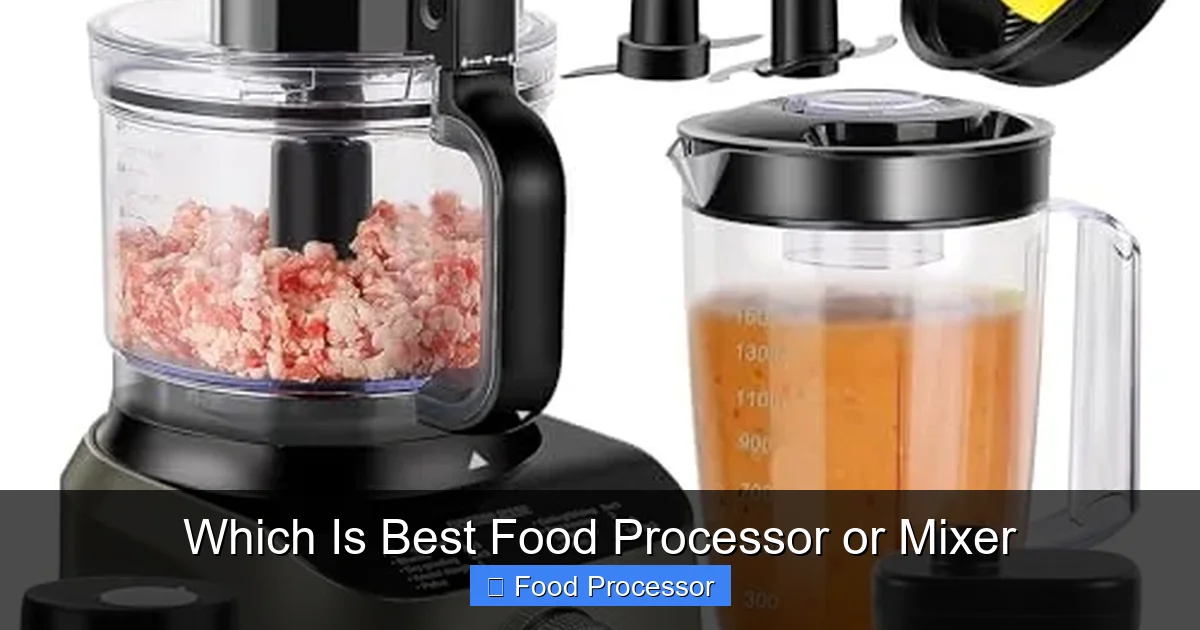
This often happens when there’s too much food in the bowl, or not enough. Try processing in smaller batches. Also, ensure ingredients are cut into similar-sized pieces before adding them to the food processor to help them process more uniformly.
Visual guide about Which Is Best Food Processor or Mixer
Image source: m.media-amazon.com
Visual guide about Which Is Best Food Processor or Mixer
Image source: m.media-amazon.com
Mixer
If ingredients aren’t mixing evenly, especially at the bottom of the bowl, you might need to scrape down the sides more frequently with a spatula. Ensure your attachments are properly secured and reaching all parts of the bowl. Sometimes, a slight adjustment to the bowl or beater height on a stand mixer can help.
Motor Overheating
Both Appliances
If your appliance feels hot or starts to smell, it could be overheating. This often happens if you’re processing very tough ingredients for too long, or if the bowl is overloaded. Turn it off, unplug it, and let it cool down completely before attempting to use it again. Always adhere to the recommended operating times and batch sizes.
Blade Not Spinning
Food Processor
If your food processor blade isn’t spinning, check a few things. First, ensure the lid is correctly locked into place; most models have safety mechanisms that prevent operation if not properly assembled. Next, check if the work bowl is securely seated on the base. Finally, ensure the blade itself is correctly inserted onto the spindle. If these basic checks don’t resolve the issue, it might indicate a mechanical problem, and you may want to consult the appliance’s manual or customer support. For more specific issues, you can refer to our guide on why your food processor blade might not be spinning.
Conclusion
Deciding “which is best food processor or mixer” ultimately comes down to your personal cooking habits and priorities in the kitchen. If your culinary adventures lean towards chopping, slicing, shredding, and pureeing large quantities of ingredients for savory dishes, a food processor is an invaluable asset. It transforms tedious prep work into quick tasks, freeing up your time and energy.
However, if your passion lies in the world of baking – creating light-as-air cakes, perfectly kneaded breads, and delicate meringues – then a stand mixer is your indispensable companion. Its specialized attachments and variable speeds are designed for the precision and aeration crucial to successful baking.
Remember, neither appliance is inherently “better” than the other; they are simply designed for different tasks. Many home chefs find that having both a food processor and a mixer eventually becomes a necessity, as they beautifully complement each other’s functionalities. By considering what you cook most often, your kitchen space, and your budget, you can confidently choose the appliance that will truly elevate your cooking and baking experience. Happy cooking!
