
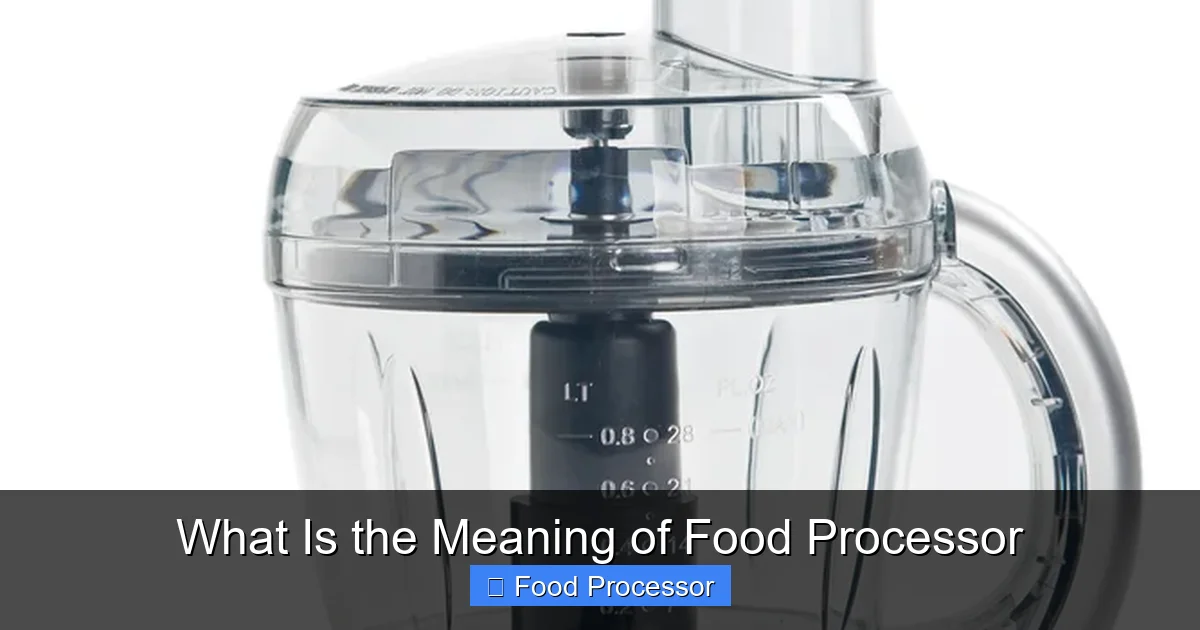
A food processor is a multi-functional kitchen appliance designed to automate repetitive tasks like chopping, slicing, shredding, and pureeing. It saves significant time and effort in meal preparation, making complex recipes more accessible. Understanding its meaning means recognizing its power to transform ingredients quickly and efficiently, becoming an indispensable tool for home cooks.
What Is the Meaning of Food Processor
Have you ever found yourself spending what feels like an eternity chopping vegetables for a stir-fry, or painstakingly mincing garlic for a sauce? If so, you’re not alone! Many home cooks dream of a magical appliance that could speed up these tedious tasks. Enter the food processor!
But what exactly is the meaning of food processor? Beyond just a gadget in your kitchen, a food processor is a game-changer. It’s an appliance designed to simplify and accelerate a multitude of food preparation jobs, turning hours of manual labor into mere minutes. This comprehensive guide will take you on a journey to understand everything about the food processor, from its core functions to how to use it like a pro. By the end, you’ll not only know what a food processor means but also how it can revolutionize your cooking experience.
Key Takeaways
- Core Definition: A food processor is a powerful kitchen appliance that automates various manual food preparation tasks, using interchangeable blades and discs to chop, slice, shred, grate, mix, and puree ingredients quickly.
- Versatility is Key: Its primary meaning lies in its versatility, handling everything from dicing vegetables and shredding cheese to kneading dough and making nut butters, significantly reducing prep time.
- Essential Components: Key parts include a robust motor base, a work bowl, a lid with a feed tube, an S-blade for chopping/pureeing, and various discs for slicing and shredding.
- Beyond a Blender: Unlike a blender, which excels at liquids and smooth purees, a food processor is designed for a wider range of textures and functions, especially dry or thick ingredients.
- Time and Effort Saver: Owning and understanding a food processor means enjoying substantial time and effort savings in the kitchen, making healthy cooking and elaborate meal preparation more achievable.
- Safety and Care: Proper assembly, safe operation, and thorough cleaning are crucial to ensure the longevity and safe use of your food processor.
Understanding the Core Meaning: What is a Food Processor?
At its heart, a food processor is an electric kitchen appliance equipped with a set of interchangeable blades and discs powered by a motor. Its main purpose is to automate and speed up repetitive tasks that typically require manual effort, such as chopping, slicing, shredding, grating, mixing, and pureeing. Think of it as your extra pair of hands in the kitchen, only much faster and more efficient.
The concept behind the food processor dates back decades, evolving from industrial-grade machines to the sleek, countertop models we know today. Its genius lies in its versatility. While a blender is primarily for liquids, a food processor excels with solid ingredients, handling everything from hard root vegetables to sticky dough.
The true meaning of food processor comes alive when you realize it’s not just about convenience; it’s about expanding your culinary horizons. With a food processor, complex recipes become approachable, and everyday meals get a gourmet touch without the added fuss.
Anatomy of a Food Processor: Parts and Their Purpose
To truly grasp what a food processor is, it helps to understand its components. While models vary, most food processors share a similar basic design:
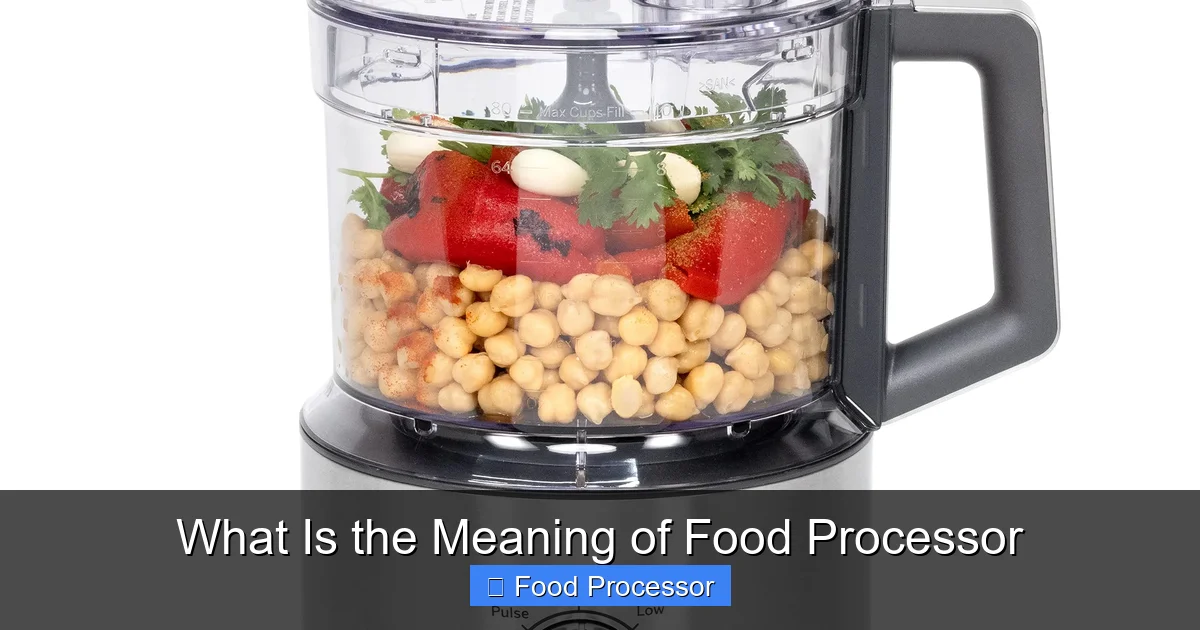
Visual guide about What Is the Meaning of Food Processor
Image source: m.media-amazon.com
The Motor Base
This is the powerhouse of your food processor. It contains the electric motor that drives the blades and discs. Motor bases can vary significantly in wattage, which indicates their power. A higher wattage usually means it can handle tougher jobs, like kneading stiff dough or grinding hard nuts, more easily.
The Work Bowl
Often made from clear, durable plastic, the work bowl is where your ingredients are processed. It attaches securely to the motor base. Work bowls come in various sizes, from small 3-cup mini processors to large 14-cup models, allowing you to choose one that fits your typical batch sizes.
The Lid with Feed Tube and Pusher
The lid snaps securely onto the work bowl, often featuring a safety interlock that prevents the motor from running if the lid isn’t properly locked in place. The feed tube is an opening in the lid through which you can add ingredients while the machine is running, especially useful for slicing and shredding or gradually adding liquids. The pusher is then used to guide ingredients down the feed tube.
Interchangeable Blades and Discs
This is where the food processor’s versatility truly shines. The most common attachments include:
- S-Blade (or Chopping Blade): This is the workhorse blade, shaped like a propeller or an “S.” It’s used for chopping, mincing, pureeing, mixing, and kneading dough. It sits at the bottom of the work bowl.
- Slicing Disc: A flat disc with a sharp blade that produces uniform slices of vegetables, fruits, or even meats. You typically feed ingredients through the feed tube for consistent results.
- Shredding/Grating Disc: This disc has sharp holes that shred ingredients into consistent strands. Perfect for cheese, carrots, cabbage, or potatoes.
- Dough Blade (Plastic): Some food processors come with a specialized plastic dough blade designed for kneading bread or pastry dough without overworking it.
- Other Attachments: Depending on the model, you might find whisking attachments, juicers, or even French fry discs.
What Can a Food Processor Do? Common Applications
Understanding the meaning of food processor really highlights what are the advantages of a food processor for any home cook. Its capabilities are vast, making it an incredibly valuable kitchen tool. Here are some of its most common and useful applications:
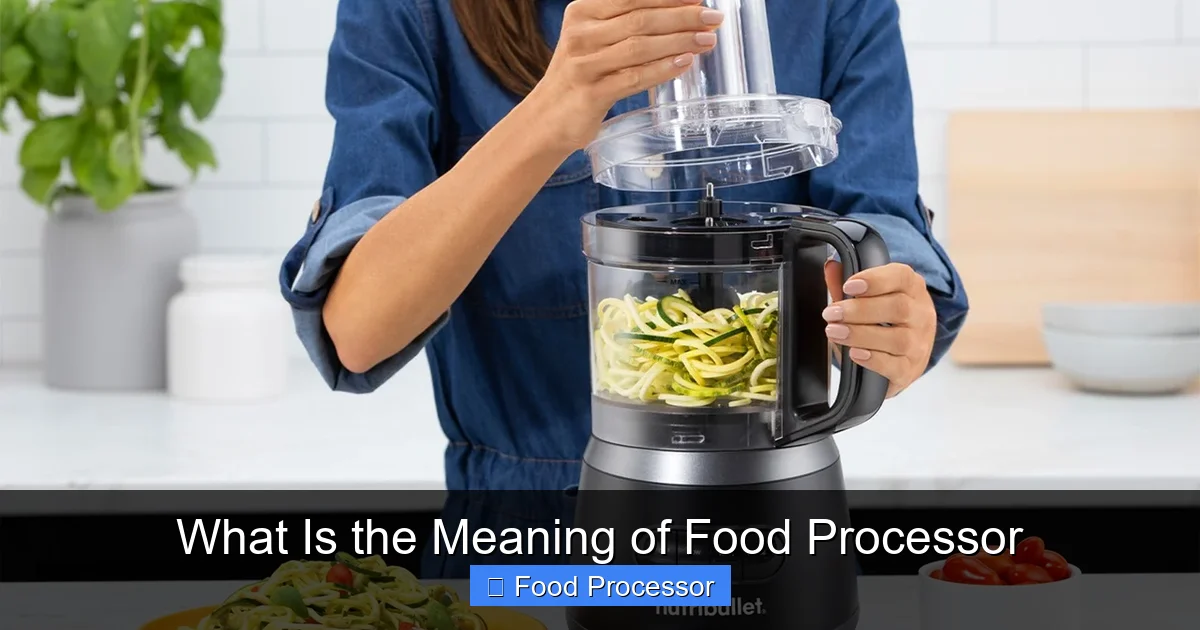
Visual guide about What Is the Meaning of Food Processor
Image source: storables.com
Chopping and Mincing
Say goodbye to teary eyes from onions or tedious mincing of garlic and herbs. The S-blade makes quick work of these tasks, producing uniform pieces in seconds. From a rough chop for salsas to a fine mince for pastes, you control the consistency with how long you process.
Slicing and Shredding
Achieve perfectly uniform slices for gratins, salads, or potato chips using the slicing disc. The shredding disc is a dream come true for grating blocks of cheese, shredding cabbage for coleslaw, or preparing carrots for cakes. It’s incredibly faster and safer than manual grating.
Pureeing and Blending
While blenders are great for smoothies, a food processor can puree cooked vegetables for soups, make creamy hummus, prepare smooth baby food, or create rich sauces like pesto. It handles thicker, denser purees that might challenge a traditional blender.
Kneading Dough
Many food processors, especially those with powerful motors, can knead dough for bread, pizza, or pastry in just a few minutes. The S-blade or a specialized dough blade quickly brings ingredients together, saving your hands from sticky, laborious work. This is a huge time-saver for bakers.
Grinding
Need fresh breadcrumbs? Want to grind nuts for a crust or a nut butter? A food processor can do it. It can even grind small amounts of meat for homemade burgers or sausages, giving you control over the fat content and texture.
Emulsifying
Creating homemade mayonnaise, aioli, or salad dressings is a breeze. The food processor’s S-blade and the slow addition of oil through the feed tube make emulsification simple, producing stable, creamy results.
Step-by-Step: How to Use Your Food Processor Effectively
To truly get the most out of your food processor, understanding these basic operational steps is key. Using a food processor is generally straightforward, but a few simple steps ensure safety and optimal performance.
Safety First
Always start by ensuring your food processor is unplugged before assembling or disassembling any parts. Blades are extremely sharp, so handle them with care, holding them by the center plastic hub rather than the edges. Never put your hands or utensils into the work bowl while the motor is running or connected to power.
Assembling Your Food Processor
Most food processors follow a similar assembly pattern:
- Place the Motor Base: Set the motor base on a clean, stable, dry surface.
- Attach the Work Bowl: Carefully place the work bowl onto the motor base, usually twisting it clockwise until it locks securely in place. You’ll often hear a click.
- Insert the Blade/Disc: If using the S-blade, carefully lower it onto the spindle in the center of the work bowl. If using a slicing or shredding disc, place the spindle adapter on first, then position the disc on top.
- Secure the Lid: Place the lid onto the work bowl and twist it clockwise until it locks. Most food processors have a safety interlock system that prevents operation if the lid isn’t properly secured.
Preparing Your Ingredients
For best results and to prevent strain on your motor, cut larger ingredients into pieces that can fit comfortably into the feed tube or around the S-blade in the work bowl. Remove any tough cores, pits, or hard skins. For items like carrots, cut them into 1-inch chunks for chopping, or lengths that fit the feed tube for slicing.
Processing Techniques
- Pulsing: For chopping, mincing, or when you need more control over the consistency, use the “pulse” function. Press and release the pulse button in short bursts (1-2 seconds). This allows the ingredients to fall back down to the blades between pulses, resulting in a more even chop and preventing over-processing.
- Continuous Processing: For pureeing, kneading dough, or making nut butter, you’ll typically use the “on” button to run the motor continuously. Keep an eye on the consistency and stop once you reach your desired texture.
- Using the Feed Tube: When slicing or shredding, turn the machine on (continuous setting) and feed ingredients slowly through the feed tube, using the pusher to guide them. Avoid forcing food down, as this can damage the motor or produce uneven results.
Disassembly and Cleaning
Once you’re done, immediately unplug the food processor. Carefully remove the lid, then lift out the blade or disc by its hub. Scrape out your processed food. Most work bowls, lids, and blades are top-rack dishwasher safe, but check your manual. For hand washing, use warm, soapy water and a brush to clean around sharp blades. Always ensure all parts are completely dry before reassembling or storing.
Tips for Getting the Most Out of Your Food Processor
- Don’t Overfill: Overfilling the work bowl can lead to uneven processing, strain the motor, and potentially cause leaks. Follow the manufacturer’s fill lines, especially for liquids.
- Cut Food Uniformly: For consistent chopping, ensure your ingredients are cut into similar-sized pieces before adding them to the bowl.
- Use the Pulse Function: This is your best friend for precise chopping and avoiding turning your ingredients into mush. A few short pulses are often all you need.
- Add Liquids Gradually: When making dressings or sauces that require oil, slowly drizzle it through the feed tube while the machine is running to create a stable emulsion.
- Clean Immediately: Food particles can dry and stick, making cleaning harder. Rinse parts immediately after use.
Food Processor vs. Other Kitchen Appliances
Understanding what a food processor is also involves knowing what it isn’t, especially when compared to similar-looking kitchen gadgets.
Food Processor vs. Blender
Many wonder about the distinctions, and it’s important to know why a food processor is different from a blender in terms of capabilities. While both have motor bases and containers with blades, their designs and primary functions differ greatly:
- Blender: Designed primarily for liquids. It has a tall, narrow jar and fixed blades optimized for creating smooth purees, smoothies, and soups by creating a vortex that pulls ingredients down.
- Food Processor: Designed for solids and semi-solids. It has a wide, short work bowl and multiple interchangeable blades and discs. Its power and blade design are ideal for chopping, slicing, shredding, and kneading, providing more texture control.
Food Processor vs. Mixer
Another common comparison is with a stand mixer, and grasping what is the difference between a food processor and a mixer can guide your appliance choices.
- Mixer (Stand or Hand): Primarily for combining, whipping, and kneading batters and doughs. It uses rotating beaters, whisks, or dough hooks to aerate and mix ingredients, often over a longer period.
- Food Processor: Can mix and knead dough very quickly, but its strength is in processing raw ingredients. It doesn’t incorporate air into mixtures as effectively as a mixer.
Choosing the Right Food Processor
When you’re ready to make a purchase, it’s wise to consider what to consider when buying a food processor to ensure it meets your specific needs. Here are key factors:
- Size: Food processors range from compact 3-cup models to large 16-cup machines. A 7-cup to 12-cup model is often a good all-around choice for most families.
- Power: Higher wattage (e.g., 700 watts and up) indicates more power, which is beneficial for tough tasks like kneading dough or grinding hard ingredients.
- Attachments: Consider what tasks you’ll perform most often. Ensure the model you choose comes with the necessary S-blade, slicing disc, and shredding disc.
- Durability and Brand Reputation: Look for sturdy construction and read reviews to gauge reliability and customer satisfaction.
Troubleshooting Common Food Processor Issues
Even the best food processors can encounter a hiccup now and then. Here are a few common issues and their solutions:
Food Processor Won’t Turn On
This is often a safety mechanism. Check if the work bowl and lid are properly locked into place. Most units have safety interlocks that prevent operation if not assembled correctly. Also, ensure it’s plugged into a working outlet.
Blade Not Spinning or Uneven Processing
If the blade isn’t spinning, or if the food at the top isn’t processing, you might have overfilled the bowl or the ingredients are too large or dense. Remove some food, cut pieces smaller, or add a bit of liquid if pureeing thick mixtures. Sometimes, the blade might not be seated correctly on the spindle.
Motor Overheating
If the motor feels hot or emits a burning smell, turn it off immediately and unplug it. This can happen from overworking the machine with tough ingredients or running it continuously for too long. Let it cool down completely before attempting to use it again.
Conclusion
So, what is the meaning of food processor? It means more than just a kitchen gadget. It represents efficiency, versatility, and the joy of creating delicious meals with less effort. From effortlessly chopping vegetables and kneading dough to pureeing silky smooth sauces, a food processor empowers you to tackle a wide range of culinary tasks with confidence and speed.
Investing in a good food processor and understanding how to use it properly can truly transform your cooking experience, making even complex recipes a breeze. Embrace the power of this incredible appliance, and discover a whole new world of cooking possibilities!
