

Baked shoyu chicken is a Hawaiian plate lunch classic, and the best baked shoyu chicken recipe comes down to one thing: getting the sauce to cling instead of pool. Bone-in thighs, a 1:1 shoyu-to-water base, brown sugar, ginger, and garlic. Bake at 375°F, then finish uncovered at 425°F.
That final uncovered stretch is what turns thin brown liquid into a sticky mahogany glaze.
Most failed batches trace back to the same mistake. The sauce never gets reduced, so it slides right off the skin. Sugar starts caramelizing near 320°F, which means the window between perfect and scorched is roughly 90 seconds.
Here's how to read the pan and get it right the first time.
Quick Answer
Bake shoyu chicken at 375°F for 40 to 45 minutes. Use bone-in, skin-on thighs, skin side up. Mix equal parts shoyu and water with brown sugar, ginger, and garlic.
Finish uncovered at 425°F for 8 to 12 minutes to set the glaze. Thighs are safe at 165°F but taste best at 175 to 185°F.
Baked Shoyu Chicken at a Glance: Temps, Times, and the Sauce Ratio That Works
The ratio matters more than the ingredient list. Straight shoyu is too salty to bake in, so it gets cut with water roughly half and half.
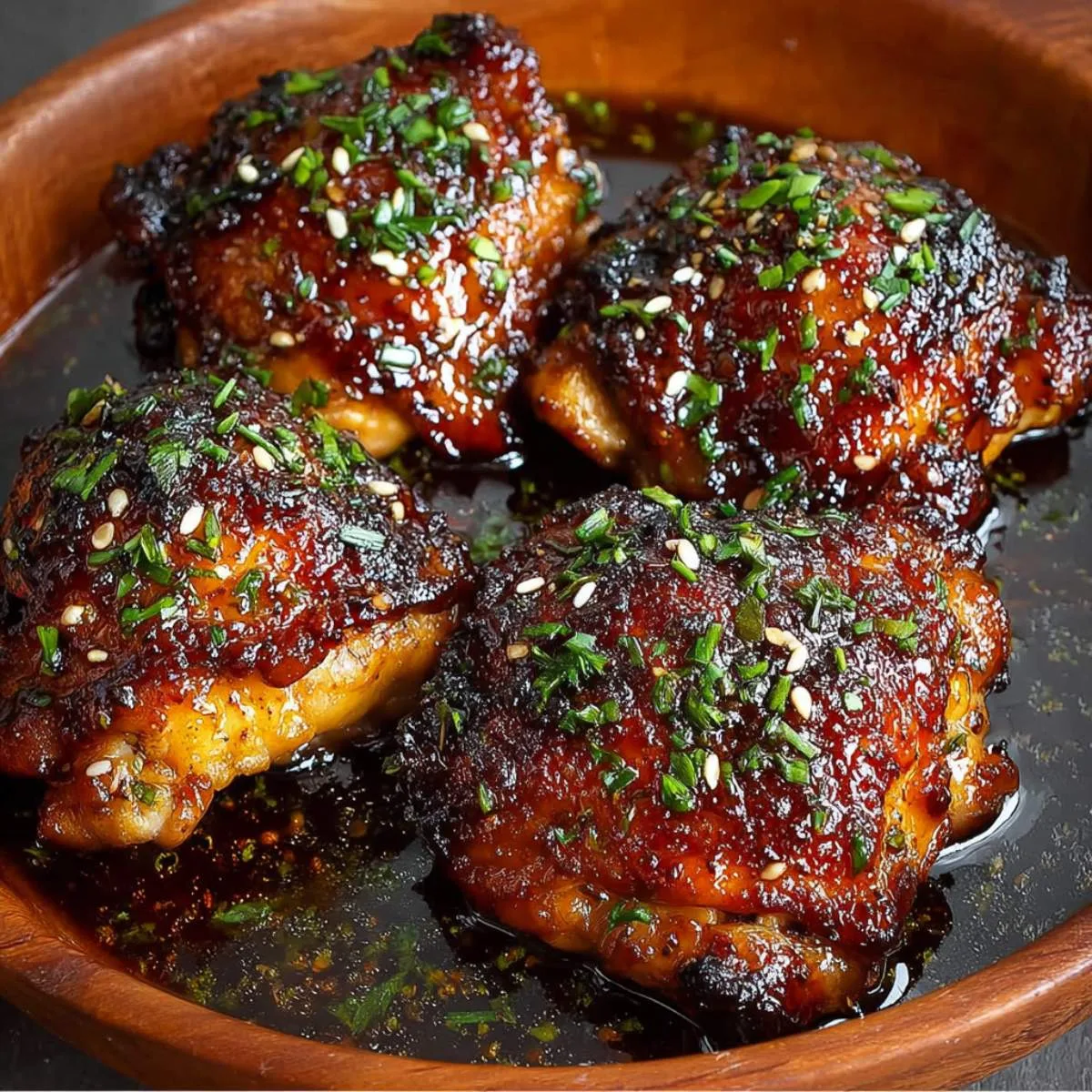
Image source: Bing (Web (fair-use with source credit))
| Element | Amount or setting | Why |
|---|---|---|
| Shoyu | 1/2 cup | Salt and umami base |
| Water | 1/2 cup | Dilutes salt to braising strength |
| Brown sugar | 1/3 cup, packed | Gloss, color, caramelization |
| Fresh ginger | 6 to 8 coins | Cuts the fat, adds heat |
| Garlic | 4 cloves, smashed | Savory depth |
| Chicken | 3 lb bone-in thighs | Forgiving, stays juicy |
| Covered bake | 375°F, 30 min | Cooks through gently |
| Uncovered finish | 425°F, 8 to 12 min | Crisps skin, sets glaze |
| Target internal temp | 175 to 185°F | Collagen breaks down |
| Rest | 8 to 10 min | Sauce thickens as it cools |
Scale it straight up. Double everything for a full sheet pan and 12 thighs.
What Shoyu Chicken Actually Is (and How It Differs from Teriyaki)
Shoyu chicken is chicken braised in diluted soy sauce, sugar, ginger, and garlic until the liquid reduces to a glaze. It grew out of plantation-era Japanese cooking in Hawaii and became a plate lunch staple alongside two scoops of rice and macaroni salad.
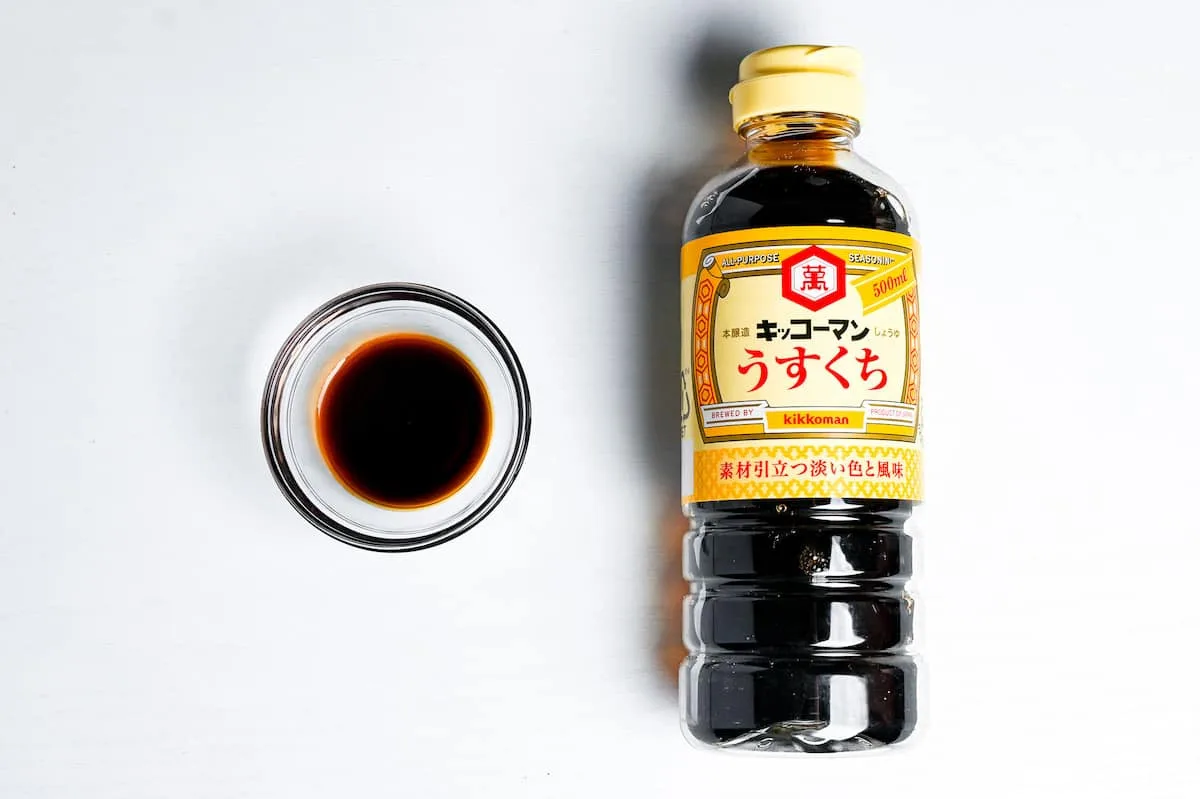
Image source: Bing (Web (fair-use with source credit))
Shoyu is Japanese-style brewed soy sauce, fermented from soybeans, wheat, salt, and the koji mold Aspergillus oryzae. That wheat content gives shoyu its rounder, less harsh flavor than Chinese dark soy sauce.
The teriyaki difference is structural. Teriyaki sauce is thick, syrupy, and brushed on at the end. Shoyu chicken cooks in its liquid the whole time, so flavor goes deeper into the meat and the finished coating stays thinner and glossier.
Why Baking Beats the Stovetop Braise for Shoyu Chicken
Baking is the only method that gives shoyu chicken genuinely crisp skin. A stovetop braise keeps the skin submerged, so it stays soft no matter how long it simmers.
The oven also removes the biggest risk in this dish. On a burner, sugar sits directly against hot metal and scorches in patches. In a 375°F oven the heat surrounds the pan, so the sauce reduces evenly instead of burning at the bottom.
- Hands-off: no stirring, no splatter
- One pan for cooking and serving
- Even doneness on bone-in pieces
- Skin actually browns and crisps
- Scales to a crowd without extra work
If you'd rather chase maximum crunch, an air fryer gets skin crisper than any oven. Our comparison of countertop models built for poultry covers what to look for, though you'll glaze at the end rather than during cooking. For weeknight speed, a compact fast-cooking unit shaves the bake down to about 22 minutes.
The Ingredients That Matter, and the Ones That Don't
Five ingredients carry this dish: shoyu, water, sugar, ginger, and garlic. Everything else is optional.
Skip the sesame oil in the braise. It turns bitter over 40 minutes of heat and adds nothing you'll taste. Same with jarred pre-minced garlic, which goes papery and grey.
Star anise is the one addition worth making, and one whole pod covers a full pan.
Picking Your Shoyu: Aloha vs. Kikkoman vs. Yamasa vs. Tamari
Brand changes the recipe. It's why the same measurements taste wildly different in two kitchens.
| Shoyu | Character | Adjustment needed |
|---|---|---|
| Aloha Shoyu | Saltier, thinner body | Cut sugar slightly, watch reduction closely |
| Kikkoman | Balanced, mid-body | Use the ratio as written |
| Yamasa | Slightly sweeter, deeper color | Pull earlier, it darkens fast |
| Kikkoman Less Sodium | Same color, less salt | Use 1/3 cup water instead of 1/2 |
| Tamari (San-J) | Darker, thicker, gluten-free | Reduce 2 to 3 minutes less |
Aloha Shoyu is the Hawaii benchmark and hard to find on the mainland outside Asian grocers. Kikkoman is the safe default and, as of 2026, the most widely stocked naturally brewed shoyu in US supermarkets.
One tablespoon of regular soy sauce carries roughly 900 to 1,000 mg of sodium according to USDA FoodData Central. Reduction concentrates that further, so full-sodium shoyu plus a hard reduction pushes a single serving high.
Choosing the Sweetener: Brown Sugar, White Sugar, Mirin, or Honey
Brown sugar is the right default. Its molasses content drives the glaze toward that dark mahogany color and adds a faint bitterness that balances the salt.
- Brown sugar: deepest color, best gloss, most forgiving
- White sugar: cleaner and sharper, lighter finish
- Mirin: adds shine and mild acidity, use 1/4 cup and halve the sugar
- Honey: burns fastest, drop the oven to 350°F if you use it
Never pair honey with a broiler finish. It scorches before the skin has a chance to set.
The Cut of Chicken to Buy (Bone-In Thighs Win, Here's Why)
Bone-in, skin-on chicken thighs are the correct cut, and it isn't close. Thigh meat holds enough collagen and fat to sit at 180°F without drying out, which is exactly where shoyu chicken tastes best.
Breasts are the wrong tool here. They turn dry and stringy around 165°F, long before the glaze has darkened. If breasts are all you have, pull them at 160°F and glaze them separately in a saucepan.
| Cut | Bake time at 375°F | Result |
|---|---|---|
| Bone-in thighs | 40 to 45 min | Best texture, crisp skin |
| Drumsticks | 40 to 50 min | Great flavor, kid-friendly |
| Whole legs | 50 to 55 min | Slowest, most forgiving |
| Boneless thighs | 25 to 30 min | Fast, less crisp |
| Bone-in breasts | 35 to 40 min | Dries out easily |
Pat the chicken dry with paper towels before it goes near the marinade. Surface moisture blocks browning, and wet skin never crisps.
Chicken thighs also run cheaper per pound than breasts across most US retail, which makes a full sheet pan genuinely inexpensive. For safe handling of raw poultry and correct cooking temperatures, the USDA publishes the standards worth following.
Skin-on matters for one reason: it's the surface the glaze clings to. If you're cooking a batch outdoors, a four-burner gas setup with a cool zone lets you bake first and lacquer over indirect heat. The same indirect approach works on any larger six-burner rig, where sugar flare-ups are the main hazard.
The 5 Color Stages of a Shoyu Glaze: How to Read the Pan
Color is your timer. Shoyu chicken gets judged by eye long before a thermometer comes into it, and the sauce moves through five recognizable stages.
| Stage | What you see | What's happening |
|---|---|---|
| 1 | Thin, translucent tea-brown | Raw sauce, pre-bake |
| 2 | Cloudy amber, still watery | 20 to 25 min in, fat rendering |
| 3 | Glossy chestnut, coats a spoon | Reduction point, sauce thickening |
| 4 | Deep mahogany, clinging to skin | Target. Pull it here |
| 5 | Matte dark with black flecks at pan edges | Sugar scorching, bitter |
Stage 3 is the one to learn. Lift a spoon out of the sauce. If it coats the back in an even layer and ribbons off slowly, you're there.
Bubble size tells the same story from across the kitchen. Fine, fast bubbles mean the sauce is still mostly water. Large, slow, lazy bubbles mean the water has cooked off and the sugar is concentrating.
Watch the pan edges too. Caramelization always starts there, where the sauce sits shallowest. A thin dark ring is normal.
Black flecks mean you have about 60 seconds before the whole pan turns bitter.
Step-by-Step: Baked Shoyu Chicken in a 9×13 or Sheet Pan
- Pat 3 lb bone-in thighs dry with paper towels.
- Whisk 1/2 cup shoyu, 1/2 cup water, 1/3 cup packed brown sugar, 6 ginger coins, and 4 smashed garlic cloves.
- Taste the raw sauce. If it makes you squint, add 2 tbsp more water.
- Reserve 1/2 cup of the mixture in a small saucepan for the finishing glaze.
- Marinate the chicken in the rest, refrigerated, in a glass dish or zip-top bag.
- Preheat to 375°F with the rack in the center.
- Arrange thighs skin side up, single layer, 1 inch of space between pieces.
- Bake covered with foil for 30 minutes.
- Uncover. Spoon pan juices over each piece. Raise the heat to 425°F.
- Bake 8 to 12 minutes more, until the skin reads stage 4 mahogany.
- Simmer the reserved sauce to a boil while the chicken finishes, about 5 minutes.
- Rest 8 to 10 minutes, then spoon the reduced sauce over.
Marinating: 30 Minutes vs. Overnight
Thirty minutes is enough. Shoyu is salty enough to season the surface fast, and a short marinade keeps a cleaner chicken flavor.
- 30 minutes: seasons the skin, meat still tastes like chicken
- 4 hours: noticeably deeper flavor, the best middle ground
- Overnight (12 to 24 hours): strong, slightly cured edge
- Past 24 hours: hammy texture, the salt has gone too far
Use glass, ceramic, or a zip-top bag. Aluminum bowls react with the salt and leave a metallic tang.
The Covered Phase, Then the Uncovered Finish
Foil traps steam, which cooks the thighs gently and stops the sauce reducing too early. Skip it and the sauce concentrates before the meat is done.
The uncovered phase does all the visual work. That's when moisture leaves the pan and the glaze moves from stage 2 to stage 4. If your oven runs hot at the back, rotate the pan when you uncover it.
Uneven color is almost always a hot-spot problem, not a recipe problem.
Reducing the Sauce So It Clings Instead of Pooling
Reduce the reserved sauce separately on the stovetop. It's the single biggest upgrade to this dish and takes five minutes.
Pan drippings alone are too thin and too fatty. A separate reduction gives you control, and boiling it also handles the food safety side of reusing marinade.
Pull the reduction while it's still slightly loose. It keeps thickening as it cools, and an over-reduced sauce sets into candy on the plate. If it seizes up, whisk in a teaspoon of hot water.
Cornstarch is optional: mix 1 tsp with 1 tbsp cold water and whisk it in off the heat to avoid lumps.
Temperature Truth: 165°F Is Safe, but 180°F Is Better for Thighs
The USDA Food Safety and Inspection Service sets 165°F as the safe minimum internal temperature for all poultry. That number is about safety, not texture.
Dark meat holds far more connective tissue than breast meat. Collagen doesn't break down properly until you're well past 165°F, which is why thighs pulled at exactly 165°F often feel rubbery.
- 165°F: safe, but chewy and springy
- 175°F: collagen starting to soften
- 180 to 185°F: tender, silky, the sweet spot
- Above 195°F: meat falls off the bone, skin goes soggy
Probe the thickest part of the thigh, angled away from the bone. Bone conducts heat differently and gives a false-low reading. An instant-read digital thermometer takes about three seconds and removes the guesswork entirely.
Getting the Skin Sticky and Lacquered, Not Pale and Flabby
Crisp skin needs three things: a dry surface, direct heat, and no standing liquid. Miss one and you get pale, rubbery skin.
Keep the sauce depth around 1/4 inch in the pan. Any deeper and the skin is effectively poaching. If the pan looks like soup at the 30-minute mark, spoon some liquid into the saucepan and add it to your reduction.
Spoon-baste rather than brush-baste during the uncovered phase. A spoon lays down a thicker coat that stays put, and one baste at the halfway mark is plenty. Basting more often cools the surface and slows browning.
A broiler finish works, but only under constant supervision. Two to four minutes is the entire window. Never walk away from a broiling sugar glaze.
For anyone chasing the crispest possible result, dry heat with strong air circulation beats a static oven, which is the same principle behind budget-friendly countertop convection units.
The 4 Ways Baked Shoyu Chicken Goes Wrong (and the Fix for Each)
Nearly every failed batch is one of four problems, and each has a specific fix.
| Problem | Cause | Fix |
|---|---|---|
| Watery sauce that won't cling | Never reduced | Simmer reserved sauce 5 min separately |
| Burnt, bitter black glaze | Sugar past 320°F unattended | Drop to 400°F, check every 3 min |
| Pale, rubbery skin | Baked covered the whole time | Uncover for the last 10 to 12 min |
| Too salty | Full-sodium shoyu plus reduction | Use 1:1 water, or less-sodium shoyu |
If the sauce is thin but the chicken is done, pull the chicken and rest it. Reduce the pan liquid hard for four minutes, then pour it back over.
If the glaze has darkened but the meat reads 150°F, tent the pan with foil and drop to 350°F. The foil stops further browning while the interior catches up.
If the skin is pale and the sauce is already thick, move the pan to the top rack at 425°F for five minutes. Don't add more liquid. And if it's too salty once cooked, serve it over more rice than you planned.
A bigger starch base is the only real rescue at that point.
Baked vs. Slow Cooker vs. Instant Pot vs. Air Fryer vs. Grill
Baking is the best all-round method, but each option suits a different situation.
| Method | Time | Skin | Best for |
|---|---|---|---|
| Baked, 375°F then 425°F | 45 to 55 min | Crisp | Best balance, most reliable |
| Slow cooker, low | 4 to 6 hrs | Soft, pale | Set-and-forget, sauce stays thin |
| Instant Pot, high pressure | 12 min plus sauté | Soft | Weeknight speed, reduce on sauté mode |
| Air fryer, 380°F | 20 to 25 min | Crispest | Two to four thighs, glaze at the end |
| Grill, indirect | 25 to 35 min | Charred edges | Summer cooking, flare-up risk |
Want fall-apart meat and don't care about skin? The slow cooker wins. Want crackling skin?
Dry heat wins every time. Grilling over a side-burner equipped setup lets you reduce the sauce right beside the grate.
How to Cut the Salt Without Killing the Flavor
Swap in less-sodium shoyu and reduce the added water. Reduced-sodium versions carry roughly 40 percent less sodium per tablespoon, so 1/3 cup water instead of 1/2 keeps the flavor concentrated.
- Use less-sodium shoyu, keep the sugar the same
- Add 1 tbsp rice vinegar to brighten what the salt was doing
- Bump the ginger to 8 or 10 coins
- Serve over plain rice, never seasoned rice
Coconut aminos give a much lower sodium version, but they're noticeably sweeter. Cut the brown sugar to 2 tbsp if you go that route.
Serving It Local Style: Two Scoop Rice, Mac Salad, and Beyond
The classic plate lunch is two scoops of short-grain white rice, a mound of macaroni salad, and the chicken with sauce spooned over everything. The rice soaks up the glaze, so don't skimp on it.
Other ways it works well:
- Shredded into fried rice or saimin
- Chopped as a musubi filling
- Over a rice bowl with furikake and sliced green onion
- Cold in a bento box the next day
Meal Prep, Storage, and Reheating Without Wrecking the Skin
Cooked shoyu chicken keeps 3 to 4 days refrigerated and up to 4 months frozen, per USDA guidance. Cool it in shallow containers so it drops out of the danger zone fast.
Reheat in a 325°F oven for 12 to 15 minutes, uncovered. A microwave turns crisp skin soft and rubbery within 60 seconds.
Store the reduced sauce separately if you can. It thickens in the fridge, so warm it with a splash of water before serving.
Food Safety Rules for Marinating and Reusing the Sauce
Always marinate poultry in the refrigerator, never on the counter. Raw chicken enters the 40 to 140°F danger zone within minutes at room temperature.
Never serve used marinade without boiling it first. A full rolling boil for at least one minute handles any Salmonella carried over from the raw chicken. That's exactly why we reserve a separate 1/2 cup before the chicken goes in.
Use a separate cutting board for raw poultry, and wash hands and surfaces afterward. Cooked chicken shouldn't sit out longer than two hours, or one hour above 90°F.
Small Adjustments That Make a Noticeable Difference
- Add one whole star anise pod to the braise for subtle warmth
- Finish with sliced green onion and toasted sesame seeds
- Skim the rendered fat off the sauce before reducing
- Eat the ginger coins, they're practically candied by then
Frequently Asked Questions About Baked Shoyu Chicken
Can I use boneless skinless thighs?
Yes, but bake only 25 to 30 minutes at 375°F. Without skin there's nothing for the glaze to cling to, so spoon the reduced sauce over at the end rather than relying on the pan to do the work.
Why is my sauce still watery?
It wasn't reduced. Pan juices stay thin because the covered phase traps steam in the dish. Simmer the reserved half cup separately for about five minutes, until it coats the back of a spoon and ribbons off slowly.
Is shoyu chicken gluten-free?
Not with traditional shoyu, which is brewed with wheat. Swap in tamari for a gluten-free version and reduce it two to three minutes less, since tamari is thicker and darker to start with and glazes faster.
Can I make it ahead for a party?
Yes, and it improves overnight. Bake it fully, cool it, then refrigerate the chicken and sauce separately. Reheat uncovered at 325°F for 15 minutes and spoon the warmed sauce over just before serving.
What's the difference between shoyu chicken and huli huli chicken?
Huli huli chicken is grilled over direct heat with a ketchup and pineapple juice based sauce, so it tastes sweeter and tangier. Shoyu chicken is braised in soy, sugar, ginger, and garlic, giving a deeper savory flavor and no char.
