

A good biscuits and chicken gravy recipe comes down to two visual cues, not a timer. The dough should stay shaggy with butter flakes you can still see. The gravy should leave the heat while it still looks slightly too thin.
Get those two moments right and the rest is assembly.
Ratios matter more than brands here. A medium-thick gravy runs 2 tablespoons fat to 2 tablespoons flour per cup of liquid, and the U.S. Department of Agriculture (USDA) sets 165°F (74°C) as the safe internal temperature for poultry.
As of 2026, neither number has changed. Here's how the two halves of the plate come together.
Quick Answer
Biscuits and chicken gravy starts with cold butter cut into flour. Bake the biscuits at 450°F for 12 to 18 minutes. Cook the chicken, then build a blond roux in the pan drippings.
Whisk in milk or stock until the gravy coats a spoon. Season at the end and ladle over split biscuits.
What Makes This Dish Work: Tall Buttermilk Biscuits and a Blond-Roux Chicken Gravy
This dish is two simple techniques stacked on one plate, and both are judged by eye rather than by clock.
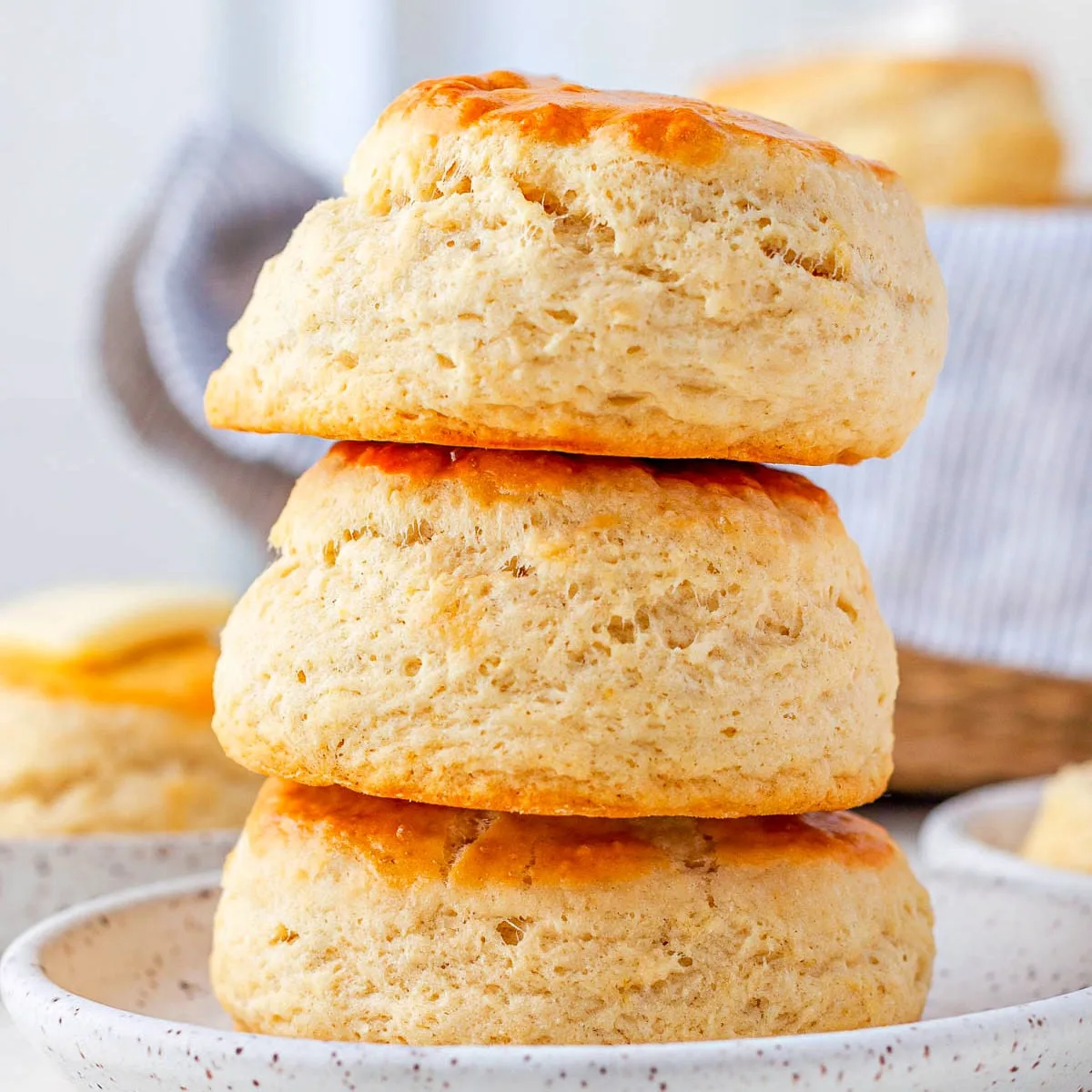
Image source: Web (Bing) / glorioustreats.com (Web image, fair-use with source credit)
A buttermilk biscuit is a chemically leavened quick bread that rises from steam trapped around cold fat. Those butter flakes melt in the oven, release water as steam, and push the dough apart into layers. That's why warm butter ruins the whole thing.
Chicken gravy is a milk or stock sauce thickened with a roux. A roux is equal parts fat and flour cooked together, and for this dish you stop at the blond stage, roughly 60 to 120 seconds. Cook it darker and you trade thickening power for colour you don't want here.
The finished gravy should reach nappe, the point where it coats the back of a spoon and holds a clean line when you drag a finger through it. Nappe is the target for nearly every cream sauce in classical French cooking, and it's the most reliable doneness cue you'll use.
Everything You Need: Ingredients, Fats, and the Two Pans That Matter
You need one baking vessel and one skillet. Nothing else is essential.
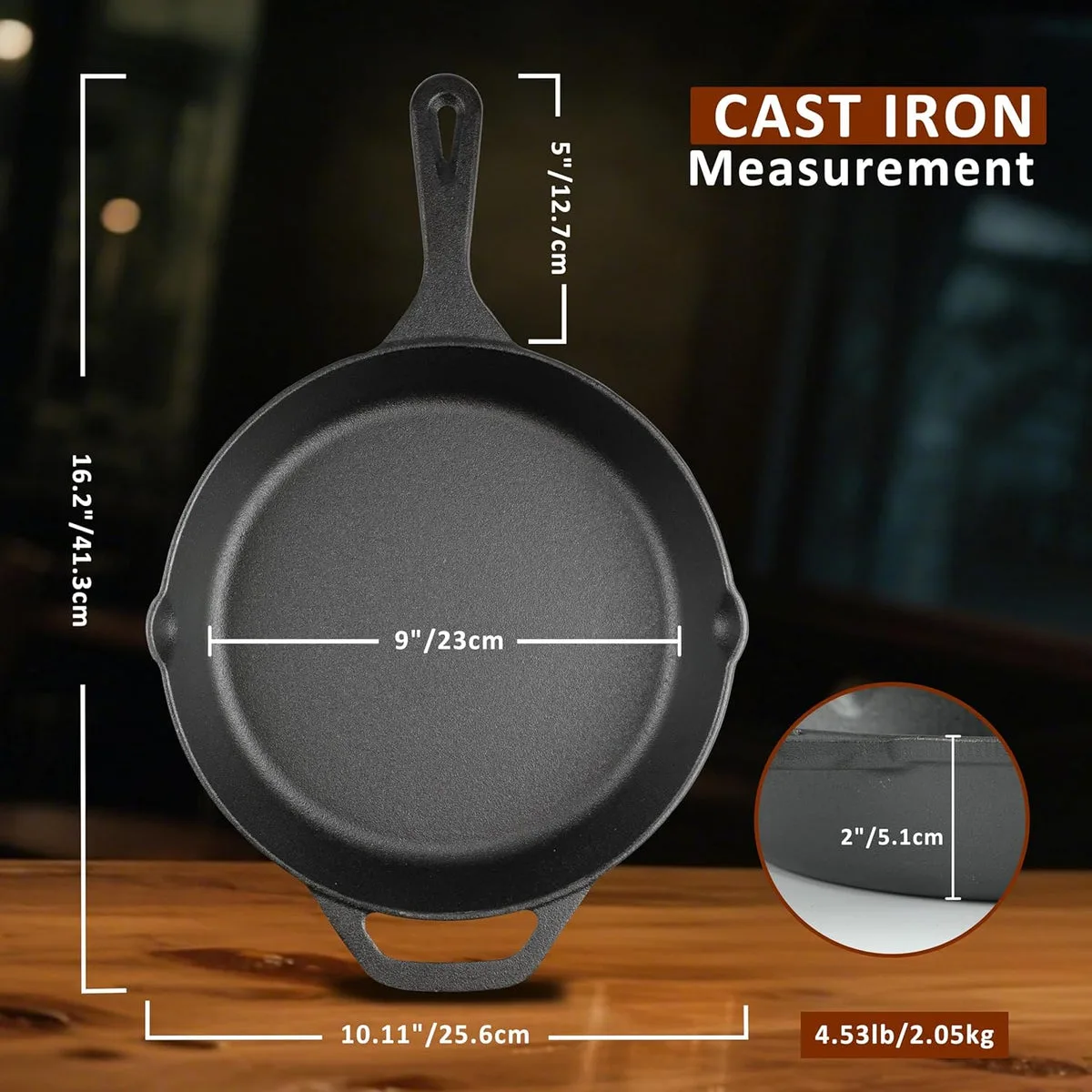
Image source: Bing (Web, fair-use with source credit)
A 10-inch cast iron skillet is the best pan for the gravy because it holds heat and builds a strong fond. Fond is the layer of browned bits stuck to the pan after searing, and it carries most of the savoury flavour in a pan gravy. Stainless steel works nearly as well.
Nonstick browns poorly and leaves you less to scrape up.
| Tool | Size or spec | Why it matters |
|---|---|---|
| Cast iron skillet | 10 inch / 25 cm | Even heat, strong fond for the gravy |
| Metal biscuit cutter | 2.5 inch / 6 cm | Sharp edge cuts clean instead of crushing |
| Box grater | Coarse side | Turns frozen butter into perfect flakes |
| Flat whisk | Any | Reaches pan corners so the roux doesn't scorch |
| Digital scale | 1 g increments | Scooped flour can run 15 to 20% heavy |
| Instant-read thermometer | ±1°F | Confirms chicken hits 165°F (74°C) |
Biscuit Ingredients and Why Cold Butter Beats Everything Else
Butter wins on flavour and lift because it's roughly 16% water, and that water becomes steam in the oven. Lard and shortening are pure fat, so they give a shorter, more tender crumb with less rise.
- Flour, 2.5 cups (300 g). Soft winter wheat flour sits around 8 to 9% protein and bakes softer than all-purpose at 10 to 12%
- Unsalted butter, 8 tablespoons (113 g), frozen and grated
- Cultured buttermilk, 1 cup (240 ml), straight from the fridge
- Baking powder, 1 tablespoon, plus 1/4 teaspoon baking soda
- Kosher salt, 1 teaspoon
Test old baking powder before you commit. Stir half a teaspoon into hot water. No vigorous fizz means dead leavener and flat biscuits.
Chicken Gravy Ingredients: Drippings, Stock, Milk, or a Mix
- Chicken thighs or shredded rotisserie chicken, 2 cups packed
- Pan drippings plus butter to make 4 tablespoons of fat
- All-purpose flour, 4 tablespoons
- Whole milk, 2 cups, plus chicken stock, 1/2 cup
- Coarse black pepper, 1 teaspoon, plus salt to taste
- Optional: a pinch of sage or thyme, or a scrape of nutmeg
Thighs give you more rendered fat and better fond than breast. If you'd rather not heat the oven twice, a compact countertop cooker brings thighs to temperature in about 20 minutes. Leftover roast chicken works too, though you'll need extra butter to replace the missing fat.
Timing It So the Gravy Is Ready When the Biscuits Come Out
Gravy waits badly. It thickens hard as it cools, so build it around the biscuit bake rather than ahead of it.
- Heat the oven to 450°F (232°C), rack in the upper third
- Mix and cut the biscuits, then get them in the oven
- While they bake, cook the chicken in the skillet and shred it
- At the 8-minute mark, start the roux
- Add liquid and simmer 5 to 8 minutes to nappe
- Fold the chicken back in as the biscuits come out
- Season, then serve within 5 minutes
Active time runs 35 to 45 minutes and yields 8 to 10 biscuits with about 3 cups of gravy, enough for 4 to 6 people. If the gravy finishes early, pull it off the heat and keep warm milk nearby to loosen it. That single habit saves more plates than anything else in this dish.
How to Make the Biscuits: What the Dough Should Look Like at Every Stage
Every biscuit failure traces back to one of two things. Warm fat, or too much mixing.
Cutting the Butter In: Pea-Sized Flakes You Can Still See
Grate frozen butter into the dry mix, then toss it with your fingertips. You want visible flakes ranging from lentil to pea size. If the mix looks uniform and sandy, the butter has gone too far and your layers are gone.
Chill the bowl 10 minutes and carry on.
The Shaggy Dough Stage: Stop Mixing Here
Pour in the cold buttermilk and stir maybe 10 or 12 strokes. The dough should look ragged with dry patches still showing. It will not look like a smooth ball, and it shouldn't.
Overmixing develops gluten, and gluten turns a biscuit bready.
Folding for Layers, Then Patting to 3/4 Inch
Turn the dough onto a floured surface. Pat it flat, fold it over on itself three or four times, then pat to a final thickness of 3/4 to 1 inch. Each fold builds a butter layer, the same principle behind puff pastry on a much lazier scale.
Cutting Straight Down and Packing Them Sides Touching
Press the cutter straight down and lift straight up. Twisting seals the cut edge and the biscuit can't climb. Arrange the rounds so their sides touch in the skillet.
They brace against each other and rise upward instead of spreading.
Bake 12 to 18 minutes. Look for golden tops, pale sides, and visible shoulders where the dough pushed up and outward. Split one by hand.
Clean horizontal layers mean you did it right.
How to Make the Chicken Gravy: Fond, Roux Colour, and the Nappe Test
Good gravy is a two-minute decision made three times. How dark the roux gets, how fast the liquid goes in, and when you stop cooking.
Cook the Chicken First and Leave the Browned Bits Behind
Sear the chicken until it reaches 165°F (74°C), then move it to a board. Do not wipe the pan. Those dark patches are concentrated flavour, and the USDA Food Safety and Inspection Service confirms 165°F as the safe endpoint for all poultry.
Shred the meat while it rests.
Cooking the Roux to Blond in 60 to 120 Seconds
Measure your fat, then add an equal amount of flour. Whisk constantly. The paste foams, then settles into a pale gold colour that smells faintly like toasted crackers.
That's blond. Stop there.
Adding Liquid Gradually to Avoid Lumps
Add the first half cup of milk slowly while whisking hard. Lumps form when cold liquid hits hot flour all at once and the outside gelatinises before the inside disperses. Once you have a smooth paste, the rest can go in faster.
Scrape the fond loose as you go.
The Nappe Test: Pull It While It Still Looks Slightly Too Thin
Simmer 5 to 8 minutes, then lift the spoon. The gravy should coat the back and hold a line drawn through it. Stop there.
It keeps thickening off the heat, so gravy that looks perfect in the pan turns to paste on the plate.
Seasoning at the End, Because Dairy Mutes Salt and Pepper
Fat and dairy blunt your palate, so season last and season harder than feels right. Add the shredded chicken, then taste. If you used bouillon or stock concentrate, hold the salt until the very end.
Sodium stacks fast between the base, the butter, and the pan.
Roux Ratios and Bake Numbers at a Glance
Gravy thickness is arithmetic, not guesswork. Once you know the ratio you can hit any consistency on purpose.
| Target | Fat | Flour | Liquid |
|---|---|---|---|
| Thin, pourable | 1 tbsp | 1 tbsp | 1 cup |
| Medium (standard) | 2 tbsp | 2 tbsp | 1 cup |
| Thick, spoonable | 3 tbsp | 3 tbsp | 1 cup |
| Spec | Value |
|---|---|
| Oven temperature | 425 to 450°F (218 to 232°C) |
| Bake time | 12 to 18 minutes |
| Dough thickness | 3/4 to 1 inch |
| Roux to blond | 60 to 120 seconds |
| Simmer to nappe | 5 to 8 minutes |
| Chicken safe temp | 165°F (74°C) |
| Cooked gravy fridge life | 3 to 4 days |
A well-made biscuit roughly doubles in height, so a 3/4-inch round should finish near 1.5 inches. If yours land under an inch, the leavener or the butter temperature is the culprit.
Cream Gravy vs Pan Gravy vs Cornstarch: Which Version to Make
Milk-based cream gravy is richer and paler. Stock-based pan gravy is lighter and more savoury. Cornstarch is the fastest and the least forgiving.
| Version | Best for | Trade-off |
|---|---|---|
| Cream gravy (all milk) | Classic Southern breakfast plates | Tastes flat without heavy seasoning |
| Pan gravy (stock plus cream) | When you have real drippings and fond | Thinner body, longer simmer |
| Cornstarch slurry | Gluten-free cooks, last-minute fixes | Glossy texture, thins out on reheating |
Cornstarch gelatinises between roughly 144 and 180°F and loses hold if you boil it hard or reheat it twice. Use 1 tablespoon per cup of liquid, whisked into cold liquid first. Never dump dry starch into hot gravy.
Our pick for this dish is a hybrid: 2 cups milk to 1/2 cup chicken stock. You get the body of cream gravy with the savoury edge of stock.
Butter, Lard, or Chicken Fat: What Each One Does to Texture and Flavour
Fat choice changes the crumb more than any other variable.
- Butter. About 16% water, so it steams and lifts. Cleanest flavour, best rise, melts fastest, so keep it frozen.
- Lard. Pure fat with large crystals. Shortest, most tender crumb and a faintly savoury note. Long-standing favourite in Appalachian and Texan kitchens.
- Shortening. Higher melting point, so it holds shape well. Neutral to the point of bland.
- Bacon drippings. Use for a quarter of the fat, no more. Beyond that the smoke bulldozes the chicken.
- Chicken fat (schmaltz). Save it for the gravy, not the biscuits. Deepest savoury base you can get.
A 50/50 split of butter and lard is the old-school compromise. Butter for lift, lard for tenderness. If you already keep rendered fat from grilled meats and drippings, that jar in the fridge is exactly what this gravy wants.
Rotisserie Chicken, Thighs, or Leftovers: Picking Your Protein
Fresh-cooked thighs give you the most flavour because they leave fat and fond behind. Rotisserie chicken saves about 20 minutes but hands you an empty pan.
| Protein | Prep time | What you get | What you lose |
|---|---|---|---|
| Bone-in thighs | 20 to 25 min | Rendered fat, strong fond, moist meat | Longest cook |
| Boneless thighs | 10 to 12 min | Good fond, quick turnaround | Less rendered fat |
| Chicken breast | 8 to 10 min | Lean, mild, fast | Dries out past 165°F |
| Rotisserie or leftovers | 0 min | Convenience, deep roast flavour | No drippings, no fond |
Using leftovers? Build the flavour back in. Start with 4 tablespoons butter, brown it lightly, and add 1/2 teaspoon poultry seasoning to the roux.
A teaspoon of Worcestershire sauce at the end fills the savoury gap.
Coarse hand-pulled shreds hold gravy better than knife-cut cubes. Cubes slide off the biscuit. Shreds tangle and stay put.
Why Biscuits Come Out Flat and Gravy Comes Out Lumpy: Fixes for Both
Nearly every failure here has a single cause and a single fix. Work the symptom, not the whole recipe.
Biscuit troubleshooting
- Flat and dense. If the butter melted before baking, chill the cut rounds 15 minutes and bake from cold. If they're pale and squat, test the baking powder in hot water.
- Tough and bready. You mixed past the shaggy stage. Next batch, stop at 10 to 12 strokes.
- Won't split cleanly. You twisted the cutter. Press straight down, lift straight up.
- Dry and crumbly. Scooped flour can run 15 to 20% over. Weigh it, or spoon and level.
- Soapy or metallic taste. Too much baking soda. Cap it at 1/4 teaspoon per 2.5 cups flour.
- Burnt bottoms. Move the rack to the upper third and swap a dark pan for cast iron or light metal.
Gravy troubleshooting
- Lumps. Whisk hard, or pass it through a fine-mesh sieve. Next time, add the first 1/2 cup of liquid slowly.
- Raw flour taste. The roux went in undercooked. Simmer 3 more minutes and taste again.
- Too thin. Simmer longer, or whisk in a beurre manié, equal parts soft butter and flour kneaded together, 1 teaspoon at a time.
- Too thick or pasty. Loosen with warm milk or stock, a splash at a time. Cold liquid seizes it.
- Broken or curdled. You boiled it after the dairy went in. Hold it at a bare simmer.
- Bland. Salt, coarse pepper, a dash of hot sauce. Always after the dairy.
- Greasy with fat pooling on top. Your fat-to-flour ratio slipped. Whisk in an extra teaspoon of flour.
One rule covers most of it. If the gravy looks right in the pan, it's already gone too far.
Nine Mistakes That Ruin This Recipe
These are the errors that show up before you even start cooking.
- Using expired baking powder, which loses potency 6 to 12 months after opening
- Working the dough with warm palms instead of fingertips
- Re-kneading scraps instead of gently re-patting them
- Spacing biscuits apart on the tray so they spread sideways
- Wiping the skillet clean and losing the fond
- Salting before the dairy, then over-salting at the end
- Boiling the gravy hard after the milk goes in
- Cooking chicken breast past 165°F until it turns stringy
- Letting the gravy sit 20 minutes before serving
Serving Sizes, Cost per Plate, and Scaling for a Crowd
One batch feeds 4 to 6 people: 8 to 10 biscuits and roughly 3 cups of gravy. Plan on two biscuits and 3/4 cup of gravy per adult.
Scaling is straightforward. Double the biscuits and use two skillets rather than crowding one. Gravy scales linearly, though a doubled batch takes 10 to 12 minutes to reach nappe instead of 5 to 8.
Flour, buttermilk, and a couple of chicken thighs make this one of the cheapest hot breakfasts you can put on a table for six. For a bigger spread, fast weeknight sides free up your stovetop while the gravy simmers.
Chicken Temperature, Cooling Gravy Safely, and the Two-Hour Rule
Cooked chicken and dairy gravy both sit squarely in the bacterial danger zone between 40 and 140°F. Don't leave either at room temperature longer than two hours, or one hour above 90°F.
Cool leftover gravy in shallow containers, not the pot. A 3-inch depth clears the danger zone far faster than a deep pan. Refrigerate within two hours and use within 3 to 4 days.
Never rinse raw chicken. Splashing spreads bacteria across the sink and worktop. Reheat all leftovers to 165°F.
Make-Ahead, Freezing, and Reheating Without Breaking the Gravy
Cut biscuits freeze beautifully. Freeze them spaced on a lined tray, bag them once solid, then bake straight from frozen with 3 to 5 extra minutes.
Gravy is fussier. Milk-heavy gravy tends to separate in the freezer, so make the stock-based version if freezing is the plan. Reheat low with a splash of milk, whisking until it comes back together.
Small Adjustments That Take This From Good to Diner-Quality
- Brush baked biscuit tops with melted butter the second they leave the oven
- Grind the pepper coarse so you can see the flecks
- Add 1/2 teaspoon Worcestershire sauce to the finished gravy
- Toast the flour 15 seconds longer for a nuttier gravy
- Split biscuits by hand, never with a knife
- Serve within 5 minutes, before the gravy sets
A quick browned protein alongside, cooked in a budget-friendly countertop unit, rounds the plate out without another pan to wash.
Frequently Asked Questions
Can I use self-rising flour instead?
Yes. Swap in 2.5 cups self-rising flour and drop the baking powder, baking soda, and salt. Self-rising flour is usually milled from soft winter wheat at 8 to 9% protein, so biscuits often come out taller and softer than with all-purpose.
Why does my gravy taste like flour?
The roux didn't cook long enough. Give it a full 60 to 120 seconds before any liquid goes in. If the gravy is already assembled, simmer it 3 extra minutes and taste again.
The raw edge cooks out.
Can I make the gravy without drippings?
Yes. Use 4 tablespoons butter, browned lightly, plus 1/2 teaspoon poultry seasoning and a teaspoon of Worcestershire sauce. You lose some depth without fond, but the result still reads as proper chicken gravy on the plate.
How thick should the gravy be before I take it off the heat?
Just barely thinner than you want it. It should coat a spoon and hold a finger line, then loosen slightly when tilted. Gravy thickens noticeably as it cools, so anything that looks perfect in the pan will set up too stiff.
What goes well alongside it?
Fried eggs, sautéed greens, sliced tomatoes, or something quick off a side-burner setup. Keep the sides simple and acidic where you can. The gravy is rich, so a sharp note on the plate helps.
