

What does Gen Z call Diet Coke? The answer depends on who you ask, where they live, and how they order it. Most of the time it is simply “DC.” That is the baseline shorthand.
From there, the language branches into “crisp Diet Coke” when the carbonation is sharp and the temperature is freezing cold, and “dirty soda” when syrups and creamer enter the glass.
Gen Z treats Diet Coke less like a beverage and more like a cultural object with its own vocabulary, meme language, and regional dialects. As of 2026, the drink has moved well past its 1980s “just for the taste of it” identity. It is now a low-calorie base for customization, a caffeine ritual, and a TikTok-era status symbol.
The terminology below sorts out exactly what to call it in every situation.
Quick Answer: Gen Z Says “DC,” “Crisp Diet Coke,” or “Dirty Soda” — Not One Universal Slang
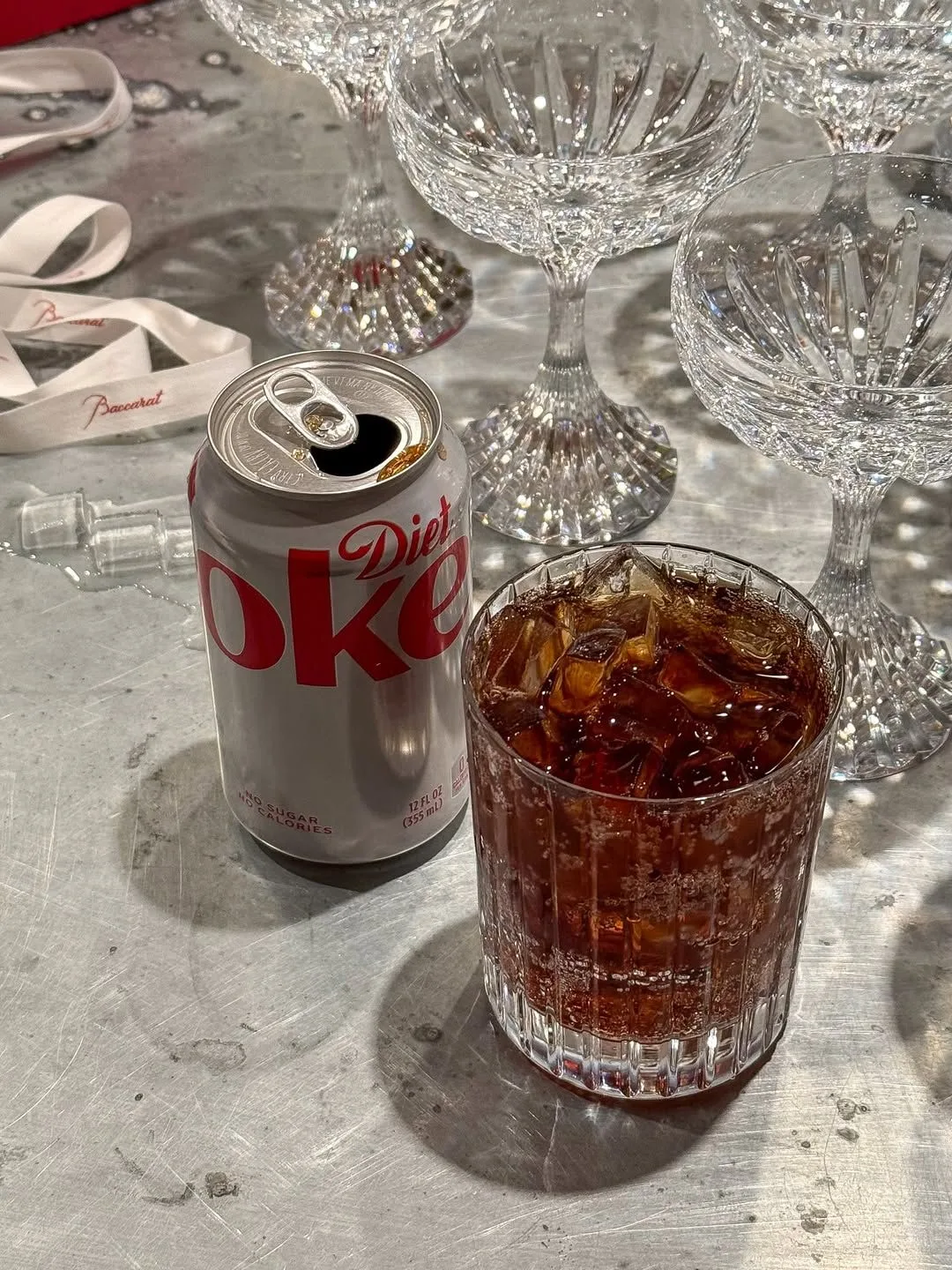
Image source: Bing (Web (fair-use with source credit))
Gen Z rarely says the full name. “DC” is the everyday term. “Crisp Diet Coke” means an ice-cold, aggressively carbonated fountain version. “Dirty soda” means Diet Coke mixed with flavor syrups and dairy or non-dairy creamer. Context decides which term fits.
Here is the quick breakdown:
- “DC” covers a plain can, bottle, or basic fountain pour.
- “Crisp DC” means the pour feels sharp, cold, and almost spicy from carbonation.
- “Dirty soda” is a custom drink, not plain cola.
- A “crisp DC” usually comes from a fountain, not a can.
The Three-Term Decision Point: Are You Grabbing Caffeine, Chasing a Vibe, or Treating Yourself?
The phrase Gen Z uses depends on three things: what you are doing, how the drink feels, and what is in it. Think of it as a branching decision tree rather than a single slang dictionary entry.
If you just need a zero-calorie caffeine hit during class or work, you are ordering a “DC.” That is the utility term. It is plain, unadorned, and understood everywhere in the United States.
If you are chasing the specific sensation of a near-frozen, heavily carbonated fountain pour, you are talking about a “crisp Diet Coke.” This is not about hunger or caffeine. It is about mouthfeel, temperature, and a weirdly specific sensory experience.
If you are treating yourself to a customized drink with added syrups, fruit, or creamer, you have entered “dirty soda” territory. This is the dessert version of Diet Coke. It has its own shops, its own ordering language, and its own regional geography.
Those three branches cover the practical reality. Someone who says “let me get a DC” at a gas station is not asking for coconut syrup and half-and-half. Someone posting a “crisp DC” video on TikTok is not showing a warm can from a grocery shelf.
The context sets the word, not the other way around.
“DC”: The Everyday Shorthand for a Plain Diet Coke
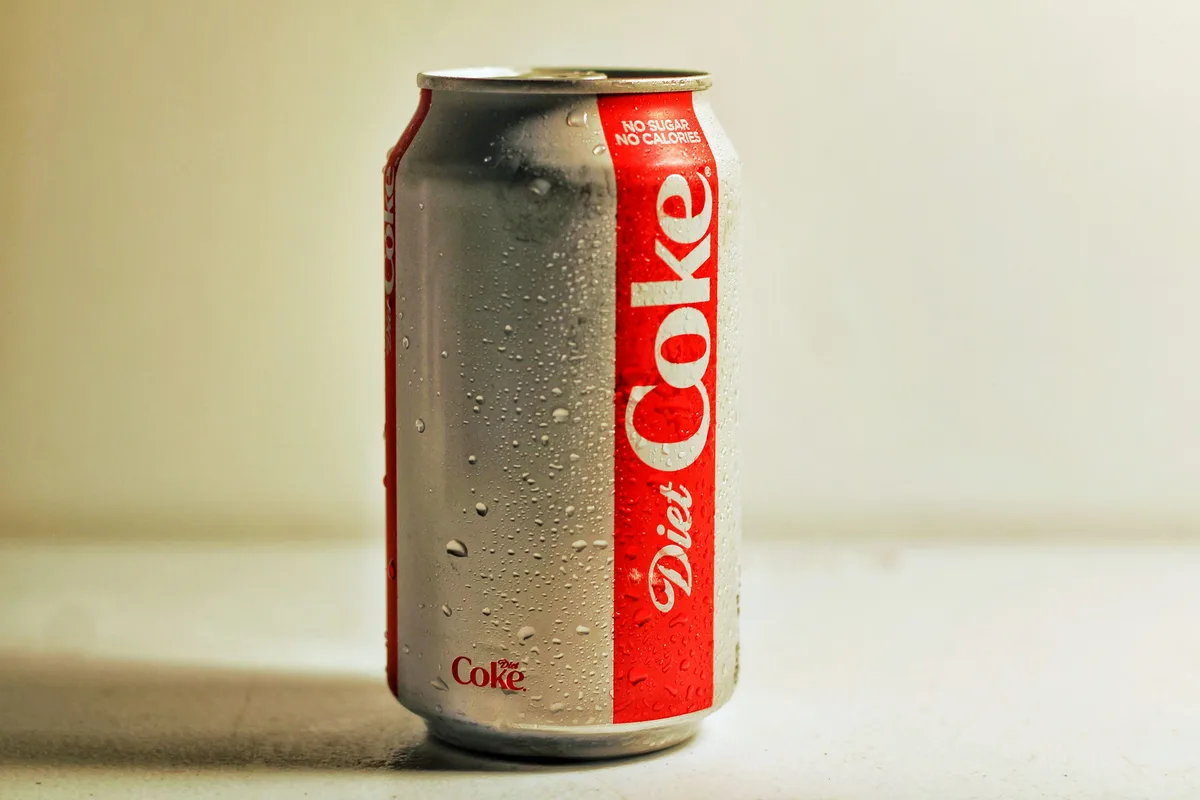
Image source: Bing (Web (fair-use with source credit))
“DC” is the default label. It covers the plain drink in any standard format: a can from a vending machine, a bottle from a convenience store fridge, or a no-frills fountain cup at a restaurant. Gen Z latched onto the initials because the full brand name feels formal, almost corporate, when spoken aloud.
This is the term you hear in group chats and drive-thru orders. “Can you grab me a DC while you’re up?” is a normal sentence. Nobody is confused. Nobody thinks you mean the District of Columbia or the comics publisher.
Diet Coke itself is a zero-calorie, zero-sugar carbonated soft drink produced by The Coca-Cola Company. It is sweetened with aspartame rather than high-fructose corn syrup or cane sugar. A 12-ounce can contains 46 milligrams of caffeine.
That puts it just below a standard cup of brewed coffee, which typically lands between 80 and 100 milligrams.
The shorthand also shows up in plural form online. “DC girlies” refers, usually with affection or self-deprecating humor, to people who make the drink part of their personality. It is not a brand campaign. It is organic internet language.
“Crisp Diet Coke”: When Cold, Sharp Carbonation Is the Whole Point
A “crisp Diet Coke” is not just a cold soda. It is a sensory event. The phrase blew up on TikTok and X, formerly Twitter, as a way to describe a fountain Diet Coke that hits three specific markers: near-freezing temperature, aggressive carbonation, and a clean pour over pellet ice.
McDonald’s is the most commonly cited source. The chain has a long-standing reputation for serving a sharper, more carbonated Diet Coke than most competitors. That is not an accident.
Industry reporting and former franchisee interviews point to insulated stainless steel syrup tanks, pre-chilled water lines, and a syrup-to-water ratio tuned slightly higher to account for ice melt.
Here is what separates a crisp pour from a regular one:
- Fountain water is chilled below standard vending machine temperature.
- The syrup-to-carbonated water ratio is calibrated higher at many McDonald’s locations.
- Pellet ice chills the drink faster and melts slower than cubed ice.
- The drink is consumed immediately, before carbonation has time to fade.
A canned Diet Coke can approach crispness if you pre-chill it and pour it over ice, but the fountain version remains the benchmark. That is why people will drive to a specific location just for one. It is also why the phrase “crisp DC” now functions as a compliment rather than a category.
“Dirty Soda”: When Diet Coke Becomes a Custom Mixer with Syrup and Creamer
“Dirty soda” is the most recent and most regional term in the Gen Z Diet Coke vocabulary. The concept started in Utah, where a cluster of soda shops built an entire ordering culture around doctored soft drinks. Swig, Fiiz, and Sodalicious are the three most recognized names.
The formula is straightforward. You start with a base soda, often Diet Coke. You add a flavored syrup, usually Torani.
Then you add dairy or non-dairy creamer, a splash of fruit juice, or fresh lime. The result is a creamy, sweet, low-effort dessert drink that still technically counts as diet.
The most famous combination is sometimes called the “Dirty Dr Pepper,” but Diet Coke versions are common. A “Dirty Diet Coke” might combine coconut syrup, lime, and half-and-half. The taste lands somewhere between an Italian soda and a melted ice cream float.
Utah’s large population of Latter-day Saints, who abstain from coffee and alcohol, helped create the market. Soda became the default pick-me-up and social drink. Shops expanded across Idaho, Arizona, and Nevada, then into Texas.
Chains are still growing as of 2026, with drive-thru locations selling drinks priced between four and eight dollars.
Dirty soda is the branch of the decision tree where Diet Coke stops being a diet drink and becomes a canvas. That is the entire point.
Fountain vs Can vs Bottle: Why the Delivery Method Changes the Name
The container changes the experience, and the experience changes what Gen Z calls the drink. That is why one person’s “DC” is another person’s “crisp DC.”
A fountain Diet Coke gets its carbonation at the point of dispensing. It is mixed on demand from chilled syrup and carbonated water. When the equipment is well maintained, the bubbles are smaller and more aggressive.
The temperature runs colder than most home refrigerators. That creates the sharp, stinging sensation Gen Z calls “crisp.”
A can is sealed and stable. The carbonation level is fixed at the factory. It can get close to crisp if the can is chilled to near freezing and immediately poured over ice, but it lacks the fresh-mix sharpness.
A bottle sits in the middle. It holds carbonation better than an open can but still cannot match a good fountain pour.
Fountain consistency varies by location. McDonald’s is the gold standard for many fans, but other chains and gas stations use different equipment and maintenance schedules. A “crisp DC” from one spot may be a flat disappointment from another.
Here is a rough ranking for crispness potential:
| Delivery Method | Crisp Potential | Notes |
|---|---|---|
| McDonald’s fountain | Highest | Chilled lines, higher syrup ratio, pellet ice |
| Other chain fountain | Moderate to high | Varies by location and maintenance |
| Can poured over pellet ice | Moderate | Must be pre-chilled and consumed fast |
| Bottle | Moderate | Better than can if cold enough |
| Unchilled can | Low | No real crisp factor |
That table explains why the terminology is situational. The word follows the sensory result, not the container type.
Diet Coke vs Coke Zero: The Identity Mix-Up Gen Z Keeps Running Into
Diet Coke and Coke Zero are not the same drink, and Gen Z knows it even when older generations do not. The confusion comes from one shared trait: both are zero-calorie colas made by The Coca-Cola Company. That is where the similarity ends.
Diet Coke has its own flavor profile built around a slightly lighter, more citrus-forward formula. It was introduced in 1982 and has never tried to taste like regular Coca-Cola. Coke Zero Sugar, originally launched as Coke Zero in 2005 and rebranded in 2017, is designed to mimic the exact taste of original Coca-Cola.
The sweetener blend is different too. Diet Coke uses aspartame only. Coke Zero Sugar combines aspartame with acesulfame potassium for a rounder sweetness.
That is why Coke Zero tastes sweeter to many people and Diet Coke tastes sharper.
When Gen Z says “DC,” they almost never mean Coke Zero. The abbreviation belongs to Diet Coke alone. The mix-up usually happens when someone asks for a “diet Coke” at a drive-thru and receives a Coke Zero instead.
It is a generational tell.
Here is the quick comparison:
| Feature | Diet Coke | Coke Zero Sugar |
|---|---|---|
| Sweetener | Aspartame | Aspartame and acesulfame potassium |
| Taste profile | Lighter, more citrus | Closer to original Coca-Cola |
| Caffeine per 12 oz | 46 mg | 34 mg |
| Packaging | Silver can, red accent | Black can, red accent |
| Gen Z shorthand | “DC” | Usually called “Zero” |
If you are ordering a “crisp DC,” you are not asking for a crisp Coke Zero. Words matter.
Regional Roots: Why “Dirty Soda” Started in Utah and Is Spreading
“Dirty soda” did not start on TikTok. It started as a Utah regional drink culture that grew into a national franchise model. The state’s large Latter-day Saint population, which avoids coffee and alcohol, created a ready market for an indulgent caffeine-and-sugar ritual that still felt socially acceptable.
Swig opened in St. George, Utah, in 2010. Fiiz and Sodalicious followed.
The shops sell custom-mixed fountain sodas with flavored syrups, purees, and creamers. Think of a coffee shop menu, but built around Dr Pepper, root beer, and Diet Coke instead of espresso.
The most famous dirty soda is not actually Diet Coke based. The “Dirty Dr Pepper” with coconut syrup and lime gets more attention. But Diet Coke versions are everywhere, and they serve the same purpose: a creamy, sweet treat that starts with a zero-calorie base.
Prices run higher than a plain soda. A large dirty soda often costs between $4 and $8 before tip. That puts it in specialty coffee territory.
Chains have expanded from Utah into Idaho, Arizona, Nevada, and Texas. As of 2026, the format keeps pushing east.
Gen Z outside the Mountain West learned the term through social media. Now “dirty soda” appears in national chain menus and grocery store copycat recipes. The phrase has outgrown its origin, but the origin still explains why the drink exists at all.
For a completely different use of the soda, you can also cook with it in savory dishes. Some home cooks use carbonated cola as a braising liquid or glaze base, turning a beverage into a kitchen ingredient.
Step-by-Step: Ordering or Making the Right Version Based on Your Mood
The fastest way to get the right Diet Coke is to decide which branch of the decision tree you are on before you order. Then say the matching term out loud. That removes most of the guesswork.
If you want a plain Diet Coke for caffeine or routine:
- Order a “DC” at any counter or drive-thru.
- Specify can, bottle, or fountain if it matters.
- If you want it extra cold, ask for a cup of ice on the side.
- Do not overpay. A plain DC should cost less than $2 in most US locations.
If you want a crisp Diet Coke:
- Go to a location known for fountain quality. McDonald’s is the default.
- Say “Can I get a large fountain Diet Coke, extra ice?”
- Ask for a fresh cup if the location is slow. Carbonation fades in a sitting cup.
- Drink it immediately. Crispness peaks in the first three minutes.
If you want a dirty soda:
- Find a soda shop or build it at home.
- Start with a cold fountain Diet Coke or a can poured over pellet ice.
- Add one to two pumps of flavored syrup. Torani is the standard brand.
- Top with a splash of creamer or half-and-half.
- Finish with a fresh lime wedge pressed into the cup.
- Stir once, gently. Over-stirring thins the cream and kills carbonation.
That final step is more important than it sounds. A dirty soda is a layered drink. The best ones stay fizzy under the cream rather than turning into flat sweetened milk.
Common Mistakes That Ruin a “Crisp” or “Dirty” Diet Coke
Most ruined Diet Cokes come from one of four mistakes: wrong temperature, wrong ice, wrong pour, or wrong modifier. Fix those and the drink transforms.
Using a warm can from a pantry.
A room-temperature can poured over ice self-destructs. The ice melts fast, dilutes the cola, and kills carbonation in under a minute. You end up with weak brown water.
Chill the can for at least four hours before serving.
Using cubed ice instead of pellet ice.
Standard cubed ice melts slower than crushed ice but faster than pellet ice. Pellet ice, sometimes called nugget ice or Sonic ice, chills the liquid fast and holds carbonation better. If you do not have a pellet ice maker, use the smallest cubes you can find.
Pouring straight down into the glass.
A hard vertical pour releases carbonation all at once. The fizz escapes as foam. Pour slowly down the side of a tilted glass instead.
That preserves the bubbles you actually want in the drink.
Adding creamer to a non-cold soda.
Dairy and acid do not always mix well. If the Diet Coke is not cold enough, the creamer can curdle slightly. It looks wrong and tastes chalky.
Keep everything cold before you combine.
Stirring a dirty soda too much.
Each stir releases carbonation. A quick, single fold is enough to swirl the cream through. Aggressive stirring turns the drink flat in seconds.
Ordering a “crisp” Diet Coke at a random gas station.
Most gas station fountains are not tuned for maximum carbonation. The syrup lines run warm, the carbonation level is set lower, and the ice is standard cubes. You will get a normal Diet Coke.
That is fine, but it is not crisp.
Expert Tips for Getting That Fountain-Fresh Crisp at Home
You cannot fully replicate a well-tuned McDonald’s fountain at home, but you can get close. The goal is to minimize temperature loss, preserve carbonation, and use the right ice.
Start with the coldest can possible. Store Diet Coke cans in the back of the fridge, not the door. The door is the warmest zone and fluctuates every time it opens.
A can chilled to 33 or 34 degrees Fahrenheit pours noticeably sharper than one at 38 degrees.
Use pellet ice if you have access. A countertop pellet ice maker costs less than $200 and produces the soft, chewable ice that soda shops use. It is the single biggest upgrade for at-home crispness.
If you do not have one, crushed ice from a refrigerator dispenser is the next best option.
Pre-chill the glass. Run it under cold water, then put it in the freezer for five minutes. A cold glass slows the temperature rise.
Pour slowly down the tilted side. Let the cola slide rather than splash. This keeps more carbonation in the liquid and less in the foam.
Add lime after the pour, not before. Fresh lime juice introduces nucleation points that cause bubbles to escape. A quick squeeze right before drinking adds brightness without flattening the glass.
Finally, drink fast. A crisp Diet Coke has a shelf life measured in minutes. After about ten minutes, even the best home pour settles into ordinary cold soda.
The crisp window is short, and that is part of the appeal.
What’s Actually in It: Caffeine, Aspartame, and Dirty Soda Extras
Diet Coke contains carbonated water, caramel color, aspartame, phosphoric acid, potassium benzoate, natural flavors, citric acid, and caffeine. A 12-ounce can has 46 mg caffeine and zero calories. Dirty soda adds calories from syrups and creamer.
The FDA recognizes aspartame as safe within acceptable daily intake limits.
FAQs About Gen Z Diet Coke Slang and Culture
What does “crisp” mean for Diet Coke?
“Crisp” means sharp, cold carbonation with a clean bite. Fountain pours, especially McDonald’s, deliver it best.
Is “dirty soda” just Diet Coke with cream?
Not always. Dirty soda includes flavor syrups and creamer, but the base can be any soda. Diet Coke versions are common.
The Only Rule: Call It What You’re Actually Ordering
Use “DC” for plain, “crisp DC” for fountain-sharp, and “dirty soda” for customized. Match the word to the cup.
