

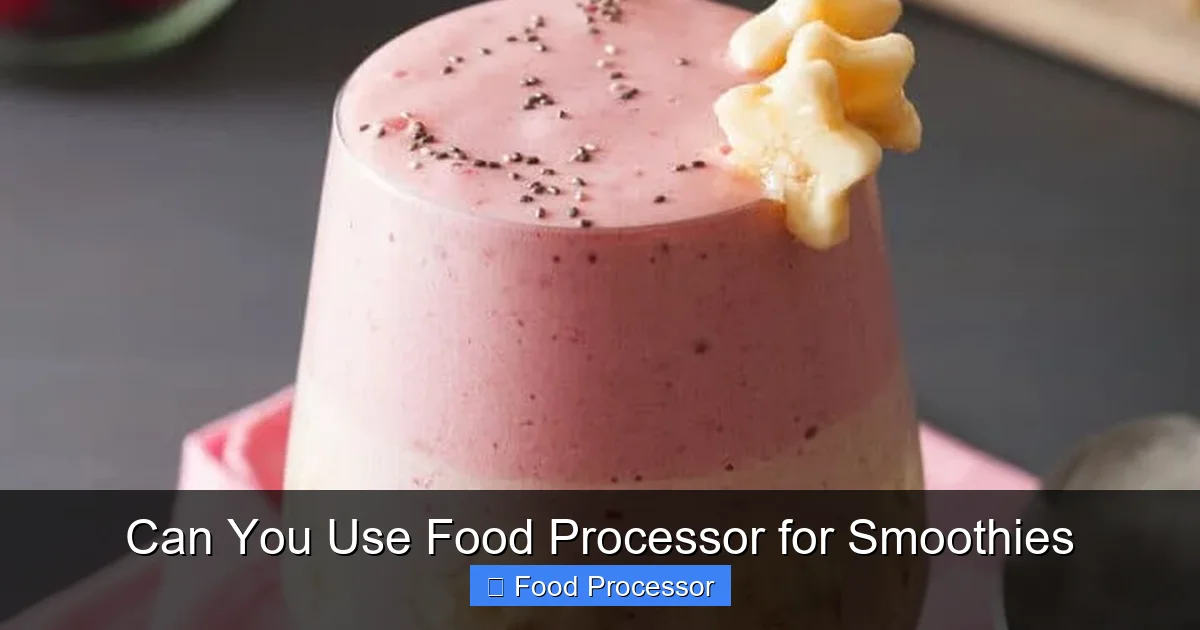
Yes, you absolutely can use a food processor for smoothies, especially if you don’t have a blender or prefer a thicker consistency. While blenders are often the go-to, a food processor can handle tough ingredients and deliver a satisfying blend. This guide will show you exactly how to achieve great results, turning your kitchen appliance into a versatile smoothie maker.
Can You Use Food Processor for Smoothies?
Have you ever found yourself craving a refreshing smoothie, only to realize your blender is tucked away, broken, or simply non-existent? It’s a common dilemma in many kitchens! The good news is, you might have another powerful tool at your disposal that can step up to the challenge: your food processor.
Yes, you can use a food processor for smoothies! While blenders are traditionally designed for this task, a food processor can absolutely create a delicious, nutritious, and satisfying smoothie. It might require a slightly different approach and offer a unique texture, but it’s a perfectly viable option. This comprehensive guide will walk you through everything you need to know about making smoothies with a food processor, from preparation to perfecting your blend. You’ll learn the best techniques, essential tips, and how to troubleshoot common issues, turning your trusty food processor into a versatile smoothie machine.
Key Takeaways
- Food Processors CAN Make Smoothies: Don’t despair if you don’t own a blender; your food processor is a capable alternative for creating delicious smoothies.
- Prioritize Liquid and Soft Ingredients First: To ensure smooth processing and prevent motor strain, always add liquids, yogurt, or soft fruits to the bottom of the work bowl before adding harder items.
- Use the Pulse Function Strategically: Instead of continuous blending, use short pulses to break down ingredients evenly and achieve the desired consistency, stopping to scrape down the sides as needed.
- Cut Ingredients into Smaller Pieces: Pre-cutting fruits, vegetables, and ice into smaller, uniform pieces makes it easier for the food processor blades to work efficiently, preventing jams and ensuring a smoother texture.
- Expect a Thicker, Chunkier Texture: Food processors generally produce a thicker smoothie with a slightly less uniform texture compared to blenders, which excel at creating ultra-smooth, aerated drinks.
- Monitor Motor Strain and Overheating: Food processors are not designed for extended continuous blending. If the motor sounds strained, give it a break to prevent overheating.
- Clean Promptly for Longevity: Disassemble and clean your food processor parts immediately after use to prevent food residue from drying and to maintain hygiene and appliance efficiency.
Understanding Your Food Processor’s Capabilities for Smoothies
Before we dive into the “how-to,” let’s quickly understand what a food processor brings to the table for smoothies. Food processors are primarily designed for chopping, slicing, grating, and kneading, making them excellent for tasks like dicing vegetables or even making dough. Their blades are usually wider and designed for cutting through solid ingredients rather than creating a vortex for liquid blending.
This means a few things for your smoothie-making adventure:
- Texture: Expect a thicker, sometimes slightly chunkier smoothie. While it won’t be as ultra-smooth and aerated as a high-powered blender might produce, it can still be wonderfully creamy.
- Liquid Requirements: Food processors need more liquid to move ingredients around effectively compared to blenders.
- Motor Strength: Most food processors have robust motors that can handle tough ingredients, which is a big plus.
Ultimately, using a food processor for smoothies is a fantastic workaround or even a preferred method for those who like a heartier, thicker drink. You might be surprised at how well a food processor can be used to make smoothies, and we’re here to show you the ropes!
Step-by-Step Guide: Making Smoothies with a Food Processor
Ready to get blending? Follow these simple steps to make a fantastic smoothie with your food processor.
1. Gather Your Ingredients
First things first, gather all your desired ingredients. A typical smoothie recipe includes:
- Liquids: Milk (dairy or non-dairy), water, juice, coconut water, or yogurt.
- Fruits: Fresh or frozen (berries, bananas, mango, pineapple, spinach). Frozen fruit is great for thickening and chilling.
- Vegetables: Spinach, kale, cucumber, carrots.
- Add-ins: Protein powder, nuts, seeds (chia, flax), nut butter, oats, sweeteners (honey, maple syrup).
- Ice: Optional, but helps with consistency and chill.
2. Prepare Your Ingredients
This is a crucial step when using a food processor for smoothies.
- Cut into Small, Uniform Pieces: Unlike a high-powered blender that can handle larger chunks, your food processor will work much better with smaller pieces. Cut all fresh fruits and vegetables into 1-inch (2.5 cm) chunks or smaller. For frozen fruits, if they are large, break them up or let them thaw slightly.
- Pre-freeze Soft Fruits: If you’re using fresh soft fruits like bananas, consider peeling and freezing them beforehand. This helps to achieve a thicker, colder smoothie without needing too much ice.
3. Assemble Your Food Processor
Ensure your food processor is properly assembled and ready to go.
- Attach the S-blade: For smoothies, you’ll always want to use the standard S-blade (also known as the chopping blade). This is the blade designed for processing ingredients into smaller pieces.
- Secure the Work Bowl and Lid: Make sure the work bowl is firmly locked onto the base, and the lid is securely latched. Your food processor won’t start if these aren’t in place for safety reasons. If you’re unsure how to use a food processor step by step, refer to your appliance manual or a general guide.
4. Add Ingredients in the Correct Order
The order in which you add ingredients is vital for efficient processing and to prevent motor strain.
- Liquids First: Always start by adding your liquid ingredients (milk, juice, water, yogurt) to the bottom of the food processor work bowl. This helps the blades move freely and creates a vortex for the other ingredients.
- Soft Ingredients Next: Follow with soft fruits (fresh bananas, berries) and leafy greens (spinach, kale).
- Harder Ingredients and Ice Last: Add frozen fruits, denser vegetables, nuts, seeds, protein powder, and finally, ice. If you’re adding ice, do it gradually. Crushing ice can be tough on some food processors, so if you frequently add ice to your smoothies, you might want to look for a food processor with good ice-crushing capabilities.
5. Process for Smoothness
Now it’s time to blend!
- Use the Pulse Function: Instead of holding down “on,” use the “pulse” button. Pulse in short bursts (2-5 seconds at a time). This allows the ingredients to fall back down towards the blade and prevents overheating the motor.
- Scrape Down Sides: After several pulses, open the lid and use a spatula to scrape down any ingredients clinging to the sides of the work bowl. This ensures everything gets evenly processed. Repeat pulsing and scraping until you reach your desired consistency.
- Be Patient: This process might take a bit longer than with a blender, especially if you’re aiming for a very smooth texture.
6. Adjust Consistency
If your smoothie is too thick or not blending well:
- Add More Liquid: Slowly add a tablespoon or two of your liquid of choice and continue pulsing until you reach the desired consistency.
- Troubleshooting Blending Issues: If it’s still struggling, check for large chunks that might be stuck. Break them up or remove them if necessary.
7. Serve and Enjoy!
Once your smoothie reaches the perfect consistency, pour it into a glass and enjoy immediately. Smoothies are best consumed fresh!
Tips for Success When Using a Food Processor for Smoothies
Here are some extra tips to help you get the best results:
- Don’t Overfill: Food processors have a maximum liquid fill line. Respect this line, especially when making smoothies, to prevent leaks and ensure efficient blending. Overfilling also puts more strain on the motor.
- Listen to Your Machine: If your food processor’s motor sounds like it’s struggling or overheating, stop immediately. Give it a short break before resuming. While robust, food processors aren’t designed for the continuous, high-speed blending that blenders are. Knowing how long can you leave a food processor running is crucial to prolonging its life.
- Use a Tamper (If Available): Some food processors come with a food pusher or tamper that fits through the feed tube. This can be useful for pushing ingredients down towards the blade while the machine is running (with the lid securely in place), minimizing the need to stop and scrape.
- Consider Temperature: Frozen ingredients are key for a cold, thick smoothie. If you’re using mostly fresh ingredients, add a handful of ice cubes.
- Batch Size Matters: Food processors work best with a decent amount of ingredients for smoothies – too little and the blade just spins, too much and it struggles. Aim for at least half the work bowl capacity, but don’t exceed the max fill line.
- Clean Promptly: As soon as you’re done, disassemble the parts and wash them. This prevents food from drying onto the blades and bowl, making cleanup much easier. Check your model, as many food processor parts can go in the dishwasher.
Food Processor vs. Blender for Smoothies: A Quick Comparison
While we’ve established that you *can* use a food processor for smoothies, it’s worth understanding the differences between it and a traditional blender.
Blender Strengths:
Visual guide about Can You Use Food Processor for Smoothies
Image source: mariascondo.com
Visual guide about Can You Use Food Processor for Smoothies
Image source: i.pinimg.com
- Designed for liquids and creating smooth, uniform textures.
- Creates a vortex that pulls ingredients into the blades.
- Better for crushing large amounts of ice and producing icy drinks.
- Usually faster for very smooth purees.
Food Processor Strengths:
- Excellent for thicker, chunkier textures.
- Can handle tougher ingredients like hard vegetables or dense nuts more easily.
- More versatile for other kitchen tasks (chopping, slicing, grating).
- A great alternative if a blender isn’t available.
If you’re buying an appliance primarily for smoothies, a blender is often the best choice. However, if you already own a food processor and want to expand its utility, or prefer a thicker smoothie, it’s a fantastic option. In fact, many people specifically look for the best food processor for smoothies that can handle all their blending needs.
Troubleshooting Common Issues
Even with the best preparation, you might encounter a few hiccups. Here’s how to fix them:
1. My Smoothie Isn’t Blending Smoothly (Too Chunky)
- Solution: Add more liquid, 1-2 tablespoons at a time, and continue pulsing. Ensure your ingredients were cut into small pieces to begin with. Stop and scrape down the sides more frequently.
2. The Food Processor is Stalling or Making a Grinding Noise
- Solution: This usually means the motor is overloaded. Turn off the machine, unplug it, and remove some of the ingredients, especially harder ones like ice or frozen fruit. Cut remaining ingredients into smaller pieces. Add more liquid.
3. My Smoothie is Too Warm
- Solution: You likely didn’t use enough frozen ingredients or ice. For your next smoothie, use more frozen fruit or increase the amount of ice added. Remember, for the best results, you want a food processor for crushing ice effectively.
4. Liquid is Leaking from the Food Processor
- Solution: Ensure the work bowl and lid are securely locked in place. Check that you haven’t exceeded the maximum liquid fill line on your work bowl. Some older food processors or those with worn seals might leak, in which case replacement parts might be needed.
Conclusion
So, can you use a food processor for smoothies? Absolutely! While it might not be the conventional choice, your food processor is a powerful and capable appliance that can whip up delicious, healthy smoothies with a slightly different, often thicker, texture. By following the right steps – preparing ingredients properly, adding them in the correct order, and using the pulse function – you can successfully expand the utility of your food processor. Don’t let the absence of a blender stop you from enjoying a refreshing homemade smoothie. Experiment with different recipes and enjoy the versatility your food processor offers!
