


It can be frustrating when your Cuisinart food processor won’t turn on. This guide walks you through common culprits, such as power supply issues, improper assembly, or activated overload protection. By following our step-by-step troubleshooting, you can diagnose and fix many problems, ensuring your food processor is back to making meal prep easy and efficient.
Food Processor Won T Turn on Cuisinart
Having your trusty Cuisinart food processor suddenly refuse to turn on can bring your kitchen activities to a grinding halt. One moment you’re ready to chop, slice, or mix, and the next, silence. It’s a common and incredibly frustrating issue, especially when you have a recipe that relies heavily on its efficiency. But don’t worry, many problems that cause a Cuisinart food processor won’t turn on can be resolved with a bit of troubleshooting. You don’t always need to rush out for a costly repair or replacement.
This comprehensive guide will walk you through all the common reasons your Cuisinart food processor might not be starting up. We’ll provide clear, step-by-step instructions to help you diagnose the issue, perform necessary checks, and hopefully get your appliance humming back to life. From simple power checks to intricate safety interlocks and even potential motor issues, we’ll cover it all. By the end of this guide, you’ll have a clear understanding of what might be wrong and what actions you can take. Let’s get your Cuisinart food processor back in action!
Key Takeaways
- Always Prioritize Safety: Before attempting any troubleshooting, ensure your Cuisinart food processor is unplugged from the wall outlet to prevent electrical shock.
- Check the Power Source First: The most common reason a food processor won’t turn on is a simple power issue, so test the outlet, cord, and circuit breaker before looking elsewhere.
- Proper Assembly is Crucial: Cuisinart food processors have sophisticated safety interlock systems; confirm the bowl, lid, and pusher are all correctly aligned and locked into place.
- Understand Overload Protection: If the motor suddenly stops or fails to start, the overload protection might have been triggered. Unplug the unit and let it rest for a while before trying again.
- Inspect for Visible Damage: Carefully examine the power cord, plug, bowl, lid, and blade for any cracks, bends, or wear that could be preventing the appliance from operating.
- Consult Your User Manual: Your Cuisinart model’s specific user manual is an invaluable resource for troubleshooting unique features or assembly instructions.
Safety First: Before You Begin Any Troubleshooting
Before you touch anything or begin poking around your appliance, your safety is paramount. Working with electrical appliances always carries a risk. Please follow these crucial safety steps to prevent injury or further damage to your Cuisinart food processor.
Unplug the Appliance
This is the golden rule for any appliance troubleshooting. Always ensure your Cuisinart food processor is completely disconnected from the power source. Simply switching it off isn’t enough, as electricity can still be present in the cord and plug. Pull the plug directly from the wall socket. This eliminates the risk of electrical shock while you’re inspecting components.
Clear the Work Area
Make sure your workspace is clean, dry, and free from any spills or clutter. A stable, well-lit surface is ideal for safely examining your food processor. Remove any food, liquids, or sharp tools from around the unit.
Common Reasons Your Cuisinart Food Processor Won’t Turn On
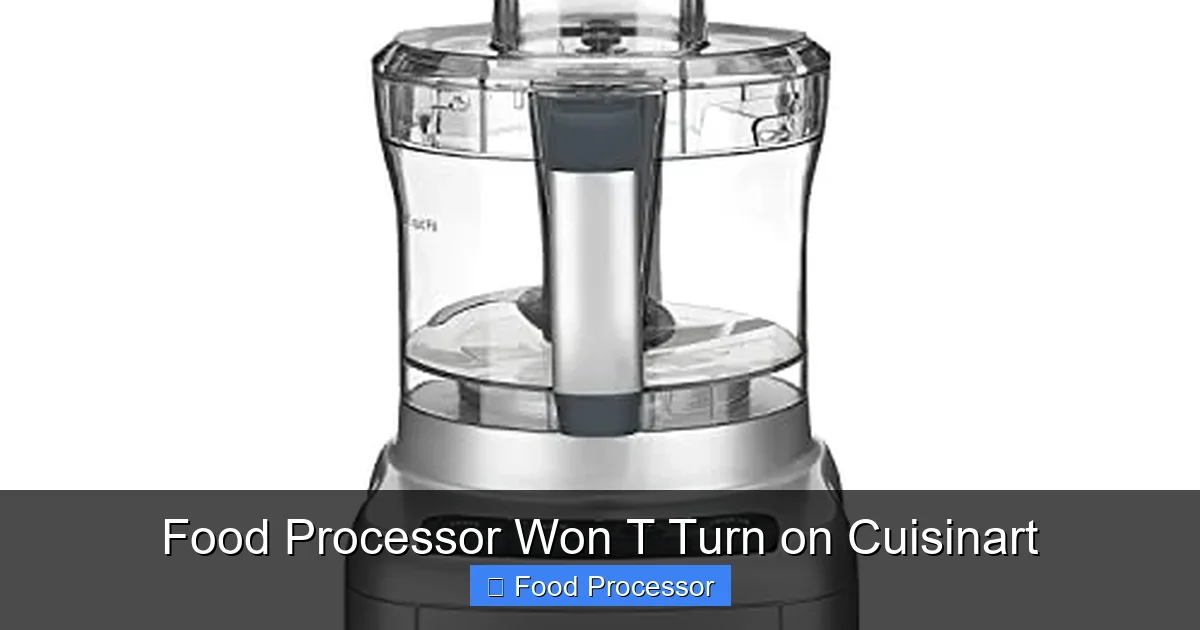
Visual guide about Food Processor Won T Turn on Cuisinart
Image source: m.media-amazon.com
When your Cuisinart food processor won’t turn on, it’s usually due to one of several common culprits. Understanding these issues can help you pinpoint the problem more quickly.
Power Supply Issues
This is often the simplest and most overlooked reason. No power, no operation. This could range from an unplugged cord to a tripped circuit breaker or a faulty outlet. A power surge could also cause issues, or even a damaged power cord itself.
Improper Assembly (Safety Interlock)
Cuisinart food processors, like most modern appliances, are equipped with sophisticated safety interlock systems. These mechanisms are designed to prevent the unit from operating if all components – the bowl, lid, and sometimes the pusher – are not correctly assembled and locked into place. If any part is misaligned or loose, the food processor simply won’t turn on. This is a very common reason why your Cuisinart food processor isn’t turning on. If you’re wondering, “why is my Cuisinart food processor not working?”, this is often the first place to check after power. For general guidance, you can also refer to our article on what to do if your food processor won’t turn on.
Overload Protection Activated
Cuisinart food processors have an internal thermal or electrical overload protection system. If the motor is overworked (e.g., trying to process too much food at once, or very hard ingredients) or if it overheats, this system automatically shuts down the unit to prevent damage. This is a safety feature to protect the motor from burning out.
Damaged Components (Blade, Bowl, Lid)
Physical damage to critical parts like the processing bowl, the lid, or even the blade assembly can prevent the food processor from turning on. Cracks, chips, or warping can interfere with the safety interlock mechanisms or prevent proper alignment.
Motor Problems
While less common, if none of the above issues are present, there might be an internal motor problem. This could be due to wear and tear, a manufacturing defect, or an electrical fault within the motor itself. This typically requires professional repair or replacement.
Step-by-Step Troubleshooting Guide
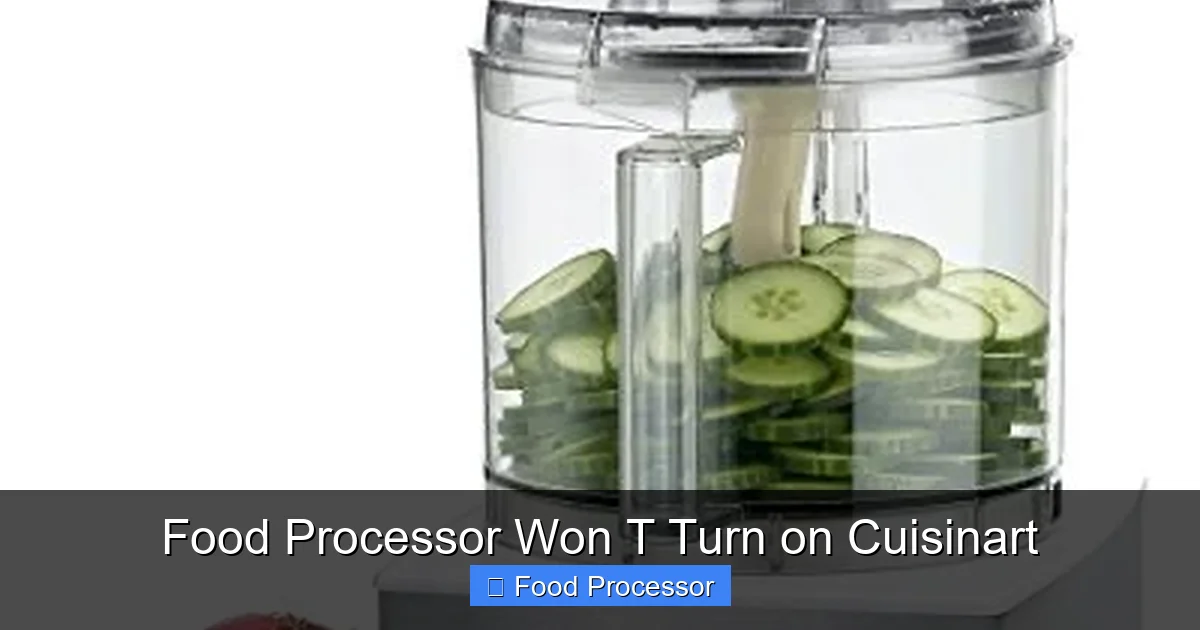
Visual guide about Food Processor Won T Turn on Cuisinart
Image source: m.media-amazon.com
Now that you know the potential issues, let’s go through a systematic approach to troubleshoot your Cuisinart food processor. Remember to keep the unit unplugged until instructed to test.
Step 1: Check the Power Source
Start with the basics. Many times, the solution is much simpler than you think.
Test the Outlet
Plug another small appliance (like a lamp or a phone charger) into the same outlet where your Cuisinart food processor was plugged in. If the other appliance works, you know the outlet is fine. If it doesn’t, try another outlet in your kitchen. This quickly tells you if the problem is with the outlet or your food processor.
Check the Power Cord and Plug
Carefully examine the power cord for any visible signs of damage such as cuts, frayed wires, kinks, or burn marks. Also, inspect the prongs of the plug for bending or corrosion. A damaged cord is a serious safety hazard and can prevent power from reaching the appliance. If you find any damage, do not use the food processor; the cord will need to be replaced.
Reset the Circuit Breaker
If other appliances on the same circuit are also not working, your kitchen’s circuit breaker might have tripped. Locate your home’s electrical panel (usually in a basement, garage, or utility closet) and look for a switch that is in the “off” position or halfway between “on” and “off.” Flip it firmly to the “off” position, then back to “on.”
Step 2: Verify Proper Assembly (The Safety Interlock System)
This is arguably the most frequent reason a Cuisinart food processor won’t turn on. The safety interlock system is designed to prevent the blades from spinning unless every component is securely in place. If you’re trying to figure out why is Cuisinart food processor not working, this is a prime suspect. Each model might have slight variations, so pay attention to your specific unit.
Bowl Placement
Ensure the processing bowl is correctly seated on the motor base. There’s usually a specific way it aligns and twists to lock into position. You might hear a click or feel it snap into place. Many Cuisinart models have an arrow or indicator on the bowl and base that needs to line up.
Lid Alignment and Locking
The lid is the next crucial piece. It also needs to be perfectly aligned and locked. Look for arrows or tabs on the lid and bowl that indicate the correct alignment. You often need to twist the lid clockwise until it clicks and locks into place. If the lid is even slightly off, the interlock won’t engage.
Pusher/Feed Tube (If Applicable)
Some Cuisinart models require the food pusher to be inserted into the feed tube, or at least the feed tube cover to be in place, for the safety mechanism to engage. Try inserting the pusher fully to see if that resolves the issue.
Blade Attachment
While not always part of the *initial* turn-on interlock, ensuring the blade or disc is correctly seated on the drive shaft within the bowl is important. An improperly seated blade might prevent the lid from closing properly, thereby affecting the interlock.
Model-Specific Locks
Some Cuisinart models have additional safety features, like a handle lock or specific button sequences. Check your user manual for any unique assembly requirements for your particular model. If you need a refresher on how to put it together, an article on how to assemble a food processor step by step can be very helpful.
Practical Tip: Disassemble your food processor completely, then reassemble it slowly and carefully, paying close attention to each click and alignment indicator. Sometimes, just a slight twist or nudge is all it takes.
Step 3: Reset Overload Protection
If your food processor stopped mid-task or simply won’t start after a heavy-duty processing job, the overload protection might be the culprit.
Unplug and Wait
Unplug the food processor from the wall outlet. Leave it unplugged for about 10-15 minutes. This allows the motor to cool down and the internal reset mechanism to disengage.
Reduce Load
If the overload was due to too much or too hard food, remove some of the ingredients from the bowl before trying to operate it again. Process in smaller batches.
Step 4: Inspect for Visible Damage
Even minor damage can sometimes be a showstopper for your Cuisinart food processor.
Cord and Plug
Re-check these thoroughly, as mentioned in Step 1. Frayed wires or a bent prong can cause a no-start situation.
Bowl, Lid, and Blade
Look for any cracks, chips, or deformities, especially around the locking tabs or where the bowl meets the base. Even small imperfections can prevent the safety interlock from engaging. Examine the drive shaft and the blade assembly for any obstructions or signs of wear that might hinder its movement.
Motor Base
Check the bottom of the motor base for any signs of liquid damage, burnt smell, or loose components. If you notice a burning smell, immediately unplug the unit and do not attempt to use it again.
Step 5: Test with Minimal Components
Sometimes, a specific accessory might be the problem. Try this:
* Ensure the bowl is properly locked.
* Ensure the blade is correctly seated.
* Ensure the lid is properly locked *without* the pusher inserted (if your model allows, some require it).
* Plug it in and try to pulse it on.
If it works this way, gradually add other components (like the pusher) to identify which part might be causing the issue.
Step 6: Consult the User Manual
This might seem obvious, but your Cuisinart user manual is a treasure trove of specific information for your model. It often includes a dedicated troubleshooting section that can address unique features or common problems specific to your appliance. If you’ve lost it, Cuisinart usually provides digital versions on their official website.
When to Seek Professional Help or Consider Replacement
If you’ve gone through all the troubleshooting steps and your Cuisinart food processor still won’t turn on, it might be time for more drastic measures. For a deeper dive into solutions, check out our guide on how to fix a food processor that is not turning on.
Persistent Issues
If the problem persists after thorough troubleshooting, or if you’re uncomfortable opening up the appliance further, professional help is the best route. Cuisinart offers customer support and authorized repair centers.
Burning Smell or Smoke
If you ever smell burning plastic or see smoke coming from your food processor, immediately unplug it and discontinue use. This indicates a serious electrical or motor fault that requires professional attention and could be a fire hazard.
Warranty Status
Check if your Cuisinart food processor is still under warranty. If it is, contacting Cuisinart customer service should be your first step. Attempting repairs yourself might void the warranty.
Age of the Appliance
If your food processor is very old and has seen many years of heavy use, the cost of repair might outweigh the cost of a new one. Cuisinart offers a range of models, and sometimes upgrading can be more economical in the long run.
Tips for Preventing Future Issues
A little preventative maintenance can go a long way in ensuring your Cuisinart food processor continues to work flawlessly for years to come.
Proper Assembly
Always take a moment to ensure all parts are correctly assembled and locked into place before turning the unit on. This prevents unnecessary strain on the interlock system and ensures safe operation.
Don’t Overload
Avoid filling the processing bowl beyond its maximum capacity or trying to process extremely hard ingredients in large quantities. This can overwork the motor and trigger the overload protection. Process in smaller batches if necessary.
Regular Cleaning
Keep your food processor clean. Food particles stuck in the locking mechanisms or around the drive shaft can prevent proper assembly and cause issues. Always clean the bowl, lid, and blades thoroughly after each use.
Store Properly
Store your food processor in a dry, safe place where it won’t be accidentally knocked over or have heavy items placed on it. Ensure the cord isn’t kinked or pinched during storage.
Conclusion
It’s definitely a bummer when your Cuisinart food processor won’t turn on. But as you’ve learned, many of these issues are solvable right at home. By systematically checking the power supply, meticulously verifying assembly, understanding the overload protection, and inspecting for damage, you can likely get your Cuisinart food processor back to making your kitchen tasks a breeze. Remember, safety is always your top priority, so never hesitate to unplug the appliance and consult your manual. If all else fails, a professional repair or considering a new model might be the next best step. Happy cooking!
