
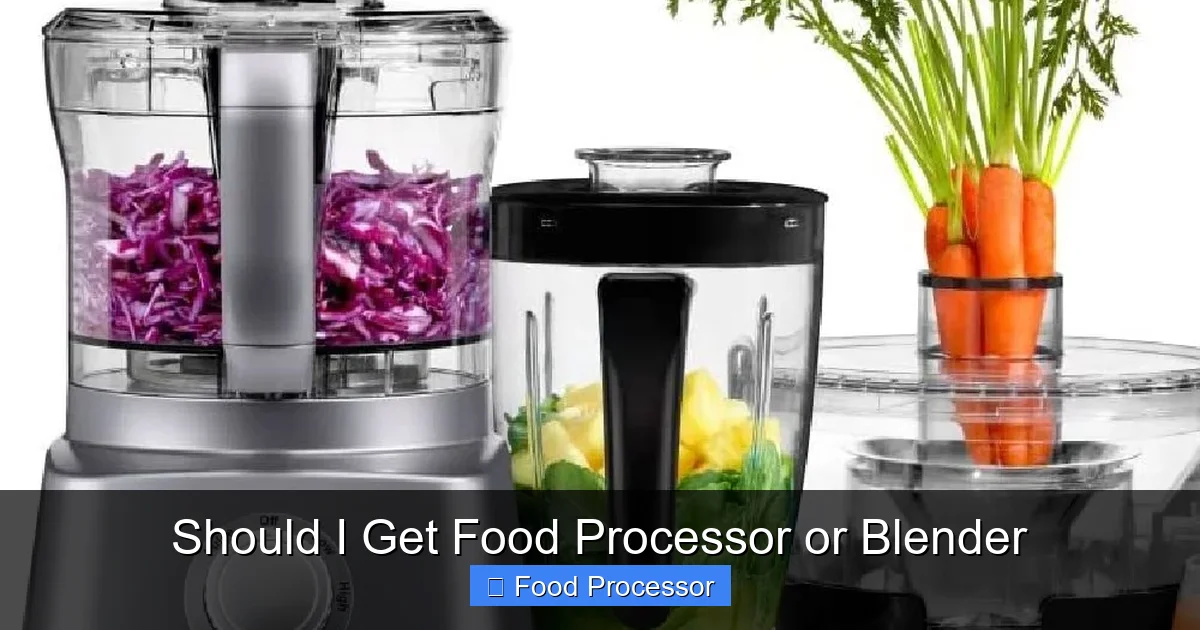
Deciding whether to get a food processor or blender can be tricky, as both are powerful kitchen appliances. A food processor excels at heavy-duty tasks like chopping, slicing, and kneading dough, producing thicker, chunkier results. In contrast, a blender is perfect for liquids, creating smooth purees, smoothies, and silky soups with ease. Your choice depends primarily on the types of recipes you make most often.
Should I Get Food Processor or Blender?
Ah, the classic kitchen conundrum! You’re standing in the appliance aisle (or browsing online), staring at a sleek food processor and a powerful blender, wondering which one will be your next culinary companion. It’s a common dilemma. Both promise to make your life easier in the kitchen, but they’re not interchangeable. Choosing between a food processor or blender can feel like a big decision, especially if you’re new to serious cooking or have limited counter space.
Don’t worry, you’re not alone. Many home cooks struggle with this choice. The good news is, by the end of this guide, you’ll have a clear understanding of what each appliance does best. We’ll break down their core functions, explore their unique features, and help you decide which one perfectly suits your cooking style and needs. We’ll make sure you understand the key differences, so you can confidently answer the question: should I get a food processor or blender?
Key Takeaways
- Understand Core Functions: A food processor is designed for chopping, slicing, shredding, and kneading, making it ideal for meal prep and baking tasks. A blender specializes in liquefying ingredients for smoothies, purees, and sauces.
- Blade and Bowl Design Matter: Food processors use versatile S-blades and various discs in a wide, short bowl, perfect for solid ingredients. Blenders have fixed, blunt blades in a tall, narrow jar, optimized for creating vortexes to process liquids.
- Consider Texture Outcomes: If you need chunky salsas, finely diced vegetables, or stiff dough, a food processor is your best bet. For perfectly smooth soups, creamy sauces, or frosty drinks, a blender is superior.
- Assess Your Cooking Habits: Evaluate the types of recipes you prepare most frequently. Are you often chopping vegetables, making pie crusts, or shredding cheese? Or are you more into daily smoothies, pureed soups, and silky dressings?
- Think About Overlap and Limitations: While some tasks can be managed by either (e.g., making a rough pesto), neither appliance is a perfect substitute for the other’s primary functions. Misusing them can lead to suboptimal results or appliance strain.
- Explore Combo Units: If your cooking needs are balanced between both solid and liquid processing, a combo unit offering interchangeable bases or jars might be a cost-effective and space-saving solution.
- Prioritize Based on Need: If budget or space is a concern, choose the appliance that aligns with your most critical kitchen tasks. Many kitchens eventually benefit from having both for maximum versatility.
Step 1: Understand What a Food Processor Is (And What It Does Best)
Let’s start with the workhorse of meal prep: the food processor. Think of it as your personal kitchen assistant for all things chopping, slicing, shredding, and even kneading. It’s designed to handle solid ingredients with precision and power.
What Defines a Food Processor?
- Wide, Short Bowl: Unlike a blender’s tall jar, a food processor has a wide, relatively shallow bowl. This design allows ingredients to spread out, giving the blades more space to work evenly.
- Versatile Blades and Discs: The most recognizable feature is the “S-blade” (also called a chopping blade), which sits at the bottom of the bowl. But food processors also come with an array of interchangeable discs for slicing, shredding, grating, and julienning.
- Powerful Motor, Lower RPM: Food processors often have robust motors designed for torque. They don’t spin as fast as blenders, which is crucial for precise chopping and shredding without liquefying.
- Chute for Adding Ingredients: Most models have a feed chute on the lid, allowing you to add ingredients like carrots or cheese while the machine is running, straight onto a slicing or shredding disc.
Typical Tasks for a Food Processor:
- Chopping and Dicing: Onions, garlic, herbs, nuts, vegetables – you name it. A food processor can chop them uniformly in seconds, saving you tons of time.
- Slicing and Shredding: With the right disc, you can perfectly slice cucumbers, shred cabbage for coleslaw, or grate cheese. This is where a food processor truly shines for meal prep.
- Making Dough: Yes, many food processors can knead bread dough, pie crusts, or cookie dough thanks to their powerful motor and appropriate blade (sometimes a special dough blade).
- Creating Dips and Spreads: Think chunky salsas, pestos, hummus, and nut butters. The S-blade works wonders for combining and breaking down ingredients into the desired consistency. For instance, if you’re wondering should I make hummus in a blender or food processor, the latter typically gives a better, thicker texture.
- Pureeing Thick Mixtures: While it can puree, it’s best for thicker purees like baby food, refried beans, or thick sauces, rather than super smooth liquids.
In short, if your cooking involves a lot of chopping, slicing, and preparing solid ingredients for baking or meals, a food processor is an invaluable tool. It significantly speeds up prep time for complex dishes.
Step 2: Understand What a Blender Is (And What It Does Best)
Now, let’s turn our attention to the blender, the king of smooth and liquid creations. Where the food processor handles solids, the blender excels at transforming ingredients into silky smooth beverages and sauces.
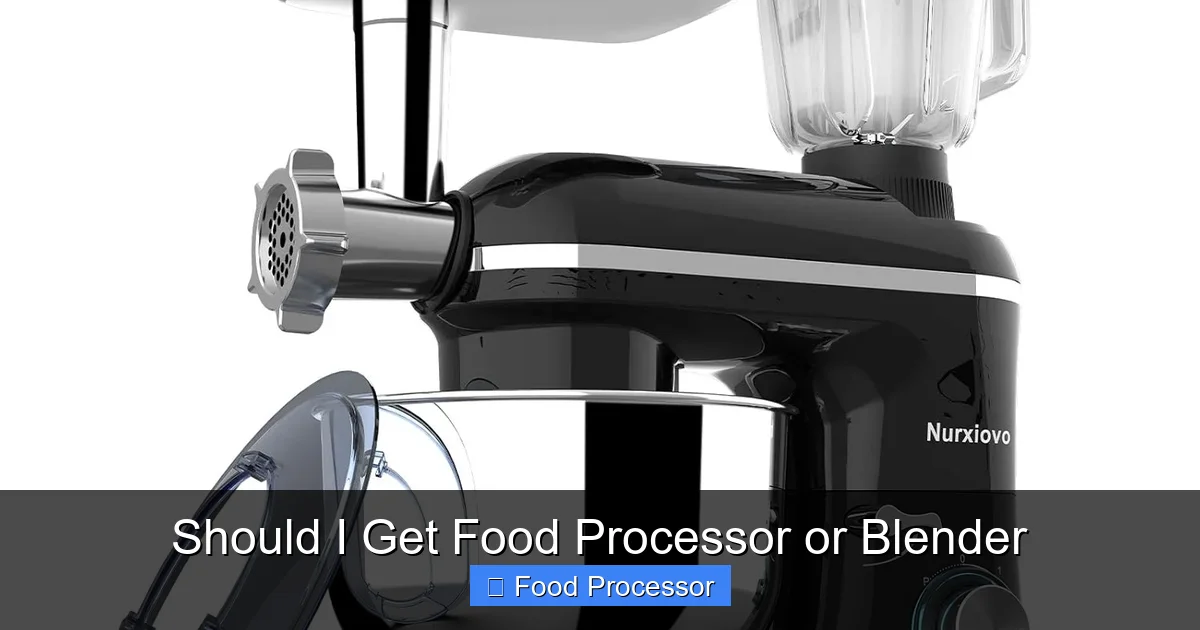
Visual guide about Should I Get Food Processor or Blender
Image source: images-na.ssl-images-amazon.com
What Defines a Blender?
- Tall, Narrow Jar: Blenders typically feature a tall, tapered jar (often made of glass or durable plastic). This shape is crucial for creating a vortex that pulls ingredients down into the blades, ensuring a smooth blend.
- Fixed, Sharp Blades: Blenders usually have a set of fixed blades at the bottom of the jar. These blades are designed to pulverize ingredients at high speeds.
- High-Speed Motor: Blenders are all about speed. Their motors spin at very high RPMs, generating the power needed to break down ice, tough fruits, and fibrous vegetables into liquid form.
- Often Heat-Resistant Jars: Many blender jars are designed to handle hot liquids, which is essential for making pureed soups directly after cooking.
Typical Tasks for a Blender:
- Smoothies and Shakes: This is arguably the blender’s most famous role. From green smoothies to protein shakes, it creates perfectly smooth, drinkable concoctions.
- Pureed Soups: For creamy, lump-free soups like butternut squash or tomato soup, a blender is unmatched. If you’re pondering should I use a blender or food processor for soup, the blender consistently delivers a superior silky texture.
- Sauces and Dressings: From vinaigrettes to creamy pasta sauces and Hollandaise, blenders can emulsify ingredients beautifully, creating smooth and consistent textures.
- Crushing Ice: A powerful blender can turn ice cubes into snow in seconds, perfect for frozen drinks or chilling beverages.
- Nut Milks: Making your own almond milk or other plant-based milks is a breeze with a blender.
If your daily routine includes morning smoothies, or you frequently prepare creamy soups and smooth sauces, a blender will be your go-to appliance. It’s the champion of liquefaction.
Step 3: Key Differences: Food Processor vs. Blender
While both are motor-driven kitchen appliances with blades, their design and functionality lead to fundamentally different outcomes. Understanding these distinctions is crucial when deciding if you need a food processor or blender.
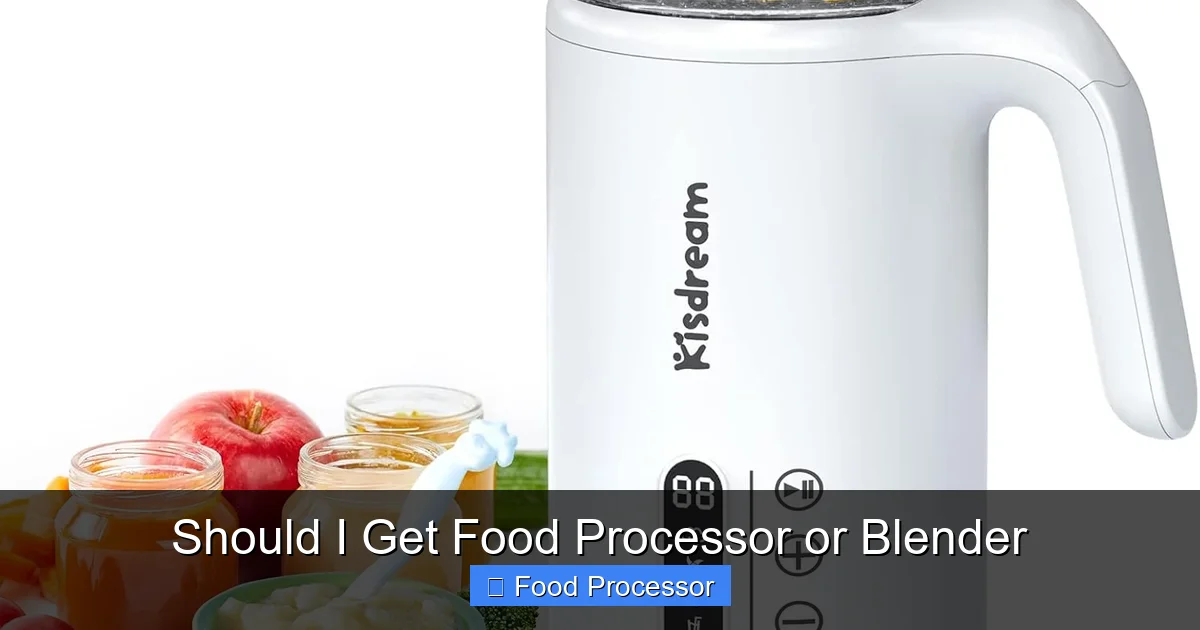
Visual guide about Should I Get Food Processor or Blender
Image source: m.media-amazon.com
Blade Design and Action:
- Food Processor: The S-blade ‘chops’ and ‘cuts’ through ingredients. Its wider sweep in the bowl processes items more horizontally. The various discs ‘slice’, ‘shred’, and ‘grate’. This is a key reason why a food processor is different from a blender in terms of utility.
- Blender: The fixed blades ‘pulverize’ and ‘liquefy’. They are designed to create a powerful vortex that continuously pulls ingredients down into the blades, ensuring everything is processed into a uniform liquid.
Bowl/Jar Shape and Size:
- Food Processor: Wide, short bowl allows for even processing of larger, more solid items without turning them into a paste too quickly. You can easily remove processed ingredients.
- Blender: Tall, narrow jar promotes the creation of a vortex, which is essential for smoothly blending liquids. It’s not ideal for dry chopping as ingredients tend to get stuck above the blades.
Motor Speed and Power Delivery:
- Food Processor: Often emphasizes torque over sheer speed. This allows it to power through dense ingredients for chopping, kneading, and shredding without overheating.
- Blender: Built for high RPMs to break down tough fibers and ice quickly, resulting in very smooth, liquid textures.
Texture Outcome:
- Food Processor: Excels at producing various textures from chunky to finely minced, shredded, or sliced. It gives you control over the final consistency of solids.
- Blender: Primarily designed for a smooth, homogenous liquid texture. While some can do a ‘pulse’ for a coarser chop, it’s generally not their strength for solid ingredients.
Step 4: When to Choose a Food Processor
You should lean towards a food processor if your kitchen adventures frequently involve:
- Extensive Meal Prep: If you spend a lot of time chopping vegetables for stir-fries, soups, or salads, a food processor will be a huge time-saver.
- Baking: Making pie crusts, cookie dough, or even bread dough is much easier with a food processor, especially one with a dedicated dough blade.
- Making Dips and Spreads: For hummus, pesto, salsas (chunky!), or nut butters that require a thicker consistency, the food processor is ideal.
- Shredding and Slicing: If you buy block cheese and want to shred it yourself, or need to slice potatoes and onions uniformly, the discs are invaluable.
- Meat Processing: Making homemade sausage or mincing meat for burgers is within a food processor’s capabilities.
Consider a food processor if you crave efficiency in chopping, shredding, and mixing solid or semi-solid ingredients. It’s the multi-tasker for hands-on cooking.
Step 5: When to Choose a Blender
Opt for a blender if your culinary routine revolves around:
- Daily Smoothies and Shakes: If you’re a health enthusiast who regularly makes fruit smoothies, green smoothies, or protein shakes, a blender is non-negotiable.
- Creamy Soups and Sauces: For achieving that restaurant-quality silky texture in your pureed soups, creamy pasta sauces, or gravies, a blender is superior.
- Baby Food: Creating perfectly smooth purees for infants is a primary use for many blenders.
- Nut Milks and Dressings: If you like making your own plant-based milks or emulsified salad dressings from scratch, the blender provides the necessary power and vortex.
- Frozen Drinks: Margaritas, daiquiris, or iced coffees are best made with a blender capable of crushing ice efficiently.
Choose a blender if smooth, liquid, or pureed consistency is your main goal. It’s the specialist for drinks and liquid-based recipes.
Step 6: Consider Your Cooking Style and Needs
The ultimate decision between a food processor or blender comes down to your personal cooking habits. Ask yourself these questions:
What Do You Cook Most Often?
- Are you a baker who loves making doughs and crumbles? Food processor.
- Do you love making big batches of salsa or pesto? Food processor.
- Is a daily smoothie part of your morning routine? Blender.
- Do you frequently make creamy vegetable soups? Blender.
- Do you dread chopping onions and garlic? Food processor.
Space and Budget Considerations:
- Both appliances take up counter space. If space is tight, consider the size of each.
- If your budget allows for only one, choose the one that performs your most frequent and most time-consuming tasks.
What About Combo Units?
Some brands offer appliances that try to do both, often a blender base with interchangeable food processor attachments. These can be a good compromise if you have balanced needs and limited space. A good example is understanding what is the best food processor and blender combo, which could be a convenient solution for many kitchens.
Step 7: Understanding Overlap and Limitations (When One Can Substitute for the Other)
While a food processor and blender are distinct, there’s a slight overlap in their capabilities. However, it’s important to understand the limitations.
Where a Food Processor Might Pinch-Hit for a Blender:
- Rough Purees: A food processor can make a thick, somewhat lumpy puree, like for a chunky salsa or a very thick soup base. It won’t achieve the silky smoothness of a blender.
- Small Amounts of Liquid: If you have a small amount of liquid to blend with solids (e.g., a thick dressing), a food processor can sometimes manage, but be careful not to overfill, as its bowl is not designed to contain large volumes of liquid at high speeds without leaking.
- It’s worth noting that while a food processor can be used in place of a blender for certain tasks, the results will rarely be identical.
Where a Blender Might Pinch-Hit for a Food Processor:
- Rough Chopping: Using the ‘pulse’ function on a powerful blender can sometimes achieve a rough chop for ingredients like onions or nuts. However, it’s easy to over-process and turn them into a paste or liquid.
- Small Batches of Dips: For very small batches of things like pesto or hummus where the ingredients are mostly soft and wet, a blender might work, but it will be smoother than a food processor version.
The key takeaway here is that while they can sometimes cover for each other in a pinch, neither will perform the other’s primary tasks as effectively or efficiently. Trying to blend a large batch of thick dough in a blender can damage the motor, and attempting to get a perfectly smooth smoothie in a food processor will likely leave you with chunks.
Step 8: Making Your Final Decision
Now, let’s bring it all together. To help you make the best choice between a food processor or blender, consider these scenarios:
Choose a Food Processor if:
- You regularly chop, slice, shred, or grate large quantities of vegetables.
- You love baking and want help with doughs and crusts.
- You frequently make homemade dips, salsas, or nut butters with a thicker texture.
- You want to make your own baby food or homemade breadcrumbs.
- You prioritize hands-on, ingredient-focused cooking and meal prep.
Choose a Blender if:
- You start your day with smoothies or protein shakes.
- You often make creamy soups, smooth sauces, or dressings.
- You want to crush ice for frozen drinks.
- You need to make homemade nut milks or fruit purees.
- You prioritize speed and ultra-smooth results for liquid-based recipes.
What if I can only get one?
If you genuinely cook an equal amount of solid-prep meals and liquid-based concoctions, and space/budget are major concerns, a high-quality combo unit might be your best bet. However, if forced to choose just one, consider which task you find most cumbersome to do manually. If chopping mountains of vegetables is your bane, get a food processor. If struggling with a lumpy soup is your biggest frustration, go for a blender.
Conclusion
Deciding between a food processor or blender doesn’t have to be a source of stress. Both are fantastic tools that can revolutionize your kitchen, but they serve different masters. The food processor is your prep master, excelling at chopping, slicing, and kneading. The blender is your liquid wizard, perfect for smoothies, soups, and smooth sauces.
By understanding their unique strengths and aligning them with your personal cooking style, you can confidently choose the appliance that will bring the most joy and efficiency to your kitchen. Happy cooking!
