

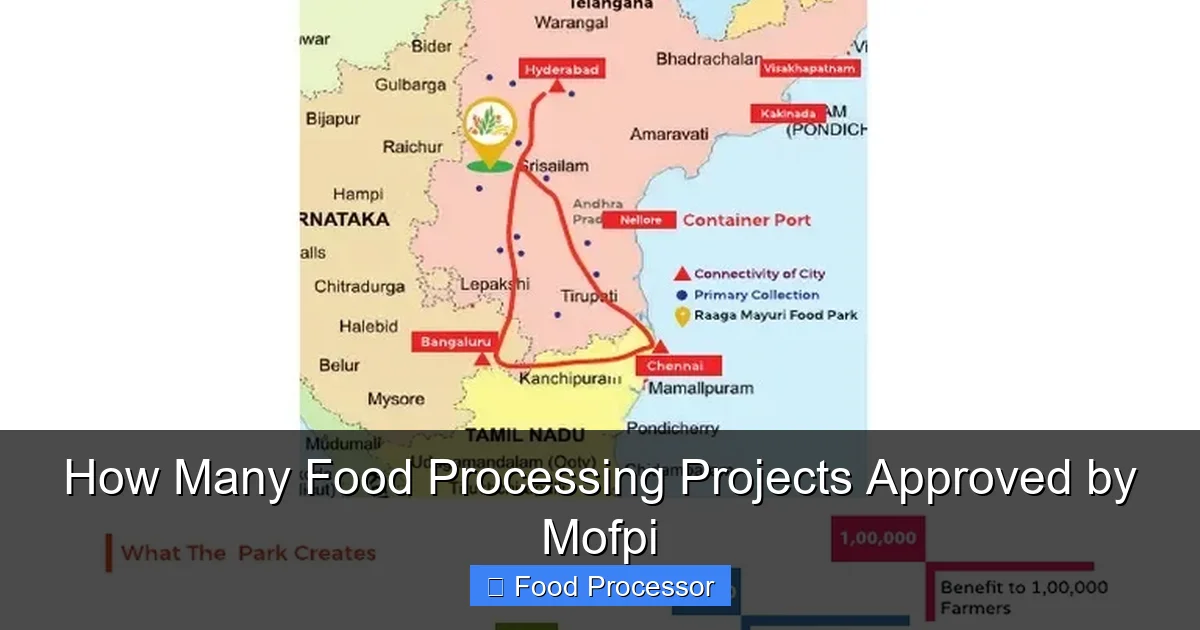
Navigating the world of food processing projects and government approvals can seem complex, but understanding the Ministry of Food Processing Industries (MoFPI) is key. This guide helps you discover how many food processing projects approved by MoFPI are out there, explains the various schemes like PMKSY and PLI, and outlines the crucial steps for project approval. It also provides practical tips for aspiring entrepreneurs looking to contribute to India’s thriving food processing sector.
How Many Food Processing Projects Approved by MoFpi
Hello there, aspiring food entrepreneur or curious mind! Have you ever wondered about the bustling world behind your favorite packaged foods? Or perhaps you’re looking to launch your own innovative food product and need to understand the landscape of government support? If so, you’ve landed in the right place!
The food processing sector in India is growing at an incredible pace. It plays a vital role in linking agriculture to manufacturing, creating jobs, and ensuring food security. At the heart of this growth is the Ministry of Food Processing Industries (MoFPI). This government body is instrumental in promoting and developing the sector through various schemes and initiatives. One of the most common questions people ask is: “how many food processing projects approved by MoFPI?”
This comprehensive guide will not just give you direct numbers (which fluctuate constantly!), but will empower you with the knowledge of *how* to find this information, *how* MoFPI operates, and *how* you can navigate the approval process for your own food processing venture. We’ll break down the complexities, offer practical tips, and ensure you understand the importance of this ministry for the future of food in India.
Let’s dive in and explore the ins and outs of MoFPI project approvals!
Key Takeaways
- MoFPI is the Central Authority: The Ministry of Food Processing Industries (MoFPI) is the primary government body in India responsible for the promotion and development of the food processing sector, overseeing various schemes and project approvals.
- Finding Approval Data Requires Research: Official information on how many food processing projects approved by MoFPI is primarily found through MoFPI’s official website, annual reports, press releases, and sometimes through the Right to Information (RTI) Act.
- Key Schemes Drive Approvals: Major government initiatives like the Pradhan Mantri Kisan Sampada Yojana (PMKSY) and the Production Linked Incentive (PLI) Scheme are instrumental in funding and approving a significant number of food processing projects across the country.
- Project Viability and DPR are Crucial: A strong Detailed Project Report (DPR) demonstrating technical, financial, and market viability is paramount for any food processing project to secure approval and financial assistance from MoFPI.
- Eligibility and Compliance are Non-Negotiable: Applicants must meticulously meet specific eligibility criteria, submit comprehensive documentation, and ensure compliance with all regulatory requirements to successfully navigate the MoFPI approval process.
- Continuous Updates and Networking are Beneficial: Staying informed about policy changes, scheme updates, and engaging with industry experts and government officials can significantly enhance an applicant’s chances of project approval.
Understanding MoFPI’s Pivotal Role in Food Processing
Before we talk about project approvals, it’s essential to grasp what MoFPI is and why it’s so important.
What is the Ministry of Food Processing Industries (MoFPI)?
MoFPI is a ministry of the Government of India. Its main objective is to develop and promote the food processing sector. This includes everything from setting up large food parks to supporting individual entrepreneurs. They aim to reduce post-harvest losses, increase farmers’ income, create employment opportunities, and provide consumers with processed and value-added food products. Their work is a major reason why food processing is important for a nation’s economy and its people.
Why are Food Processing Projects Crucial for India?
Food processing adds value to agricultural produce. Instead of selling raw tomatoes, you can turn them into ketchup, puree, or dried snacks. This transformation helps farmers get better prices for their crops and extends the shelf life of perishable goods. It also creates a wide range of jobs, from factory workers to research and development specialists.
India, being an agrarian economy, has immense potential in this sector. MoFPI’s schemes provide the necessary financial and infrastructural support to harness this potential. These projects can range from large-scale mega food parks to smaller individual units focusing on specific products.
Step-by-Step: How to Research MoFPI Approved Projects
Visual guide about How Many Food Processing Projects Approved by Mofpi
Image source: agriculturepost.com
The exact number of “how many food processing projects approved by MoFPI” is not a static figure you can find in one single document. It’s a dynamic number that changes with every approval cycle, scheme launch, and reporting period. However, you can definitely find robust data and insights. Here’s how:
Accessing Official MoFPI Websites and Publications
This is your primary and most reliable source of information.
Visit the Official MoFPI Website
The Ministry of Food Processing Industries maintains a comprehensive official website (mofpi.gov.in). This website is a treasure trove of information. Look for sections like:
- “Schemes”: Here, you’ll find details about ongoing and past schemes, including their objectives, guidelines, and often, lists of approved projects under each scheme.
- “Annual Reports”: MoFPI publishes annual reports that detail their activities, achievements, and statistics for the financial year. These reports often contain aggregated data on how many food processing projects approved by MoFPI across various categories.
- “Press Releases” / “News & Events”: Important announcements about scheme launches, project inaugurations, and significant approvals are often published here.
- “Data & Statistics”: While not always a dedicated section, sometimes statistical summaries related to the sector are available.
Practical Tip: Use the search function on the MoFPI website. Try keywords like “approved projects,” “beneficiaries,” “sanctioned units,” or specific scheme names (e.g., “PMKSY approved projects”).
Navigating Annual Reports and Parliament Questions
Government ministries prepare detailed annual reports. These documents provide a holistic view of the ministry’s performance.
Review MoFPI’s Annual Reports
These reports are usually accessible on the ministry’s website, often under an “About Us” or “Publications” section. They consolidate information on expenditures, scheme implementation, and the number of projects sanctioned or completed. You’ll find figures on how many food processing projects approved by MoFPI for specific financial years.
Look for Parliament Questions (PQ) and Answers
Members of Parliament often ask questions in the Lok Sabha and Rajya Sabha about government schemes and their implementation. The answers provided by the respective ministries are public records and can offer very specific data, including the number of projects approved, funds disbursed, and even state-wise breakdowns. These are often available on the websites of the Parliament of India or through government data portals.
Utilizing the Right to Information (RTI) Act
If you need very specific or granular data that isn’t publicly available, India’s Right to Information (RTI) Act, 2005, is your tool.
Filing an RTI Application
You can file an RTI application to MoFPI requesting specific information on how many food processing projects approved by MoFPI within a certain timeframe, under a particular scheme, or in a specific region.
- How to file: You can file an RTI online through the RTI Online Portal (rtionline.gov.in) or by sending a physical application.
- Be Specific: Clearly state what information you are seeking to ensure a precise response.
- Patience is Key: Responses usually come within 30 days, but sometimes require follow-ups.
Note: While RTI is powerful, it’s best used after you’ve exhausted publicly available sources.
Consulting Industry Reports and News Media
Beyond official government sources, industry associations, consulting firms, and financial news outlets often compile and report on government initiatives.
Read Industry Publications and News Articles
Agricultural and food industry magazines, business newspapers, and online news portals frequently cover MoFPI’s activities. They might summarize achievements, highlight key approvals, or analyze the impact of various schemes. These sources often offer a consolidated view of how many food processing projects approved by MoFPI, sometimes with expert commentary.
Key Schemes and Approval Processes
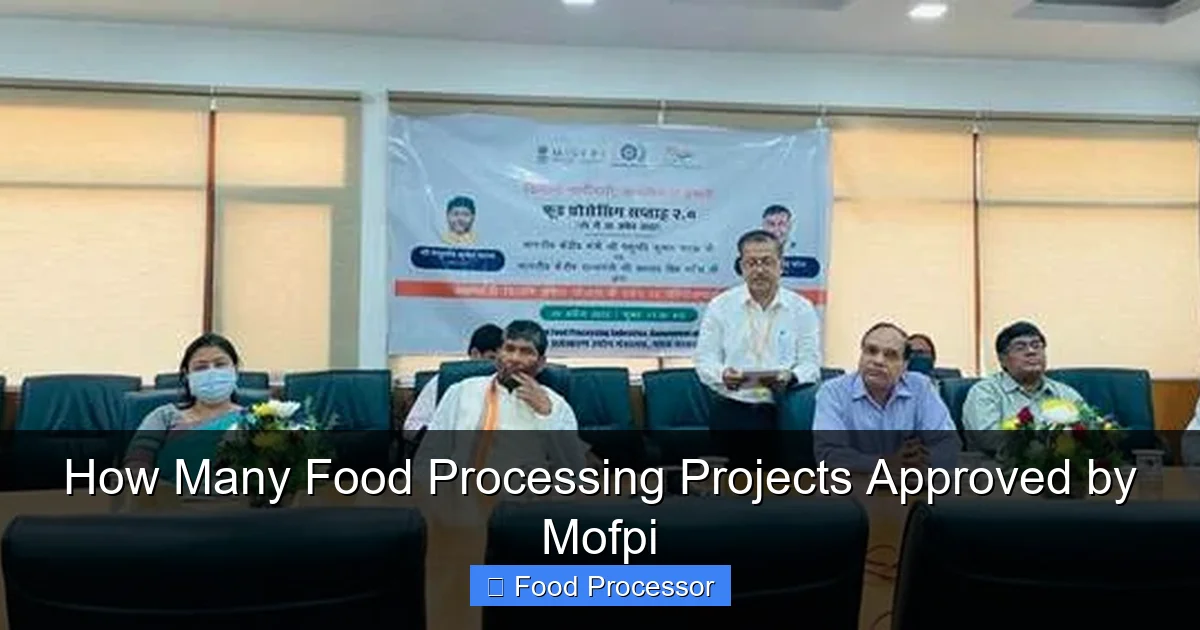
Visual guide about How Many Food Processing Projects Approved by Mofpi
Image source: kattufoodtech.com
MoFPI runs several flagship schemes, each with specific objectives and approval mechanisms. Understanding these is crucial to knowing how projects get approved.
Pradhan Mantri Kisan Sampada Yojana (PMKSY)
PMKSY is a comprehensive package aimed at creating modern infrastructure with efficient supply chain management from farm to retail. It’s a major driver for the number of food processing projects approved by MoFPI.
Components of PMKSY
- Mega Food Parks: Provide state-of-the-art infrastructure for food processing units.
- Integrated Cold Chain and Value Addition Infrastructure: Focuses on creating seamless cold chain facilities.
- Creation/Expansion of Food Processing & Preservation Capacities (CEFPPC): Supports individual food processing units.
- Agro Processing Clusters: Develops infrastructure in specific agricultural belts.
- Scheme for Creation of Backward & Forward Linkages: Connects farmers directly to processors and markets.
- Food Safety and Quality Assurance Infrastructure: Supports quality control labs.
- Human Resources and Institutions: Skill development and research.
Under CEFPPC, for instance, many individual units get approved. To understand “how many food processing projects approved by MoFPI under PMKSY,” you’d look at the scheme-specific updates on the MoFPI website.
Production Linked Incentive (PLI) Scheme for Food Processing
The PLI scheme is relatively newer and aims to boost domestic manufacturing and attract large investments in the food processing sector. It provides incentives based on incremental sales.
Focus Areas of PLI
- Ready to Cook/Ready to Eat (RTC/RTE) foods
- Processed fruits and vegetables
- Marine products
- Mozzarella cheese
- Specific organic products and millet-based products
This scheme aims to create global food champions and generate substantial employment. Projects approved under PLI often involve significant investment and contribute to the overall count of MoFPI-supported projects.
Pradhan Mantri Formalisation of Micro Food Processing Enterprises (PMFME) Scheme
This scheme focuses on supporting individual micro-enterprises. Many small-scale projects get approved here.
Key Features of PMFME
- Provides financial, technical, and business support for micro food processing units.
- Aims to formalize and upgrade existing units and support new ones.
- Focuses on ‘One District One Product’ (ODOP) approach.
The PMFME scheme specifically targets unorganized micro-enterprises, making it easier for smaller ventures to get government support. This significantly contributes to “how many food processing projects approved by MoFPI” at the grassroots level. Entrepreneurs often start small, perhaps by mastering how to use a food processor to chop vegetables for their initial products, and then scale up.
General Project Application and Approval Flow
While each scheme has specific guidelines, the general process for getting a food processing project approved by MoFPI often involves:
- Scheme Identification: Determine which MoFPI scheme best fits your project’s scope and objectives.
- Detailed Project Report (DPR) Preparation: This is the cornerstone of your application. The DPR must cover all technical, financial, marketing, and management aspects of your proposed project. It’s where you articulate your vision and viability.
- Online Application: Most schemes now require online submission through dedicated portals.
- Scrutiny and Evaluation: MoFPI officials and/or designated agencies will scrutinize your application and DPR for eligibility and viability.
- Field Visits/Interviews: For larger projects, site visits or presentations might be required.
- Approval Committee Review: Your project will be reviewed by an inter-ministerial or expert committee.
- Sanction Letter: Upon approval, a sanction letter is issued, outlining the approved grant/subsidy and terms.
- Implementation and Fund Disbursement: Funds are usually disbursed in tranches based on project progress.
Understanding food purchasing, processing, and preservation is a crucial foundational step before even beginning your DPR.
Factors Influencing Project Approvals
Beyond just filling out forms, several factors can significantly impact whether your project gets approved.
Eligibility Criteria
Each scheme has specific eligibility criteria regarding the type of entity (individual, FPO, cooperative, private limited company), project cost, minimum turnover, and the nature of the proposed processing activity. Meticulously checking and meeting these is non-negotiable.
Project Viability and DPR (Detailed Project Report)
Your DPR is your business’s blueprint. It needs to be professional, realistic, and compelling.
- Technical Viability: Does your project use appropriate technology? Is the proposed processing feasible?
- Financial Viability: Are your cost estimates realistic? Do your projections show profitability?
- Market Viability: Is there a demand for your product? Do you have a clear marketing strategy?
- Environmental Compliance: Does your project adhere to environmental norms?
A well-prepared DPR can be the difference between approval and rejection.
Compliance and Documentation
The government operates on documentation. Ensure all required documents—ranging from land ownership proofs, financial statements, statutory clearances, and permits—are in order and accurately submitted. Incomplete or incorrect documentation is a common reason for delays or rejection.
Geographical Focus and Priority Areas
MoFPI often prioritizes projects in specific regions (e.g., North Eastern States, aspirational districts) or those focusing on certain products or technologies (e.g., value addition to specific crops, sustainable processing). Aligning your project with these priorities can give you an edge.
Tips for Aspiring Food Processors
If you’re looking to get your own food processing project approved, here are some actionable tips:
Develop a Strong Business Plan
Think of your DPR as a highly detailed business plan. Invest time and resources in creating a robust plan that outlines every aspect of your venture. This isn’t just for MoFPI; it’s vital for your own success.
Network and Seek Mentorship
Connect with existing food processors, industry experts, and consultants who specialize in government schemes. Their experience and guidance can be invaluable in understanding the nuances of the approval process and improving your project proposal.
Stay Updated with Policies and Schemes
MoFPI schemes are periodically updated, and new ones are introduced. Regularly check the MoFPI website and relevant news portals to stay informed. A slight change in guidelines could significantly impact your application. You might even find insights into how many food processing projects approved by MoFPI are linked to newer, more focused initiatives.
Focus on Value Addition and Innovation
Projects that demonstrate significant value addition to agricultural produce, use innovative technologies, or address specific market gaps often receive favorable consideration. Think about how your project can bring something new to the table, perhaps by exploring products that undergo minimal processing to retain nutritional value.
Start Small, Think Big
Many entrepreneurs start with small-scale processing and gradually expand. Even a micro-enterprise with a strong product idea can benefit from schemes like PMFME. Proving success at a smaller scale can pave the way for larger projects and more significant approvals in the future.
Troubleshooting: What if Your Project Isn’t Approved?
It’s common for projects to face initial rejection or requests for revisions. Don’t get discouraged!
Analyze the Rejection Reasons
MoFPI usually provides reasons for rejection or suggests modifications. Carefully review these points. Was it an incomplete document? A weak financial projection? Unrealistic market assessment?
Revise and Re-apply
Address all the points raised by the ministry. Strengthen your DPR, gather missing documents, or rework your project plan. Sometimes, a project might be better suited for a different scheme or a slightly modified scope. Learn from the feedback, make the necessary improvements, and re-apply. Persistence is often key in navigating government approvals.
Conclusion
Understanding “how many food processing projects approved by MoFPI” is less about finding a single number and more about comprehending the dynamic ecosystem of government support, schemes, and approval processes. MoFPI plays a crucial role in transforming India’s food sector, and through schemes like PMKSY, PLI, and PMFME, it approves a vast and ever-growing number of projects annually.
By diligently researching official sources, preparing a robust Detailed Project Report, ensuring compliance, and staying informed, aspiring entrepreneurs can significantly increase their chances of securing MoFPI approval for their food processing ventures. The journey may require patience and meticulous effort, but the potential for growth, contribution to the economy, and personal success in this vital sector is immense. Go forth and innovate in the world of food processing!
